Ubuhle Women: Beadwork and the Art of Independence at Chrysler Museum of Art, October 18, 2018 – February 24, 2019

“Experience the color and shine of intricate beaded artworks in Ubuhle Women: Beadwork and the Art of Independence. The exhibition showcases a new form of textile art known as the ndwango and presents a story of rural South African women overcoming hardships and illness to achieve artistic significance and economic independence.

Beadwork is a customary form of artistic expression for South African women and is passed down through the generations. Ubuhle Women was established by Ntombephi Ntobela and Bev Gibson in 1999 on a former sugar plantation in KwaZulu-Natal. It created employment for rural women using the traditional skills many of them already possessed. The plain black fabric that serves as the foundation for the Ubuhle Women’s exquisite beadwork is reminiscent of the Xhosa headscarves and skirts many of the women wore growing up. The artists stretch this textile like a canvas and use colored Czech glass beads to transform the flat cloth into a contemporary art form of remarkable visual depth. Gibson, the visionary of the traveling exhibition, says “the works are so beautiful, there’s nothing to understand.” Ntobela says the women work in their own unique style “directly from the soul” to create abstract and figurative subjects for their ndwangos.” — Chrysler Museum of Art

 “There are fascinating, culturally specific elements in these artworks like patterning influenced by traditional Zulu and Xosa clothing and adornment as well as imagery and subject matter that speak to a universal humanity that we all share and can relate to. No matter who we are, we can identify with a person’s sorrow, joy, hopes and journeys of healing,” said Carolyn Swan Needell, Ph.D., the Chrysler Museum’s Carolyn and Richard Barry Curator of Glass.

Bongiswa Ntobela (South African, 1973−2009). Funky Bull, 2006. Glass beads sewn onto fabric. The Ubuhle Private Collection

Zondlile Zondo (South African, b. 1969). Flowers for the Gods, 2012. Glass beads sewn onto fabric. The Ubuhle Collection

Zondlile Zondo (South African, b. 1969). My Mother’s Peach Tree, 2012. Glass beads sewn onto fabric. The Ubuhle Private Collection

Ntombephi “Induna” Ntobela (South African, b. 1966). My Sea, My Sister, My Tears, 2011. Glass beads sewn onto fabric. The Ubuhle Private Collection

Ntombephi “Induna” Ntobela (South African, b. 1966). Sangoma Bull, 2012. Glass beads sewn onto fabric. Private collection

Zanele Muhloli (South African, b. 1972). Portrait of Ntombephi “Induna” Ntobela and Bev Gibson, April 2013 © Zanele Muhloli / Ubuhle Artists

Zanele Muhloli (South African, b. 1972). Portrait of Zondlile Zondo, April 2013 © Zanele Muhloli / Ubuhle Artists

Ubuhle Women: Beadwork and the Art of Independence was developed by the Smithsonian Anacostia Community Museum, Washington, DC, in cooperation with curators Bev Gibson, James Green, and Ubuhle Beads, and is organized for tour by International Arts & Artists, Washington, DC.

Images courtesy Chrysler Museum of Art.

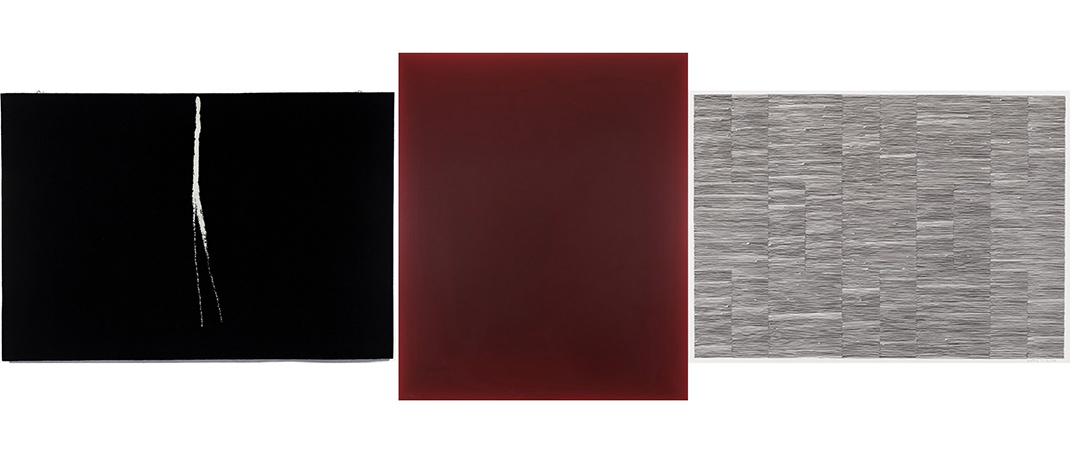
Anni Albers at Tate Modern, October 11, 2018 – January 27, 2019

“Tate Modern presents the UK’s first major retrospective of the work of Anni Albers (1899–1994). This exhibition brings together her most important works from major collections in the US and Europe, many of which will be shown in the UK for the first time, to highlight Albers’s significance as an artist. Opening ahead of the centenary of the Bauhaus in 2019, it is long overdue recognition of Albers’s pivotal contribution to modern art and design, and part of Tate Modern’s wider commitment to showing artists working in textiles.

Anni Albers combined the ancient craft of hand-weaving with the language of modern art, finding within the medium many possibilities for the expression of modern life. Featuring over 350 objects including beautiful small-scale studies, large wall-hangings, jewellery made from everyday items, and textiles designed for mass production, this exhibition explores the many aspects of Albers’s practice – such as the intersection between art and craft; hand-weaving and machine production; ancient and modern. Significant weavings such as Ancient Writing 1936 and Six Prayers 1966-67 – Albers’s moving memorial commemorating the six million Jews who died in the Holocaust, commissioned by the Jewish Museum in New York – are shown in this country for the first time. The artist’s lesser-known commissioned works exploring the relationship between textiles and architecture are also highlighted, including Albers’s designs for a large wall-hanging at the iconic modernist Camino Real hotel in Mexico City in 1968. The exhibition design itself takes inspiration from the artist’s own writings, such as her seminal essay ‘The Pliable Plane: Textiles in Architecture’, 1957, in which Albers advocates ‘a new understanding between the architect and the inventive weaver’.” — Tate Modern

Anni Albers
. Wall Hanging, 1926. 
Mercerized cotton, silk, 
2032 x 1207 mm. 
The Metropolitan Museum of Art, Purchase, Everfast Fabrics Inc. and Edward C. Moore Jr. Gift, 1969 © 2018 The Josef and Anni Albers Foundation / Artists Rights Society (ARS), New York/DACS, London

Anni Albers. 
Ancient Writing, 1936. 
Cotton and rayon, 
1505 x 1118 mm. 
Smithsonian American Art Museum. Gift of John Young © 2018 The Josef and Anni Albers Foundation/Artists Rights Society (ARS), New York/DACS, London
. Photo: Princeton University Art Museum/Art Resource NY/Scala, Florence

Anni Albers. 
With Verticals, 1946. 
Red cotton and linen
, 1549 x 1181 mm. The Josef and Anni Albers Foundation, Bethany CT © 2018 The Josef and Anni Albers Foundation/Artists Rights Society (ARS), New York/DACS, London. 
Photograph by Tim Nighswander/Imaging4Art

Anni Albers. 
Open Letter, 1958. 
Cotton, 
57.8 x 60 cm. The Josef and Anni Albers Foundation, Bethany CT 
© 2018 The Josef and Anni Albers Foundation/Artists Rights Society (ARS), New York/DACS, London. 
Photo: Tim Nighswander/Imaging4Art

Anni Albers. 
Intersecting, 1962. 
Pictorial weaving, cotton and rayon, 
400 x 419 mm
. Josef Albers Museum Quadrat Bottrop
© 2018 The Josef and Anni Albers Foundation/Artists Rights Society (ARS), New York/DACS, London

Anni Albers. Rug, 1959. Wool hand woven, 1220 x 1650 mm. Herbert F. Johnson Museum of Art, Cornell University
© 2018 The Josef and Anni Albers Foundation / Artists Rights Society (ARS), New York/DACS, London

Anni Albers. 
Six Prayers, 1966-1967. 
Cotton/linen, bast/silver, Lurex
, 1861 x 2972 mm. 
The Jewish Museum, New York, Gift of the Albert A. List Family, JM

Anni Albers
. Epitaph, 1968. Pictorial weaving, 1498 x 584 mm. The Josef and Anni Albers Foundation, Bethany CT
© 2018 The Josef and Anni Albers Foundation / Artists Rights Society (ARS), New York/DACS, London

Anni Albers in her weaving studio at Black Mountain College, 1937

Anni Albers is organised by Tate Modern and Stiftung Kunstsammlung Nordrhein-Westfalen, Düsseldorf. It is curated by Ann Coxon, Curator, International Art, Tate Modern, Professor Briony Fer, University College London with Maria Müller-Schareck, Curator, Stiftung Kunstsammlung Nordrhein-Westfalen assisted by Priyesh Mistry, Assistant Curator, International Art, Tate Modern and Linda Walther, Assistant Curator, Stiftung Kunstsammlung Nordrhein-Westfalen.

Images courtesy Tate Modern.

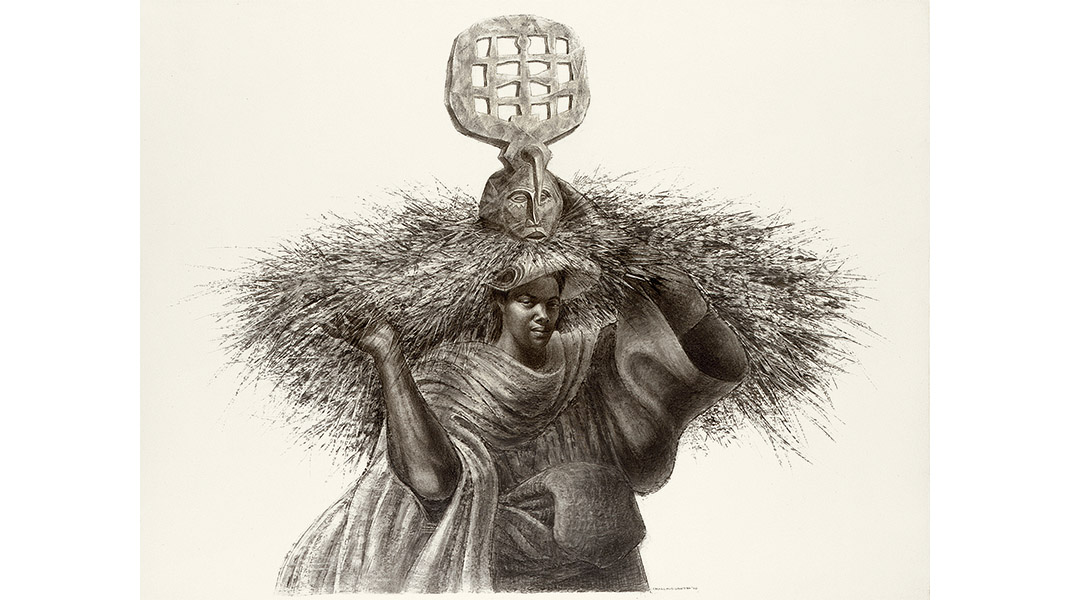
Charles White: A Retrospective at The Museum of Modern Art, October 7, 2018 – January 13, 2019

“Charles White: A Retrospective is the first major exhibition dedicated to Charles White (1918–1979) in over three decades. Organized chronologically, the retrospective charts the entirety of White’s career, illuminating his socially motivated responses to the tumultuous events and cultural episodes that defined 20th-century American history. The exhibition’s roughly 100 drawings, paintings, and prints, along with additional ephemera, attest to White’s continually developing body of work, and serve as a model for the active role art can play in contemporary society.

The exhibition includes representative work from the three artistic centers in which White lived, created, and taught throughout his life: Chicago, New York, and Los Angeles. It begins with early paintings and murals White made for the Works Progress Administration (WPA) in Depression-era Chicago, where he grew up. Shortly thereafter, between 1942 and 1956, White lived mainly in New York City, teaching drawing, exhibiting at the progressive ACA Gallery on 57th Street, and supporting the Committee for the Negro in the Arts in Harlem. A selection of White’s personal photographs, also on view in the exhibition, capture his life in New York, while the inclusion of his work for album covers, publications, film, and television emphasize his dedication to more accessible distribution outlets for his art. The presentation concludes with the inventive output from his last decades as an internationally established figure and influential teacher in Los Angeles during the 1960s and ’70s.” — MoMA

Charles White. Folksinger. 1957. Ink on board. 52 × 34″ (132.1 × 86.4 cm). Collection Pamela and Harry Belafonte © 1957 The Charles White Archives. Photo Credit: Christopher Burke Studios

Charles White. Five Great American Negroes. 1939. Oil on canvas, 60 x 155″ (152.4 x 393.7 cm). From the Collection of the Howard University Gallery of Art, Washington D.C.© The Charles White Archives/ Photo: Gregory R. Staley

Charles White. Love Letter II. 1977. Color lithograph, 30 1/8 × 22 7/16″ (76.5 × 57 cm). The Art Institute of Chicago, Margaret Fisher Fund. © The Charles White Archives/ © The Art Institute of Chicago

Charles White. Love Letter III. 1977. Color lithograph. 30 1/16 x 22 5/8″ (76.3 x 57.4 cm). The Art Institute of Chicago. Margaret Fisher Fund. © The Charles White Archives/ © The Art Institute of Chicago

Charles White. Preacher. 1940. Tempera on board. 30 × 21 1/2″ (76.2 × 54.6 cm). The Davidsons, Los Angeles, California. © 1940 The Charles White Archives. Photo Credit: The Huntington Library, Art Collections, and Botanical Gardens, San Marino, California.

Charles White. Headlines. 1944. Ink, gouache, and newspaper on board, 20 x 16″ (50.8 x 40.6 cm). Collection of William M. and Elisabeth M. Landes. © The Charles White Archives/ Photo: Gregory R. Staley

Charles White. Soldier. 1944. Tempera on Masonite. 30 × 25″ (76.2 × 63.5 cm). The Huntington Library, Art Collections, and Botanical Gardens. Gift of Sandra and Bram Dijkstra. © The Charles White Archives/ © Courtesy of the Huntington Art Collections, San Marino, California

Charles White. Our Land. 1951. Egg tempera on panel, 24 x 20″ (61 x 50.8 cm). Private Collection. © The Charles White Archives/ Photo: Gavin Ashworth. Courtesy Jonathan Boos

Charles White). Work (Young Worker). 1953. Wolff crayon and charcoal on illustration board, 44 × 28″ (111.8 × 71.1 cm). Private collection. Photo: Christopher Burke Studio © The Charles White Archives/ Charles White (American, 1918-1979).

Charles White. Harvest Talk. 1953. Charcoal, Wolff’s carbon drawing pencil, and graphite, with stumping and erasing on ivory wood pulp laminate board. 26 × 39 1/16″ (66 × 99.2 cm). The Art Institute of Chicago. Restricted gift of Mr. and Mrs. Robert S. Hartman. © 1953 The Charles White Archives.

Charles White. Ye Shall Inherit the Earth. 1953. Charcoal on paper, 36 x 26″ (99.1 x 66 cm). Private Collection. © The Charles White Archives/ Courtesy Princeton University Art Museum

Charles White. J’Accuse #7. 1966. Charcoal on paper, 39 1/4 × 51 1/2″ (99.7 × 130.8 cm). Private collection. © The Charles White Archives/ Photo courtesy of Michael Rosenfeld Gallery LLC, New York, NY

Charles White. General Moses (Harriet Tubman). 1965. Ink on paper, 47 × 68″ (119.4 × 172.7 cm). Private collection. © The Charles White Archives. Photo courtesy of Swann Auction Galleries

Charles White. Harriet. 1972. Oil on board. 53 5/16 × 47 1/4″ (135.4 × 120 cm). John L. Warfield Center for African and African American Studies, The University of Texas at Austin. © The Charles White Archives/ Photo: Paul Bardagjy

Charles White. Black Pope (Sandwich Board Man). 1973. Oil wash on board. 60 × 43 7/8″ (152.4 × 111.4 cm). The Museum of Modern Art, New York. Richard S. Zeisler Bequest (by exchange), The Friends of Education of The Museum of Modern Art, Committee on Drawings Fund, Dian Woodner, and Agnes Gund. © 1973 The Charles White Archives. Photo Credit: Jonathan Muzikar, The Museum of Modern Art Imaging Services

Charles White. Sound of Silence. 1978. Printed by David Panosh, Published by Hand Graphics, Ltd. Color lithograph on paper. 25 1/8 × 35 5/16″ (63.8 × 89.7 cm). The Art Institute of Chicago. Margaret Fisher Fund. © 1978 The Charles White Archives.

Charles White: A Retrospective is organized by Esther Adler, Associate Curator, Department of Drawings and Prints, MoMA; and Sarah Kelly Oehler, Field-McCormick Chair and Curator of American Art, The Art Institute of Chicago. The exhibition was on view at The Art Institute of Chicago from June 8 through September 3, 2018, and following its MoMA presentation it will travel to the Los Angeles County Museum of Art (LACMA), where it will be on view from February 17 through June 9, 2019. 

Images courtesy The Museum of Modern Art.

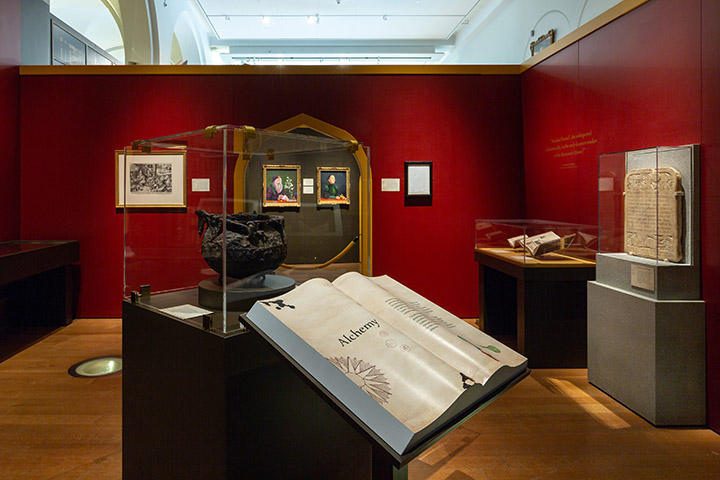
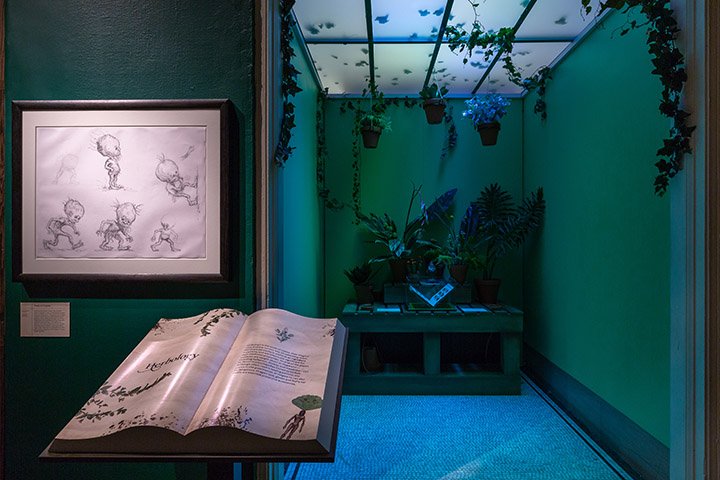
Harry Potter: A History of Magic at New-York Historical Society, October 5, 2018 – January 27, 2019

Harry Potter: A History of Magic, now at the New-York Historical Society, was the British Library’s most successful exhibition. Celebrating the 20th anniversary of the U.S. publication of Harry Potter and the Sorcerer’s Stone, the New York exhibition explores the traditions of folklore and magic at the heart of the Harry Potter stories and showcases a new selection of objects that are on view to the public for the very first time.

Harry Potter: A History of Magic features centuries-old treasures, including rare books, manuscripts, and magical objects from the collections of the British Library, the New-York Historical Society, and other museums, as well as original material from publisher Scholastic and J.K. Rowling’s own archives. The exhibition is organized around the subjects studied at Hogwarts School of Witchcraft and Wizardry, including: Potions and Alchemy, Herbology, Divination, Charms, Astronomy, Defense Against the Dark Arts, and Care of Magical Creatures.

Photographs by Corrado Serra.

The exhibition is accompanied by a special audio tour featuring the voice of actress Natalie Dormer—available to ticketholders as a free Audible download—providing in-depth content on the objects on view.

The original exhibition was organized by British Library curators Julian Harrison, Tanya Kirk, Alexander Lock, and Joanna Norledge. In New York, the exhibition is overseen by Margi Hofer, New-York Historical’s vice president and museum director, and Cristian Petru Panaite, associate curator of exhibitions.

Art of Native America: The Charles and Valerie Diker Collection at The Met Fifth Avenue, October 4, 2018-October 6, 2019

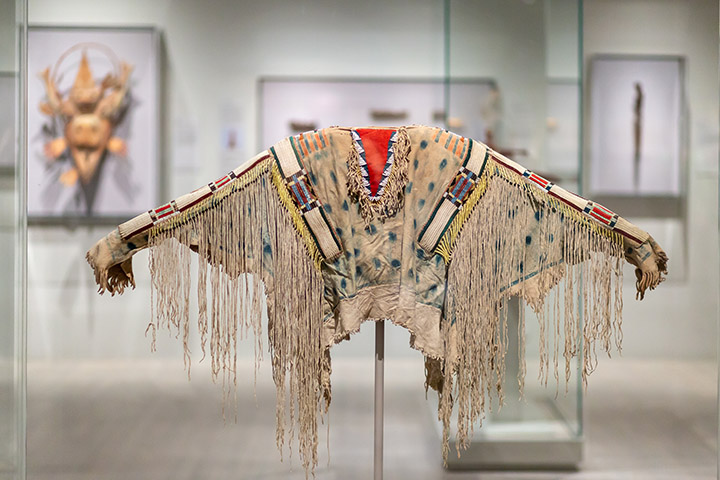
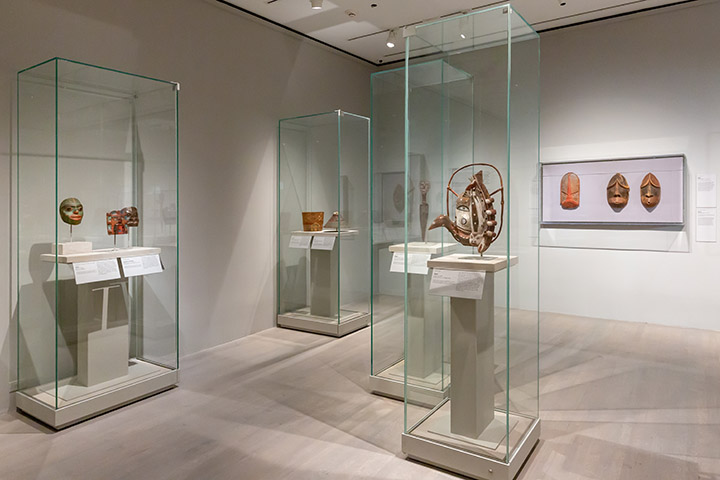
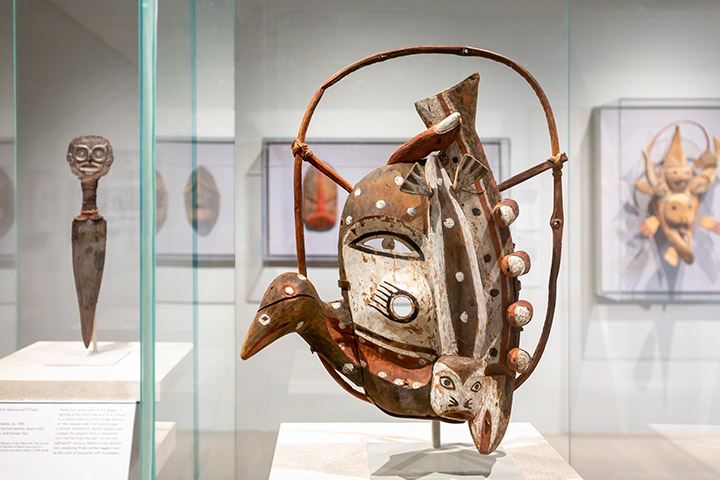
“The achievement of historical Native artists from across the United States and Canada is reflected in this installation of 116 works. More than fifty Indigenous groups are represented, as well as nearly all major historical Native American aesthetic forms: painting, drawing, sculpture, textiles, quill and bead embroidery, basketry, and ceramics. The works reveal the complexity, vibrancy, and variation of Native life and offer new narratives of America’s past. 

Most of the objects—made to be worn; to nourish; to hunt, defend, and protect; to heal; to cradle the young; and to invoke the spirits—were created in the eighteenth, nineteenth, and early twentieth centuries against the backdrop of Euro-American colonialism. They are organized into seven geographical regions: Woodlands, Plains, Plateau, California and Great Basin, Southwest, Northwest Coast, and Arctic. 

This long-term installation consists of promised gifts, donations, and loans from the pioneering collectors Charles and Valerie Diker. Their belief in the potential of these objects to broaden historical, cultural, and aesthetic understanding inspired their generosity. The presentation marks the first significant display of Native art in the American Wing, established in 1924.” — Introductory Wall Text

Guest curators: Gaylord Torrence, Fred and Virginia Merrill Senior Curator of American Indian Art, The Nelson-Atkins Museum of Art, Kansas City, Missouri and Marjorie Alexander, Curatorial Consultant, American Indian Art, The Nelson-Atkins Museum of Art, Kansas City, Missouri.

Photographs by Corrado Serra.

Sylvia Yount, the Lawrence A. Fleischman Curator in Charge of the American Wing, stated: “We are committed to exploring thoughtfully and sensitively the entangled histories of contact and colonization from both Native and Euro-American perspectives. The Met takes seriously its curatorial responsibility to share with our broad audiences—in a variety of displays and contexts—the cultural endurance and creative continuity of Indigenous American artists.”

Franz Marc and August Macke: 1909-1914 at Neue Galerie New York, October 4, 2018 – January 21, 2019

Franz Marc and August Macke: 1909-1914 is an exhibition that explores the life and work of two German artists and the power of their friendship. In the four years prior to Macke’s death in 1914 (Marc himself died in 1916), they wrote each other scores of letters, visited each other’s homes, traveled together, and often discussed the development of their work. They shared ideas about art, and through their innovations helped create the movement known as Expressionism in early twentieth-century Germany. The exhibition focuses on Marc and Macke’s artistic relationship, how their lives intersected, and how their art was developed and received during their lifetimes.

Featuring approximately 70 paintings and works on paper, Franz Marc and August Macke is comprised of loans from public and private collections worldwide. While Marc has received acclaim in the United States, Macke has not become well known. This presentation at Neue Galerie New York is the first time that Macke’s work will be shown in an American museum exhibition, and the first exhibition in the United States on the relationship between these artists.

In early 1910, Marc wrote to Macke: “I consider it a great stroke of luck to have at last met a colleague of so inward and artistic a disposition—rarissime! How pleased I would be if we were to succeed in exhibiting our pictures side by side.” Both men were young artists—twenty-nine and twenty-three, respectively—when they first met in Munich in January of that year. They soon became friends and visited each other’s studios in and near Munich. Beginning with the first presentation of the Blaue Reiter (Blue Rider) in December 1911 and continuing for the next three years, they showed together in Munich, Berlin, Dresden, Cologne, and Moscow.” — Neue Galerie

Franz Marc (1880–1916). Siberian Sheepdogs, 1909. Oil on canvas. National Gallery of Art, Washington. Gift of Mr. And Mrs. Stephen M. Kellen

August Macke (1887–1914). Portrait with Apples, 1909. Oil on canvas. Städtische Galerie im Lenbachhaus und Kunstbau, Munich

Franz Marc (1880–1916). Ape Frieze, 1911. Oil on canvas. Hamburger Kunsthalle. Photo: bpk Bildagentur/Hamburger Kunsthalle/Art Resource, NY

Franz Marc (1880–1916). The Yellow Cow, 1911. Oil on canvas. Solomon R. Guggenheim Museum, New York. Solomon R. Guggenheim Founding Collection

August Macke (1887–1914). Geraniums before Blue Mountain, 1910. Oil on canvas. Milwaukee Art Museum. Gift of Mrs. Harry Lynde Bradley, 1961. Photo: John R. Glembin

August Macke (1887-1914). Colored Forms I, 1913. Oil on board, mounted on panel. LWL-Museum für Kunst und Kultur, Westfälisches Landesmuseum, Münster, Germany. Photo: LWL-LMKuk/Sabine Ahlbrand-Dornseif

Franz Marc (1880–1916). Broken Forms, 1914. Oil on canvas. Solomon R. Guggenheim Museum, New York

August Macke (1887–1914). Four Girls, 1913. Oil on canvas. Museum Kunstpalast, Düsseldorf. Photo: Museum Kunstpalast – Horst Kolberg – ARTOTHEK

August Macke (1887-1914). Lady in a Park, 1914. Oil on canvas. The Museum of Modern Art, New York. Gift of the Henry Pearlman Foundation, 1956. Photo: The Museum of Modern Art/Licensed by SCALA / Art Resource, NY

August Macke (1887–1914). Strollers at the Lake II, 1912. Oil on canvas. Neue Galerie New York. This work is part of the collection of Estée Lauder and was made available through the generosity of Estée Lauder

Franz Marc (1880–1916). Horse and Donkey, 1912. Tempera on paper. Private Collection, Switzerland

Franz Marc (1880–1916). The First Animals, 1913. Gouache and pencil on paper. Private Collection

August Macke (1887–1914). Donkey Rider, 1914. Watercolor on paper. Private Collection

Franz Marc and August Macke: 1909-1914 is organized by the Neue Galerie New York and the Musées d’Orsay et de l’Orangerie, Paris. The curator for the Neue Galerie is independent scholar Vivian Endicott Barnett. After its presentation in New York, the exhibition will travel to Paris, where it will be on view at the Musée de l’Orangerie from March 6 to June 17, 2019.

Images courtesy Neue Galerie.

Pin-Ups: Toulouse Lautrec and The Art of Celebrity at Royal Scottish Academy, October 6, 2018 – January 20, 2019

Pin-Ups: Toulouse Lautrec and The Art of Celebrity is the first NGS exhibition to explore the work of one of the most innovative and popular French artists of the era known as the ‘Belle Époque’. Henri de Toulouse-Lautrec (1864-1901) was an outstanding painter, printmaker and caricaturist renowned above all for his immersion in the theatrical and celebrity culture of Paris. This exhibition will bring together around 75 posters, prints, paintings and drawings by Lautrec and contemporaries such as Pierre Bonnard, Théophile Alexandre Steinlen and Jules Chéret, the ‘father of the modern poster’. These will include many of the artist’s finest graphic artworks made for legendary nightclubs such as the Moulin Rouge and the Ambassadeurs. The exhibition will also include the work of British artists who were drawn to the dynamic café culture of Paris, such as Walter Sickert, Arthur Melville, JD Fergusson and William Nicholson.

Pin-Ups will capture the colour and excitement of this period of economic prosperity and cultural optimism. This was a climate that gave rise to a new mass-celebrity and consumer culture and a golden age of the poster. Public enthusiasm for these images was such that they were removed from walls by collectors, sometimes as soon as they were put up, a process that transformed ephemeral advertising to a collectable form of fine art which bridged ‘high’ and popular culture for the first time.” — National Galleries of Scotland

Théophile Steinlen (1859–1923). Cabaret du Chat Noir (Poster), 1892. Colour lithograph, 134.5 x 94.7cm. Collection: Victoria and Albert Museum, London. © Victoria and Albert Museum, London.

Henri de Toulouse-Lautrec (1864–1901). Divan Japonais, 1892. Poster, Colour lithograph, 79.8 x 60.5. Collection: Victoria and Albert Museum, London. © Victoria and Albert Museum, London.

Jules Cheret (1836-1932). La Loie Fuller, 1893. Printer: Chaix (Ateilier Cheret), Paris. Lithograph in red, yellow, dark violet, and black ink on paper, 124 x 84cm. Collection: The Hunterian, University of Glasgow

Henri de Toulouse-Lautrec (1864–1901). Jane Avril, 1899. Print, lithograph in coloured inks on paper, 56 x 36 cm. Collection: National Galleries of Scotland, purchased 1963

John Duncan Fergusson (1874–1961). La Terrasse, Café d’Harcourt, about 1908-09 Oil on canvas, 108.6 x 122 cm. Collection: National Galleries of Scotland, long loan in 2001 © The Fergusson Gallery, Perth & Kinross Council, Scotland Photo: A Reeve

Christopher Baker, Director of European and Scottish Art and Portraiture at the National Galleries of Scotland, said: “This fascinating exhibition provides an opportunity to taste the decadence and visual richness of culture in late nineteenthcentury Paris. The elegance and inventiveness of Toulouse-Lautrec’s brilliant designs which helped transform contemporary performers into stars and have an enduring appeal will be set in the wider context of his contemporaries’ riveting work.”

Images courtesy National Galleries of Scotland.

Pietro Consagra: Frontal Sculpture 1947–1967 at Robilant + Voena, London, September 27 – November 16, 2018

“Consagra is one of Europe’s most renowned post-war sculptors. Born in Mazara del Vallo, Sicily, in 1944 he moved to Rome, the “open city” that was beginning its civic and material reconstruction after the dramatic years of World War II. The artist developed his highly distinctive vision for a new sculpture after a formative visit to Paris in 1946, which marked the beginning of an active dialogue with the international avant-garde, he realized his first abstract sculptures: they were not modelled as a whole, but instead constructed of silhouetted forms built of overlapping planes.

The exhibition brings together pivotal examples of Consagra’s work in redefining the coordinates of modern sculpture: from his early “totemic” pieces from the late 1940s (one of which was acquired by Peggy Guggenheim in 1949) into his most well-known “colloqui” (colloquies) from the 1950s, the key cycle in the development of his frontal sculpture, which granted him the Grand Prize for sculpture at the Venice Biennale in 1960. A room is to be devoted to his bi-frontal coloured iron and aluminium works from the 1960s, which he presented in crucial solo exhibitions at Marlborough Gallery in Rome (1966) and Marlborough-Gerson Gallery in New York (1967): “ferri trasparenti” (transparent iron works), also presented at the Solomon R. Guggenheim Museum in 1967, “piani sospesi” (suspended planes), “piani appesi” (hanging planes), “giardini” (gardens), “inventario” (inventory).

This selection of works, including some rarely exhibited pieces, will be the core of the exhibition, flanked by a special presentation of his “paracarri” (bollards) marble edition (1974), where Consagra highlighted and reinterpreted a characteristic urban presences in Italian cities, the bollard, into a variety of shapes and colours: they will be presented together with his original photographs from Welcome to Italy publication, which is also being republished on the occasion of the London exhibition.” — Robilant + Voena

Pietro Consagra, Racconto del demonio n. 3 (Tale of the Devil, n.3), 1962-89, bronzo, 177 x 119 x 4 cm

Pietro Consagra, Pietro Consagra, Racconto del demonio n.5 (Tale of the Devil n.5), 1962, bronzo, 85,2 x 56,5 x 6 cm n.5, 1962, bronzo, 85,2 x 56,5 x 6 cm

Pietro Consagra, Giardino arancio (Orange Garden), 1966, painted iron, 120,5 x 128 x 0,5 cm ph. Bruno Bani

Pietro Consagra, Inventario n. 1 (Inventory n. 1), 1966-’67, alluminio dipinto

 Pietro Consagra: Frontal Sculpture 1947–1967 is realized in collaboration with the Archivio Pietro Consagra and curated by Francesca Pola.

All images are subject to copyright. They are courtesy Robilant + Voena and Archivio Pietro Consagra .

Between Worlds: The Art of Bill Traylor at Smithsonian American Art Museum, September 28, 2018 – March 17, 2019

“Bill Traylor (ca. 1853–1949) is among the most important American artists of the 20th century. Born in antebellum Alabama, Traylor was an eyewitness to history—the Civil War, Emancipation, Reconstruction, Jim Crow segregation, the Great Migration and the steady rise of African American urban culture in the South. In the late 1930s, a decade after leaving plantation life and moving to the city of Montgomery, Alabama, Traylor took up pencil and paintbrush and created a visual autobiography, images on discarded cardboard extracted from his memories and experiences. When he died in 1949, Traylor left behind more than 1,000 works of art, the only known person born enslaved, and entirely self-taught, to create an extensive body of graphic artworks.

Between Worlds: The Art of Bill Traylor brings together 155 drawings and paintings to provide the most encompassing and in-depth study of the artist to date. This major retrospective is drawn from public and private collections across the country and abroad and includes 17 works from the collections of the Smithsonian American Art Museum. It presents a comprehensive picture of Traylor’s stylistic development and artistic themes, explored in the context of the profoundly different worlds Traylor’s life bridged: rural and urban, black and white, old and new.” — Smithsonian American Art Museum

Bill Traylor, Untitled (Man, Woman, and Dog), 1939, crayon and pencil on paperboard. Smithsonian American Art Museum; Gift of Herbert Waide Hemphill, Jr., and museum purchase made possible by Ralph Cross Johnson. Photo by Mindy Barrett

Bill Traylor, Untitled (Dog Fight with Writing), ca. 1939–1940, opaque watercolor and pencil on paperboard. Smithsonian American Art Museum; Museum purchase through the Luisita L. and Franz H. Denghausen Endowment. Photo by Gene Young

Bill Traylor, Untitled (Radio), ca. 1940–1942, opaque watercolor and pencil on printed advertising paperboard. Smithsonian American Art Museum; Museum purchase through the Luisita L. and Franz H. Denghausen Endowment. Photo by Gene Young

Bill Traylor, Untitled (Yellow and Blue House with Figures and Dog), July 1939, colored pencil on paperboard. Smithsonian American Art Museum; Museum purchase through the Luisita L. and Franz H. Denghausen Endowment. Photo by Gene Young

Bill Traylor, Untitled (Red Goat with Snake), ca. 1940–1942, opaque watercolor and pencil on paperboard. Smithsonian American Art Museum; Gift of Judy A. Saslow. Photo by Gene Young

Bill Traylor, Man with Yoke, ca. 1939–1942, pencil and gouache on cardboard. Private Collection. Photo by Bonnie H. Morrison, NYC

Bill Traylor, Untitled (Blue Man on Red Object), ca. 1939–1942, poster paint and pencil on cardboard. High Museum of Art, Atlanta, purchase with funds from Mrs. Lindsey Hopkins, Jr., Edith G. and Philip A. Rhodes, and the Members Guild. Photo by Mike Jensen

Bill Traylor, Untitled (Man Carrying Dog on Object), ca. 1939–1942, poster paint and graphite on cardboard. High Museum of Art, Atlanta, purchase with funds from Mrs. Lindsey Hopkins, Jr., Edith G. and Philip A. Rhodes, and the Members Guild. Photo by Mike Jensen

Bill Traylor, Untitled (Event with Man in Blue and Snake), 1939, colored pencil and pencil on cardboard. Collection of Penny and Allan Katz. Photography by Gavin Ashworth

Bill Traylor, Man and Large Dog (Verso: Man and Woman), ca. 1939–1942, poster paint and pencil on cardboard. Collection of Jerry and Susan Lauren. Photo: Matt Flynn © Smithsonian Institution

Bill Traylor, Man in Black and Blue with Cigar and Suitcase, ca. 1939–1942, pencil and poster paint on cardboard. Collection of Jerry and Susan Lauren. Photo: Matt Flynn © Smithsonian Institution

Bill Traylor, Mean Dog (Verso: Man Leading Mule), ca. 1939–1942, poster paint and pencil on cardboard. Collection of Jerry and Susan Lauren. Photo: Matt Flynn © Smithsonian Institution

Bill Traylor, Truncated Blue Man with Pipe, ca. 1939–1942, poster paint and pencil on cardboard. Louis-Dreyfus Family Collection. Photo: William Louis-Dreyfus Foundation Inc.

Bill Traylor, Figures and Construction with Cat, ca. 1939–1942, gouache and pencil on cardboard. Courtesy of The Metropolitan Museum of Art, New York, Promised Gift of Charles E. and Eugenia C. Shannon. Image copyright © The Metropolitan Museum of Art. Image source: Art Resource, NY

Bill Traylor, Self-Portrait, ca. 1939–1940, gouache and pencil on cardboard. Courtesy of The Metropolitan Museum of Art, New York, Promised Gift of Charles E. and Eugenia C. Shannon. Image copyright © The Metropolitan Museum of Art. Image source: Art Resource, NY

Bill Traylor, Untitled, ca. 1939–1942, colored pencil on cardboard. Collection of Jan Petry and Angie Mills. Photograph © John A. Faier

Bill Traylor, Leg Forms with Bird, ca. 1939–1940, charcoal on cardboard. Private Collection. Photo: Stephanie Arnett

Between Worlds: The Art of Bill Traylor is organized by Leslie Umberger, curator of folk and self-taught art at the Smithsonian American Art Museum. The museum is the sole venue for this exhibition.

Images courtesy Smithsonian American Art Museum.

Armenia! at The Met Fifth Avenue, September 22, 2018 – January 13, 2019

Armenia! explores the arts and culture of the Armenians from their conversion to Christianity in the early fourth century through their leading role on international trade routes in the 17th century. The exhibition emphasizes how Armenians developed a distinctive national identity in their homeland at the base of Mt. Ararat (widely accepted as the resting place of Noah’s Ark) and how they maintained and transformed their traditions as their communities expanded across the globe.

More than 140 opulent gilded reliquaries, richly illuminated manuscripts, rare textiles, liturgical furnishings made of precious materials, khachkars (cross stones), church models, and printed books demonstrate Armenia’s distinctive imagery in their homeland and other major Armenian sites, from the Kingdom of Cilicia on the Mediterranean to New Julfa, in Safavid Persia. Select comparative works display Armenian interaction with other cultures. 

 Major Armenian repositories of their culture provide almost all the works in the exhibition. Most are on view in the United States for the first time; many have not traveled for centuries .” — The Metropolitan Museum of Art

Photographs by Corrado Serra.

  “This is the first major exhibition to celebrate the remarkable artistic achievements of Armenians in the Middle Ages, and the exceptional works of art on view will be a revelation to many of our visitors,” said Max Hollein, Director of The Met. “By examining these magnificent treasures, we can better understand and appreciate the central role that art played in defining and connecting Armenian communities during this time, and how they both influenced and were inspired by styles from other cultures.” 

The exhibition was organized by Helen C. Evans, the Mary and Michael Jaharis Curator of Byzantine Art, with the support of C. Griffith Mann, the Michel David-Weill Curator in Charge, Department of Medieval Art and The Cloisters, and the assistance of Constance Alchermes, Research Assistant. 

Eugene Richards: The Run-On of Time at International Center of Photography (ICP), September 27, 2018 – January 6, 2019

The International Center of Photography (ICP) presents its fall exhibition, Eugene Richards: The Run-On of Time. This exhibition is the first museum retrospective devoted to Richards’s nearly 50-year career. Composed of over 140 photographs and short films—all created in Richards’s unflinching yet poetic style—the show is organized thematically, rather than by project, offering an in-depth look at the recurring subject matter of his career. Focusing on birth, death, poverty, prejudice, war, and terrorism, Richards illuminates aspects of American society that are more easily, or more comfortably, ignored. The show confronts difficult subjects with an impassioned honesty that can be challenging, lyrical, beautiful, and melancholy.” — ICP

“The responsibility of the photographer is to respect people while—most importantly—using your skills to reveal something true about their lives and their humanity.” — Eugene Richards

Eugene Richards, Reverend and Mrs. Landers, Hughes, Arkansas, 1969. Gelatin silver print. Collection of Eugene Richards. © Eugene Richards

Eugene Richards, Doll’s head, Hughes, Arkansas, 1970. Gelatin silver print. Collection of Eugene Richards. © Eugene Richards

Eugene Richards, U.S. Marine, Hughes, Arkansas, 1970. Gelatin silver print. Collection of Eugene Richards. © Eugene Richards

Eugene Richards, Wonder Bread, Dorchester, Massachusetts, 1975. Gelatin silver print. Collection of Eugene Richards. © Eugene Richards

Eugene Richards, Still House Hollow, Tennessee, 1986. Gelatin silver print. Collection of Eugene Richards. © Eugene Richards

Eugene Richards, Back from prison, Shantytown, New York City, 1986. Gelatin silver print. Collection of Eugene Richards. © Eugene Richards

Eugene Richards, Grandmother, Brooklyn, New York, 1993. Gelatin silver print. Collection of Eugene Richards. © Eugene Richards

Eugene Richards, PTSD, McHenry, Illinois, 2014. Chromogenic print. Collection of Eugene Richards. © Eugene Richards

“Eugene is the real deal, a true photojournalist who has spent his whole life documenting issues that don’t often get the attention they should,” says Mark Lubell, Executive Director of ICP. “We couldn’t be happier to present Eugene Richards: The Run-On of Time and to provide a platform for Eugene and his powerful work in his hometown of New York City.” 

Eugene Richards: The Run-On of Time was organized by the George Eastman Museum and The Nelson-Atkins Museum of Art. The accompanying catalogue has essays by co-curators Lisa Hostetler and April Watson. Images courtesy International Center of Photography.

Images courtesy International Center of Photography.

The Black Image Corporation, Project by Theaster Gates at Fondazione Prada Osservatorio, September 20, 2018 – January 14, 2019

“The project explores the fundamental legacy of Johnson Publishing Company archives, which feature more than 4 million images and have contributed to shape the aesthetic and cultural languages of the contemporary African American identity. Founded by John H. Johnson in 1942, his eponymous publishing company created two landmark publications for black American audiences: the monthly magazine Ebony and its weekly sister outlet Jet , whose publication was respectively initiated in 1945 and in 1951. Ebony and Jet were committed to both celebrating positive everyday events and depicting the complex realities black Americans faced in postwar USA. The magazines quickly became two of the major platforms for the representation and discussion of black culture, covering a broad range of events and personalities from historic milestones such as the March on Washington in 1963 and the first African-American astronaut to sports icons and show business celebrities. Their visual language reflected a mid-century modern aesthetic filtered through the lens of black life. This wide collection of images helps to illuminate the richness of African American professional codes, modes of dress, social structures, domestic lives and forms of beauty and glamour.

For Fondazione Prada Osservatorio, Theaster Gates has conceived a coral and participatory exhibition focused on the works of two photographers: Moneta Sleet Jr. and Isaac Sutton. As stated by Gates, “for this show, I hope to tease out the creation of female iconic moments by Sleet and Sutton and also offer small forays into the lives of everyday people through never-before-seen images from the Johnson Collection. The archives speak about beauty and black female power. Today it seems to me a good time to dig into the visual lexicon of the American book and show images that are rarely seen outside of my community. I wanted to celebrate women of all kinds and especially black women”. — Fondazione Prada

All photos are from the exhibition “The Black Image Corporation” curated by Theaster Gates at Fondazione Prada Osservatorio in Galleria Vittorio Emanuele II, Milan.

Photo by Isaac Sutton. Courtesy Johnson Publishing Company, LLC. All rights reserved.

Photo by Isaac Sutton. Courtesy Johnson Publishing Company, LLC. All rights reserved.

Photo by Isaac Sutton. Courtesy Johnson Publishing Company, LLC. All rights reserved.

Photo by Isaac Sutton. Courtesy Johnson Publishing Company, LLC. All rights reserved.

Photo by Isaac Sutton. Courtesy Johnson Publishing Company, LLC. All rights reserved.

Photo by Isaac Sutton. Courtesy Johnson Publishing Company, LLC. All rights reserved.

Photo by Moneta Sleet Jr. Courtesy Johnson Publishing Company, LLC. All rights reserved.

Photo by Moneta Sleet Jr. Courtesy Johnson Publishing Company, LLC. All rights reserved.

Photo by Moneta Sleet Jr. Courtesy Johnson Publishing Company, LLC. All rights reserved.

Photo by Moneta Sleet Jr. Courtesy Johnson Publishing Company, LLC. All rights reserved.

Photo by Moneta Sleet Jr. Courtesy Johnson Publishing Company, LLC. All rights reserved.

Theaster Gates. Photo by Ugo Dalla Porta.

Images courtesy Fondazione Prada.