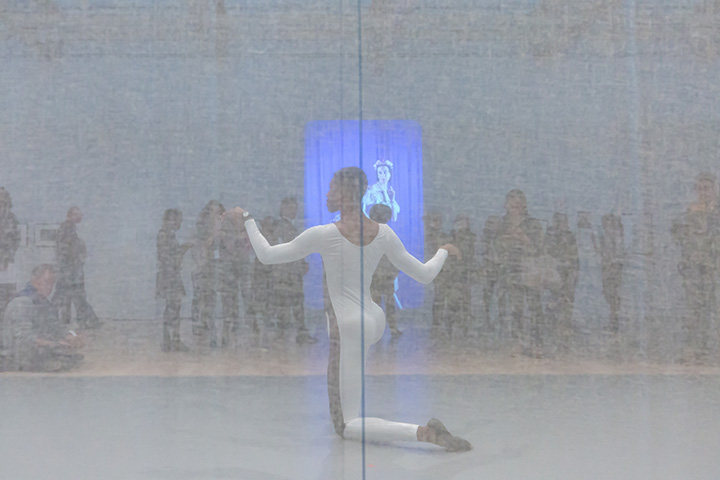
Being: New Photography 2018 at The Museum of Modern Art, March 18, 2018 – August 19, 2018

“The Museum of Modern Art presents Being: New Photography 2018, the latest presentation in MoMA’s celebrated New Photography exhibition series. Since its inception in 1985, New Photography has introduced more than 100 artists from around the globe, and it is a key component of the Museum’s contemporary program. Every two years, New Photography presents urgent and compelling ideas in recent photography and photo-based art. This year’s edition, Being, asks how photography can capture what it means to be human. The exhibition includes over 80 new and recent works by 17 artists from eight countries. While at various stages in their careers, all are presenting their work at the Museum for the first time.

At a time when questions about the rights, responsibilities, and dangers inherent in being represented—and in representing others—are being debated around the world, the works featured in Being call attention to assumptions about how individuals are depicted and perceived. Many challenge the conventions of photographic portraiture, or use tactics such as masking, cropping, or fragmenting to disorient the viewer. In others, snapshots or found images are taken from their original context and placed in a new one to reveal hidden stories. While some of the works might be considered straightforward representations of individuals, others do not include images of the human body at all. Together, they explore how personhood is expressed today, and offer timely perspectives on issues of privacy and exposure; the formation of communities; and gender, heritage, and psychology.” — MoMA

Installation photographs by Corrado Serra.

Adelita Husni-Bey. The Council, 2018

Andrzej Steinbach. Untitled from the series Figur I, Figur II, 2015

Andrzej Steinbach. Untitled from the series Gesellschaft beginnt mit drei, 2017

Aida Muluneh. Left to right: Fragments, The Morning Bride, Strength in Honor, The Departure, 2016

Left: Paul Mpagi Sepuya. A Sitting for Matthew, 2015. Center and right: Em Rooney. Pictures, Keychains, Freedom Ladder2016; Elliot2015; Outer Frame for Elliot (The Sawdust Ring), 2015

Left: Paul Mpagi Sepuya. Left to right: Untitled, 2017; A Ground (0083), 2015; Mirror Ground Study (_1990600), 2016

Huong Ngo and Hong-An Truong. The opposite of looking is not invisibility. The opposite of yellow is not gold, 2016

Stephanie Syjuco. Left to right: Cargo Cults: Head Bundle, Cargo Cults: Java Bunny, 2013-16

Left: Shilpa Gupta. Untitled, 2014. Right: Stephanie Syjuco. Cargo Cults: Basket Woman, 2013-16

Front: Carmen Winant. My Birth, 2018

Harold Mendez. Left to right: At the edge of the Necrópolis, Consent not to be a single being, Sin nombre, 2017-18

B. Ingrid Olson. Left to right: Felt Angle, box for standing, 2017; Headbox, 2017; Model for a folded room, bound girdle, 2017

B. Ingrid Olson. Left to right: Firing Distance, Surrounding Bone, 2016; Mutter: skeleton of the house under construction, 2017

Sofia Borges. Left to right: Yellow Chalk, 2017; Painting, Brain and Face, 2017

Joanna Piotrowska. Left to right: XXXI, FROWST, 2013-14; Untitled, 2016; XXIII, FROWST, 2013-14; Untitled, 2016; XXXIII, FROWST, 2013-14

Being: New Photography 2018 is organized by Lucy Gallun, Assistant Curator, Department of Photography.

Unknown Tibet: The Tucci Expeditions and Buddhist Painting at Asia Society Museum, through May 20, 2018

Photographs by Corrado Serra.

“The world knew very little about the Himalayan region when Italian scholar and explorer Giuseppe Tucci (1894–1984) began his work around one hundred years ago. His contributions to the understanding of Tibet, including Tibetan Buddhism, in the West have been enormous and the materials he was able to gather for future study impressive. Unknown Tibet: The Tucci Expeditions and Buddhist Painting presents a selection of the paintings he acquired during his travels. Tucci obtained expedition permits that included permission to acquire and export original source materials for scientific study. The paintings he acquired were purchased, gifted, or found and deemed too badly damaged or incomplete for cult use by the Tibetan communities. Those in this exhibition, all recently conserved, are now in the collection and care of the Museum of Civilisation-Museum of Oriental Art “Giuseppe Tucci” in Rome, to which Tucci and his wife Francesca Bonardi Tucci bequeathed all of their possessions.

Tucci’s life was framed by two World Wars, a worldwide economic depression, and—shortly after his last journey to Tibet—the destruction of Tibetan monastic culture. The turbulent times and the four years Tucci spent in the military during World War I—two of which were at the front line—had a profound effect on him. He was a highly intellectual, multi-lingual scholar with an antipathy to military solutions and a dedication to the pursuit of intercultural dialogue. During his lifetime, he received many high honors from many countries in Europe and Asia, and his scientific legacy is still fundamental to the research of Tibetan culture today. Tucci’s bibliography of more than four hundred entries attests to the expansiveness of his interests and talents.

Tucci was also one of the most important explorers of the century. Among his scientific travels were eight major expeditions to Tibet, from 1928 to 1948, which are the focus of this exhibition. The selection of paintings and reproductions of photographs from three Italian photographers represent the roughly five thousand miles Tucci trekked across the Tibetan cultural zone, which extends far beyond the present borders of the Tibetan Autonomous Region in China. They also challenge us to envision very distant points in time and place: Italy at the beginning of the twentieth century, pre-modern Tibet, and the culture of ancient Tibet that expanded and blossomed from the twelfth century.” — Introductory Wall Text

Right: Amitāyus, ca. 16th century.

Left: Śākyamuni in the Bhadrakalpa, 15th century. Center: Buddha Śākyamuni, 15th century. Right: Buddha Śākyamuni, 18th century

The Sixteen Arhats (Neten, gNas brtan) – Nāgasena Arhat, 17th century

The Sixteen Arhats (Neten, gNas brtan) – Nāgasena Arhat, 17th century

Seated Buddha in Dharmachakra-mudra, probably the Buddha Shakyamuni, India, Uttar Pradesh; Gupta period, ca. late 5th–early 6th century

Left to right: A Bhutanese Hierarch Jigme Sengge (‘Jigs med seng ge), Last quarter of 18th century; Drikungpa or Drukpa Kagyu Lama, 16th century; Guru Rinpoche and his Eight Emanations, 16th-17th centuries; Tamdrin and other emanations of Guru Rinpoche, 19th century; Padmasaṃbhava and the teaching activities of Guru Rinpoche, 18th century

Installation view

Left to right: Green Tārā (Śyāmatārā, sGrol ljang), Mid-19th century; Avalokiteśvara Ṣaḍakṣarī (sPyan ras gzigs yi ge drug pa), 19th century; Heruka, 19th century; Uṣṇīṣavijayā (gTsug tor rnam rgyal ma), 19th century; White Tārā (Sitatārā, sGrol dkar), 19th century

Left: Vajradhātumaṇḍala (rDo rje dbyings kyi dkyil ’khor), 1875

Installation view

Left: Butön Rinchendrub (Bu ston rin chen grub), 16th century

Left: Panchen Lama, Early 17th century. Right: Tsongkhapa and scenes from his life, 18th century

Left: Vaiśravana, 14th century. Center: Bardo Thödrol (bar do thos grol) Vajra-Heruka in Yab-Yum, ninth day meditation, 18th century (?). Right: Black Garuḍa (Khyung nag po), 18th century

Left: Black Garuḍa (Khyung nag po), 18th century. Right: Bon po deity Tsewang Rigzin (Tshe dbang rig ’dzin), 19th century.

Installation view

Left: Bon po deity Tsewang Rigzin (Tshe dbang rig ’dzin), 19th century. Right: Astrological / Divination chart (Sipaho, Srid pa ho), 19th century

Unknown Tibet: The Tucci Expeditions and Buddhist Painting was organized was organized by Dr. Adriana Proser, Asia  Society’s John H. Foster Senior Curator for Traditional Asian Art, and guest curator Dr. Deborah Klimburg‐Salter, University Professor Emeritus, CIRDIS, Institute for Art History, University of Vienna; and Associate, Department of South Asian Studies, Harvard University.

Nick Mauss: Transmissions at Whitney Museum of American Art, March 16 – May 14, 2018

Photographs by Corrado Serra.

“For this exhibition, Nick Mauss (b. 1980, New York, NY) explores the history of American modernist ballet, continuing a hybrid mode of working he has pursued for a decade in which the roles of curator, artist, choreographer, scholar, and performer converge. New works by Mauss—ranging from scores for a ballet to scenic design, décor elements, and live performance—will appear alongside pieces from the Whitney’s collection and those of other institutions, including the Kinsey Institute for Sex, Gender, and Reproduction and the Jerome Robbins Dance Division of the New York Public Library. Central to the exhibition is a ballet conceived by Mauss in close collaboration with dancers, in response to archival material and the constellation of objects in the show.

In the current vogue for contemporary dance in museums, the legacy of ballet remains relatively unexamined. This exhibition will consider the intersections of ballet with the visual arts, theater, fashion, and new representations of the body. Focusing on New York’s role in a transatlantic exchange of ballet and surrealist aesthetics, the show presents a vision of American modernist ballet as an artistic catalyst, filter, and vibrant, shared vocabulary. Through the intertwined languages of ballet, painting, photography, and sculpture, Mauss also mines a pre-queer history within the realm of supposedly straight cultural production of the 1930s and 1940s. The exhibition itself is a hybrid of a historical presentation and an unfolding artistic proposition that forges new modes of attention, viewing, and an engagement with history in the present.” — Whitney Museum

Top: Nick Mauss, re-creation of the costume Paul Cadmus designed for Filling Station, 2018. Bottom: Elie Nadelman, Dancing Figure, c.1916-18.

Nick Mauss: Transmissions is organized by Scott Rothkopf, Deputy Director for Programs and Nancy and Steve Crown Family Chief Curator, and Elisabeth Sussman, Sondra Gilman Curator of Photography, with Greta Hartenstein, senior curatorial assistant, and Allie Tepper, curatorial project assistant.

Human+: The Future of Our Species at Palazzo delle Esposizioni, Roma, through July 1, 2018

“Cyborgs, superhumans and clones. Evolution or extinction? What does it mean to be a human today. What will it feel like to be a human a hundred years from now? Technological capabilities are increasing at a rapid pace—should we continue to embrace modifications to our minds, bodies and daily lives, or are there boundaries we shouldn’t overstep?

HUMAN+: The Future of Our Species is an exhibition that explores potential future trajectories of humankind by considering the implications of both historical and emerging technologies. The ‘plus’ symbol in Human+ implies a positive direction for the future of our species. But what is that direction? For the majority of the 20th century, progress has been measured by increased speed and efficiency—faster, better, stronger—but the side effects have been fatter, sadder and exhausted. Our definition of success needs to be recalibrated.

The 21st century will be characterized by the confluence of fields such as biotechnology, robotics and artificial intelligence. Manipulating biological processes, controlling digital and mechanical machines and creating non-biological intelligence above and beyond what humans can comprehend— these advances raise ethical questions about the appropriation of life and the alteration of the self. The converging forces of these and other currents will lead us to a new and unknown place.

From subtle provocations to grand gestures, the artworks in this exhibition consider how these changes might be adopted and assimilated. The value in speculation is not prediction, but reflection. What are we striving for? We are designing our future, consciously or not, and every creator, whatever their discipline, will play a part in this process. In this exhibition artists, designers and scientists speculate on and imagine many possible futures. Now it’s your turn.” — Palazzo delle Esposizioni

Section 1: Augmented Abilities

Aimée Mullins, Gambe da ghepardo (Cheetah legs). Installation. Photo: Howard Schatz

Lorenz Potthast, Casco deceleratore (Decelerator helmet),  2014. Installation. Photo courtesy the artist.

Section 2: Encountering Others

Louis-Philippe Demers, Area V5: Robotica sociale interattiva (Interactive social robotics), 2009-2010. Installation. Photo: CCCB Barcelona

Louis-Philippe Demers, Detail of Area V5: Robotica sociale interattiva (Interactive social robotics), 2009-2010

Yves Gellie, Part of a series of portraits of humanoid robots. Versione umana 2.0 (Human version 2.0), 2007 – 2009. Photographic print. Photo courtesy the artist. Courtesy Baudoin Lebon

Yves Gellie, Part of a series of portraits of humanoid robots. Versione umana 2.0 (Human version 2.0), 2007 – 2009. Photographic print. Photo courtesy the artist. Courtesy Baudoin Lebon

Section 3: Authoring Environments

Laura Allcorn, Progetto di impollinazione umana (Project of human pollination), 2009. Installation. Photo courtesy the artist

Anthony Dunne & Fiona Raby, Foraggieri (Foragers), 2009. Installation. Photo: Jason Evans

Section 4: Life at the Edges

Agatha Haines, Trasfigurazioni (Transfiguration), 2013. Installation. Photo: Agatha Haines

Tissue Culture & Art Project, Oron Catts & Ionat Zurr. Bambole scacciapensieri semiviventi (Semi-alive dolls that make thoughts disappear). Installation, 2000. Photo Courtesy CCCB Barcelona – La Fotografica 2015

Section 5: Human, Superhuman?

Donato Piccolo, Leonardo sogna le nuvole (Leonardo dreams of clouds), 2014. Kinetic sculpture (latex, oil, aluminum, smoke machine, electronic components), cm 120 x 45 x 23. Courtesy l’artista e Galerie Mazzoli. Photo: Angelo Sabatiello

Donato Piccolo, Detail of Leonardo sogna le nuvole (Leonardo dreams of clouds), 2014

Section 5 was curated by Valentino Catricalà, Fondazione Mondo Digitale.

The exhibition was conceived and shown for the first time at Science Gallery, Trinity College Dublin. The touring version is co-produced by Science Gallery, Trinity College Dublin and Centre de Cultura Contemporània de Barcelona.

Human+: The Future of Our Species was curated by Cathrine Kramer.

Images courtesy Palazzo delle Esposizioni.

The EY Exhibition: Picasso 1932 – Love, Fame, Tragedy at Tate Modern, March 8 – September 9, 2018

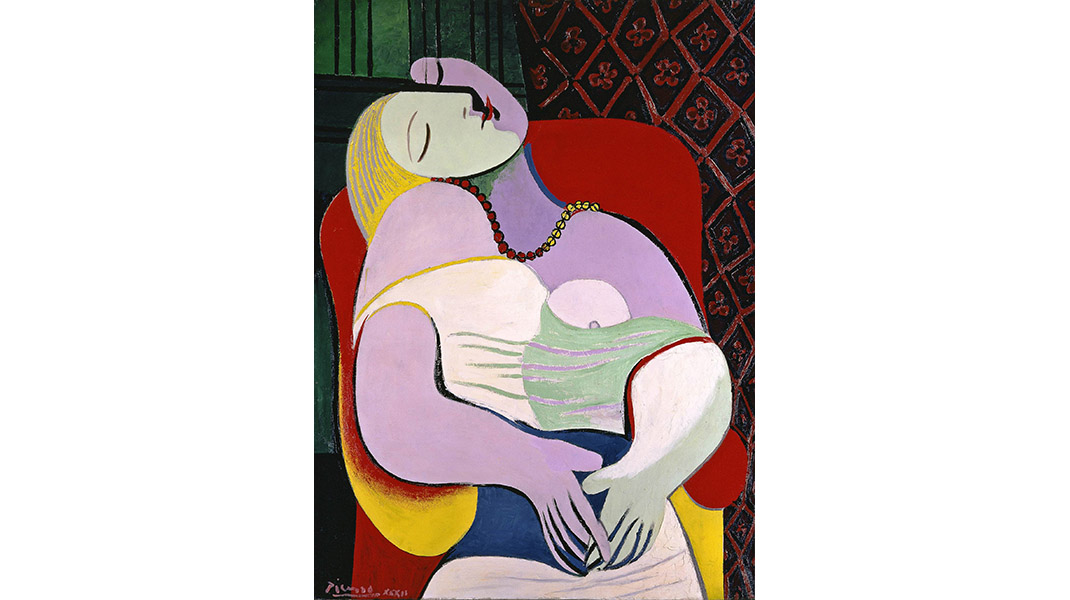
“45 years after the artist’s death, Tate Modern stages its first ever solo exhibition of Pablo Picasso’s work, one of the most ambitious shows in the museum’s history. The EY Exhibition: Picasso 1932 – Love, Fame, Tragedy takes visitors on a month-by-month journey through 1932, a time so pivotal in Picasso’s life and work that it has been called his ‘year of wonders’. More than 100 outstanding paintings, sculptures and works on paper demonstrate his prolific and restlessly inventive character, stripping away common myths to reveal the man and the artist in his full complexity and richness.” — Tate Modern

Achim Borchardt-Hume, Director of Exhibitions, Tate Modern, and co-curator of the exhibition said: ‘Picasso famously described painting as “just another form of keeping a diary”. This exhibition invites you to get close to the artist, to his ways of thinking and working, and to the tribulations of his personal life at a pivotal moment in his career. Visitors will be able to walk through 12 months of Picasso’s life and creative decision-making, to see many of his most ground-breaking and best-loved works in a surprising new light.’

Nancy Ireson, Curator of International Art, Tate, and co-curator of the exhibition said:
‘We are thrilled to be reuniting some of Picasso’s greatest works of art for the first time in 86 years, many of which are rarely shown in public. Displaying them in the order in which they were made demonstrates just how intensely creative 1932 was for Picasso, revealing his explosive energy to a new generation’

Pablo Picasso, Nude Woman in a Red Armchair (Femme nue dans un fauteuil rouge), 1932. Oil paint on canvas, 1299 x 972 mm. Tate. Purchased 1953 © Succession Picasso/DACS London, 2017

Pablo Picasso, Reclining Nude (Femme nue couchée), 
1932. Oil paint on canvas, 
1300 x 1610 mm. 
Private Collection
© Succession Picasso/DACS London, 2018

Pablo Picasso, 
The Rescue (Le sauvetage), 1932
. Oil paint on canvas, 
1445 x 1122 x 77 mm. 
Fondation Beyeler, Riehen/Basel, Sammlung Beyeler
© Succession Picasso/DACS London, 2018

Pablo Picasso, 
Woman on the Beach (Nu sur la plage), 
1932. 
Oil paint on canvas
, 330 x 400 mm
. The Penrose Collection © Succession Picasso/DACS London, 2018

Pablo Picasso, 
Le Rêve (The Dream), 
1932. Oil paint on canvas, 1299 x 968 mm. 
Private collection 
© Succession Picasso/DACS London, 2018

Pablo Picasso, Young Woman with Mandolin (Jeune Fille à la mandoline), 1932. Oil paint on board,  838.2 x 669.9 x 63.5 mm. The University of Michigan Museum of Art, Ann Arbor, Michigan. Gift of The Carey Walker Foundation © Succession Picasso/DACS London, 2018

Pablo Picasso, 
Nude, Green Leaves and Bust (Femme nue, feuilles et buste), 
1932
. Oil paint on canvas, 
1620 x 1300 mm
. Private Collection
© Succession Picasso/DACS London, 2018

Cecil Beaton. 
Pablo Picasso, rue La Boétie, 1933, Paris 
©The Cecil Beaton Studio Archive at Sotheby’s

Images courtesy Tate Modern.

Public Parks Private Gardens: Paris to Provence at The Met Fifth Avenue, March 12 – July 29, 2018

Photographs by Corrado Serra.

“Following in the footsteps of 19th-century artists who celebrated the out-of-doors as a place of leisure, renewal, and inspiration, the exhibition Public Parks, Private Gardens: Paris to Provence explores horticultural developments that reshaped the landscape of France and grounded innovative movements—artistic and green—in an era that gave rise to Naturalism, Impressionism, and Art Nouveau. As shiploads of exotic botanical specimens arrived from abroad and local nurserymen pursued hybridization, the availability and variety of plants and flowers grew exponentially, as did the interest in them. The opening up of formerly royal properties and the transformation of Paris during the Second Empire into a city of tree-lined boulevards and parks introduced public green spaces to be enjoyed as open-air salons, while suburbanites and country-house dwellers were prompted to cultivate their own flower gardens. By 1860, the French journalist Eugène Chapus could write: ‘One of the pronounced characteristics of our Parisian society is that . . . everyone in the middle class wants to have his little house with trees, roses, and dahlias, his big or little garden, his rural piece of the good life’.

The important role of parks and gardens in French life during this period is richly illustrated by paintings, drawings, photographs, prints, illustrated books, and objects in The Met collection by artists extending from Camille Corot to Henri Matisse, many of whom were gardeners themselves. Anchored by Impressionist scenes of outdoor leisure, the presentation offers a fresh, multisided perspective on best-known and hidden treasures housed in a Museum that took root in a park: namely, New York’s Central Park, which was designed in the spirit of Parisian public parks of the same period.” — The Met

Center: Louis Martin Berthault, Fruit or flower basket, designed 1812; Sèvres Manufactory, 1823

Installation view of section “Parks for the Public”

Camille Pissarro, The Garden of the Tuileries on a Spring Morning and The Garden of the Tuileries on a Winter Afternoon, 1899

Installation view

Installation view

Installation view of section “Revival of Floral Still Life”

Left: Edgar Degas, A Woman Seated beside a Vase of Flowers (Madame Paul Valpinçon?), 1865. Right: Claude Monet, Chrysanthemums, 1882

Left: Vincent van Gogh, Sunflowers, 1887. Center: Claude Monet, Bouquet of Sunflowers, 1881. Right: Vincent van Gogh, Irises, 1890

Installation view of section “Private Gardens”

Left: Paul Cézanne, The Pool at Jas de Bouffan, ca. 1885–86. Right: Berthe Morisot, The Gate at Bougival, 1884

Claude Monet. Left to right: Bridge over a Pond of Water Lilies, 1899; Camille Monet in the Garden at Argenteuil, 1876; Garden at Sainte-Adresse, 1867

Installation view of section “Portrait in the Garden”

Left: Mary Cassatt, Lydia Crocheting in the Garden at Marly, 1880. Center: Mary Cassatt, Portrait of a Young Girl, 1899. Right: Edouard Manet, Madame Manet (Suzanne Leenhoff) at Bellevue, 1880

Left: Franz Xaver Winterhalter, The Empress Eugénie (Eugénie de Montijo, Condesa de Teba), 1854. Center: Edouard Vuillard, Garden at Vaucresson, 1920; reworked 1926, 1935, 1936. Right: Pierre Bonnard, From the Balcony, 1909

Left: Henri de Toulouse-Lautrec, The Streetwalker, ca. 1890–91. Right: Berthe Morisot, Young Woman Knitting, ca. 1883

The exhibition has been organized by Susan Alyson Stein, Engelhard Curator of Nineteenth-Century European Painting, Department of European Paintings, with Guest Curator Colta Ives, Curator Emerita, Department of Drawings and Prints, and the assistance of Research Associate Laura D. Corey, Department of European Paintings.

16th Annual Orchid Show at New York Botanical Garden’s Enid A. Haupt Conservatory, March 3 – April 22, 2018

Photographs by Corrado Serra.

“The 2018 edition of The Orchid Show at The New York Botanical Garden is exhibiting commissioned works by acclaimed Belgian floral artist Daniel Ost. Entering its 16th year, the popular exhibition, showcasing thousands of dramatically displayed orchids in the Botanical Garden’s historic Enid A. Haupt Conservatory, features a series of installations crafted by Ost, each a living sculpture that celebrates the individual beauty of these stunning flowers.

One of the world’s leading floral designers, Ost uses flowers as a means of expression. He identifies himself as a bloembinder, the Dutch term for an artist who works with flowers. His large-scale artworks have been tailored to the unique environment of the landmark Victorian style Haupt Conservatory, complementing the architecture of the building while creating a transformative, dazzling spectacle of color, form, and texture. Bamboo, arranged in grids and calling to mind the glass grids of the Conservatory, and clear tubing, meant to both evoke water and connect to the Conservatory’s glass, are among the materials employed in his artful installations to which individual orchids are attached so that each flower and form can be seen and appreciated. The works pay homage to his training in ikebana, the Japanese art of flower arranging. In ikebana, artists value the ideas of wabi-sabi, a philosophy that finds beauty in imperfection, asymmetry, and impermanence.” — New York Botanical Garden

Zoe Leonard: Survey at Whitney Museum of American Art, March 2 – June 10, 2018

“Over the past three decades, Zoe Leonard (b. 1961) has produced work in photography, sculpture, and installation that is significant for its lyrical observations of daily life, as well as for its rigorous attention to the politics and conditions of image-making and display. Her work is wideranging in both form and subject matter, and addresses themes including gender and sexuality, loss and mourning, migration, displacement, and the urban landscape. Leonard’s approach to photography engages with its history as a utilitarian, vernacular, and popular medium; similarly, her sculptures are often composed of found objects—commonplace items that bear signs of their use. Through repetition, subtle changes of perspective, and shifts of scale, Leonard frames the quotidian in ways that challenge the viewer to reexamine the familiar.

Zoe Leonard: Survey is, as titled, a “survey” exhibition intended to give a broad overview of the artist’s work. But “to survey” is also to look out at a place or site and gauge it from multiple viewpoints in an effort to understand and describe it. It is this kind of mapping that Leonard undertakes both in her work and through the form of the exhibition. She encourages us to consider the Museum itself as a site and to question the conditions—be they cultural, social, economic, or political—that inflect our subjective points of view. Survey offers an opportunity to reflect on the nature of perception and to take the measure of our own relationship to the world.” — Introductory Wall Text

Zoe Leonard, Niagara Falls no.4, 1986/1991.Gelatin silver print, 41 7/8 × 29 1/4 in. (106.36 × 74.3 cm). Collection of the artist; courtesy Galerie Gisela Capitain, Cologne, and Hauser & Wirth, New York.

Zoe Leonard, Dress + Suit (for Nancy), 1990/1995. Gelatin silver print, 30 1/8 × 21 7/6 in. (76.52 × 54.45 cm). Collection of the artist; courtesy Galerie Gisela Capitain, Cologne, and Hauser & Wirth, New York.

Zoe Leonard, The Fae Richards Photo Archive, 1993-96, (detail), 78 gelatin silver prints and 4 chromogenic prints, dimensions variable. Whitney Museum of American Art, New York; Purchase, with funds from the Contemporary Painting and Sculpture Committee and the Photography Committee.

Installation view of Zoe Leonard, Strange Fruit, 1992-97. Orange, banana, grapefruit, lemon, and avocado peels with thread, zippers, buttons, sinew, needles, plastic, wire, stickers, fabric, and trim wax, dimensions variable. Collection of the Philadelphia Museum of Art; purchased with funds contributed by the Dietrich Foundation and with the partial gift of the artist and the Paula Cooper Gallery, 1998. Image courtesy the Philadelphia Museum of Art. Photograph by Graydon Wood.

Zoe Leonard, TV Wheelbarrow, 2001, Dye transfer print, 20 × 16 in. (50.8 × 40.6 cm). Collection of the New York Public Library; Funds from the Estate of Leroy A. Moses, 2005.

Zoe Leonard, Roll #11, 2006/2016. Chromogenic print, 22 × 18 1/2 in. (55.9 × 47 cm). Collection of the artist; courtesy Galerie Gisela Capitain, Cologne, and Hauser & Wirth, New York.

Zoe Leonard, Observation Point/Observation Point, 2011. Two postcards, 3 5/16 × 5 1/2 in.(8.47 × 13.97 cm) each. Collection of the artist.

Zoe Leonard, New York Harbor I, 2016. Two gelatin silver prints, 21 × 17 1/8 in. (53.3 × 43.5 cm) each. Collection of the artist; courtesy Galerie Gisela Capitain, Cologne, and Hauser & Wirth, New York.

Installation view of Zoe Leonard, detail of How to Make Good Pictures, 2016. 429 books, 25 1/4 × 6 1/8 × 248 3/4 in. (64.1 × 15.6 × 631.8 cm) overall. Collection of the artist; courtesy Galerie Gisela Capitain, Cologne. Photograph by Simon Vogel.

Zoe Leonard, You see I am here after all, 2008, (detail), 3,851 vintage postcards, 11 ft 10 ½ in x 147 ft.. Installation view Dia: Beacon, Beacon, NY. Courtesy of the artist and Galerie Gisela Capitain, Cologne. Photo by Bill Jacobson, New York.

Zoe Leonard: Survey is organized by Bennett Simpson, Senior Curator, with Rebecca Matalon, Curatorial Associate, The Museum of Contemporary Art, Los Angeles. The installation at the Whitney Museum is overseen by Elisabeth Sherman, Assistant Curator.

Images courtesy Whitney Museum of American Art.

Grant Wood: American Gothic and Other Fables at Whitney Museum of American Art, March 2 – June 10, 2018

“Grant Wood (1891–1942) became an overnight celebrity following the debut of American Gothic, his now-iconic portrait of a Midwestern farm couple, at the Art Institute of Chicago in 1930. Only a year earlier, he had been a relatively unknown painter of French Impressionist–inspired landscapes in Cedar Rapids, Iowa. His short mature career, from 1930 to 1942, spanned some of the most trying, soul-searching years for the United States, as the country grappled with the aftermath of an economic meltdown and engaged in vigorous, sometimes bitter debates over its core national identity. What emerged as a powerful strain in art and popular culture during this period was a pronounced reverence for the values of community, hard work, and self-reliance that were seen as fundamental to the national character and embodied most fully by America’s small towns and farms. Wood’s farmscapes and portraits epitomized these sentiments. His romanticized depictions of a seemingly more innocent time elevated him into a popular, almost mythic national figure, celebrated for his art and his promotion of Regionalism, the representational style associated with the Midwest that dominated American art during the Depression.

Today, it is clear that the enduring power of Wood’s art owes as much to its mesmerizing psychological ambiguity as to its archetypal Midwestern imagery. An eerie silence and disquiet run throughout his work, complicating its bucolic, elegiac appearance. The tension between his desire to recapture the dreamworld of his childhood and his instincts as a shy, sexually repressed Midwesterner seeped into his art, endowing it with an unsettling solitude and chilling sense of make-believe. Wood’s conflicted relationship with the homeland he professed to adore may be a truer expression of the unresolved tensions in the American experience than he might ever have imagined, more than seventy-five years after his death.” ౼ Introductory Wall Text

Grant Wood, Corn Cob Chandelier for Iowa Corn Room, 1925. Copper, iron, and paint, 94 x 32 x 34 in. (238.8 x 81.3 x 86.4 cm). Cedar Rapids Museum of Art, Iowa; gift of John B. Turner II 81.17.3. © Figge Art Museum, successors to the Estate of Nan Wood Graham/Licensed by VAGA, New York, NY. Photograph © 2017 Mark Tade

Grant Wood, American Gothic, 1930. Oil on composition board, 30 3⁄4 x 25 3⁄4 in. (78 x 65.3 cm). Art Institute of Chicago; Friends of American Art Collection 1930.934. © Figge Art Museum, successors to the Estate of Nan Wood Graham/Licensed by VAGA, New York, NY. Photograph courtesy Art Institute of Chicago/Art Resource, NY

Grant Wood, Parson Weems’ Fable, 1939. Oil on canvas, 38 3⁄8 x 50 1⁄8 in. (97.5 x 127.3 cm). Amon Carter Museum of American Art, Fort Worth, Texas 1970.43. © Figge Art Museum, successors to the Estate of Nan Wood Graham/Licensed by VAGA, New York, NY

Grant Wood, The Midnight Ride of Paul Revere, 1931. Oil on composition board, 30 x 40 in. (76.2 x 101.6 cm). The Metropolitan Museum of Art, New York; Arthur Hoppock Hearn Fund, 1950. © Figge Art Museum, successors to the Estate of Nan Wood Graham/Licensed by VAGA, New York, NY. Image © The Metropolitan Museum of Art, New York; courtesy Art Resource, NY

Grant Wood, Boy Milking Cow, 1932. Oil on canvas, cut out and mounted on fiberboard, 71 1⁄4 x 63 1⁄4 in. (181 x 160.7 cm) framed. Coe College, Permanent Art Collection, Cedar Rapids, Iowa; gift of the Eugene C. Eppley Foundation. © Figge Art Museum, successors to the Estate of Nan Wood Graham/Licensed by VAGA, New York, NY. Photograph by Mark Tade, 2005

Grant Wood, Saturday Night Bath, 1937. Charcoal on paper, 24 1⁄16 x 26 15⁄16 in. (61.1 x 68.4 cm). Museum of Fine Arts, Houston; gift of Dr. Jack Tausend in memory of Mary Nesbit Tausend 2004.1603. © Figge Art Museum, successors to the Estate of Nan Wood Graham/Licensed by VAGA, New York, NY

Grant Wood, Spring in Town, 1941. Oil on wood, 26 x 24 1⁄2 in. (66 x 62.2 cm). Swope Art Museum, Terre Haute, Indiana 1941.30. © Figge Art Museum, successors to the Estate of Nan Wood Graham/Licensed by VAGA, New York, NY

Grant Wood, Spring Turning, 1936. Oil on composition board, 18 1⁄4 x 40 1⁄8 in. (46.4 x 101.9 cm). Reynolda House Museum of American Art, Winston-Salem, North Carolina; gift of Barbara B. Millhouse 1991.2.2. © Figge Art Museum, successors to the Estate of Nan Wood Graham/Licensed by VAGA, New York, NY. Image courtesy Reynolda House Museum of American Art, affiliated with Wake Forest University

Grant Wood: American Gothic and Other Fables is organized by Barbara Haskell, Curator, with Sarah Humphreville, Senior Curatorial Assistant.

Images courtesy Whitney Museum of American Art.

All Too Human: Bacon, Freud and a Century of Painting Life at Tate Britain, February 28 – August 27, 2018

“A landmark exhibition at Tate Britain celebrates how artists have captured the intense experience of life in paint. All Too Human: Bacon, Freud and a Century of Painting Life showcases around 100 works by some of the most celebrated modern British artists, with Lucian Freud and Francis Bacon at its heart. It reveals how their art captures personal and immediate experiences and events, distilling raw sensations through their use of paint, as Freud said: ‘I want the paint to work as flesh does’. Bringing together major works by Walter Sickert, Stanley Spencer, Michael Andrews, Frank Auerbach, R.B. Kitaj, Leon Kossoff, Paula Rego, Jenny Saville, Lynette Yiadom-Boakye and many others, this exhibition makes poignant connections across generations of artists and tells an expanded story of figurative painting in the 20th century and into the 21st century.” ౼ Tate Britain

Cecily Brown, born 1969. Boy with a Cat, 2015. Oil, pastel on linen, 1092 x 1651 mm. Collection of Danny and Lisa Goldberg © Cecily Brown. Photo: Richard Ivey

Euan Uglow, 1932-2000. Georgia,
1973
. Oil paint on canvas, 
838 x 1118 mm
. British Council Collection 
© The Estate of Euan Uglow

Francis Bacon, 1909-1992. Portrait, 1962. Oil paint on canvas, 1980 x 1415 mm. Museum für Gegenwartskunst Siegen. The Lambrecht-Schadeberg Collection/Winners of the Rubens Prize of the City of Siegen
© The Estate of Francis Bacon. All rights reserved. DACS, London.

Leon Kossoff, born 1926. Children’s Swimming Pool, Autumn Afternoon, 1971. Oil paint on board, 1680 x 2140 x 56 mm. Tate © Leon Kossoff

Lucian Freud, 1922-2011. Girl with a White Dog, 1950-1. Oil paint on canvas, 762 x 1016 mm. © Tate

Lynette Yiadom-Boakye, born 1977. 
Coterie Of Questions, 
2015.  
Oil paint on canvas, 
2000 x 1300 x 37 mm. 
Private collection. Courtesy Corvi-Mora, London and Jack Shainman Gallery, New York
© Lynette Yiadom-Boakye

Michael Andrews, 1928-1995. 
Melanie and Me Swimming, 1978-9. Acrylic paint on canvas, 1955 x 1959 x 77 mm. Tate
© The estate of Michael Andrews

Paula Rego, born 1935. The Family, 1988. Acrylic paint on canvas backed paper, 2134 x 2134 mm. Marlborough International Fine Art © Paula Rego

R.B. Kitaj. 1932-2007. The Wedding. 1989-93. Oil paint on canvas, 1829 x 1829 mm. Tate
© The estate of R. B. Kitaj

All Too Human: Bacon, Freud and a Century of Painting Life is curated at Tate Britain by Elena Crippa, Curator, Modern and Contemporary British Art, and Laura Castagnini, Assistant Curator. The exhibition will tour to the Museum of Fine Arts, Budapest later in 2018.

Images courtesy Tate Britain.

T.C. Cannon: At the Edge of America at Peabody Essex Museum (PEM), March 3 – June 10, 2018

“The Peabody Essex Museum (PEM) presents an exhibition celebrating one of the most influential and inventive Native American artists of the 20th-century, T.C. Cannon (1946-1978, Caddo/Kiowa). T.C. Cannon: At the Edge of America explores the dynamic creative range and legacy of an artist whose life was cut short at age 31. Through nearly 90 works, including 30 major paintings, works on paper, poetry and musical recordings, Cannon’s distinctive and affecting worldview shines through in this groundbreaking exhibition that is organized by PEM and will tour the country through 2019. This is the first major traveling exhibition of his work since 1990.

Deeply personal yet undeniably political, Cannon’s artwork adeptly channels his cultural heritage, experience as a Vietnam War veteran, and the turbulent social and political climate that defined 1960s and ‘70s America. Amid ongoing national and global conversations about ethnic identity, social justice, land rights and cultural appropriation, Cannon’s work continues to engage issues that are as relevant now as they were 50 years ago. “Never shying from the complexity and nuance of identity politics, Cannon interrogated American history and popular culture through his Native lens and showed us that Native American history and culture are integral to the American experience,” says Karen Kramer, exhibition curator and PEM’s Curator of Native American and Oceanic Art and Culture.” ౼ PEM

T. C. Cannon (1946–1978, Caddo/Kiowa), Two Guns Arikara, 1974–77. Acrylic and oil on canvas. Anne Aberbach + Family, Paradise Valley, Arizona. © 2017 Estate of T. C. Cannon. Photo by Thosh Collins

T. C. Cannon (1946–1978, Caddo/Kiowa), Self-Portrait in the Studio, 1975. Oil on canvas. Collection of Richard and Nancy Bloch. © 2017 Estate of T. C. Cannon. Photo by Addison Doty.

T. C. Cannon (1946–1978, Caddo/Kiowa), His Hair Flows Like a River, 1973. Oil on canvas. Anne Aberbach + Family, Paradise Valley, Arizona. © 2017 Estate of T. C. Cannon. Photo by Thosh Collins.

T. C. Cannon (1946–1978, Caddo/Kiowa), Waiting for the Bus (Anadarko Princess), 1977. Lithograph. Anne Aberbach + Family, Paradise Valley, Arizona. © 2017 Estate of T. C. Cannon. Photo by Thosh Collins.

T. C. Cannon (1946–1978, Caddo/Kiowa), Favorite Wife, 1972. Oil on canvas. Collection of George Oswalt. © 2017 Estate of T. C. Cannon. Photo by Carla Cain.

T. C. Cannon (1946–1978, Caddo/Kiowa), A Remembered Muse (Tosca), 1978. Woodcut. Anne Aberbach + Family, Paradise Valley, Arizona. © 2017 Estate of T. C. Cannon. Photo by Thosh Collins.

T. C. Cannon (1946–1978, Caddo/Kiowa), Small Catcher, 1973–78. Oil on canvas. Collection of Gil Waldman and Christy Vezolles. © 2017 Estate of T. C. Cannon. Courtesy of the Heard Museum, Phoenix, Arizona. Photo by Craig Smith.

T. C. Cannon (1946–1978, Caddo/Kiowa), Indian with Beaded Headdress, 1978. Acrylic on canvas. Peabody Essex Museum. © 2017 Estate of T. C. Cannon. Photo by Kathy Tarantola.

T. C. Cannon (1946–1978, Caddo/Kiowa), Buffalo Medicine Keeper, about 1974. Acrylic and oil on canvas. William E. Weiss Memorial Fund Purchase, Buffalo Bill Center of the West, Cody, Wyoming. © 2017 Estate of T. C. Cannon.

T. C. Cannon (1946–1978, Caddo/Kiowa), Cloud Madonna, 1975. Acrylic on canvas. Collection of Charles and Karen Miller Nearburg, promised gift to the Hood Museum of Art, Dartmouth College, Dartmouth, New Hampshire. © 2017 Estate of T. C. Cannon.

T. C. Cannon (1946–1978, Caddo/Kiowa), On Drinkin’ Beer in Vietnam in 1967, after 1978. Lithograph. Private Collection. © 2017 Estate of T. C. Cannon. Photo by Allison White.

T. C. Cannon (1946–1978, Caddo/Kiowa), Collector #3, 1974. Acrylic and oil on canvas. Collection of Alexis Demirjian. © 2017 Estate of T. C. Cannon. Photo by Tim Nighswander/Imaging4Art.

T. C. Cannon (1946–1978, Caddo/Kiowa), Hopi with Manta, 1976. Oil on canvas. Anne Aberbach + Family, Paradise Valley, Arizona. © 2017 Estate of T. C. Cannon. Photo by Thosh Collins.

T. C. Cannon (1946–1978, Caddo/Kiowa), Law North of the Rosebud, 1971. Acrylic on canvas. Collection of Charles and Karen Miller Nearburg. © 2017 Estate of T. C. Cannon. Photo by Brad Flowers.

T. C. Cannon (1946–1978, Caddo/Kiowa), Abby of Bacabi, 1978. Oil on canvas. Fred Jones Jr. Museum of Art, University of Oklahoma, Norman, Oklahoma. © 2017 Estate of T. C. Cannon.

T. C. Cannon (1946–1978, Caddo/Kiowa), All the Tired Horses in the Sun, 1971–72. Oil on canvas. Tia Collection. © 2017 Estate of T. C. Cannon.

Portrait of T. C. Cannon, about 1965. Courtesy of Archives of the Institute of American Indian Arts.

Images courtesy Peabody Essex Museum.

2018 Triennial: Songs for Sabotage at New Museum, February 13, 2018 – May 27, 2018

Photographs by Corrado Serra.

“More than ever, images dominate our reality. The artists in “Songs for Sabotage” treat art as a form of propaganda that turns images on their head in order to reveal the ideologies and built worlds behind them. This tendency echoes the historical notion of sabotage, in which actors impede modes of production from the inside to disturb their normal function. These artists share a concern that entrenched powers of colonialism and institutionalized racism continue to exacerbate inequity. They respond by mapping the violent and isolating effects of these powers on bodies and communities, and by producing objects and images that memorialize individual acts of resistance. They make interventions into cities, infrastructures, and networks embedded in everyday life, proposing objects that might create common experience and disrupt these systems of control.

The artists in “Songs for Sabotage” offer models for dismantling and replacing the political and economic networks that envelop today’s global youth. They are further connected by deep engagement with the specificity of local context, addressing communities and landscapes from Hong Kong to Johannesburg to Athens. At the same time, they adopt a critical examination—and embrace—of the internationalism that links them, finding common cause as a generation living under a shared condition of precarity. Their works range widely in medium and form, including painted allegories for the administration of power, sculptural proposals to renew or destroy monuments, and cinematic works that contend with the ways identity is mobilized in our current era. Viewed in ensemble, these works provide models for working against a system that constantly threatens failure.” — Introductory Wall Text

Installation view of 4th floor

Tiril Hasselknippe, Balconies (støp i meg, støp), 2018.

Front: Diamond Stingily, E.L.G., 2018. Back: Series of artworks by Wilmer Wilson IV , 2017

Installation view of 4th floor

Gresham Tapiwa Nyaude: If you want to help us you need to understand, Part 1 and Part 2, 2018

Front: Tiril Hasselknippe: Balconies (støp i meg, støp), 2018. Back: Gresham Tapiwa Nyaud: left: Privilege of the Bed-ridden, 2018; right: The Red General, 2018

Left & right:  Artworks by Cian Dayrits. Center: Haroon Gunn-Salie, Senzenina, 2018.

Left: Paintings by Zhenya Machneva. Right: KERNEL (Pegy Zali, Petros Moris, and Theodoros Giannakis), As you said, things resist and things are resistant, 2018

Zhenya Machneva: left to right: CHP-14, 2016; Project: Landscape # 1 @ “On/Off”, 2012; Guillotine, 2018

Left: Paintings by Chemu Ng’ok. Right: Violet Dennison, M.O.O.P., 2018

Chemu Ng’ok: left to right: In Denial, 2016; Be-friend, 2017; Reflections, 2017; The Boundary Wall, 2017

Violet Dennison, M.O.O.P., 2018

Matthew Angelo Harrison, Prototype of Dark Silhouettes (detail), 2018

Matthew Angelo Harrison, Prototype of Dark Silhouettes (detail), 2018

Left: Painting by Dalton Paula. Right: Paintings by Tomm El-Saieh

Installation view of 2nd floor

Front: Daniela Ortiz, Burn el hielo, 2018. Back: Dalton Paula: left to right: Enfia a faca na bananeira, 2017; Pedrinha miudinha, 2017

Front: Daniela Ortiz, This land will never be fertile for having given birth to colonisers (Esta tierra jamás será fértil por haber parido colonos), 2018

Installation view of 2nd floor

Left: Claudia Martínez Garay, Cannon Fodder / Cheering Crowds, 2018. Right: Julia Phillips, Fixator (#1), 2017

Claudia Martínez Garay, Cannon Fodder / Cheering Crowds, 2018

Hardeep Pandhal, Black By Day, Red By Night (Mood Board), 2018

“Songs for Sabotage” is the fourth edition of the New Museum Triennial, an exhibition series dedicated to emerging artists from around the world. The exhibition is curated by Gary Carrion-Murayari, Kraus Family Curator, and Alex Gartenfeld, Deputy Director and Chief Curator at the Institute of Contemporary Art, Miami, with Francesca Altamura, Curatorial Assistant.