The Tale of Genji: A Japanese Classic Illuminated at The Met Fifth Avenue, March 5 – June 16, 2019

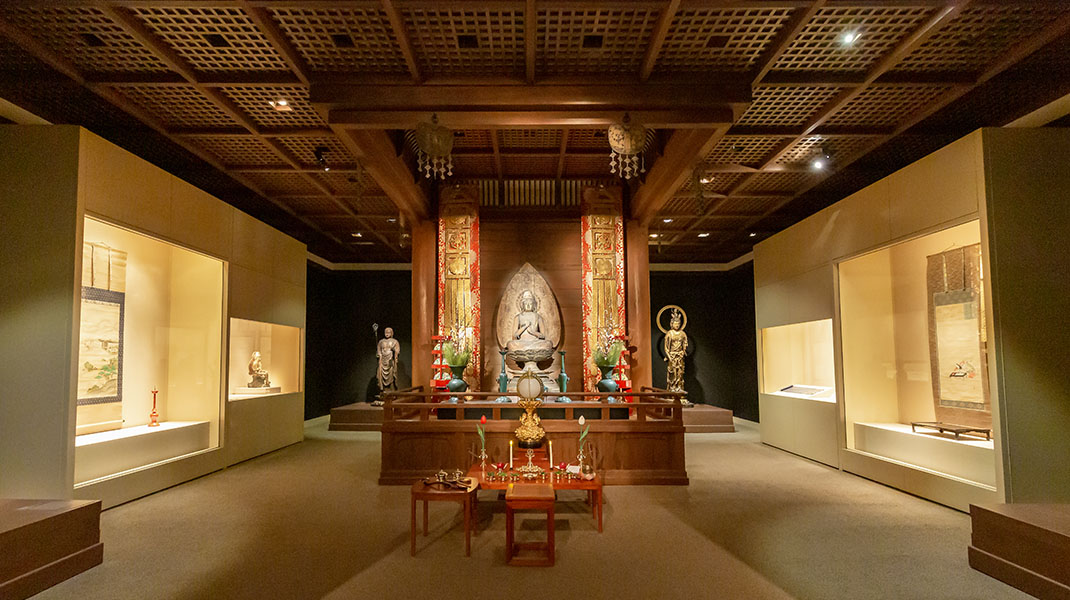
“A major international loan exhibition focusing on the artistic tradition inspired by Japan’s most celebrated work of literature is on view at The Metropolitan Museum of Art. Bringing together more than 120 works of art from 32 public and private collections in Japan and the United States—including National Treasures and Important Cultural Properties, most of which have never left Japan—The Tale of Genji: A Japanese Classic Illuminated explores the tale’s continuing influence on Japanese art since it was written around the year 1000 by the noblewoman Murasaki Shikibu (ca. 978–ca. 1014).  Often referred to as the world’s first novel, The Tale of Genji has captivated readers for centuries through its sophisticated narrative style, humor and wit, and unforgettable characters, beginning with the ‘radiant prince’ Genji, whose life and loves are the focus of the story.

The exhibition presents the most extensive introduction to the visual world of Genji ever shown outside Japan. It features nearly one thousand years of Genji-related art—an astonishing range of works including paintings, calligraphy, silk robes, lacquerware, a palanquin for a shogun’s bride, and popular art such as ukiyo-e prints and contemporary manga—and provide viewers with a window into the alluring world of the Heian imperial court (794–1185) that was created by the legendary authoress.

Comprising 54 chapters, The Tale of Genji describes the life of the prince, from the amorous escapades of his youth to his death, as well as the lives of his descendants, introducing along the way some of the most iconic female characters in the history of Japanese literature.  Organized thematically in eight sections, the exhibition pays special attention to the Buddhist reception of the tale, while also giving prominence to Genji’s female readership and important works by female artists.” — The Metropolitan Museum of Art

Photographs by Corrado Serra.

The altar is adorned with ceremonial objects borrowed from Ishiyamadera Temple. The Main Hall of Ishiyamadera Temple in Otsu, Japan features “The Genji Room”.

The Tale of Genji: A Japanese Classic Illuminated is organized by The Metropolitan Museum of Art and The Japan Foundation, with the cooperation of the Tokyo National Museum and Ishiyamadera Temple.

The exhibition is curated by John T. Carpenter, Mary Griggs Burke Curator of Japanese Art in the Department of Asian Art at The Met; and guest curator Melissa McCormick, Professor of Japanese Art and Culture at Harvard University; with Monika Bincsik, Diane and Arthur Abbey Assistant Curator for Japanese Decorative Arts at The Met; and Kyoko Kinoshita, Professor of Japanese Art History at Tama Art University.

T. rex: The Ultimate Predator at American Museum of Natural History, March 11 – August 9, 2020

“Everyone knows Tyrannosaurus rex. But did you know that T. rex hatchlings were fluffy and gangly, more like turkeys than the massive killing machines they grew up to be? Or that T. rex evolved from a large group of dinosaurs that were, for the most part, small, and fast? Or how about that the mega-predator had the rare ability to pulverize and digest bones? T. rex: The Ultimate Predator, the first major exhibition of the American Museum of Natural History’s 150th anniversary celebration, will introduce you to the entire tyrannosaur family and reveal the amazing story of the most iconic dinosaur in the world through life-sized models—including the most scientifically accurate representation of T. rex to date–fossils and casts, engaging interactives, and the Museum’s first multiplayer virtual reality experience.

Visitors to T. rex: The Ultimate Predator will encounter a massive life-sized model of a T. rex with patches of feathers—the definitive representation of this prehistoric predator. The exhibition will also include reconstructions of several T. rex hatchlings and a four-year-old juvenile T. rex; a ‘roar mixer’ where visitors can imagine what T. rex may have sounded like by blending sounds from other animals; a shadow theater featuring a floor projection of an adult T. rex skeleton coming to life; and a life-sized animation of T. rex in a Cretaceous environment that responds to visitors’ movements. At a tabletop ‘Investigation Station,’ visitors can explore a variety of fossil casts ranging from coprolite (fossilized feces) to a gigantic femur, with virtual tools including a CT scanner, measuring tape, and a microscope to learn more about what such specimens can reveal to scientists about the biology and behavior of T. rex.” — American Museum of Natural History

Photographs by Corrado Serra.

“Dinosaurs, and Tyrannosaurus rex in particular, are such an important and iconic part of the Museum and have been throughout our history,” said Ellen V. Futter, President of the American Museum of Natural History. “So it seems fitting to launch the Museum’s 150th Anniversary celebrations with a major new exhibition on the ever-intriguing King of Dinosaurs. This exciting and fascinating exhibition will do what the Museum has done throughout its history and continues to do today: share the latest scientific breakthroughs with the public, introduce visitors to the researchers on the cutting-edge of discovery, shed new light on the great story of life on Earth, and inspire wonder and curiosity in visitors of all ages.”

In the last 30 years, we’ve seen a huge increase in both the number of tyrannosaur fossil discoveries as well as the availability of technology that lets us explore complex questions about these charismatic animals,” Mark Norell, curator of exhibition, said. “I never would have imagined that one day we’d be able to look at the shape of T. rex’s brain, analyze the tiny daily growth lines on their massive teeth to determine how quickly they put on weight, or use advanced biomechanical modeling to figure out the force of its bite.”

The Power of Intention: Reinventing the (Prayer) Wheel at The Rubin Museum of Art, March 1 – October 14, 2019

The Power of Intention: Reinventing the (Prayer) Wheel is an exhibition that brings together traditional and contemporary art to illuminate the relationship between our intentions, commitments, and actions. Inspired by concepts related to Buddhist prayer wheels — ritual objects containing thousands of written prayers and mantras — the show looks at how we can empower ourselves to create positive change within and between us. This marks the official opening of Power: Within and Between Us — the Rubin’s yearlong, institution-wide thematic exploration, incorporating exhibitions, talks, programs, and experiences designed to spark new ways of thinking about power, from intention to action. 

Prayer Wheels can be small handheld devices turned by hand or large, building-size structures that can only be rotated with effort, often by several people working together. With each turn, the mantras are believed to be read and sent out into the world for the benefit of all.

The Power of Intention: Reinventing the (Prayer) Wheel expands on this idea, highlighting the potential of intention to kindle positive change. It explores the notions and concepts inherent in the construction, activation, and meaning of the prayer wheels, including the power of commitment, engagement, repetition, accumulation, and belief.” — The Rubin Museum of Art 

Photographs by Corrado Serra.

Left: Youdhi Maharjan (b. 1984, Kathmandu, Nepal); Committed to Becoming; 2018; hand cut text collage on reclaimed book pages; 20 x 16 in. (50.8 x 40.64 cm); courtesy of the artist. Right: Table-Top Prayer Wheel (manl ‘khor lo); Tibet; before 1936; copper-alloy, tin-alloy, steel, ink, paper, cloth; Newark Museum; Newark Museum Purchase 1936, Carter D. Holton Collection, 36.323 A-C.

Left: Pierced Handheld Prayer Wheel (mani lag ‘khor); Tibet; before 1927; copper-alloy, steel, glass, ink, paper, bamboo; Newark Museum; Gift of Mrs. J. B. Barlow, 1927, 27.653 A-D. Right: Youdhi Maharjan (b. 1984, Kathmandu, Nepal); Power of Thought; 2018; cutout text collage on reclaimed book pages; 22 1/8 x 30 5/8 in. (51.2 x 77.8 cm); courtesy of the artist.

Monika Bravo (b. 1964, Bogotá, Columbia); Landscape of Belief; 2012; glass, mirror, projector, media player, aluminum, wood, text from Italo Calvino’s Invisible Cities, time-based electronic installation; courtesy of the artist and Johannes Vogt Gallery.

Scenocosme: Gregory Lasserre (b. 1976, Annecy, France) & Anaïs met den Ancxt (b. 1981, Lyon, France); Metamorphy; 2014; interactive installation; courtesy of the artists.

Alexandra Dementieva (b. 1960, Moscow, Russia); Breathless; 2012; interactive light object with production by Cyland MediaLab, VGC (Vlaamse Gemeenschapscomissie) (BE), and Adem vzw (BE), support from iMAL asbl/vzw and Flemish Ministry of Culture, programming and engineering by Aleksey Grachev and Sergey Komarov, and breath detector/Interface-Z construction by Peter Maschke; courtesy of the artist.

Installation view

Left: Avalokiteshvara; Central Tibet; 14th–15th century; pigments on cloth; courtesy of the Stephen and Sharon Davies Collection. Right: Wind-Powered Prayer Wheel (mani rlung ‘khor); Tibet; before 1920; metal, ink, paper, bamboo, string; Newark Museum; Newark Museum Purchase 1920, 20.406 A-C.

Left: Charwei Tsai (b. 1980, Taipei, Taiwan); A Supplication; 2019; watercolor and ink on rice paper; 59 x 59 in. (150 x 150 cm); courtesy of the artist. Right: Charwei Tsai (b. 1980, Taipei, Taiwan); Spiral Incense; 2019; natural herbs/herbal medicine; diameter 39.4 in. (100 cm); courtesy of the artist.

“We may not think of our intentions as sources of power; however they are the driving force behind each of our actions. This exhibition invites us to change how we think about power and consider that we can use our own intentions to empower ourselves and create change for ourselves and others,” said Elena Pakhoutova, curator of Himalayan Art and organizer of “Power of Intention.” She added, “Commitment, considered an integral component of an intention, powers a person to carry the intention into action, however small it may be. Then, a conscious positive action replaces what might have been a habit or mindless act. Prayer wheels are a symbolic reference point for visitors’ experiences of the contemporary works of art in the exhibition, where each work relates to a specific notion that helps reinforce our individual intentions and spark positive action.” 

Novecento: Nuovi Percorsi at Museo del Novecento, Milan, from February 23, 2019

The Museo del Novecento in Milan inaugurated the new galleries dedicated to Marino Marini and new thematic itineraries that focus on art from the 1960s to the 1980s, with the installation of 122 works by 56 artists, and a new educational workshop. Novecento: Nuovi Percorsi (Nineteen Hundred: New Itineraries) is the title of two new itineraries which show an important rereading of the museum’s collection. The project is an integral part of a comprehensive program that will conclude in 2020 on the occasion of the tenth anniversary of the inauguration of the Museum.

Organized by the Museum’s Directorate and Scientific Committee, Novecento: Nuovi Percorsi presents the innovative project for the sculptures of Marino Marini designed by the architect Italo Rota. Rota also collaborated in the preparation of the works of the second half of the twentieth century, almost a thousand square meters of new itineraries, which include the installation of one hundred and twenty two works of art and the integration of thirty new artists.

All images are exhibition views of Novecento: Nuovi Percorsi (Nineteen Hundred: New Itineraries). Photos by Bruno Pulici. Courtesy Museo del Novecento.

Michaela Ghersi from Milan collaborated with this article.

The Orchid Show: Singapore at New York Botanical Garden, February 23 – April 28, 2019

“For its 17th year, The New York Botanical Garden’s popular annual orchid exhibition returns with The Orchid Show: Singapore, developed in partnership with Gardens by the Bay and Singapore Botanic Gardens. Two iconic architectural elements inspired by both sites—the iconic Supertrees of Gardens by the Bay and the famed Arches of Singapore Botanic Gardens’ National Orchid Garden—are featured as part of a horticultural tribute to the ‘City in a Garden,’ one of the world’s greatest orchid cultures.

Singapore Botanic Gardens, the only tropical garden in the world designated a UNESCO World Heritage Site, is home to the country’s National Orchid Garden, a leader in orchid hybridization, with its famed Arches festooned with thousands of mesmerizing orchids and many other exotic tropical species.

Gardens by the Bay is Singapore’s immersive horticultural attraction best known for its Supertrees—soaring vertical habitats that are marvels of nature, art, and technology. Dripping with brilliantly colored orchids, these impressive structures are embedded with photovoltaic cells that harvest solar energy, a shining example of Singapore’s contributions to the field of environmentally sustainable horticulture.

At The New York Botanical Garden, The Orchid Show: Singapore showcases renditions of both the Arches and the Supertrees—creating a kaleidoscope of colors with thousands of spectacular orchids, including dancing lady (Oncidium), rainbow (Vanda), cane (Dendrobium), and Asian corsage orchids (Cymbidium), and many other exotic tropical species.” — New York Botanical Garden

Photographs by Corrado Serra.

Hudson Rising at New-York Historical Society, March 1 – August 4, 2019

“The New-York Historical Society presents Hudson Rising, a unique exhibition that explores 200 years of ecological change and environmental activism along ‘the most interesting river in America’ through artifacts, media, and celebrated Hudson River School paintings. Hudson Rising reflects on how human activity has impacted the river and, in turn, how the river environment has shaped industrial development, commerce, tourism, and environmental awareness. The exhibition also explores how experts in various fields are currently creating ways to restore and re-engineer areas of the river in response to climate change.

Curated by Marci Reaven, New-York Historical’s vice president of history exhibitions, and Jeanne Haffner, associate curator, Hudson Rising begins with a prelude featuring artist Thomas Cole’s panoramic five-part Course of Empire series (1834-36), a treasure of New-York Historical’s collection that depicts the transformation of a pristine landscape into a thriving city, then its dramatic decline, and the fall of civilization. Cole’s poetic questioning of the social costs of what was seen in his time as progress, serves as a prelude to the exhibition narrative, which begins with the industrial age and continues into the present day.” — New-York Historical Society

“Nature has spread for us a rich and delightful banquet. Shall we turn from it?”  — Thomas Cole, “Essay on American Scenery”, 1836

Photographs by Corrado Serra.

Thomas Cole’s panoramic five-part Course of Empire series (1834-36)

“This path-breaking exhibition explores ideas about the environment that developed in the context of the Hudson, examining how we became aware, as New Yorkers and as Americans, of the role that humans played in the river’s ecological degradation,” said Dr. Louise Mirrer, president and CEO of New-York Historical. “The exhibit also looks at the strategies we devised to address it. Spanning the entire industrial era, Hudson Rising presents a compelling account of how the Hudson has been an incubator for our ideas about the environment and our relationships to the natural world for two centuries-plus.”

Dorothea Tanning at Tate Modern, February 27 – June 9, 2019

“Tate Modern stages a major exhibition of the work of pioneering artist Dorothea Tanning (1910-2012). Organised in collaboration with the Museo Nacional Centro de Arte Reina Sofía in Madrid, it is the first large-scale exhibition of her work for 25 years and the first ever to span Tanning’s remarkable seven-decade career. Bringing together some 100 works from across the globe, the exhibition explores how she expanded the language of Surrealism. From her early enigmatic paintings, to her ballet designs, uncanny stuffed textile sculptures, installations and large-scale late works, it offers a rare opportunity to experience the artist’s unique internal world.

The exhibition follows the story of Tanning’s life and work, from her influential first encounters with Surrealism in New York in the 1930s, through to her later years as a painter, poet and writer. Prominent early works are brought together, such as the artist’s powerful self-portrait Birthday 1942 (Philadelphia Museum of Art) which attracted the attention of Max Ernst whom she married in 1946. These join key examples of Tanning’s mid-career prismatic paintings, as well as and her later soft sculptures to show the full breath of her practice.” — Tate Modern

Dorothea Tanning (1910 – 2012). Birthday, 1942. Oil paint on canvas, 1022 x 648 mm. Philadelphia Museum of Art. © DACS, 2018

Dorothea Tanning (1910 – 2012). Children’s Games, 1942. Oil paint on canvas, 280 x 180 mm. Private collection © DACS, 2018

Dorothea Tanning (1910 – 2012). Eine Kleine Nachtmusik, 1943. Oil paint on canvas, 407 x 610 mm. Tate © DACS, 2018

Dorothea Tanning (1910 – 2012). Self-Portrait, 1944. Oil paint on canvas, 610 x 760 mm. San Francisco Museum of Modern Art © DACS, 2018. Photo © Katherine Du Tiel

Dorothea Tanning (1910 – 2012). Maternity, 1946-47. Oil paint on canvas, 1422 x 1219 mm. Private collection © DACS, 2018

Dorothea Tanning (1910 – 2012). La Truite au bleu (Poached Trout), 1952. Oil paint on canvas, 400 x 550 mm. Michael Wilkinson, New Orleans, L.A © DACS, 2018

Dorothea Tanning (1910 – 2012). Hôtel du Pavot, Chambre 202, 1970-1973. Fabric, wool, synthetic fur, cardboard, and Ping-Pong balls, 3405 x 3100 x 4700 mm. Centre Pompidou, Paris. Musée national d’art modern/ Centre de création industrielle. Photo (C) Centre Pompidou, MNAM-CCI, Dist. RMN-Grand Palais / Philippe Migeat © DACS, 2018

Dorothea Tanning (1910 – 2012). Éntreinte, 1969. Wool flannel and fake fur stuffed with wool, 1016 x 1028 x 482 mm. The Destina Foundation, New York © DACS, 2018

Dorothea Tanning (1910 – 2012). Verbe, 1966-1970. Flannel, wool, tweed, cardboard, polyfill, forged steel, and wooden jigsaw puzzle pieces from Johannes Vermeer’s “The Artist’s Studio” (ca.1665/66), 890 x 1160 mm. Yale University Art Gallery, Janet and Simeon Braguin Fund © DACS, 2018

Photographer unknown. Dorothea Tanning, Great River, Long Island, 1944. Photograph The Destina Foundation, New York © unknown

Dorothea Tanning is curated by Alyce Mahon, Reader in Modern and Contemporary Art History at the University of Cambridge, and Ann Coxon, Curator, International Art, Tate Modern, supported by Emma Lewis and Hannah Johnston, Assistant Curators, International Art, Tate Modern. The exhibition is organised by the Museo Nacional Centro de Arte Reina Sofia, Madrid in collaboration with Tate Modern.

Images courtesy Tate Modern.

The Self-Portrait, from Schiele to Beckmann at Neue Galerie New York, February 28 – June 24, 2019

The Self-Portrait, from Schiele to Beckmann is an unprecedented exhibition that examines works primarily from Austria and Germany made between 1900 and 1945. This groundbreaking show is unique in its examination and focus on works of this period. Approximately 70 self-portraits by more than 30 artists—both well-known figures and others who deserve greater recognition—will be united in the presentation, which is comprised of loans from public and private collections worldwide.

Admired for their revelatory nature, self-portraits yield insight into both the appearance and the essence of the artist, in some cases providing almost confessional portrayals, sharing profound insights regarding their self-image as a maker, and their perceived relationship to society. On a more universal level, they can also expose deeper truths about the human condition. During the first four decades of the twentieth century, the self-portrait, a genre that has transcended the ages, reached new heights in Germany and Austria.” — Neue Galerie

Paula Modersohn-Becker (1876–1907). Self-Portrait with Two Flowers in Her Raised Left Hand, 1907. Oil on canvas, 55.2 x 24.8 cm (21 3/4 x 9 3/4 in.). Jointly owned by The Museum of Modern Art, New York, Gift of Debra and Leon Black, and The Neue Galerie New York, Gift of Jo Carole and Ronald S. Lauder

Egon Schiele (1890–1918). Self-Portrait in Brown Coat, 1910. Watercolor, gouache, and black crayon on paper, 45.6 x 32.2 cm (18 x 12 5/8 in.). Private Collection

Käthe Kollwitz (1867–1945). Frontal Self-Portrait, ca. 1910. Charcoal on gray-blue Ingres paper, 28.5 x 26 cm (11 1/4 x 10 1/4 in.). Käthe Kollwitz Museum Cologne. Photo: Käthe Kollwitz Museum Cologne © 2019 Artists Rights Society (ARS), New York / VG Bild-Kunst, Bonn

Lyonel Feininger (1871–1956). Self-Portrait, 1915. Oil on canvas, 100.3 x 80 cm (39 1/2 x 31 1/2 in.). The Museum of Fine Arts, Houston, Museum purchase funded by the Caroline Wiess Law Accessions Endowment Fund © 2019 Artists Rights Society (ARS), New York / VG Bild-Kunst, Bonn

Max Beckmann (1884–1950). Self-Portrait in front of Red Curtain, 1923. Oil on canvas, 122.9 x 59.2 cm (48 3/8 x 23 1/4 in.). Private Collection © 2019 Artists Rights Society (ARS), New York / VG Bild-Kunst, Bonn

Max Beckmann (1884–1950). Self-Portrait with a Cigarette, 1923. Oil on canvas, 60.2 x 40.3 cm (23 3/4 x 15 7/8 in.). The Museum of Modern Art, Gift of Dr. and Mrs. F. H. Hirschland. Photo: © The Museum of Modern Art/Licensed by SCALA / Art Resource, NY © 2019 Artists Rights Society (ARS), New York / VG Bild-Kunst, Bonn

Lovis Corinth (1858–1925). Last Self-Portrait, 1925. Oil on canvas, 80.5 x 60.5 cm (31 3/4 x 23 7/8 in.). Kunsthaus Zürich. Photo: © Kunsthaus Zürich

Otto Dix (1891–1969). Self-Portrait with Easel, 1926. Tempera on panel, 80.5 x 55.5 cm (31 3/4 x 21 7/8 in.). Leopold-Hoesch-Museum, Düren. Photo: Peter Hinschläger © 2019 Artists Rights Society (ARS), New York / VG Bild-Kunst, Bonn

Georg Scholz (1890-1945). Self-Portrait in front of an Advertising Column, 1926. Oil on canvas, 60 x 77.8 cm (23 5/8 x 30 5/8 in.). Staatliche Kunsthalle Karlsruhe. Photo: bpk Bildagentur / Staatliche Kunsthalle Karlsruhe / Art Resource, NY © 2019 Artists Rights Society (ARS), New York

Felix Nussbaum (1904–1944). Self-Portrait with Jewish Identity Card, ca. 1943. Oil on canvas, 56 x 49 cm (22 x 19 1/4 in.). Felix-Nussbaum-Haus Osnabrück, loan from the Niedersächsische Sparkassenstiftung. Photo: Museumsquartier Osnabrück, Felix-Nussbaum-Haus Osnabrück © 2019 Artists Rights Society (ARS), New York

The Self-Portrait, from Schiele to Beckmann is organized by Neue Galerie New York. The guest curator is Prof. Dr. Tobias G. Natter, an internationally acknowledged expert on art from Vienna around 1900.

Images courtesy Neue Galerie.

Moroni: The Riches of Renaissance Portraiture at The Frick Collection, February 21 – June 2, 2019

In Renaissance Italy, one of the aims of portraiture was to make the absent seem present through naturalistic representation of the sitter. This notion—that art can capture an individual exactly as he or she appears—is exemplified in the work of Giovanni Battista Moroni. The artist spent his entire career in and around his native Bergamo, a region in Lombardy northeast of Milan, and left a corpus of portraits that far outnumbers those of his contemporaries who worked in major artistic centers, including Titian in Venice and Bronzino in Florence. Though Moroni never achieved their fame, he innovated the genre of portraiture in spectacular ways. This winter and spring, the Frick presents the first major exhibition in North America devoted to his work, bringing together nearly two dozen of Moroni’s most arresting and best known portraits from international collections to explore the innovations and experiments that belie his masterful illusion of recording reality. They will be shown alongside a selection of complementary objects—Renaissance jewelry, textiles, arms and armor, and other luxury items—that exemplify the material and visual world that Moroni recorded, embellished, and transformed.” — The Frick Collection

Giovanni Battista Moroni. Isotta Brembati, ca. 1555–56. Oil on canvas, 63 x 45 1/4 inches. Fondazione Museo di Palazzo Moroni, Bergamo – Lucretia Moroni Collection. Photo: Fondazione Museo di Palazzo Moroni, Bergamo

Giovanni Battista Moroni. Portrait of a Young Woman, ca. 1575. Oil on canvas, 20 3/8 x 16 3/8 inches. Private collection. Photo: Michael Bodycomb

Giovanni Battista Moroni. Giovanni Gerolamo Grumelli, called Il Cavaliere in Rosa (The Man in Pink), dated 1560. Oil on canvas, 85 x 48 3/8 inches. Fondazione Museo di Palazzo Moroni, Bergamo – Lucretia Moroni Collection. Photo: Mauro Magliani

Giovanni Battista Moroni. Lucia Albani Avogadro, called La Dama in Rosso (The Lady in Red), ca. 1554–57. Oil on canvas, 61 x 42 inches. The National Gallery, London. Photo: © The National Gallery, London

Giovanni Battista Moroni. Faustino Avogadro, called Il Cavaliere dal Piede Ferito (The Knight with the Wounded Foot), ca. 1555–60. Oil on canvas, 79 5/8 x 41 7/8 inches. The National Gallery, London Photo: © The National Gallery, London

Giovanni Battista Moroni. Lucrezia Agliardi Vertova, dated 1557. Oil on canvas, 36 x 27 inches. The Metropolitan Museum of Art, New York; Theodore M. Davis Collection, Bequest of Theodore M. Davis, 1915. Photo: The Metropolitan Museum of Art, New York

Giovanni Battista Moroni. Lay Brother with Fictive Frame, ca. 1557. Oil on canvas, 21 3/4 x 19 7/8 inches. Städel Museum, Frankfurt am Main. Photo: Städel Museum, Frankfurt am Main

Giovanni Battista Moroni. Bernardo Spini, ca.1573-75. Oil on canvas, 77 1/2 x 38 5/8 inches. Accademia Carrara, Bergamo. Photo: Fondazione Accademia Carrara, Bergamo

Giovanni Battista Moroni. Pace Rivola Spini, ca. 1573-75. Oil on canvas, 77 1/2 x 38 5/8 inches. Accademia Carrara, Bergamo. Photo: Fondazione Accademia Carrara, Bergamo

Giovanni Battista Moroni. Alessandro Vittoria, ca. 1551. Oil on canvas, 32 1/2 x 25 5/8 inches. Gemäldegalerie, Kunsthistorisches Museum, Vienna. Photo: KHM-Museumsverband

Giovanni Battista Moroni. The Tailor (Il Sarto, or Il Tagliapanni), ca. 1570. Oil on canvas, 39 1/8 x 30 1/4 inches. The National Gallery, London. Photo: © The National Gallery, London

Giovanni Battista Moroni. Bust of Isotta Brembati, ca. 1550. Oil on canvas, 21 5/8 x 18 1/2 inches. Accademia Carrara, Bergamo. Photo: Fondazione Accademia Carrara, Bergamo

Giovanni Battista Moroni. Bust Portrait of a Young Man with an Inscription, ca. 1560. Oil on canvas, 18 5/8 x 15 5/8 inches. The National Gallery, London; Layard Bequest, 1916. Photo: © The National Gallery, London

Giovanni Battista Moroni. Portrait of a Gentleman and His Two Children, ca.1572-1575. Oil on canvas, 49 3/8 x 38 5/8 inches. National Gallery of Ireland Collection, Dublin; Purchased, 1866. Photo: © National Gallery of Ireland

Giovanni Battista Moroni. Giovanni Bressani, dated 1562. Oil on canvas, 45 3/4 x 35 inches. National Galleries of Scotland, Edinburgh; Purchased by Private Treaty, 1977. Photo: National Galleries of Scotland

Moroni: The Riches of Renaissance Portraiture was organized by Aimee Ng, Associate Curator, The Frick Collection; Simone Facchinetti, Curator, Museo Adriano Bernareggi, Bergamo; and Arturo Galansino, Director General, Palazzo Strozzi, Florence. 

Images courtesy The Frick Collection.

Invention and Design: Early Italian Drawings at the Morgan, The Morgan Library & Museum, February 15 – May 19, 2019

A new exhibition celebrates the Morgan Library & Museum’s extensive collection of Italian Drawings, exploring how the concept of disegno (a word that means both ‘drawing’ and ‘design’) emphasized the artist’s creative power and fundamentally changed Italian Renaissance art. Invention and Design: Early Italian Drawings at the Morgan tells the story of how drawing practice evolved dramatically during the fifteenth and early sixteenth centuries. This exhibition is the first to focus on the Morgan’s drawings from this extraordinarily fertile period in art history. It features over 90 works by masters such as Mantegna, Filippo and Filippino Lippi, Botticelli, Leonardo da Vinci, Raphael, Correggio, Fra Bartolomeo, and Andrea del Sarto. The show is timed to mark an important milestone: the publication of the first catalogue to survey this collection, Italian Renaissance Drawings at the Morgan Library & Museum.” — The Morgan Library & Museum

“The Morgan’s collection of Italian Renaissance Drawings is one of the country’s largest, notably rich in drawings by artists born before 1500,” said John Marciari, curator of the exhibition and Head of the Drawings and Prints Department. “It includes some of the earliest true preparatory drawings and compositional sketches, which makes the Morgan uniquely positioned to provide a historical account of the evolution of Italian drawing practice. By offering a glimpse into these transformations in drawing practice, we are delighted to give visitors a kind of behind-the-scenes look at the culture that shaped some of the most astonishing works of the Italian Renaissance.”

Recumbent Ibex and Dog. Verso: Lynx and a Recumbent Unicorn, 15th century, The Morgan Library & Museum, I, 83 . Photography by Steven H. Crossot, 2014.

Andrea Mantegna (1431 – 1506), Three Standing Saints , ca. 1455 – 1460, pen and brown ink on laid paper toned with red chalk. Thaw Collection, The Morgan Library & Museum, 1985.100 . Photography by Steven H. Crossot, 2014.

Lorenzo Costa (1460 – 1535), Head of a Bearded Man Looking Down to the Right, and a Hand, 15th century, brush and gray-brown ink, heightened with white gouache, over metalpoint, on gray-brown prepared paper. The Morgan Library & Museum, IV, 6. Photography by Steven H. Crossot, 2014.

Andrea del Sarto (1486 – 1530), Young Man Taking a Step, with a Basket and Balancing a Sack, 16th century, black chalk on paper. The Morgan Library & Museum, I, 30 . Photography by Steven H. Crossot, 2014.

Giovanni Agostino da Lodi (active ca. 1467–ca. 1524), Head of a Bearded Man in Profile to the Right, ca. 1500, red chalk on paper. The Morgan Library & Museum, 1973.35:1, Gift of János Scholz. Photography by Janny Chiu, 2018.

Giovanni Agostino da Lodi (active ca. 1467–ca. 1524), Head of a Youth Facing Left, 15th century, red chalk on paper. The Morgan Library & Museum, 1973.35:2; Gift of János Scholz. Photography by Graham Haber, 2018.

Attributed to Correggio (1489? – 1534), Head of a Woman Crying Out, 1511 – 1514. Charcoal and black chalk, blended with white chalk. The Morgan Library & Museum, IV, 30. Photography by Steven H. Crossot, 2014.

Images courtesy The Morgan Library & Museum.  

The Extended Moment: Photographs from the National Gallery of Canada at The Morgan Library & Museum, February 15 – May 26, 2019

“The Morgan Library & Museum presents an exhibition of photographs from one of the most comprehensive repositories of photography on the continent, the collection at the National Gallery of Canada. The first in a series of three major photography shows at the Morgan in 2019, The Extended Moment: Photographs from the National Gallery of Canada is organized into a sequence of pairings that underline the persistence, over time and across space, of trends and tensions central to photography. The moment in each photograph in the sequence is ‘extended’ by images neighboring it on either side, even as the exhibition as a whole presents the age of photography, from its beginning in 1839 to now, as a single ‘extended moment.’

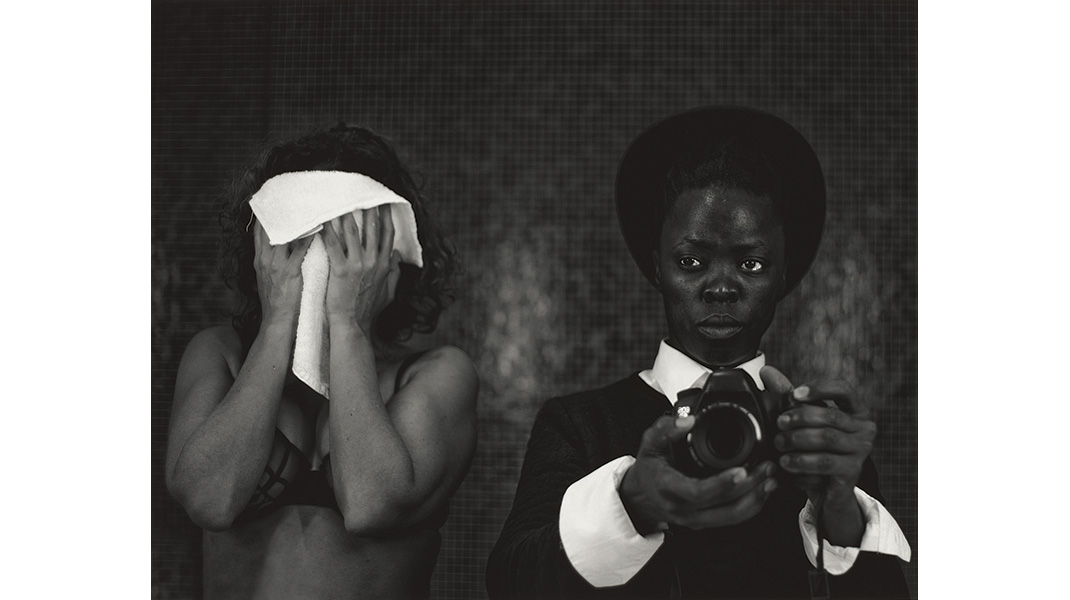
Included in the show are 68 works representing photography’s role in art, journalism, science, exploration, activism, warfare, the chronicling of family and community histories, and many other subjects. Spanning a period of 180 years, the exhibition also features works by notable artists such as Edward Burtynsky, Julia Margaret Cameron, Henri Cartier-Bresson, Lynne Cohen, John Herschel, Richard Learoyd, Lisette Model, Zanele Muholi, Edward Steichen, and Josef Sudek.” — The Morgan Library & Museum

Harold Eugene Edgerton (1903-1990), Golf Drive by Densmore, 1938, printed 1977, gelatin silver print. National Gallery of Canada. © Harold Edgerton/MIT, courtesy Palm Press, Inc.

Walker Evans (1903-1975), Church of Nazarene, Tennessee, 1936, printed later, gelatin silver print. Gift of Phyllis Lambert, Montreal, 1982, National Gallery of Canada. © Walker Evans Archive, The Metropolitan Museum of Art.

Gordon Parks, Emerging Man, 1952, printed later, gelatin silver print. National Gallery of Canada. Courtesy of and copyright The Gordon Parks Foundation.

Unidentified photographer, Portrait of an Unidentified Woman, c. 1850, daguerreotype with applied colour. National Gallery of Canada.

Zanele Muholi, ZaVa, Amsterdam, 2014, gelatin silver print. National Gallery of Canada. Courtesy of the artist, Yancey Richardson, New York, and Stevenson Cape Town / Johannesburg.

Lynne Cohen, Untitled (easel), 2007, chromogenic print. National Gallery of Canada. Estate of Lynne Cohen.

Zhang Huan, To Raise the Water Level in a Fish Pond (Close Up), 1997, dye coupler print. National Gallery of Canada. © Zhang Huan, courtesy Pace Gallery.

“Photographs have influenced the human imagination in myriad, complex ways from the very beginning of the medium’s history,” said Colin B. Bailey, Director of the Morgan. “Images are made daily and document our national and global histories. Photography is also a deeply personal art that asks questions about how the world works. This is an incredible opportunity for the Morgan to familiarize visitors in the U.S. with one of the most distinguished photography collections on the continent.” 

“The Morgan is at once the newest kid on the block —the Department of Photography here is only six years old—and a place where photography gets seen in long historical perspective among the arts of communication,” said Joel Smith, curator of the Morgan exhibition. “It is an honor to host the venerable collection of the National Gallery of Canada here; it also feels like a case of natural synergy.” 

Images courtesy The Morgan Library & Museum.

What’s So Funny About Math? at National Museum of Mathematics (MoMath), February 16 – March 31, 2019

The first-ever math cartoon exhibition, What’s So Funny About Math? features 20 math-related cartoons by artists from across the country, including Roz Chast, Drew Dernavich, Dana Fradon, James Stevenson, Robert Leighton, Jack Ziegler, Bob Mankoff, Charlie Hankin, Sidney Harris, Nate Fakes, Dan Reynolds, Mike Seddon, Pat Byrnes, Mark Heath, and Nick Kim. The exhibit  includes commentary by notable mathematicians and a caption contest in which visitors to the exhibition will have the opportunity to create their own caption for one of the cartoons on display.

“Math doesn’t always strike people as a funny subject, which is why we are thrilled to partner with Bob Mankoff — one of the country’s preeminent cartoonists — to launch the first-ever exhibition featuring math-related cartoons,” explained Cindy Lawrence, Executive Director of MoMath. “‘We are very excited to share math, laughter, and new perspectives with the MoMath community.”

“We welcome the opportunity to team up with MoMath to help shed light on a lesser-known side of mathematics–the lighter side,” said Bob Mankoff, Founder of CartoonCollections.com. “Contrary to your beliefs as a child, math can be funny with the right perspective. There’s nothing better than the perfect cartoon to succinctly amplify a message and challenge assumptions, axioms, and even quadratic equations.”

Roz Chast

Robert Leighton

Dana Fradon

Charlie Hankin

Bob Mankoff

What’s So Funny About Math? is curated by Bob Mankoff, former New Yorker Cartoon Editor, current Esquire Cartoon and Humor Editor, and Founder of Cartoon Collections.

Images courtesy Cartoon Collections and National Museum of Mathematics.