Reencounter at Museo Nacional del Prado, June 6 – November 29, 2020

The Museo del Prado is reopening with a spectacular new installation of its permanent collection. The Central Gallery, an extensive architectural space flooded with natural light, now becomes the principal axis for this new hanging which includes the majority of the collection’s most iconic works, offering a unique and unprecedented experience.

This new installation, comprising 249 works, follows a principally chronological order from the 15th century to the dawn of the 20th century. Given its exceptional nature, however, the emphasis on national schools has been reduced in favour of establishing dialogues between artists and paintings separated by time and place: associations that suggest influences, admiration and rivalries and which emphasise the profoundly self-referential nature of the Museo del Prado’s collections.  

‘Reencounter’ evokes the type of display that existed when the Museo del Prado first opened to the public.” ― Museo Nacional del Prado

Exhibition views of “Reencounter”.

5da30229-6999-4df9-fb3c-591de0828c0f

Room 24. Photo © Museo Nacional del Prado

99dd664d-5049-09ae-3ed5-10869e45fb34

Room 12. Photo © Museo Nacional del Prado

cd772d58-003b-8163-8039-8783db6fd68b

Room 32. Photo © Museo Nacional del Prado

638f4189-0911-5489-0a72-3c75f124b4dd

Room 28. Photo © Museo Nacional del Prado

6950adf0-a364-65f6-e7a9-edcc0b0e265b

Room 8B. Photo © Museo Nacional del Prado

Title image: “Reencounter”. Photo © Museo Nacional del Prado. 

Images courtesy Museo Nacional del Prado.

Fondazione Prada, Milan, reopened June 5, 2020

Fondazione Prada reopened its doors in Milan on June 5, 2020. After the interruption of activities due to the health emergency, the exhibition program of the Milan venue is modified. The exhibition spaces will be accessible to the public from Friday to Sunday, from 10 am to 7 pm. Audience will be able to visit the three temporary exhibitions “K”, “The Porcelain Room”, and “Storytelling”.

“K”, a project that explores the literary universe of Franz Kafka through the works of Martin Kippenberger, Orson Welles, and Tangerine Dream, is extended until October 25, 2020.

Fondazione Prada, Milano - K 1

Martin Kippenberger. The Happy End of Franz Kafka’s “Amerika,” 1994. Mixed media (chairs, tables, and other objects), electric cables, green base painted with white lines, two bleachers. c. 30 x 20 m. Private collection. For this installation also Memphis and Private collection, Milan © Estate of Martin Kippenberger, Galerie Gisela Capitain, Cologne

Fondazione Prada, Milano - K 2

Orson Welles. The Trial, 1962. 118 min. English with Italian subtitles. Distributed by Filmauro. Screened in loop from 10:15 am to 6:15 pm

Fondazione Prada, Milano - K 3

Tangerine Dream. Franz Kafka, the Castle, 2013. 69 min. Produced by Edgar Froese. Distributed by Eastgate Music & Arts, Berlin. Played in loop

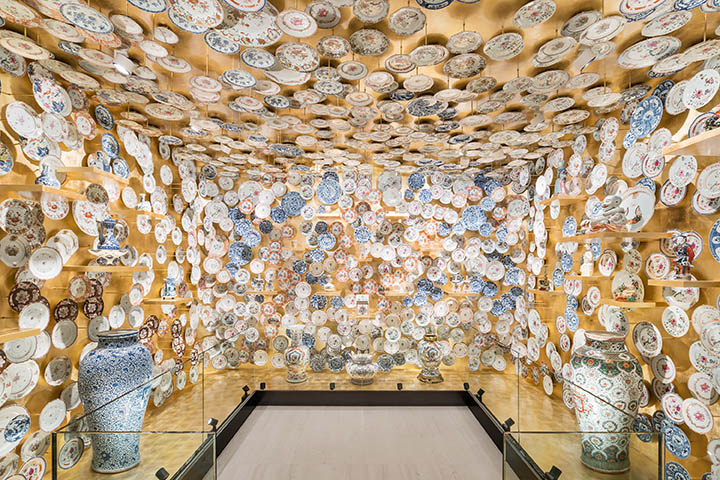
“The Porcelain Room”, an artistic investigation on the historical context, purpose and impact of Chinese export porcelain, is extended until January 10, 2021.

Exhibition views of  “The Porcelain Room – Chinese Export Porcelain”. Curated by Jorge Welsh and Luísa Vinhais. Fondazione Prada, Milan. Photos: Delfino Sisto Legnani.

Fondazione Prada, Milano - The Porcelain Room 1

Fondazione Prada, Milano - The Porcelain Room 4

Fondazione Prada, Milano - The Porcelain Room 3

“Storytelling”, a solo show devoted to artist Liu Ye, is extended until January 10, 2021.

Fondazione Prada, Milano - Storytelling 1

Liu Ye. The Little Match-seller, 2004. Acrylic on canvas, 220 x 180 cm. M+, Hong Kong

Fondazione Prada, Milano - Storytelling 2

Liu Ye. Left: Mondrian in the Morning, 2000. Acrylic on canvas, 180 x 180 cm. Private Collection, Beijing. Right: Prelude, 2018. Acrylic on canvas, 40 x 30 cm. Private Collection, Beijing

Fondazione Prada, Milano - Storytelling 3

Liu Ye. Catherine Deneuve, 2012. Acrylic on canvas, 60 x 45 cm. Private Collection, Beijing

Fondazione Prada’s website and social channels will continue to operate as a laboratory of ideas and a flexible and creative platform where new digital projects such as “Love Stories”, conceived by Francesco Vezzoli for Fondazione Prada’s Instagram account and running until July 19, 2020, will be developed.

The venetian outpost of Ca’ Corner della Regina and Osservatorio in Milan will reopen to the public in 2021.

Title image: Fondazione Prada, Milan. Photo by Bas Princen.

Images courtesy Fondazione Prada.

Tetsumi Kudo: Cultivation at Louisiana Museum of Modern Art, through August 16, 2020

Japanese artist Tetsumi Kudo (1935-1990) was a radical and visionary outsider. Almost forgotten until recently, Kudo is being rediscovered internationally due to his foreboding depictions of an ailing world and the emergence of a ‘new ecology’.

This exhibition’s laboratory of remarkable cultivation environments allows us to study Kudo’s radiantly coloured and grotesque propositions for the cultivation of life in a world, where humans, technology and polluted nature have merged.

By combining found materials and modelled elements into peculiar sculptures, Kudo conspicu­ously anticipated many of the aesthetic trends we see in contemporary art as well as the present-day penchant for the surreal and grotesque. His works also appear strikingly relevant in the cultural and political agendas of today when it comes to e.g. environment and procreation.

Kudo’s work is affected by a childhood in Japan in the aftermath of the atomic bomb. His approach to humanity’s self-destruction and ecological decadence however is both unsentimental and even quite humorous in its dealing with how new life can develop in spite of everything.” ― Louisiana Museum of Modern Art

363 Tetsumi Kudo

Tetsumi Kudo. Cultivation by Radioactivity in the Electronic Circuit, 1968. Mixed media. Louisiana Museum of Modern Art ©Tetsumi Kudo Adagp, Paris 2020 / VISDA

363_x Tetsumi Kudo

Tetsumi Kudo. Cultivation by Radioactivity in the Electronic Circuit, 1968. Mixed media. Louisiana Museum of Modern Art ©Tetsumi Kudo Adagp, Paris 2020 / VISDA

364 Tetsumi Kudo

Tetsumi Kudo. Pollution – Cultivation – New Ecology (Portrait of Ionecso), 1971. Assemblage: Mixed media. Louisiana Museum of Modern Art © Tetsumi Kudo Adagp, Paris 2020 / VISDA

Fridericianum_Tetsumi_Kudo_September2016_660b

Tetsumi Kudo. Cultivation by Radioactivity, 1967. UV tube, papier maché, paint, wire, 175 x 63 x 50 cm. Collection Fabre. Photo: documenta archiv / Fabian Frinzel © Tetsumi Kudo / Adagp, Paris 2020 / VISDA

KT1968-007 (Cultivation by Radioactivity in the Electronic Circuit (Pink Flower))v2_JE

Tetsumi Kudo. Cultivation by Radioactivity in the Electronic Circuit (Pink Flower), 1968. Plastic, plexi glass, polyester, 65 x 25 x 25 cm. Courtesy of Andrea Rosen Gallery. Photo: Jessica Eckert © Tetsumi Kudo / Adagp, Paris 2020 / VISDA

KT1970-009 (Cultivation by Nature - People Who Are Looking at it)v1 Jeremy Lawson

Tetsumi Kudo. Cultivation by Nature & People Who Are Looking at It, 1970-71. Plastic bucket, plastic, mirrored glass, papier maché, cotton, artificial soil, resin, adhesive, paint, artificial hair, 36 x 23 x 23 cm. Private Collection © Tetsumi Kudo / Adagp, Paris 2020 / VISDA

KT1974-007 (Bonheur)v01_LB

Tetsumi Kudo. Bonheur, 1974. Happiness, 1974. Cage, paint, artificial soil, plastic flowers, cotton, plastic, resin, string, cigarettes, thermometer, Aspro tablets, circuit board, 29 x 48 x 22 cm. Courtesy of Andrea Rosen Gallery. Photo: Lance Brewer © Tetsumi Kudo / Adagp, Paris 2020 / VISDA

KT1980-016 (Paradise)v1_LB

Tetsumi Kudo. Paradise, 1980. Cage, paint, plastic flower, plastic, metal coins, resin, 78 x 36 x 20,3 cm. Private Collection, Courtesy Andrea Rosen Gallery. Photo: Lance Brewer © Tetsumi Kudo / Adagp, Paris 2020 / VISDA

KUDO 49963 (2)

Tetsumi Kudo. Flowers, 1967-68. From: Garden of the Metamorphosis in the Space Capsule, 1968. 10 artificial flowers, paper, iron. Private Collection, Courtesy Hauser & Wirth and Andrea Rosen Gallery © Tetsumi Kudo / Adagp, Paris 2020 / VISDA

KUDO 50386

Tetsumi Kudo. Human Bonsai – Freedom of Deformity – Deformity of Freedom, 1979. Artificial soil, resin, plastic, wood, paint, cotton, wire, metal chain, glass beads, 39 x 74 x 22 cm. Private Collection, Courtesy Hauser & Wirth and Andrea Rosen Gallery © Tetsumi Kudo / Adagp, Paris 2020 / VISDA

Tetsumi Kudo: Cultivation is organized and curated by Tine Colstrup. 

Images courtesy Louisiana Museum of Modern Art, Humlebæk, Denmark.

Richard Artschwager at Guggenheim Museum Bilbao, through Autumn, 2020

“The Guggenheim Museum Bilbao presents the exhibition Richard Artschwager, a unique occasion to survey the creative career of Richard Artschwager (Washington, D.C., 1923 – Albany, New York, 2013), an artist who worked halfway between painting and sculpture and who developed a unique language using the new domestic materials of his time. This ambitious project, conceived by world-renowned curator Germano Celant and co-organized by the Guggenheim Museum Bilbao and MART – Museo di Arte Moderna e Contemporanea di Trento e Rovereto, comprises almost 70 pieces alongside a selection of rarely-seen archival documentation.

Designed as an open labyrinth highlighting the main nuclei of Artschwager’s oeuvre, the exhibition features a comprehensive selection of paintings and sculptures dating from the early 1960s to the first decade of the 21st century: from his first wood and Formica structures and paintings on Celotex to his nylon-bristle sculptures and ‘corner pieces,’ including works in horsehair and so-called blps, which the artist began making in 1968 and displaying individually or on a citywide scale. Artschwager, who had a crucial experience as a cabinetmaker at the beginning of his career, always worked toward the fusion of figuration and abstraction, artistic innovation and design, and ironically sought to combine the functional and the useless.” ― Guggenheim Museum Bilbao

Table and Chair

Richard Artschwager. Table and Chair, 1963-64. Melamine and wood. 755 x 1320 x 952 mm. Object: 1143 x 438 x 533 mm. Tate: Purchased 1983. Photo: Tate © Estate of Richard Artschwager, VEGAP, Bilbao, 2020

Museum Ludwig, ML, Richard Artschwager, Apartment House, ML/SK 5161, Köln

Richard Artschwager. Apartment House, 1964. Liquitex, Celotex, Formica. 177 x 126.5 x 16 cm. Museum Ludwig, Köln. Donation Collection Ludwig, 1976 © Estate of Richard Artschwager, VEGAP, Bilbao, 2020

3

Richard Artschwager. Fabrikhalle, 1969. Acrylic paint on drywall and chipboard, HPL. 73.30 x 92.60 x 7 cm. Museum Ulm – Stiftung Sammlung Kurt Fried. Photo: Armin Buhl © Estate of Richard Artschwager, VEGAP, Bilbao, 2020

4

Richard Artschwager. Tower III (Confessional), 1980. Formica and oak. 152.5 x 119 x 81.1 cm. Emanuel Hoffmann Foundation, permanent loan to the Öffentliche Kunstsammlung Basel. Photo: Bisig & Bayer, Basel Estate of Richard Artschwager, VEGAP, Bilbao, 2020

5

Richard Artschwager. Two Point Perspective, 1994. Acrylic on Celotex, Formica on wood, acrylic on wood. 136 x 139 x 5 cm. Kunstmuseen Krefeld, Heinz and Marianne Ebers-Stiftung © Estate of Richard Artschwager, VEGAP, Bilbao, 2020

6

Richard Artschwager. Door }, 1983-84. Acrylic and lacquer on wood and glass, metal, two parts. 207.6 x 165.1 x 24.8 cm. Collection Kerstin Hiller and Helmut Schmelzer, on loan to Neues Museum Nürnberg. Photo: Annette Kradisch © Estate of Richard Artschwager, VEGAP, Bilbao, 2020

7

Richard Artschwager. Search for Tomorrow, 2004. Acrylic and fiber panel on artist’s frame. 120.6 x 189.2 cm. Private collection © Estate of Richard Artschwager, VEGAP, Bilbao, 2020

8

Richard Artschwager. Exclamation Point, 2010. Plastic bristles on a mahogany core painted with latex. 165.1 × 55.9 × 55.9 cm. Private collection. Courtesy Gallery Xavier Hufkens, Brussels. Photo: Allan Bovenberg © Estate of Richard Artschwager, VEGAP, Bilbao, 2020

10

Richard Artschwager. Standing woman (Dirne), 1999. Acrylic, rubberized hair on Masonite. 213.4 x 114.3 x 6.4 cm. Private collection, Vienna © Estate of Richard Artschwager, VEGAP, Bilbao, 2020

11

Richard Artschwager. City of Man, 1981. Acrylic and charcoal on Celotex and plastic laminate with plexiglass. 197.5 × 458 × 13.3 cm. Whitney Museum of American Art, New York. Promised gift of Emily Fisher Landau P.2010.17.a-c © Estate of Richard Artschwager, VEGAP, Bilbao, 2020

12

Richard Artschwager. Portrait Zero, 1961. Wood, screws, and rope. 114.9 x 68.7 x 14 cm. Sammlung Michalke, Germany © Estate of Richard Artschwager, VEGAP, Bilbao, 2020

16

Richard Artschwager. Weave (Green), 1991. Acrylic and Celotex on panel. 171.2 x 131 x 9 cm. Courtesy Galleria Alfonso Artiaco, Napoli. Photo: Luciano Romano © Estate of Richard Artschwager, VEGAP, Bilbao, 2020

17

Richard Artschwager. Table Prepared in the Presence of Enemies II, 1992. Wood, metal, screws and Formica. The SYZ Collection, Switzerland © Estate of Richard Artschwager, VEGAP, Bilbao, 2020

18

Richard Artschwager. Splatter Table, 1992. Laminate, wood, aluminum. Variable dimensions. Collection S.M.A.K., Stedelijk Museum voor Actuele Kunst Ghent © Estate of Richard Artschwager, VEGAP, Bilbao, 2020

20

Richard Artschwager. This Way – That Way, 2012. Acrylic on handmade paper on soundboard. 130 x 116.8 cm. Augustus and Clara Artschwager Collection, Courtesy of Gagosian © Estate of Richard Artschwager, VEGAP, Bilbao, 2020

Richard Artschwager was curated by Germano Celant and Manuel Cirauqui, curator of the Guggenheim Museum Bilbao.

Images courtesy Guggenheim Museum Bilbao.

Memos. On Fashion in This Millennium at Museo Poldi Pezzoli, Milan, through September 28, 2020

“The project, in the form of an exhibition and a catalogue, aims to spark off a series of reflections on contemporary fashion, its qualities and its attributes, taking as its starting point Italo Calvino’s Six Memos for the Next Millennium, the series of Charles Eliot Norton Poetry Lectures that the writer was supposed to give at Harvard University in the autumn of 1985. Calvino died suddenly in September of the same year, but his wife Esther decided to publish what he had written for them. Thus the incisive and inclusive word Memos has been chosen as the title of the exhibition.

Reading Calvino today raises a fundamental question: can fashion, given its nature as a cultural industry, as a system of communication, as a rich, hybrid and problematic territory, be considered a scientific and poetic practice, and therefore a naturally literary one? So the exhibition uses Calvino’s words as devices to reflect on what has changed and what has stayed the same in fashion. Memos also evokes the legendary typewritten notes Diana Vreeland used to make when she was editor of the American edition of Vogue. Notes, intended for the editorial staff, that sum up the speed with which Vreeland’s imagination operated. Notes that functioned as mood boards made up of words.

The selection of objects: the clothes, magazines and ephemera that are part of the stories told by fashion, and that help to organize the exhibition into a sequence of three-dimensional ‘memos’, include among other things clothes designed by the most important fashion designers.” ― Museo Poldi Pezzoli

Installation views of Memos. On Fashion in This Millennium.

FdeLuca_LSC_4077

FdeLuca_LSC_4055

FdeLuca_LSC_4091

FdeLuca_LSC_3907

FdeLuca_LSC_4002

FdeLuca_LSC_3968

FdeLuca_LSC_3788

FdeLuca_LSC_3934

FdeLuca_LSC_3922

FdeLuca_LSC_3824

FdeLuca_LSC_4043

FdeLuca_LSC_3808

FdeLuca_LSC_3850

FdeLuca_LSC_3774

FdeLuca_LSC_3687

Memos. On Fashion in This Millennium was conceived and curated by Maria Luisa Frisa. Exhibition project was by Judith Clark. Visual design was by Stefano Tonchi.

Images courtesy Museo Poldi Pezzoli.

Olafur Eliasson: In Real Life at Guggenheim Museum Bilbao, through Autumn, 2020

“The Guggenheim Museum Bilbao presents Olafur Eliasson: In real life, a survey of the career of Olafur Eliasson (1967), one of today’s most prominent artists. Through around 30 works created between 1990 and 2020 – including sculptures, photographs, paintings, and installations – the exhibition challenges the way we navigate and perceive our environment, leading us to reflect on the urgent issues of today.

Eliasson’s art derives from an interest in perception, movement, embodied experience, and feelings of self. Central to his artistic practice are his concern with nature, inspired by time spent in Iceland; his research into geometry; and his ongoing investigations into how we perceive, feel about, and shape the world around us. His practice extends beyond making artworks and exhibitions to include public interventions and architectural projects.” — Guggenheim Museum Bilbao

092Galleries Eliasson

Olafur Eliasson. Beauty, 1993. Spotlight, water, nozzles, wood, hose, pump. Dimensions variable. Installation view: Guggenheim Museum Bilbao, 2020. Photo: Erika Ede. Museum of Contemporary Art, Los Angeles © 1993 Olafur Eliasson

064Galleries Eliasson

Olafur Eliasson. Moss wall, 1994. Reindeer moss, wood, wire. Dimensions variable. Installation view: Guggenheim Museum Bilbao, 2020. Photo: Erika Ede. Courtesy of the artist; neugerriemschneider, Berlin; Tanya Bonakdar Gallery, New York / Los Angeles © 1994 Olafur Eliasson

102Galleries Eliasson

Olafur Eliasson. Room for one colour, 1997. Monofrequency lamps. Dimensions variable. Installation view: Guggenheim Museum Bilbao, 2020. Photo: Erika Ede. Courtesy of the artist; neugerriemschneider, Berlin; Tanya Bonakdar Gallery, New York / Los Angeles © 1997 Olafur Eliasson

009Galleries Eliasson

Olafur Eliasson. Model room, 2003. Wood table with steel legs, mixed media models, maquettes, prototypes. Dimension variable. Installation view: Guggenheim Museum Bilbao, 2020. Photo: Erika Ede. Moderna Museet, Stockholm. Purchase 2015 funded by The Anna-Stina Malmborg and Gunnar Höglund Foundation © 2003 Olafur Eliasson

148Galleries Eliasson

Olafur Eliasson. Your atmospheric colour atlas, 2009. Fluorescent lights, color filter foil (red, green, blue), aluminum, steel, ballasts, haze machine. Dimensions variable. Installation view: Guggenheim Museum Bilbao, 2020 ARoS Aarhus Kunstmuseum, Denmark © 2009 Olafur Eliasson

337Galleries Eliasson

Olafur Eliasson. Your uncertain shadow (colour), 2010. HMI lamps (green, orange, blue, magenta), glass, aluminium, transformers. Dimension variable. Installation view: Guggenheim Museum Bilbao, 2020. Photo: Erika Ede. Thyssen-Bornemisza Art Contemporary Collection, Vienna © 2010 Olafur Eliasson

271Galleries Eliasson

Olafur Eliasson. In real life, 2019. Aluminum, color-effect filter glass (green, yellow, orange, red, pink, cyan), bulb, LED light. Diameter 208 cm. Installation view: Guggenheim Museum Bilbao, 2020 Photo: Erika Ede. Courtesy of the artist; neugerriemschneider, Berlin; Tanya Bonakdar Gallery, New York / Los Angeles © 2019 Olafur Eliasson

198Galleries Eliasson_1

Olafur Eliasson. Big Bang Fountain, 2014. Water, strobe light, pump, nozzle, stainless steel, wood, foam, plastic, control unit, dye. 165 x 160 x 160 cm. Installation view: Guggenheim Museum Bilbao, 2020. Photo: Erika Ede. Courtesy of the artist; neugerriemschneider, Berlin; Tanya Bonakdar Gallery, New York/Los Angeles © 2014 Olafur Eliasson

274Galleries Eliasson

Olafur Eliasson. The glacier melt series, 1999/2019, 2019. 30 C-prints, each 31 x 91 x 2.4 cm. Installation view: Guggenheim Museum Bilbao, 2020. Photo: Erika Ede. Courtesy of the artist; neugerriemschneider, Berlin; Tanya Bonakdar Gallery, New York / Los Angeles © 2019 Olafur Eliasson

358Galleries Eliasson

Olafur Eliasson. The presence of absence pavilion, 2019. Bronze, 200 x 100 x 100 cm. Installation view: Guggenheim Museum Bilbao, 2020. Photo: Erika Ede. Courtesy of the artist; neugerriemschneider, Berlin; Tanya Bonakdar Gallery, New York / Los Angeles © 2019 Olafur Eliasson

045Galleries Eliasson

Olafur Eliasson. Waterfall, 2019. Scaffolding, water, wood, plastic sheet, aluminium, pump, hose. Height 11 metres; diameter 12 metres. Installation view: Guggenheim Museum Bilbao, 2020. Photo: Erika Ede. Courtesy of the artist; neugerriemschneider, Berlin; Tanya Bonakdar Gallery, New York / Los Angeles © 2019 Olafur Eliasson

Olafur Eliasson

Olafur Eliasson. Photo: Runa Maya Mørk Huber / Studio Olafur Eliasson © 2017 Olafur Eliasson

Olafur Eliasson: In Real Life was organized by the Tate Modern in collaboration with the Guggenheim Museum Bilbao. It was curated by Mark Godfrey, Senior Curator, International Art, Tate Modern, and Lucía Agirre, Curator, Guggenheim Museum Bilbao.

Images courtesy Guggenheim Museum Bilbao.

Willi Smith: Street Couture at Cooper Hewitt, Smithsonian Design Museum, through October 25, 2020*

“Founder of the iconic brand WilliWear, Smith aimed to democratize fashion through affordable styles that could be worn across seasons. Quality of materials, durability and craftsmanship were paramount to the brand. His clothes moved from the office to the dance floor, blending exaggerated shoulders with harem pants, layering color and pattern, and blurring gender boundaries. WilliWear’s collaborations with Christo and Jeanne Claude, Nam June Paik, Bill T. Jones and Arnie Zane, Dan Friedman, SITE and many more aimed to bring avant-garde art and design to the everyday consumer.

The exhibition features key works by this pioneer of streetwear fashion and explores Smith’s efforts to champion inclusive fashion and lifestyle through innovative partnerships with artists, designers and performers.” — Cooper Hewitt

“Cooper Hewitt’s team realized early on in our research that while the depth of Willi Smith’s story may be missing from the history books, it is vividly alive in the minds of his family, friends, collaborators and admirers,” said Alexandra Cunningham Cameron, curator of contemporary design and Hintz Secretarial Scholar at Cooper Hewitt. “Smith’s community revealed to us that he was more than a designer—he was an activist, an entrepreneur, a cultural catalyst and a confidant. This digital archive extends an open invitation to the public to rectify history by taking an active role in shaping an understanding of Smith’s influence.”

4M0A0740

Installation view of “Willi Smith: Street Couture.” Photo: Ann Sunwoo © Smithsonian Institution

4M0A0751

Installation view of “Willi Smith: Street Couture.” Photo: Ann Sunwoo © Smithsonian Institution

4M0A0770

Installation view of “Willi Smith: Street Couture.” Photo: Ann Sunwoo © Smithsonian Institution

4M0A0804

Installation view of “Willi Smith: Street Couture.” Photo: Ann Sunwoo © Smithsonian Institution

4M0A0756

Installation view of “Willi Smith: Street Couture.” Photo: Ann Sunwoo © Smithsonian Institution

4M0A0817

Installation view of “Willi Smith: Street Couture.” Photo: Ann Sunwoo © Smithsonian Institution

4M0A0775

Installation view of “Willi Smith: Street Couture.” Photo: Ann Sunwoo © Smithsonian Institution

4M0A0827

Installation view of “Willi Smith: Street Couture.” Photo: Ann Sunwoo © Smithsonian Institution

4M0A0808

Installation view of “Willi Smith: Street Couture.” Photo: Ann Sunwoo © Smithsonian Institution

4M0A0837

Installation view of “Willi Smith: Street Couture.” Photo: Ann Sunwoo © Smithsonian Institution

Willi Wear Showroom

WilliWear Showoom, SITE, 1982, Photographed by Andreas Sterzing, Courtesy of SITE – James Wines, LLC, photo © Andreas Sterzing

Willi Smith, ca. 1981, Courtesy of Kim Steele

Willi Smith, ca. 1981, Courtesy of Kim Steele

“Willi Smith: Street Couture” is organized by Alexandra Cunningham Cameron, along with curatorial assistants Darnell-Jamal Lisby and Julie Pastor.

Images courtesy Cooper Hewitt, Smithsonian Design Museum.

*PLEASE NOTE: Cooper Hewitt, Smithsonian Design Museum is temporarily closed to the public.

Phyllis Galembo: Maske at Boca Raton Museum of Art, through September 20, 2020*

“These images are nearly life-size and explore spiritual realms of these masquerade cultures with brilliant, mesmerizing colors. For more than 30 years, Phyllis Galembo has travelled around the world to photograph participants in contemporary mask-making and masquerade events that range from traditional religious ceremonies to secular celebrations.

Galembo’s portraits are celebrated by the world’s leading fine art photography editors for their stunning resonance. Through her lens, the viewer gains special access to these rarely seen other-worlds as she captures the raw and sometimes frightening aspects of masks and ceremonial garb. She has made over twenty trips to sites of ritual masquerades, capturing cultural performances with a subterranean edge. The masking seen through her photographs is a complex, mysterious, and profound tradition in which the participants transcend the physical world and enter the spiritual realm.” ― Boca Raton Museum of Art 

“I like the way viewers can grasp the real stories behind each image. Every mask, costume and fiber of material can represent so much to the people in these portraits,” adds Galembo. “Many of these subjects created these ritual costumes because a spirit inspired them. These are people who make masks and costumes that are very spiritually motivated,” says Galembo. 

Agot Dance Group by Phyllis Galembo

Agot Dance Group, Etikpe Village, Cross River, Nigeria 2004 Ilfochrome

Otoghe-Toghe by Phyllis Galembo

Otoghe-Toghe, Aromgba Village, Nigeria 2005 Ilfochrome

Banana Leaf Masquerade by Phyllis Galembo

Banana Leaf Masquerade, EkongIkon Ukom, Calabar, Nigeria 2005 Ilfochrome

Ekpeyong Edet by Phyllis Galembo

Ekpeyong Edet Dance Group, Nigeria 2005 Ilfochrome

Ekpo by Phyllis Galembo

Ekpo, Calabar, Nigeria 2005 Ilfochrome

Affianwan by Phyllis Galembo

Affianwan, Calibar South, Nigeria 2005 Ilfochrome

Jaguar Style or Ekong-Itaghafon by Phyllis Galembo

Jaguar style or Ekong-Itaghafon, Calabar, Nigeria 2005 Ilfochrome

by PhyllisGalembo'

Akata Dance Masqueraders, Ogoja, Nigeria 2004 Ilfochrome

Akata Dance by Phyllis Galembo

Akata Dance Masquerade, Cross River, Nigeria 2004 Ilfochrome

You Can't Buy Wisdom at the Market by Phyllis Galembo

You Can’t Buy Wisdom at the Market, Benin 2006 Ilfochrome

Aye Loja Gelede Masquerade by Phyllis Galembo

Aye Loja (The World is a Market Place that we Visit), Gelede Masquerade, Agonli Village, Benin 2006 Ilfochrome

Ringo (Big Deer) by Phyllis Galembo

Ringo (Big Deer) Masquerade, Kroo Bay, Sierra Leone 2008 Ilfochrome

Two in a Fancy Dress by Phyllis Galembo

Two in a Fancy Dress, Red Cross Masquerade Group, Winneba, Ghana 2010 Ilfochrome

Apprentice Tailor, 2006

Egungun, Adandokpodji Village, Benin 2006 Ilfochrome

Awo-O-Dudu by Phyllis Galembo

Awo-O-Dudu (A Spirit They Saw), Freetown, Sierra Leone 2008 Ilfochrome

“For many people all over the world now, creating and wearing masks feels like a way they can reclaim some personal power,” said Phyllis Galembo. “Protective face masks aren’t just medical anymore, we can see on social media how they are becoming a part of fashion, of our cultural landscape. Ways that people can convey messages and reflect their own personality.”

As a new wave of mask-making creativity takes hold, Boca Raton Museum of Art education team has created new digital pathways for the public to enjoy online. These include mask-related online activities for families who are still at home, and video gallery tours for all ages.

Images courtesy Boca Raton Museum of Art.

*PLEASE NOTE: Boca Raton Museum of Art will reopen to the public on Wednesday, June 3. The museum offers free admission to all guests through September of this year, as a special way to give back to the community.

American Ballet Theatre OffStage: A 2020 Virtual Season, May 11 – July 4, 2020

“American Ballet Theatre (ABT) presents a full season of programming to viewers and fans around the world with American Ballet Theatre OffStage: A 2020 Virtual Season. As the global health crisis has forced ABT artists out of the theater and into their homes, these online offerings will carry the artistry of ABT into homes everywhere with a slate of daily activities timed to align with ABT’s previously planned New York 80th Anniversary Spring Season, May 11–July 4, 2020. 

In this week-by-week online journey, American Ballet Theatre OffStage offers diverse behind-the-scenes experiences of America’s National Ballet Company®. Daily programming includes conversations, ballet classes, orchestral concerts, Guest Artist spotlights, hair and make-up tutorials and a historical review. American Ballet Theatre OffStage will run across Company online platforms at ABT.org, Instagram (@ABTOfficial, @ABTSchool, and @ABTStudioCo), Facebook, YouTube, Twitter and email blasts.” ― ABT

For more information, please visit www.abt.org/TogetherTonight.

ABT 2020 Season

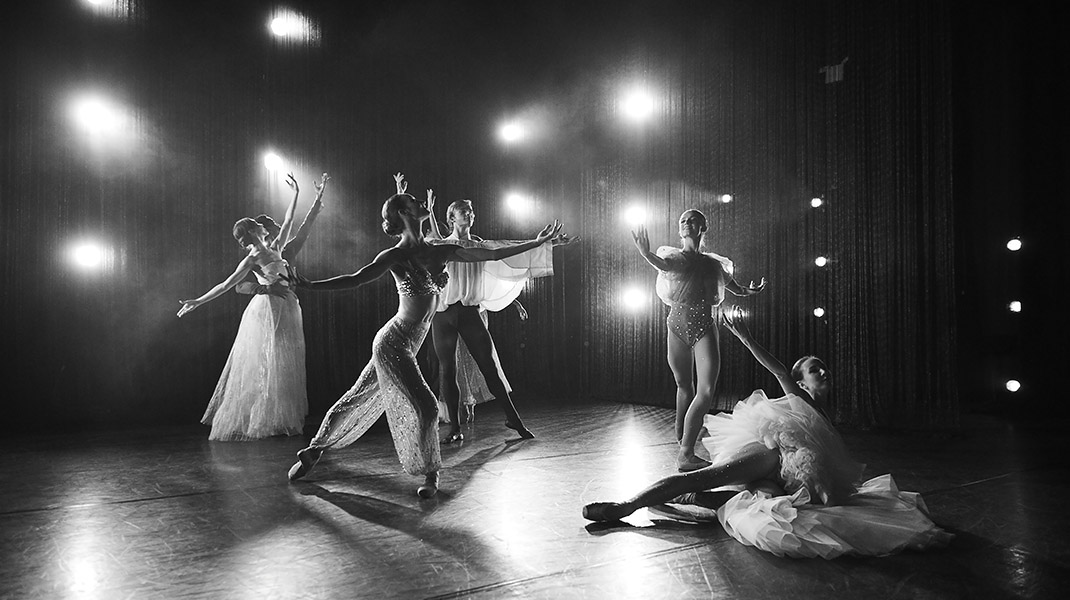
ABT 2020. Misty Copeland and Calvin Royal III. Photo: Ruth Hogben.

ABT 2020 Season

ABT dancers Hee Seo, Calvin Royal III, Christine Shevchenko, Aran Bell, Catherine Hurlin and Isabella Boylston. Photo: Osvaldo Pontón. Creative Direction: Ruth Hogben.

ABT 2020

ABT 2020. Isabella Boylston. Photo: Osvaldo Pontón. Creative Direction: Ruth Hogben

ABT 2020

ABT dancers Thomas Forster, Christine Shevchenko, Calvin Royal III, Hee Seo, Catherine Hurlin and Aran Bell. Photo: Osvaldo Pontón. Creative Direction: Ruth Hogben.

Images courtesy American Ballet Theatre.

Lincoln Center at Home, Dance Week, May 30 – June 4, 2020

Lincoln Center for the Performing Arts (LCPA) announces a week devoted to dance. Part of Lincoln Center at Home (#LincolnCenterAtHome), the offerings, which will be streamed at LincolnCenter.org and on Lincoln Center’s Facebook Page, were filmed during more than 40 years of performances on the Lincoln Center Campus by such renowned institutions as Ballet Hispánico, New York City Ballet, American Ballet Theatre, The School of American Ballet, and Alvin Ailey American Dance Theater.

  • Saturday May 30 at 2pm: CARMEN.maquia and Club HavanaBallet Hispánico
  • Saturday May 30 at 8pm: A Midsummer Night’s Dream, New York City Ballet
  • Sunday May 31 at 8pm: American Ballet Theatre at the Metropolitan Opera House
  • Monday June 1 at 7pm: The School of American Ballet Virtual Workshop Performance Celebration
  • Tuesday June 2 at 8pm: Coppélia, New York City Ballet
  • Wednesday June 3 at 8pm: Tribute to Balanchine, New York City Ballet
  • Thursday June 4 at 8pm: Chroma, Grace, Takademe, Revelations, Alvin Ailey American Dance Theater
LC CARMEN b64jnrazl7hqiwjhi7tc

Ballet Hispanico in CARMEN.maquia

NYCBallet_AMidSummersNightDream_Reel1A_ProgramMaster_NonOverlap_J074309_4x3_ProResHQ_2997_2CH-3[1]_640x360

New York City Ballet in A Midsummer Night’s Dream

LiveFromLincolnCenter_NYCBallet_TributeToGeorgeBalanchine_Reel2of2_4x3_ProResHQ_2994_2CH-1_640x360

New York City Ballet in Tribute to George Balanchine

Les Sylphides

American Ballet Theatre in Les Sylphides with with Rebecca Wright,
Marianna Tcherkassky and Ivan Nagy leading the cast. Photo by Louis Peres

3391-12_Scotch_SAB_NCrop

Advanced students of the School of American Ballet performing Scotch Symphony at the 2017 Workshop Performances. Choreography by George Balanchine © The George Balanchine Trust. Photo by Paul Kolnik

3469-9_InCreases_SAB

Advanced students of the School of American Ballet performing In Creases at the 2018 Workshop Performances. Photo by Paul Kolnik

Alvin Ailey American Dance Theater in Alvin Ailey's Revelations. Photo by Bill Hebert (1)

Alvin Ailey American Dance Theater in Alvin Ailey’s Revelations. Photo by Bill Hebert

Alvin Ailey American Dance Theater in Ronald K. Brown's Grace. Photo by Pierre Wachholder

Alvin Ailey American Dance Theater in Ronald K. Brown’s Grace. Photo by Pierre Wachholder

Some of the broadcasts have not been seen in decades and are being unlocked as Lincoln Center offers gems from its media archives, including landmark New York City Ballet works by George Balanchine, the company’s co-founder, with some dancers in the roles that Balanchine created for them.

Title photo: David Geffen Hall. Photo by Iñaki Vinaixa for Lincoln Center.

Images courtesy Lincoln Center for the Performing Arts.

Socially Distant Theater: The Solo Show as Seen by Hirschfeld an Online Exhibition by The Al Hirschfeld Foundation, May 11 – June 20,2020

“The Al Hirschfeld Foundation is proud to announce the first in a series of online exhibitions exploring the work of one of the most iconic artists of the last century. On May 11, the Foundation will open a special exhibition for these times: ‘SOCIALLY DISTANT THEATER: The Solo Show as Seen by Hirschfeld’, a collection of 25 drawings, paintings, collages, and prints documenting a half century of one person shows. This special digital exhibit will be online for six weeks through June 20 at AlHirschfeldFoundation.org/exhibitions before a new exhibition is presented.

In addition to showing the artwork in detail as it has never been seen before, throughout the exhibition are links to videos of parts or the whole of some of these solo performances. You can see Henry Fonda as Clarence Darrow, Julie Harris as Emily Dickinson, or Robert Morse as Truman Capote. Or you can see Eric Bogosian, Whoopi Goldberg, and John Leguizamo channel a seemingly endless parade of characters from their solo shows. It turns out being alone has never been so interesting.” ― The Al Hirschfeld Foundation

SociallyDistantTheater-promo

Socially Distant Theater: The Solo Show As Seen By Hirschfeld

11445

The first NINA: Are You With It, Rugged Path, and Girl From Nantucket, 1945

Lily Tomlin in Appearing Nitely 1977

Lily Tomlin in Appearing Nitely, 1977

1127_whoopiv2_copy

Whoopi Goldberg in Whoopi Goldberg, 1984

Mandy Patinkin in Mandy Patinkin Dress Casual 1989

Mandy Patinkin in Mandy Patinkin Dress Casual, 1989

Patrick Stewart in A Christmas Carol 1994

Patrick Stewart in A Christmas Carol, 1994

Christopher Plummer in Barrymore 1997

Christopher Plummer in Barrymore, 1997

John Leguizamo in Sexaholic A Love Story 2002

John Leguizamo in Sexaholic…A Love Story, 2002

Elaine Strich in At Liberty 2002

Elaine Strich in At Liberty, 2002

009

Self Portrait, 1985

selfportbarberchairhr_1

Self Portrait in Barber Chair, 1989

“In the world of the theater, the one-person show is perhaps the best situation and the worst,” writes David Leopold, Creative Director for the AHF in the introduction to the exhibition. “It is a supreme test of assurance and ability; of magnetism and charisma. But the format is also frightening; there’s no one to play against, to lean on, to share the criticism. For an actor, if there is no one else to take the blame, there is also no one to share the credit with as well. The applause at the end is for only one performer. In many ways these performers are all caricatures in the sense they have exaggerated elements of their subject to bring a whole life or simply a story to life. So in essence, Al Hirschfeld, the ultimate solo artist, is the ideal portraitist for this unique form of theater.”

Images courtesy The Al Hirschfeld Foundation.

Francie Bishop Good: Curious Garden at Mindy Solomon Gallery, Miami, through May 31, 2020*

“I am sure there is Magic in everything, only we have not sense enough to get hold of it and make it do things for us” ― Frances Hodgson Burnett, The Secret Garden

“Francie Bishop Good makes gardens-subterranean, magical, tropical, extraterrestrial forms. She occasionally pairs them with paintings. Energetically swirling colors to complement and clash with the three-dimensional component. Her seemingly endless array of works blossom and grow from a long history of training and hard creative work.

Francie uses photography as a point of departure in her works, beginning with a digital image that is then covered with paint, ultimately hiding the initial subject. Hands on manipulation of clay and the ‘conversation’ between two-dimensional and three-dimensional forms painted with the same vibrant polymer palate result in something resoundingly fresh and different – a hard won victory in an art world full of derivation.

For her exhibition Curious Garden, Good activates individual sculptures and organically inspired pedestals as well as large-scale wall works to create a sense of the ‘vegetative’ in the gallery space.” ― Mindy Solomon Gallery

Francie-Bishop-Good-01

The Dragons In Our Plants, 2020. Synthetic polymer paint on board, 40″ × 90″

Francie-Bishop-Good-02

Front: Good Salmon Giant Pinch Pot, 2020. Resin, foam, cement, synthetic polymer paints, bisque-fired earthenware, metal stool, 50 x 36 x 36 in. Back: Remembering Daffs, 2020. Synthetic polymer paint on board, 48″ × 72″

Francie-Bishop-Good-03

Installation view of Francie Bishop Good: Curious Garden

Francie-Bishop-Good-04

Installation view of Francie Bishop Good: Curious Garden

Francie-Bishop-Good-06

Installation view of Francie Bishop Good: Curious Garden

Mandrake, 2020 Pairing nting, 20 x 16 synthetic polymer paints on board Sculpture, 9x11x9 synthetic polymer paint on bisque fired earthenware copy

Good Mandrake, 2020. Synthetic polymer paints on board, bisque-fired earthenware clay with synthetic polymer paints. Painting 20″ x 16″. Sculpture 9″ x 11″ x 9″

Larkspur, pairing 2020 ainting, 18x24 synthetic Polymer paint on Board Sculpture, 10x9x9 synthetic Polymer paints on Bisque Fired Earthenware copy

Good Larkspur, 2020. Synthetic polymer paints on board, bisque-fired earthenware clay with synthetic polymer paints. Painting 20″ x 24″. Sculpture 10″ x 9″ x 9″

Francie-Bishop-Good-07

Installation view of Francie Bishop Good: Curious Garden

Moonflower 2020, Synthetic polymer paints on board, bisque fired earthenware clay with synthetic polymer paints, 18 x 20t

Good Moonflower, 2020. Synthetic polymer paints on board, bisque fired earthenware clay with synthetic polymer paints. Painting 18″ × 24″. Sculpture 7″ x 7″ x 6″

Francie-Bishop-Good-08

Installation view of Francie Bishop Good: Curious Garden

Images courtesy Mindy Solomon Gallery.

*PLEASE NOTE: Mindy Solomon Gallery is temporarily closed to the public.