Artifices Instables, Stories of Ceramics at Nouveau Musée National de Monaco, Villa Sauber, through February 21, 2021

“The exhibition Artifices Instables, Stories of Ceramics presents a journey through inventions and experiments highlighting the diversity of shapes and decorations of ceramics, as well as its production processes. These different stages of production – the selection and preparation of clay, the shaping, the finishing, the decoration, the cooking and the enamelling – reveal, also, the ‘recipes’ and the almost alchemic preparations which vary from one creator/inventor to the other.

Cristiano Raimondi, guest curator at the NMNM for this exhibition, chose to investigate ceramics as a heterogenic and unstable material, able to tell transversal stories. Through a selection of more than 120 pieces by international artists, the curator envisioned a set-up which is a crossover between atelier and a cabinet of curiosities. The exhibition path involves both floors of Villa Sauber, and the works are displayed following the idea of affinity and visual references.” — Nouveau Musée National de Monaco

Exhibition views of Artifices instables, Histoires de céramiques at Nouveau Musée National de Monaco, Villa Sauber.

Poterie artistique de Monaco, Style Fischer (1871‐1889). Collections Comité National des Traditions Monégasques, NMNM et Palais Princier Photo : NMNM/Andrea Rossetti, 2020
Poterie artistique de Monaco, Style Fischer (1871‐1889). Collections Comité National des Traditions Monégasques, NMNM et Palais Princier
Aaron Angell. Photo : NMNM/Andrea Rossetti, 2020
Eugène Baudin (showcase). Photo : NMNM/Andrea Rossetti, 2020
Chiara Camoni, The Ashes of Montelupo, 2017. Photo : NMNM/Andrea Rossetti, 2020
Johan Creten. Photo : NMNM/Andrea Rossetti, 2020
Albert Diato. Photo : NMNM/Andrea Rossetti, 2020
Simone Fattal. Photo : NMNM/Andrea Rossetti, 2020
Ron Nagle. Photo : NMNM/Andrea Rossetti, 2020
Georges Ohr (foreground). Eugène Baudin (background). Photo : NMNM/Andrea Rossetti, 2020
Brian Rochefort. Photo : NMNM/Andrea Rossetti, 2020
Magdalena Suarez Frimkess. Untitled, 2016. Glazed ceramic, 21 x 20 x 13 cm. Private collection, Milan. Photo : Andrea Rossetti

Curator and scenography : Cristiano Raimondi.

Title image: Left: Poterie artistique de Monaco, Style Fischer (1871-1889). Glazed pottery with polychrome sprigs, 40 x 23,5 x 21 cm. Collection NMNM. Right: Ron Nagle, Coitis Mortis, 2013. Ceramic, glaze, catalyzed polyurethane, epoxy resin, and aluminum, 17 x 22 x 14cm. Collection Silvia Fiorucci Roman, Monaco.

Images courtesy Nouveau Musée National de Monaco.

Come Together, Right Now: The Art of Gathering at Chrysler Museum of Art, October 11, 2020 – January 3, 2021

“The Chrysler Museum of Art encourages everyone to consider the bonds between us with Come Together, Right Now: The Art of Gathering.  On view at the Museum and in outdoor locations in Norfolk, the exhibition features more than 100 artworks drawn from the Chrysler’s collection and digital photography submitted by community members. Visitors will see many works that are rarely on view and masterpieces from all areas of the collection, including photography, painting, sculpture and installation works.  Four themes—Together in Celebration, Together in Purpose, Together in Justice, and Together in Love—will highlight the many ways artists examine the joys and complexities of ‘coming together’ and showcase how communities are linked by activities, celebrations, demonstrations, love and family.

Come Together, Right Now was conceived in the early days of the COVID-19 pandemic when people grappled with the new restrictions spawned by social distancing while also uniting in a struggle to control the devastating disease. The public killings of Black and brown people intensified the sense of separation and division and the need to create community as we address uncomfortable but necessary questions about racism and intolerance and chart the course toward an inclusive future. Artwork reminds us of the value of community and prompts us to consider creative solutions to the impediments we face as we work to come together. It also helps us to discover all that we can learn right now from self-examination and each other through our through our common experiences, causes, celebrations and struggles.” Chrysler Museum of Art

Doris Ulmann (American, 1882–1934). The Preacher’s Family, South
Carolina, ca. 1929–1931. Platinum print. Museum purchase.
Philip Evergood (1901-1973). Music, 1933, revised 1959. Oil on canvas. Gift of Walter P. Chrysler, Jr.
in memory of Jack Forker Chrysler.
Ernest C. Withers (American, 1922-2007). Big Ella, Club Paradise, Memphis,
Tennessee, 1960s, printed ca. 2000. Gelatin silver print. Gifts of Ernest
C. Withers and Panopticon Gallery © Estate of Ernest C. Withers and
Panopticon Gallery of Photography, Boston, MA.
Pierre Daura (American (born Spain), 1896 – 1976). Baseball,
ca. 1939-55. Oil on board. Gift of Martha Randolph Daura
© Daura Estate.
Marilyn Nance (American, b. 1953). Three Placards (Elijah Muhammad, Martin Luther King, Jr. and Malcolm X),
June 14, 1986. Gelatin silver print. Gift of Joyce F. and Robert B. Menschel © Marilyn Nance.
Ken Heyman (American, born 1930.) Israel (Closeup of Men Holding Hands), 1965. Gelatin silver print.
Gift of Dr. Donald and Alice Lappe © Ken Heyman.
Mark Markov-Grinberg (Russian, 1907-2003). Happy Maternity,
Stavropol Territory, 1935, printed later. Gelatin silver print. Gift of
Gary Ginsberg and Susanna Aaron © Mark Markov-Grinberg.
David A. Douglas (American, b.1958). Portrait of M.K. and Scout, 2005.
Mixed media on panel. Gift of the artist in memory of K.D. Baker
© David A. Douglas
Robert Mapplethorpe (American, 1946 – 1989). Patti Smith (Neckbrace),
New York. 1977. Gelatin silver print. Gift of the artist
© The Robert Mapplethorpe Foundation, Inc.
Bob Lerner (American, 1926 – 2019). Candle Vendor, Cuzco, Peru.
Date: 1961, printed 2002. Inkjet print.
Gift of the artist © Chrysler Museum of Art.
Romare Bearden (American, 1911-1988). Tidings, ca. 1970. Screenprint on
wove paper. Museum collection.

“As many have faced unprecedented isolation this year and grappled with social distancing, we believe the time is perfect to celebrate the most powerful things that draw us together. Images of love, dancing, making music and working together will lift visitors’ spirits and inspire them to reflect,” said Lloyd DeWitt, Ph.D., the Chrysler Museum’s Chief Curator and Irene Leache Curator of European Art.

Images courtesy Chrysler Museum of Art.

Howardena Pindell: Rope/Fire/Water at The Shed, October 16, 2020 – April 11, 2021

 “The Shed reopened October 16 with a solo exhibition, nearly four years in the making, featuring new work by Howardena Pindell that examines the violent, historical trauma of racism in America and the therapeutic power of art.

For her solo exhibition at The Shed, Howardena Pindell presents Rope/Fire/Water, her first video in 25 years and a project unrealized by the artist since the 1970s that The Shed commissioned. In this powerful work, Pindell recounts personal anecdotes and anthropological and historical data related to lynchings and racist attacks in the United States. She accompanies this voice-over with archival photos of lynchings and the historic Birmingham, Alabama, Children’s Crusade, a series of nonviolent protests carried out by young people in May 1963. 

Over her nearly 60-year career, Pindell has created richly textured abstract paintings while engaging with politics and the social issues of her time. In the exhibition, Pindell will also debut a pair of large-scale paintings related to global atrocities of imperialism and white supremacy, and several abstract paintings that demonstrate a through line in Pindell’s practice: after working on traumatic historical projects, the artist decompresses by creating meticulously produced, large-scale abstract works on unstretched canvas.” — The Shed

 “Working on my commission for The Shed has been a very rewarding and healing experience,” said Howardena Pindell. “It allowed me to conceptualize an idea as a result of an experience I had as a child. I put it forth as a performance piece to a group of white women artists at the A.I.R. Gallery, where I was a founder in the early 1970s. They turned it down. (I was the only nonwhite member of the gallery.) The now-realized concept is the film Rope/Fire/Water, the centerpiece of the exhibition.”

Columbus, 2020. Mixed media on canvas, 108 x 120 inches. Courtesy the artist, Garth Greenan Gallery,
and Victoria Miro Gallery.
Ko’s Snow Day, 2020. Mixed media on canvas, 67 x 72 inches. Courtesy the artist,
Garth Greenan Gallery, and Victoria Miro Gallery.
Plankton Lace #2, 2020. Mixed media on canvas, 77 x 88 inches. Courtesy the artist,
Garth Greenan Gallery, and Victoria Miro Gallery.
Four Little Girls, 2020. Mixed media on canvas, 108 x 120 inches. Courtesy the artist, Garth Greenan
Gallery, and Victoria Miro Gallery.
Plankton Lace #1, 2020. Mixed media on canvas, 76 x 86 inches. Courtesy the artist,
Garth Greenan Gallery, and Victoria Miro Gallery.
Rope/Fire/Water, 2020. Digital Video, 19min. Courtesy of The Artist, Commissioned by The Shed.
Slavery Memorial: Lash, 1998 – 99. Mixed media on canvas, 55 1/2 x 136 inches.
Courtesy the artist, Garth Greenan Gallery, and Victoria Miro Gallery.
Slavery Memorial: Lash, 1998 – 99. Mixed media on canvas. 55 1/2 x 136 inches.
Courtesy the artist,Garth Greenan Gallery, and Victoria Miro Gallery.
Canals/Underground Railroad, 2015–2016. Mixed media on canvas, 40 x56 1/2 inches.
Courtesy the artist, Garth Greenan Gallery, and Victoria Miro Gallery.

Bringing together Howardena Pindell’s painting and video practice has increasingly gained importance as our current circumstances have progressed,” said Adeze Wilford, Curatorial Assistant at The Shed. “Her intention to bring attention to historical events that have shaped this country through her video, paired with the beauty of her abstract paintings offered as care for the viewer, is vital for this moment. While we cannot turn away from the past, the artist has provided a means to bring us peace as we face the painful legacy of racism in this country.”

Howardena Pindell: Rope/Fire/Water was organized by Adeze Wilford, Assistant Curator at The Shed.

Images courtesy The Shed.

Chen Zhen: Short-circuits at Pirelli HangarBicocca, October 15, 2020 – February 21, 2021

“Pirelli HangarBicocca presents Short-circuits a retrospective exhibition curated by Vicente Todolí, devoted to Chen Zhen, one of the leading figures of contemporary art. Celebrated by the world’s most important museums, the artist managed to bridge the gap between the art of the East and that of the West, with works of great visual impact that anticipated the socio-political complexities of today, addressing themes such as globalisation and consumerism, and their relationship with tradition. The exhibition is a journey through some of the artist’s most important works, which convey the idea of the interdependence between the material and spiritual world, through reflections on the curative and purifying action of art and on the metaphorical processes of illness and healing.

The title of the exhibition is inspired by the artist’s creative method, which he referred to as a ‘short-circuit phenomenon’, which is that of revealing the hidden meaning of a work of art when it is taken from the original setting for which it was created to a different place. This process led Chen Zhen to reflect on the concept of symbolic and cultural enrichment as a means of artistic creation. The idea behind the exhibition reflects this, creating original interactions between the works on display, while also shedding light on the numerous cross-references and connections that appear in the artist’s works, creating an open dialogue on a number of themes: globalisation and consumerism, overcoming the hegemony of Western values, and the coming together of different cultures.” — Pirelli HangarBicocca

Chen Zhen. Jue Chang, Dancing Body – Drumming Mind (The Last Song), 2000. Installation view, Kunsthalle Wien, Vienna, 2007. Collection Pinault. Courtesy GALLERIA CONTINUA © ADAGP, Paris. Photo: Ela Bialkowska
Chen Zhen. Éruption future, 1992. Installation view, Centre d’art contemporain de Saint- Rémy-de-Provence, Saint-Rémy-de-Provence, 1992. Courtesy GALLERIA CONTINUA © ADAGP, Paris. Photo: Éric Angels
Chen Zhen. Fu Dao / Fu Dao, Upside-down Buddha / Arrival at Good Fortune, 1997. Installation view, CCA – Center for Contemporary Art, Kitakyushu, 1997. Courtesy GALLERIA CONTINUA © ADAGP, Paris. Photo: Chen Zhen
Chen Zhen. Nightly Imprecations,1999. Installation view, Art & Public, Geneva, 2000. Courtesy GALLERIA CONTINUA © ADAGP, Paris. Photo: Courtesy Art & Public, Geneva
Chen Zhen. Daily Incantations, 1996. Installation view, Deitch Projects, New York, 1996. Courtesy GALLERIA CONTINUA © ADAGP, Paris. Photo: Tom Powell
Chen Zhen. Le Chemin / Le Radeau de l’écriture, 1991 (detail). Installation view, Centre lotois d’art contemporain, Figeac,1991. Courtesy GALLERIA CONTINUA © ADAGP, Paris. Photo: Éric Angels
Chen Zhen. Purification Room, 2000 (detail). Courtesy GALLERIA CONTINUA © ADAGP, Paris. Photo: Sebastiano Pellion di Persano
Chen Zhe. Prayer Wheel – “Money makes the Mare Go” (Chinese slang), 1997 (detail). Installation view, P.S.1 Contemporary Art Center, New York, 1997-1998. Collection Pinault. Courtesy GALLERIA CONTINUA © ADAGP, Paris. Photo: Chen Zhen
Chen Zhen. Le Rite suspendu / mouillé, 1991. Courtesy GALLERIA CONTINUA © ADAGP, Paris. Photo: Ela Bialkowska
Chen Zhen. Jardin-Lavoir, 2000. Installation view, Galleria Continua, Havana, 2017-2018. Courtesy GALLERIA CONTINUA © ADAGP, Paris. Photo: Nestor Kim
Chen Zhen. Jardin-Lavoir, 2000 (detail). Installation view, Galleria Continua, Havana, 2017-2018. Courtesy GALLERIA CONTINUA © ADAGP, Paris. Photo: Nestor Kim

Curated by Vicente Todolí, Short-circuits, is conceived as an immersive exploration within the complex artistic research of Chen Zhen, bringing together for the first time some of the artist’s most significant works from 1991 to 2000, in the 5,500 square metres of the Navate and Cubo of Pirelli HangarBicocca.

Images courtesy Pirelli HangarBicocca.

Mending the Sky at New Orleans Museum of Art (NOMA), October 9, 2020 – January 31, 2021

“The New Orleans Museum of Art (NOMA) presents Mending the Sky, the museum’s first major exhibition following New Orleans’ months-long shutdown due to the COVID-19 pandemic. The exhibition brings together eleven artists’ projects that respond to a world turned upside down. Working across the fields of art, animation, and performance, the artists work to shift conversations, challenge entrenched views, and subvert the established order.

Inspired by one of the works in the exhibition, Mending the Sky takes its title from a Chinese fable in which a rip in the sky causes the earth to split open, bringing floods, fires, famine, and disease—until a goddess comes to take on the arduous task of mending the broken sky. Each of the artworks in the exhibition help give shape to the aftermath of calamity, building towards a more equitable future by helping to envision the new world that might rise in the wake of crisis. Premiering several major new acquisitions by both locally based and internationally recognized artists, Mending the Sky brings a global perspective to issues currently affecting the city of New Orleans, the United States and the world. With roots in Brazil, China, the Dominican Republic, Jamaica, Vietnam, India, Europe, and the American South, each of these artist projects are also acts of world-building that offer a glimpse of a future that cannot yet be seen.” — New Orleans Museum of Art

Beili Liu, After All / Mending The Sky, 2018- ongoing, Silk, cyanotype, sewing needle, thread, wire, hardware, dimensions variable, 2017 © Beili Liu Studio
Beili Liu, After All / Mending The Sky, 2018- ongoing (detail), Silk, cyanotype, sewing needle, thread, wire, hardware, dimensions variable, 2017 © Beili Liu Studio
Firelei Báez, the trace, whether we are attending to it or not (a space for each other’s breathing), 2019, Acrylic, oil and transfer on archival printed canvas, 90 x 114 3/8 inches, Museum Purchase, Carmen Donaldson Fund, 2019.34, Courtesy of the artist and James Cohan, New York. Photo: Phoebe d’Heurle
Firelei Báez, the trace, whether we are attending to it or not (a space for each other’s breathing), 2019 (detail), Acrylic, oil and transfer on archival printed canvas, 90 x 114 3/8 inches, Museum Purchase, Carmen Donaldson Fund, 2019.34, Courtesy of the artist and James Cohan, New York. Photo: Phoebe d’Heurle
Baseera Khan, Braidrage, 2017-ongoing, Indoor rock-climbing wall made from
99 unique poured dyed resin casts of the corners of the artist’s body,
embedded with wearable Cuban chains, hair, and hypothermia blankets,
Dimensions variable, Collection of the Artist, Installation view at the
University of Albany, Photo by Ariana Sarwari © Baseera Khan
Lorna Williams, Lore, 2017, Plaster teeth, vines, plumbing hardware, light
fixture, 64 x 32 x 72 inches, New Orleans Museum of Art, Museum Purchase
© Lorna Williams
Lorna Williams, Lore, 2017, Plaster teeth, vines, plumbing hardware, light
fixture, 64 x 32 x 72 inches, New Orleans Museum of Art, Museum Purchase
© Lorna Williams
Jamilah Sabur, Un chemin escarpé / A steep path, 2018, Five-channel video, Installation from the Hammer Museum, Color, sound, 10:27 min (Edition 1/2), Museum Purchase, Carmen Donaldson Fund, 2019.35, Courtesy of the Artist and Nina Johnson, Miami. Photo: Jeff McLane © Jamilah Sabur
Jamilah Sabur, Un chemin escarpé / A steep path, 2018 (still), Five-channel video, Installation from the Hammer Museum, Color, sound, 10:27 min (Edition 1/2), Museum Purchase, Carmen Donaldson Fund, 2019.35, Courtesy of the Artist and Nina Johnson, Miami. Photo: Jeff McLane © Jamilah Sabur
Clarissa Tossin, Encontro das Águas (Meeting of Waters), 2016-18, Woven archival inkjet print on vinyl (4 1/2 x 50 feet), terra-cotta objects, fishnet, thread, kraft paper and woven baskets and backpack made out amazon.com boxes, Installation View: Blanton Museum of Art, UT Austin (January 13 – July 1, 2018), Collection of the Artist © Clarissa Tossin
Clarissa Tossin, Encontro das Águas (Meeting of Waters), 2016-18 (detail),
Woven archival inkjet print on vinyl, 4 1/2 x 50 feet, Installation View: Blanton
Museum of Art, UT Austin (January 13 – July 1, 2018),
Collection of the Artist © Clarissa Tossin
Diedrick Brackens, If you feed a river, 2019, New Orleans Museum of Art, Museum
Purchase, Carmen Donaldson Fund, 2019.61 © Diedrick Brackens
Ana Hernandez, A Sense of Memory, 2015, Cast metal, found glass, found wood, found
metal, found nails, steel wire, steel wool, oil pastel, wood stain on found wood panel in
artist’s frame, 60 x 41 x 14 inches, New Orleans Museum of Art, Museum Purchase
© Ana Hernandez
Heidi Hahn, Burn Out in Shredded Heaven, 2018-2019, Oil on canvas, 80 x 74 in,
Museum purchase with funds provided by Kevie Yang, 2019.60 © Heidi Hahn
Thao Nguyen Phan, Mute Grain, 2019 (still), Three channel video installation, 15:45 mins, loop, black and white, Collection of the Artist, Image courtesy of the artist and the Rockbund Art Museum, Shanghai © Thao Nguyen Phan
Thao Nguyen Phan, Mute Grain, 2019 (still), Three channel video installation, 15:45 mins, loop, black and white, Collection of the Artist, Image courtesy of the artist and The Factory Contemporary Arts Centre, Ho Chi Minh City © Thao Nguyen Phan
Helen Gillet, Photo by Jason Kruppa © Helen Gillet

Mending the Sky touches on the many complex ideas that we, as a community, have been challenged to address in the times of COVID-19,” says Susan Taylor, Montine McDaniel Freeman Director at NOMA. “This is an exhibition about loss and uncertainty, but also creates space for recovery, healing, and hope.”

Mending the Sky focuses on artists who consider the crucial actions of care, healing and coming together,” says exhibition curator Katie A. Pfohl. “Each of them recognizes the hard work of recovery: that we must remedy the challenges of the past and address present issues to forge a new path forward.”

Images courtesy New Orleans Museum of Art.

Uninvited Guests: Episodes on Women, ideology and the visual arts in Spain (1833-1931) at Museo Nacional del Prado, October 6, 2020 – March 14, 2021

Uninvited Guests: Episodes on Women, ideology and the visual arts in Spain (1833-1931) is the first exhibition to be organised by the Museo Nacional del Prado following its reopening. It aims to offer a reflection on the way in which the structures of power defended and disseminated the role of women in society through the visual arts, from the reign of Isabel II to that of her grandson Alfonso XIII. During that period the Museo del Prado became a key element for the acquisition and display of contemporary art, playing an important role in the construction of the idea of a modern Spanish school. 

Structured into episodes particularly representative of this art system, Uninvited Guests generates a series of contexts that allow for a reflection from the starting point of the Museum’s own collection and for an analysis of some of the most profound consequences of a common mindset. The women present in all these contexts are rarely the protagonists through their own initiatives, nor are they located where they wished to be: rather, they were merely ‘uninvited guests’ in the art world of the day.” — Museo Nacional del Prado

Queen Joanna the Mad imprisoned in Tordesillas with her daughter, the Infanta. Catherine Francisco Pradilla y Ortiz (1848-1921). Oil on canvas, 1906. Madrid, Museo Nacional del Prado
The Father’s Advice. Plácido Francés y Pascual (1834-1902).
Oil on canvas, 1892. La Coruña, Museo de Bellas Artes,long-term
loan from Museo Nacional del Prado
Pride. Baldomero Gili y Roig (1873-1926. Oil on canvas, c. 1908.
Logroño, Museo de la Rioja, long-term loan from Museo Nacional del Prado
The Human Beast. Antonio Fillol Granell (1870-1930). Oil on canvas, 1897.
Madrid, Museo Nacional del Prado
Phalaena. Carlos Verger Fioretti (1872-1929). Oil on canvas, 1920. Zamora, Museo de Zamora,
long-term loan from Museo Nacional del Prado
The Price of a Mother (To Improve the Race). Marceliano Santa María Sedano (1866-1952). Oil on canvas, 1900. Burgos, Ayuntamiento de Burgos
The Satyr. Antonio Fillol Granell (1870-1930). Oil on canvas, 1906. Collection of the Fillol family
The Spinners (copy of Velázquez). Madame Anselma (Alejandrina Gessler de Lacroix)
(1831-1907). Oil on canvas, 1872. Madrid, Museo de la Real Academia de Bellas Artes
de San Fernando
Fruits. Julia Alcayde y Montoya (1855-1939). Oil on canvas, 1911. Madrid, Museo Nacional del Prado
Joaquina Serrano Painting in Espalter’s Studio. Joaquín Espalter y Rull
(1809-1880). Oil on canvas, c. 1876. Madrid, Museo Nacional del Romanticismo
A Procession Passing through the Cloister of San Juan de los Reyes, Toledo.
Elena Brockmann de Llanos (1865-1946). Oil on canvas, c. 1892. Granada,
Hospital Real, Rectorado de la Universidad, long-term loan from
Museo Nacional del Prado

Miguel Falomir, Director of the Museo Nacional del Prado observes: “I think that one of the most interesting aspects of this exhibition lies precisely in the fact that it is directed towards official art of the time rather than the periphery. Some of these works may be surprising to our modern sensibility but not for their eccentricity or doom-laden aura, rather for being an expression of an already outmoded time and society.”   

Uninvited Guests was curated by Carlos G. Navarro, a curator in the Museum’s department of 19th century painting.

Images courtesy Museo Nacional del Prado.

Félix Fénéon: The Anarchist and the Avant-Garde—From Signac to Matisse and Beyond at The Museum of Modern Art, through January 2, 2021

“The Museum of Modern Art presents Félix Fénéon: The Anarchist and the Avant-Garde—From Signac to Matisse and Beyond, the first exhibition devoted to the influential French art critic, editor, publisher, dealer, and collector Félix Fénéon (1861–1944). Though largely unknown today and always discreetly behind the scenes in his own era, Fénéon played a key role in the careers of leading artists from Georges Seurat and Paul Signac to Pierre Bonnard and Henri Matisse, each of whom is featured prominently in the exhibition. Félix Fénéon: The Anarchist and the Avant-Garde—From Signac to Matisse and Beyond traces Fénéon’s career through approximately 130 works that highlight his initiatives to help artists via his reviews, exhibitions, and acquisitions; his commitment to anarchism; his literary engagements; and his contributions to the recognition of non-Western art. Bringing together a selection of major works that Fénéon admired, championed, and collected, alongside contemporary letters, documents, and photographs, the exhibition underscores the tremendous impact he had on the development of modernism in the late 19th and early 20th centuries.” — The Museum of Modern Art

Installation views of Félix Fénéon: The Anarchist and the Avant-Garde—From Signac to Matisse and Beyond, The Museum of Modern Art, New York, August 27, 2020–January 2, 2021. Digital Image © 2020 The Museum of Modern Art, New York. Photos by Robert Gerhardt.

This exhibition is currently being presented here as part of our Virtual Views series. Explore Fénéon’s life and the art that inspired him through highlights from MoMA curator Starr Figura, along with art, audio, and video features below.

The MoMA exhibition is organized by Starr Figura, Curator, Department of Drawings and Prints, The Museum of Modern Art; Isabelle Cahn, Senior Curator of Paintings, Musée d’Orsay; Philippe Peltier, former Head, Océania and Insulindia Unit, Musée  du quai Branly-Jacques Chirac; with Anna Blaha, Curatorial Assistant, Department of Drawings and Prints, The Museum of Modern Art.

Title image: Paul Signac (French, 1863–1935). Opus 217. Against the Enamel of a Background Rhythmic with Beats and Angles, Tones, and Tints, Portrait of M. Félix Fénéon in 1890, 1890. Oil on canvas, 29 x 36 1/2″ (73.5 x 92.5 cm). The Museum of Modern Art, New York. Gift of Mr. and Mrs. David Rockefeller.

Images courtesy The Museum of Modern Art.

Bochner Boetti Fontana at Magazzino Italian Art, October 2, 2020 – January 11, 2021

“Magazzino Italian Art opens a special exhibition examining the formal, conceptual, and procedural affinities in the work of Mel Bochner, Alighiero Boetti, and Lucio Fontana. Curated by Bochner in collaboration with Magazzino, the exhibition marks the first presentation to consider the American artist’s extensive, yet overlooked, engagement with the practices of Fontana and Boetti, as well as with Italian art at large. Bochner Boetti Fontana offers, through the artist’s perspective, a number of resonances between his work and that of the Italian and Italian-Argentine artists: an exploration of systems, language, and materials; and a sense of irony and humor, often and especially shared by Arte Povera and Conceptualism, as all these works opened the work of art onto the space of display. The exhibition also traces parallels between the artistic movements that developed on both sides of the Atlantic during the 1960s and 1970s: Spatialism and Arte Povera in Italy, and Process and Conceptual Art in the United States.” — Magazzino Italian Art

Installation views of Bochner Boetti Fontana at Magazzino Italian Art (October 2 – January 11, 2020). Photos by Alexa Hoyer. Courtesy of Magazzino Italian Art Foundation.

“We are incredibly honored to be working with Mel Bochner to curate this special exhibition that explores key tenets of his practice in tandem with those of Alighiero Boetti and Lucio Fontana,” said Magazzino Director Vittorio Calabrese. “The exhibition marks the first time that an American artist will be shown in our galleries and speaks to the central theme of our 2020 season, which reveals the international resonances of postwar and contemporary Italian art within a broader global perspective.”

David Hockney: Drawing from Life at The Morgan Library & Museum, October 2, 2020 – May 30, 2021

“David Hockney (b. 1937) is one of the most internationally renowned living artists. The exhibition is the first to focus on his portraits on paper, and one of very few to investigate his drawing practice. Featuring over 100 drawings and prints, it will trace a trajectory from the artist’s early sketches as a student, through his Ingres-like portraits of the 1970s, to his return to the sketchbooks and imaginative iPhone and iPad portraits in the early 2000s.

David Hockney: Drawing from Life is unique in exploring the artist’s drawing practice through a small group of sitters he has depicted repeatedly over the years: his muse and confidante, the designer Celia Birtwell; his mother; his friend and former curator Gregory Evans; master printer Maurice Payne; and the artist himself. Each of these individuals has been important to Hockney. Over time, he has rendered them in different media and forms, ranging from pencil, pen and ink, and pastel drawings to etchings, photo collages, and iPhone and iPad drawings. In revisiting these people over decades, Hockney gives us a singular insight into the evolution of his practice. The Morgan is a fitting venue for this intimate presentation of drawings, which will take place in the museum’s Morgan Stanley East and West Galleries. In 2017, the Morgan acquired Celia, Paris (1969), the first portrait Hockney made of his close friend, the celebrated textile designer Celia Birtwell. The drawing, included in this exhibition, is a superb example of the precise, delicate style of line drawing—indebted to Ingres and Picasso—that Hockney developed in the late 1960s, notably in portraits of friends and family.” — The Morgan Library & Museum

David Hockney, Self Portrait, 1954. Collage on newsprint,
16 1/2 x 11 3/4″. Bradford Museums & Art Galleries, Cartwright Hall
© David Hockney. Photo: Richard Schmidt
David Hockney, The Student: Homage to Picasso, 1973. Etching,
29 3/4″ x 22 1/4″. National Portrait Gallery, London. Purchased, 1979
© David Hockney. Photo: Richard Schmidt
David Hockney, Mother, Paris, 1972. Colored pencil on paper, 17 x 14”.
Collection of The David Hockney Foundation, © David Hockney.
Photo: Richard Schmidt
David Hockney, Study for My Parents and Myself, 1974. Crayon on paper, 14 x 17″. The David
Hockney Foundation © David Hockney. Photo: Richard Schmidt
David Hockney, Mother, Bradford. 19 Feb 1978, 1979. Sepia ink on paper,
14 x 11″. The David Hockney Foundation © David Hockney.
Photo: Richard Schmidt
David Hockney, Gregory, 1978. Colored pencil on paper, 17 x 14″.
The David Hockney Foundation © David Hockney. Photo: Richard Schmidt
David Hockney, Gregory, Los Angeles, March 31st 1982. Composite polaroid,
14 1/2 x 13 1/4″. Collection of the artist© David Hockney. Photo: Richard Schmidt
David Hockney, Celia, Carennac, August 1971. Crayon on paper, 17 x 14″.
The David Hockney Foundation © David Hockney. Photo: Richard Schmidt
David Hockney, Maurice, 1998. Etching, 44 x 30 1/2. The David Hockney
Foundation © David Hockney. Photo: Richard Schmidt
David Hockney, Self Portrait 26th Sept. 1983. Charcoal on paper,
30 x 22 1/2″. The Doris and Donald Fisher Collection at the San Francisco
Museum of Modern Art © David Hockney
David Hockney, Self Portrait with Red Braces, 2003. Watercolor on paper,
24 x 18 1/8″. © David Hockney. Photo: Richard Schmidt
David Hockney, Celia Birtwell, 21 Nov 2019, 2019, Ink on paper, 30 1 x
22 5/8″. Collection of the artist © David Hockney. Photo: Richard Schmidt
David Hockney, No. 1201. March 14, 2012. iPad drawing printed on paper.
Exhibition Proof 37 x 28. The David Hockney Foundation © David Hockney

“The exhibition reveals an intimate side of this internationally known artist. In the self-portraits as in the portraits of his closest friends done over a period of more than fifty years, Hockney uses drawing to explore with honesty and vulnerability the passage of time and the aging process” — Isabelle Dervaux, Acquavella Curator of Modern and Contemporary Drawings

The exhibition is organized by the National Portrait Gallery, London, in collaboration with the artist and the Morgan. The exhibition was curated by Sarah Howgate, Senior Curator of Contemporary Collections at the National Portrait Gallery, London. The exhibition’s co-curator at the Morgan, was Isabelle Dervaux, Acquavella Curator of Modern and Contemporary Drawings.

Images courtesy The Morgan Library & Museum.


Solomon R. Guggenheim Museum reopens Saturday, October 3 with two new exhibitions: Away from the Easel: Jackson Pollock’s Mural and Knotted, Torn, Scattered: Sculpture after Abstract Expressionism

Away from the Easel: Jackson Pollock’s Mural, through September 19, 2021

Away from the Easel: Jackson Pollock’s Mural is a focused exhibition dedicated to the first monumental painting by American artist Jackson Pollock (1912–1956). Commissioned by visionary collector and dealer Peggy Guggenheim for her Manhattan home in the summer of 1943, during a pivotal moment in the evolution of Pollock’s artistic style, Mural was completed by the end of that same year. The current presentation is the first time this work has been on view in New York in more than 20 years and marks the painting’s debut at the Guggenheim Museum. Along with Mural, the exhibition features three additional works by Pollock.” — Guggenheim Museum

Jackson Pollock, Mural, 1943. Oil and casein on canvas, 242.9 x 603.9 cm. University of Iowa Stanley Museum of Art, Gift of Peggy Guggenheim, 1959.6 © 2020 The Pollock-Krasner Foundation/Artists Rights Society (ARS), New York.
Jackson Pollock with the unpainted canvas for Mural in his and
Lee Krasner’s Eighth Street apartment, New York, summer 1943.
Photo: Bernard Schardt, Courtesy Pollock-Krasner House and
Study Center, East Hampton, New York, Gift of Jeffrey Potter.
Jackson Pollock standing in front of Mural (1943) at the studios of Vogue magazine, ca. 1947.
Photo: Herbert Matter, courtesy of the Department of Special Collections, Stanford University Libraries.
Jackson Pollock, The She-Wolf, 1943. Oil, gouache, and plaster on canvas, 106.4 x 170.2 cm. The Museum of
Modern Art, New York, Purchase, 1944 © 2020 The Pollock-Krasner Foundation/Artists Rights Society
(ARS), New York. Digital Image ©The Museum of Modern Art/Licensed by SCALA/Art Resource, New York.

Away from the Easel: Jackson Pollock’s Mural was curated by Megan Fontanella, Curator, Modern Art and Provenance.

Knotted, Torn, Scattered: Sculpture after Abstract Expressionism, through September 19, 2021

Knotted, Torn, Scattered: Sculpture after Abstract Expressionism is an exhibition that considers the diverse ways that artists in the 1960s and ’70s responded to the achievements of Abstract Expressionist painters to formulate unique approaches to sculptural practice. Knotted, Torn, Scattered features works from the Guggenheim collection by Lynda Benglis, Maren Hassinger, Robert Morris, Senga Nengudi, Richard Serra, and Tony Smith. These artists saw in postwar painting urgent questions about scale, material, and process.”— Guggenheim Museum

Foreground: Tony Smith, Wingbone, 1962. Plaster, cloth and wood, 26 x 25 x 118 inches (66 x 63.5 x 299.7 cm). Solomon R. Guggenheim Museum, New York, Purchased through prior gifts of Andrew Powie Fuller and Geraldine Spreckels Fuller Bequest and Richard S. Zeisler Bequest. © 2020 Estate of Tony Smith / Artists Rights Society (ARS), New York.
Richard Serra, Belts, 1966–67. Vulcanized rubber and neon, approximately 6 feet 8 inches x 16 feet 6 inches x 1 foot 8 inches (203.2 x 502.9 x 50.8 cm). Solomon R. Guggenheim Museum, New York, Panza Collection, 91.3863. © 2020 Richard Serra / Artists Rights Society (ARS), New York
Lynda Benglis, Two, 1973. Gauze, paint, plaster, mica, metal, and plastic
sequins, 31 x 12 1/8 x 16 1/2 inches (78.8 x 31.7 x 41.9 cm).
Solomon R. Guggenheim Museum, New York, Gift, Mrs. Andrew P. Fuller.
©Lynda Benglis / Licensed by VAGA at Artists Rights Society (ARS), New York.
Robert Morris, Untitled (Black Felt), ca. 1969, Felt, approximately 22 feet (670.5 cm), overall. Solomon R. Guggenheim Museum, New York, Panza Collection, 91.3803. © 2020 The Estate of Robert Morris / Artists Rights Society (ARS), New York.
Senga Nengudi, Performance Piece, 1978/2013. Gelatin silver prints, triptych, 40 x 31 1/2 inches (101.6 x 80 cm) and 31 1/2 x 40 inches (80 x 101.6 cm) each. A.P. 1/1, edition of 5. Photographs by Harmon Outlaw. Solomon R. Guggenheim Museum, New York, Purchased with funds contributed by the Photography Council, with additional funds contributed by Manuel de Santaren 2019.20. © 2020 Senga Nengudi.
Maren Hassinger, Untitled, 1972/2020. Rope. Dimensions variable. Solomon R. Guggenheim Museum, New York. Purchased through prior gift of Judge and Mrs. Samuel I. Rosenman, 2020 © 2020 Maren Hassinger.

Knotted, Torn, Scattered: Sculpture after Abstract Expressionism was organized by Lauren Hinkson, Associate Curator, Collections. 

Title image: Solomon R. Guggenheim Museum Restoration Completion. Photograph by David Heald © The Solomon R. Guggenheim Foundation, New York.

Images courtesy Solomon R. Guggenheim Museum.

Barbara Chase-Riboud: Avatars at Fondation d’entreprise Hermès, La Verrière, September 25 – December 5, 2020

For the fifth exhibition in the cycle “Matters of Concern | Matières à panser” at La Verrière, the Brussels art space of the Fondation d’entreprise Hermès, curator Guillaume Désanges presents “Avatars”, a solo exhibition by American artist Barbara Chase-Riboud.

“Based in Paris since 1960, American artist Barbara Chase-Riboud has developed a career of extraordinary creativity and productivity, as a novelist, poet, sculptor and draughtswoman, investing each practice with the same intensity, and always to universal acclaim. In the field of visual art, she is noted for her imposing series of bronze sculptures with ropes of silk or wool, drawing on a vast spectrum of sources from modernist abstraction to classical statuary, textiles, baroque art and vernacular African or Oceanian sculpture. The strange, faceless figures – part totems, fetish-figures or monuments – are forged from intricate combinations of materials that generate a subtle interplay of sheen, opacity and chromatic density enshrined in the ‘flesh’ of the material itself. Created partly by chance, partly by necessity, the striking combination of crumpled metal and minutely detailed woven components imbues the figures with a stylistic ambiguity reminiscent of Louise Nevelson, Barbara Hepworth, John Chamberlain, or certain works by Terry Adkins, not forgetting Auguste Rodin, Umberto Boccioni or Alberto Giacometti. Barbara Chase-Riboud is a free spirit, guided by intuition, by her own desires and impulses, and by the possibilities of her raw materials, working outwith the strictures of an overly circumscribed aesthetic or theoretical programme. Her gestures are directed by the acuity of her gaze and the physicality of things, taking a chance on the capacity of form to ‘realise’ itself. The resulting, hybrid sculptural forms combine elegance and savagery, power and fragility, stasis, presence and mobility.” — From the text by Guillaume Désanges

Barbara Chase-Riboud, Zanzibar, 1970, bronze and silk ropes,
270 × 81 × 49 cm, FNAC 10323, Centre national des arts plastiques
© Rights reserved / Cnap. Photo © Fabrice Lindor.
Barbara Chase-Riboud, Little Black Flag, 2007, bronze with black
patina, silk, wool with steel support, 157.5 × 97.8 × 45.7 cm,
courtesy of Michael Rosenfeld Gallery LLC, New York (New York,
United States) © Barbara Chase-Riboud.
Barbara Chase-Riboud, Poet Walking His Dog, 1994, unique bronze casts, rope, wax medallions,
graphite and crayon on paper on Corten steel shelf, 115.6 × 124.5 × 25.4 cm, courtesy of
Michael Rosenfeld Gallery LLC, New York (New York, United States) © Barbara Chase-Riboud.
Barbara Chase-Riboud, Malcolm X #16, 2016, bronze with red patina, silk,
wool, polished cotton, synthetic fibers with steel support,
233.7 × 81.3 × 76.2 cm, courtesy of Michael Rosenfeld Gallery LLC,
New York (New York, United States) © Barbara Chase-Riboud.
Barbara Chase-Riboud, La Musica Red #4, 2003, bronze with red patina and silk,
76.2 × 38.1 × 81.3 cm, courtesy of the artist © Barbara Chase-Riboud.
Barbara Chase-Riboud, Harrar/Middle Passage, circa 1973, marble
and synthetic fibers, courtesy of the artist © Barbara Chase-Riboud.
Barbara Chase-Riboud, Zanzibar Table Gold, 1972, polished bronze, silk and
linen, 38.7 × 33.0 × 32.4 cm, courtesy of the artist © Barbara Chase-Riboud.
Barbara Chase-Riboud, Mandela Monument, Capetown, 1996,
charcoal, charcoal pencil, ink with engraving and aquatint on paper,
80 × 60.3 cm, courtesy of Michael Rosenfeld Gallery LLC,
New York (New York, United States) © Barbara Chase-Riboud.
Barbara Chase-Riboud, Anna Akhmatova Monument, St. Petersburg,
1996, charcoal, charcoal pencil, ink with engraving and aquatint
on paper, 80 × 60.3 cm, courtesy of Michael Rosenfeld Gallery LLC,
New York (New York, United States) © Barbara Chase-Riboud.
Barbara Chase-Riboud, Monument to Man Ray’s The Enigma of Isidore
Ducasse Philadelphia, Penn. U.S.A., 1996, charcoal, charcoal pencil,
ink with engraving and aquatint on paper, 80 × 60.3 cm, courtesy of
Michael Rosenfeld Gallery LLC, New York (New York, United
States) © Barbara Chase-Riboud.
Barbara Chase-Riboud, Marquis de Sade Monument, Charenton,
1997, charcoal, charcoal pencil, and ink with engraving and aquatint
on paper, 80 × 61 cm, courtesy of Michael Rosenfeld Gallery LLC,
New York (New York, United States) © Barbara Chase-Riboud.
Portrait of Barbara Chase-Riboud, courtesy of Michael Rosenfeld Gallery LLC, New York
(New York, United States). Photo © Grant Delin.

Images courtesy Fondation d’entreprise Hermès, Brussels, Belgium.

Don McCullin at Tate Liverpool, September 16, 2020 – May 9, 2021

“Tate Liverpool presents a major retrospective of the legendary British photographer Sir Don McCullin. Renowned as one of Britain’s greatest living photographers, McCullin has captured images of conflict from around the world including Vietnam, Northern Ireland, Lebanon and Biafra. Often taken at great personal risk, these unforgettable photographs will be shown alongside McCullin’s work made in the north of England, his travel assignments and his long-term engagement with landscape. Originally shown at Tate Britain in spring 2019, the exhibition presents more than 200 photographs and showcases the scope and achievements of his career.

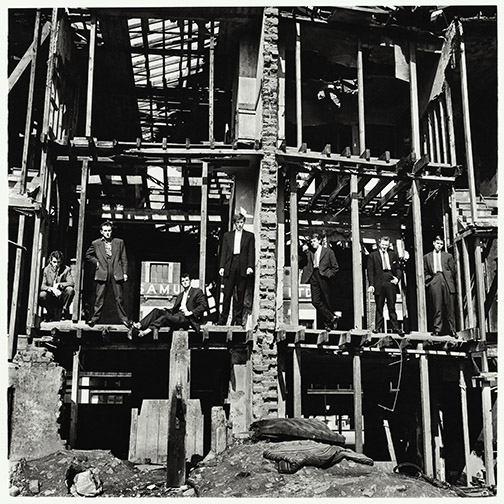
Don McCullin began taking photographs in 1958, documenting his surroundings and local community in his native Finsbury Park, London. In 1959 his photograph The Guvnors, a portrait of a notorious local gang, was published in The Observer, launching his career as a photojournalist. In 1961, McCullin travelled to Germany on his own initiative, funding the trip himself, to photograph the building of the Berlin Wall. The images he took won him a British Press Award and a permanent contract with The Observer. Working first for The Observer and then The Sunday Times Magazine, McCullin went on to capture major conflicts around the world from Vietnam and the Congo to Cyprus and Beirut. The exhibition includes some of McCullin’s most iconic and poignant photographs including Shell-shocked US Marine, The Battle of Hue 1968 and Starving Twenty Four Year Old Mother with Child, Biafra 1968. Alongside McCullin’s hand-printed silver gelatin prints, the exhibition also includes his magazine spreads, contact sheets, helmet and the Nikon camera which took a bullet for him in Cambodia.” — Tate Liverpool

Don McCullin Protester, Cuban Missile Crisis, Whitehall, London 1962 © Don McCullin
Don McCullin Shell-shocked US Marine, The Battle of Hue 1968,
printed 2013. ARTIST ROOMS Tate and National Galleries
of Scotland.Presented by the artist 2014 © Don McCullin
Don McCullin The Guvnors in their Sunday Suits, Finsbury Park, London 1958
© Don McCullin
Don McCullin Liverpool c. 1970 © Don McCullin
Don McCullin Catholic Youths Attacking British Soldiers in the Bogside of Derry, Londonderry 1971
© Don McCullin
Don McCullin Early shift, West Hartlepool steelworks, County Durham 1963 © Don McCullin

The exhibition was originally conceived by Simon Baker, Director of The Maison Européene de la Photographie, Paris, with Shoair Mavlian, Director of Photoworks, assisted by Aïcha Mehrez, Assistant Curator of Contemporary British Art, Tate Britain. The exhibition at Tate Liverpool is co-curated by Tamar Hemmes, Assistant Curator Tate Liverpool, and Aïcha Mehrez.

Images courtesy Tate Liverpool.