Collision/Coalition at The Shed, June 19 – August 25, 2019

The Shed presents three distinct yet interrelated new commissions in an exhibition that explores social and cultural confrontations and alliances. Collision/Coalition pairs new work by artists Tony Cokes and Oscar Murillo with screenings of a new documentary film about artist Beatriz González, directed by Yanina Valdivieso and Vanessa Bergonzoli. The commissions are on view in The Shed’s Level 4 Gallery.

Tony Cokes (b. 1956, Richmond, Virginia) lives and works in Providence, Rhode Island. Cokes creates video works in a recognizable style that piece together found footage or solid-color slides, animated quoted text, and pop music. He offers social critiques by quoting a range of sources including philosophers, musicians, activists, comedians, and other cultural figures. His works often include archival footage, images from Hollywood films, textual commentary, voiceovers, and popular music.

Oscar Murillo (b. 1986, La Paila, Colombia) is a multidisciplinary artist who works in painting, drawing, sculpture, video, installation, interventions, and performance. In exploring the conditions of contemporary globalization, Murillo considers the movement and use of people, things, and ideas. In 2019, Murillo was nominated for the prestigious Turner Prize.

Photographs by Corrado Serra.

Tony Cokes

Tony Cokes

Tony Cokes

Tony Cokes

Tony Cokes

Oscar Murillo

Oscar Murillo

Oscar Murillo

Oscar Murillo

Oscar Murillo

Oscar Murillo

Oscar Murillo

Oscar Murillo

Oscar Murillo

Oscar Murillo

Oscar Murillo

Oscar Murillo

Oscar Murillo

Collision/Coalition asks ,‘What is the role of art in the face of political, social, and economic power?’” said Emma Enderby. “The Shed is a place for conversation and reflection and by interconnecting three distinct commissions and angles—Tony Cokes, Oscar Murillo, and Yanina Valdivieso and Vanessa Bergonzoli’s documentary on Beatriz González’s work—questions are raised on art’s agency and relationship to capital, on its power to succumb or to subvert.”

Collision/Coalition is organized by Emma Enderby, Senior Curator, with Adeze Wilford, Curatorial Assistant.

Bodies of Knowledge at New Orleans Museum of Art, June 28 – October 13, 2019

The New Orleans Museum of Art (NOMA) presents Bodies of Knowledge. The exhibition brings together eleven international contemporary artists to reflect on the role that language plays in defining our cultural identities, and will be the first global contemporary exhibition of its kind at NOMA. Working with materials that range from books and silent film to ink and musical scores, artists Manon Bellet, Wafaa Bilal, Garrett Bradley, Mahmoud Chouki, Adriana Corral, Zhang Huan, William Kentridge, Shirin Neshat, Edward Spots, Donna Crump and Wilmer Wilson IV propose new ways of representing our collective past. 

Organized around a series of immersive installation and film projects, Bodies of Knowledge asks us to consider how we might write more inclusive narratives, reshape public space, and account for people and histories that have, in large measure, been shared.” — New Orleans Museum of Art

Bodies of Knowledge brings a global perspective to current discussions in New Orleans surrounding cultural preservation and historical memory,” said Susan Taylor, NOMA’s Montine McDaniel Freeman Director. “This exhibition invites visitors to consider the role that language plays in their lives, and explore the many ways history can be erased, rewritten, and reinterpreted.”

Manon Bellet, Brève braise, 2010-present, Site-specific installation, Burnt silk paper affixed to the wall, Dimensions variable, Installation image from Galerie Ausstellungsraum Klingental, Basel Switzerland, 2011, Photo by Viktor Kolibal © Manon Bellet

Manon Bellet, Brève braise, 2010-present, Site-specific installation, Burnt silk paper affixed to the wall, Dimensions variable, Installation image from Kunstmuseum Solothurn, Switzerland, 2013, Photo by Viktor Kolibal © Manon Bellet

Manon Bellet, Brève braise, 2010-present, Site-specific installation, Burnt silk paper affixed to the wall, Dimensions variable, Image courtesy the artist from a performance at the Contemporary Art Center New Orleans, Photo by Julie Verlinden, © Manon Bellet

Wafaa Bilal, 168:01, 2016 to present, Site-specific installation, Dimensions variable, Image courtesy of the artist, Photograph by John Dean © Wafaa Bilal

Wafaa Bilal, 168:01, 2016 to present, Site-specific installation, Dimensions variable, Image courtesy of the artist, Photograph by John Dean © Wafaa Bilal

Wafaa Bilal, The Ashes Series: Piano, 2003-2013, Archival inkjet photograph, 40 x 50 inches, Image courtesy of the artist © Wafaa Bilal

Wafaa Bilal, The Ashes Series: Pool, 2003-2013, Archival inkjet photograph, 40 x 50 inches, Image courtesy of the artist © Wafaa Bilal

Garrett Bradley, America (film still), 2019, Multi-Channel video installation, 35mm film transferred to video, black and white, sound, Image courtesy of the artist © Garrett Bradley 2019

Garrett Bradley, America (film still), 2019, Multi-Channel video installation, 35mm film transferred to video, black and white, sound, Image courtesy of the artist © Garrett Bradley 2019

Garrett Bradley, America (film still), 2019, Multi-Channel video installation, 35mm film transferred to video, black and white, sound, Image courtesy of the artist © Garrett Bradley 2019

Mahmoud Chouki in New Orleans, 2019, Photography by Marion Hill © Marion Hill

Adriana Corral, Memento, 2013-present, Site-specific installation, Dimensions variable, Female victim names (Juarez, Chihuahua, Mexico) transferred onto (three) walls: acetone, ash burial plot in the center of the space (dimensions of plot, 4ft x 8ft x1inch), Ashes obtained from burned name listings transferred onto wall, Installation image from the McNay Museum, San Antonio, Texas, 2013 © Adriana Corral

Adriana Corral, Memento, 2013-present, Site-specific installation, Dimensions variable, Female victim names (Juarez, Chihuahua, Mexico) transferred onto (three) walls: acetone, ash burial plot in the center of the space (dimensions of plot, 4ft x 8ft x1inch), Ashes obtained from burned name listings transferred onto wall, Installation image from the McNay Museum, San Antonio, Texas, 2013 © Adriana Corral

Wilmer Wilson IV, Black Mask, 2012, Single channel video, 5:56 minutes, Edition 3/5, New Orleans Museum of Art

Wilmer Wilson IV, Black Mask, 2012, Single channel video, 5:56 minutes, Edition 3/5, New Orleans Museum of Art

Wilmer Wilson IV, A Running Tour of Some Monuments of Rome (detail), 2014, Publication, dimensions variable. Courtesy the artist.

Wilmer Wilson IV, A Running Tour of Some Monuments of Philadelphia (detail), 2014, Publication, dimensions variable. Courtesy the artist.

Shirin Neshat, Rapture Series (Women with Writing on Hands), 1999, Chromogenic color print, 40 ½ x 60 ¼ inches, Edition of 5 + 2AP. New Orleans Museum of Art, Museum Purchase, 2001.292, © Shirin Neshat, courtesy Galerie Jérôme de Noirmont, Paris

Shirin Neshat, Rapture (Production still), 1999, Two-channel black and white video, sound (projection), 13 min loop, © Shirin Neshat, Courtesy the artist and Gladstone Gallery, New York and Brussels

Shirin Neshat, Fervor (Production still), 2000, Two-channel black and white video, sound (projection), 10 min loop, © Shirin Neshat, Courtesy the artist and Gladstone Gallery, New York and Brussels

William Kentridge, Zeno Writing, 2002, Video still of animated film using charcoal and pastel drawing, footage from theater performance, documentary material from First World War, 35mm and digital video, Video and DVD transfer, 12 minutes, Museum of Fine Arts, Houston, Joint acquisition of the Museum of Fine Arts, Houston, funded by Nina and Michael Zilkha; and the High Museum of Art, Atlanta, 2004.201, Image courtesy the artist and Marian Goodman Gallery © William Kentridge

William Kentridge, Zeno Writing, 2002, Video still of animated film using charcoal and pastel drawing, footage from theater performance, documentary material from First World War, 35mm and digital video, Video and DVD transfer, 12 minutes, Museum of Fine Arts, Houston, Joint acquisition of the Museum of Fine Arts, Houston, funded by Nina and Michael Zilkha; and the High Museum of Art, Atlanta, 2004.201, Image courtesy the artist and Marian Goodman Gallery © William Kentridge

William Kentridge, Zeno Writing, 2002, Video still of animated film using charcoal and pastel drawing, footage from theater performance, documentary material from First World War, 35mm and digital video, Video and DVD transfer, 12 minutes, Museum of Fine Arts, Houston, Joint acquisition of the Museum of Fine Arts, Houston, funded by Nina and Michael Zilkha; and the High Museum of Art, Atlanta, 2004.201, Image courtesy the artist and Marian Goodman Gallery © William Kentridge

Zhang Huan, Family Tree, 2000 (Detail), 9 Chromogenic color prints on Fuji Archival paper, Edition A/P 1, 80 x 70 inches each, Collection of Howard and Joy Osofsky, Photograph courtesy Zhang Huan Studio © Zhang Huan, courtesy Pace Gallery

Zhang Huan, Family Tree, 2000 (Detail), 9 Chromogenic color prints on Fuji Archival paper, Edition A/P 1, 80 x 70 inches each, Collection of Howard and Joy Osofsky, Photograph courtesy Zhang Huan Studio © Zhang Huan, courtesy Pace Gallery

Zhang Huan, Family Tree, 2000 (Detail), 9 Chromogenic color prints on Fuji Archival paper, Edition A/P 1, 80 x 70 inches each, Collection of Howard and Joy Osofsky, Photograph courtesy Zhang Huan Studio © Zhang Huan, courtesy Pace Gallery

Edward Spots, Photography by Louis Greenfield © Lois Greenfield

Bodies of Knowledge is organized by the New Orleans Museum of Art and co-curated by Katie Pfohl, Curator of Modern and Contemporary Art and Allison Young, The Andrew W. Mellon Curatorial Fellow for Modern and Contemporary Art. 

Images courtesy New Orleans Museum of Art.

Among Others: Photography and the Group at The Morgan Library & Museum, through August 18, 2019

“The Morgan Library & Museum presents a new exhibition about photography’s unique capacity to represent the bonds that unite people. From posed group portraits and candid street scenes to collages, constructions, and serial imagery, photographers have used many methods to place people in a shared frame of reference. Among Others: Photography and the Group brings together more than sixty exceptional works spanning the 1860s to the present to explore the complexity of a type of image that is often taken for granted. Drawn primarily from the Morgan’s collection, the works in the exhibition include images by Amy Arbus, Eve Arnold, Robert Frank, Peter Hujar, and August Sander.

Among Others presents the seemingly endless possibilities of the group photograph, placing historically important portraits alongside records of significant cultural moments and experiments that helped reinvent the genre. In representations of the group, artist, subjects, and circumstances come together to create an image that might call to mind a loving family, a chance encounter among strangers, an embodiment of the democratic spirit, or a photographer’s ability to read and respond to a crowd. The photographs in the exhibition come in many formats: not just exhibition prints, snapshots, and posters, but also photo books, painted wooden sculpture, collages, baseball cards, and even a wastepaper basket featuring Richard M. Nixon. In their range and ingenuity, the works pose questions about family, diversity, democracy, representation, and the varieties of visual delight.” — The Morgan Library & Museum

Amy Arbus (b. 1954), The Clash, NYC, 1981, gelatin silver print. The Morgan Library & Museum, Gift of Amy Arbus, 2018.74 Copyright © Amy Arbus.

Eugene Omar Goldbeck (1892–1986), Indoctrination Division, Air Training Command, Lackland Air Base, San Antonio, Texas, July 19, 1947, gelatin silver print. The Morgan Library & Museum, Purchased on funds given by members of the Photography Collectors Committee, 2018.63.

Peter Hujar (1934–1987), Contact sheet: Gay Liberation Front poster image shoot, 1969 or 1970, gelatin silver print. The Morgan Library & Museum, Peter Hujar Collection, Purchased on the Charina Endowment Fund; 2013.108:8.1263. © Peter Hujar Archive, LLC, courtesy Pace/MacGill Gallery, New York and Fraenkel Gallery, San Francisco.

Bob Adelman (1930–2016), People Wall, World’s Fair, New York, 1965, gelatin silver print. The Morgan Library & Museum, Purchased as the gift of Nancy and Burton Staniar, 2015.131. © Bob Adelman Estate.

Art Kane (1925–1995), Harlem, 1958, In “The Golden Age of Jazz,” Esquire, January 1959. The Morgan Library & Museum, Purchased on funds given by Peter J. Cohen, Ronald R. Kass, and Elaine Goldman; 2018.120. Photograph by Art Kane for Esquire, a publication of the Hearst Communications, Inc., Art Kane. Courtesy © The Art Kane Archive.

Mike Mandel (b. 1950), Baseball-Photographer Trading Cards, 1975, photo-offset lithography on cards. The Morgan Library & Museum, Purchased as the gift of Jane P. Watkins, 2013.5:1-135. © Mike Mandel, courtesy the artist and Robert Mann Gallery, New York.

Myers Cope Co. Atlantic City, Photo-multigraph of unidentified girl, ca. 1920s, gelatin silver print with postcard back. The Morgan Library & Museum, Gift of Peter J. Cohen, 2015.119:100.

Powell & Co. Anti-Slavery Constitutional Amendment Picture, 1865, albumen print. The Morgan Library & Museum, Purchased on the Charina Endowment Fund, 2018.64.

Studio Retrato-Escultura Victor, Fotoescultura with eight subjects, ca. 1940s, carved, painted, and assembled wood with hand-colored gelatin silver prints. The Morgan Library & Museum, Purchased as the gift of Richard and Ronay Menschel, 2016.163.

Photographer Unidentified, Group at the Main Building, Moscow State University, after 1953, gelatin silver print and mixed media. The Morgan Library & Museum, Purchased as the gift of Peter J. Cohen, 2018.129.

Photographer Unidentified, Untitled (women in aprons pose among trees), 1913, commercially processed gelatin silver print; postcard. The Morgan Library & Museum, Gift of Peter J. Cohen, 2015.119:101.

“The Morgan’s photography collection has grown and evolved in many directions since its founding in 2012, always with a dual emphasis on the camera’s creative possibilities and its role in shaping modern sensibilities,” said Colin B. Bailey, Director. “We are excited to present this wide-ranging selection of works, most of which are recent acquisitions and have never been exhibited before at the Morgan.” 

Joel Smith, the Morgan’s Richard L. Menschel Curator and Department Head, said, “The group is a subject we’re so accustomed to seeing in photographs, it’s easy to forget that the conventions around it had to be invented, and that they shape our picture of reality. This exhibition invites viewers to explore the many ways images have defined—since long before the selfie—how it looks to belong to a group and what it means to be represented.” 

Images courtesy The Morgan Library & Museum.

Drawing the Curtain: Maurice Sendak’s Designs for Opera and Ballet at The Morgan Library & Museum, June 14 – October 6, 2019

“A summer exhibition at the Morgan Library & Museum celebrates an extraordinary bequest from acclaimed author and illustrator of children’s books Maurice Sendak (1928–2012). Best known for his 1963 picture book Where the Wild Things Are, Sendak was an avid music and opera lover. Beginning in the late 1970s, he embarked on a second career as a designer for opera and ballet. Drawing the Curtain brings together nearly one hundred and fifty drawings from more than 900 by Sendak in the Morgan’s collection, including preliminary sketches, storyboards, finished watercolors, and painted dioramas. Also included are earlier works by Sendak on loan from The Maurice Sendak Foundation, and a number of props and costumes. This is the first museum exhibition dedicated to Sendak’s set and costume designs, offering new insights into the artist’s inspirations and creative process.” — The Morgan Library & Museum

Maurice Sendak (1928-2012), Diorama of Moishe scrim and flower proscenium (Where the Wild Things Are), 1979-1983, watercolor, pen and ink, and graphite pencil on laminated paperboard. © The Maurice Sendak Foundation. The Morgan Library & Museum, Bequest of Maurice Sendak, 2013.103:69, 70, 71. Photography by Graham Haber, 2018.

Maurice Sendak (1928-2012), Study for stage set #10 (Where the Wild Things Are), 1979-1983, watercolor, pen and ink, and graphite pencil on paper. © The Maurice Sendak Foundation. The Morgan Library & Museum, Bequest of Maurice Sendak, 2013.103:52. Photography by Janny Chiu.

Maurice Sendak (1928-2012), Study for Wild Things costume, with notes (Where the Wild Things Are), 1979, watercolor, pen and ink, and graphite pencil on paper. © The Maurice Sendak Foundation. The Morgan Library & Museum, Bequest of Maurice Sendak, 2013.103:19. Photography by Janny Chiu.

Maurice Sendak (1928-2012), Storyboard (Where the Wild Things Are), 1979, watercolor, pen and ink, and graphite pencil on paper. © The Maurice Sendak Foundation. The Morgan Library & Museum, Bequest of Maurice Sendak, 2013.103:72a-b. Photography by Janny Chiu.

Maurice Sendak (1928-2012), Design for show scrim (The Magic Flute), 1979-1980, watercolor and graphite pencil on paper on board. © The Maurice Sendak Foundation. The Morgan Library & Museum, Bequest of Maurice Sendak, 2013.104:120. Photography by Janny Chiu.

Maurice Sendak (1928-2012), The Edge of the Forest, interlude between Act II, scenes 2 and 3, for PBS broadcast (The Cunning Little Vixen), 1983, watercolor and graphite pencil on paper. © The Maurice Sendak Foundation. The Morgan Library & Museum, Bequest of Maurice Sendak, 2013.105:102. Photography by Janny Chiu.

Maurice Sendak (1928-2012), Costume study for Fox Golden-Stripe (The Cunning Little Vixen), 1981, watercolor and graphite pencil on paper. © The Maurice Sendak Foundation. The Morgan Library & Museum, Bequest of Maurice Sendak, 2013.105:77. Photography by Janny Chiu.

Maurice Sendak (1928-2012), Design for show curtain (The Love for Three Oranges), 1981, watercolor and graphite pencil on paper. © The Maurice Sendak Foundation. The Morgan Library & Museum, Bequest of Maurice Sendak, 2013.106:167. Photography by Janny Chiu.

Maurice Sendak (1928-2012), Design for March curtain, Act II (The Love for Three Oranges), 1981, watercolor and graphite pencil on paper. © The Maurice Sendak Foundation. The Morgan Library & Museum, Bequest of Maurice Sendak, 2013.106:166. Photography by Janny Chiu.

Maurice Sendak (1928-2012), Storyboard (The Love for Three Oranges), 1981-1982, watercolor, ink, and graphite pencil on board. © The Maurice Sendak Foundation. The Morgan Library & Museum, Bequest of Maurice Sendak, 2013.106:169. Photography by Janny Chiu.

Maurice Sendak (1928-2012), 5 Playing cards (The Love for Three Oranges), 1982, watercolor and pen and ink on laminated paperboard. © The Maurice Sendak Foundation. Collection of Justin G. Schiller. Photography by Graham S. Haber, 2018.

Maurice Sendak (1928-2012), Ship (Nutcracker), 1982-4, gouache and graphite pencil on paper. © The Maurice Sendak Foundation. The Morgan Library & Museum, Bequest of Maurice Sendak, 2013.107:289. Photography by Janny Chiu.

Maurice Sendak (1928-2012), Design for show curtain (Nutcracker), 1983, gouache and graphite pencil on paper.© The Maurice Sendak Foundation. The Morgan Library & Museum, Bequest of Maurice Sendak, 2013.107:262. Photography by Janny Chiu.

Maurice Sendak (1928-2012), Design for battle scene, Act I (Nutcracker), 1982-1983, gouache and graphite pencil on paper. © The Maurice Sendak Foundation. The Morgan Library & Museum, Bequest of Maurice Sendak, 2013.107:262. Photography by Janny Chiu.

“Few people know that Maurice Sendak had a long and productive relationship with the Morgan. It is exciting to focus on his work as a theater designer, which is an often overlooked but important aspect of his career as an artist,” said Director of the museum, Colin B. Bailey. “We are deeply grateful to The Maurice Sendak Foundation for their support in the planning of this exhibition and for lending several key works, including examples of Sendak’s charming Fantasy Sketches.” 

“This exhibition will be a wonderful surprise to those who are familiar with Sendak primarily through his beloved books,” said Rachel Federman, Assistant Curator in the Modern and Contemporary Drawings Department and the curator of the exhibition. “His designs for opera and ballet have all the beauty, humor, and complexity of his picture books and illustrations, but they also put on full display his passion for art, art history, and music.”

Images courtesy The Morgan Library & Museum.

Kokdu: A Story of Guardian Angels at Alice Tully Hall, Lincoln Center, Saturday June 29, 7pm

Film at Lincoln Center, the New York Asian Film Foundation, and the Korean Cultural Center New York present a special New York Asian Film Festival event: The US Premiere of Kokdu: A Story of Guardian Angels, a fantasy world where traditional Korean music (gugak) meets cinema. The event features live traditional accompaniment performed by a 20-member ensemble from the National Gugak Center.

Director Tae-yong Kim, Music Director Jun-Seok Bang and the National Gugak Center have joined forces to acquaint Korean music and dance to an international audience by bridging several art forms and building a unique, heartwarming story of loss and redemption, steeped in local Korean folklore but with a universal appeal.

Melding fantasy and reality, Kokdu weaves between cinematic storytelling and a staged theatrical piece, creating a moving and magical experience. It explores Korean myths and traditions while dealing deftly with dark themes of death, guilt and mourning, with an empathetic, poignant, and ultimately uplifting touch.

Images of Kokdu: A Story of Guardian Angels. Courtesy National Gugak Center.

This performance is presented by Film at Lincoln Center, New York Asian Film Foundation, and the Korean Cultural Center New York; performed by the National Gugak Center.

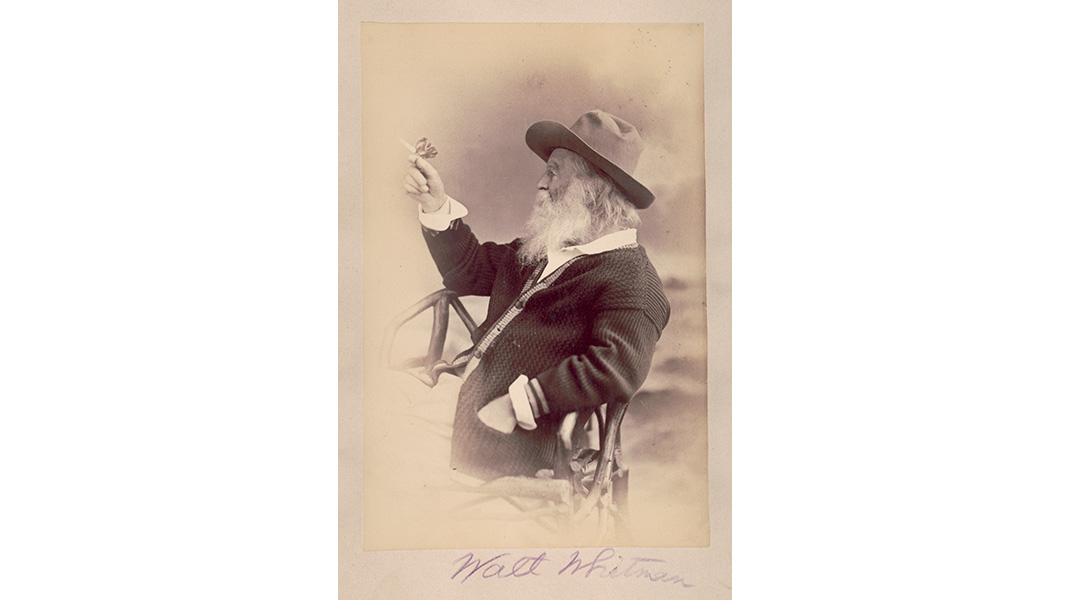
Walt Whitman: Bard of Democracy at The Morgan Library & Museum, June 7 – September 15, 2019

In celebration of the two hundredth anniversary of Walt Whitman’s birth, the Morgan Library & Museum exhibits the work of the beloved American poet. In a notebook in 1859, Whitman wrote, “Comrades! I am the bard of Democracy,” and over his 73 years (1819–1892) he made good on that claim. As he bore witness to the rise of New York City, the Civil War and other major transformations in American life, Whitman tried to reconcile the famous contradictions of this country through his inclusivity and his prolific body of work. The author of one of the most celebrated texts of American literature—Leaves of Grass (1855)—came from humble origins in Long Island and Brooklyn but eventually earned a global audience that has never stopped growing. Walt Whitman: Bard of Democracy traces the development of his writing and influence, from his early days producing local journalism and sensational fiction to his later years writing the visionary poems that would revitalize American letters.” — The Morgan Library & Museum

Walt Whitman (1819 – 1892), O Captain! my captain! April 27, 1890, autograph manuscript. The Morgan Library & Museum, MA 1212.1. Photography by Graham S. Haber, 2012.

Walt Whitman (1819 – 1892), Walt Whitman’s Books, broadside advertisement printed on linen, circa 1871. The Morgan Library & Museum, gift of Charles E. Feinberg, 1959; PML 50638. Photography by Graham S Haber 2017.

Napoleon Sarony (1821-1896), Carte de visite photograph of Oscar Wilde, 1882. The Morgan Library & Museum, purchased on the Drue Heinz Fund, 2017; MA 8916. Photography by Janny Chiu, 2019.

Moses P. Rice and Sons?, Walt Whitman and his rebel soldier friend Pete Doyle, 1865, photograph; albumen print on card mount. Library of Congress Prints and Photographs Division. Image provided courtesy of the Library of Congress.

Walt Whitman (1819-1892), An American Poet at Last!, self-review, Brooklyn, 1855. The Library of Congress. Image provided courtesy of the Library of Congress.

George Frank E. Pearsall (1841-1931), Walt Whitman, 1871, photographic print. The Library of Congress. Image provided courtesy of the Library of Congress.

Walt Whitman (1819-1892), Draft of preface for Democratic Vistas, circa 1871, autograph manuscript. The Library of Congress. Image provided courtesy of the Library of Congress.

Phillips & Taylor, Photograph of Walt Whitman, 1873. Prints and Photographs Division, Library of Congress. Image provided courtesy of the Library of Congress.

Walt Whitman’s cardboard butterfly, 1850. Manuscript Division, Thomas Biggs Harned Collection of Walt Whitman Papers, Library of Congress. Image provided courtesy of the Library of Congress.

Walt Whitman (1819-1892), Notebook with trial lines for Leaves of Grass, circa 1847-1854. The Library of Congress. Image provided courtesy of the Library of Congress.

Walt Whitman (1819-1892), Notebook with trial lines for Leaves of Grass, circa 1847-1854. The Library of Congress. Image provided courtesy of the Library of Congress.

Walt Whitman (1819-1892), Notebook with trial lines for Leaves of Grass, circa 1847-1854. The Library of Congress. Image provided courtesy of the Library of Congress.

“Walt Whitman’s poetry occupies a special place in American literature,” said Colin B. Bailey, director of the Morgan Library and Museum. “He was a New Yorker in that he not only captured the spirit of his bustling, complex, and contradictory city, but he also carved out a career path for himself through his ambition and surprisingly proactive self-promotion. We are excited to offer more insight into his inspirations, his world, and the evolution of his dynamic voice.” 

“It was a joy to work with the Morgan on this comprehensive exhibit, and to see New York City all over again, through his eyes,” said Ted Widmer, guest curator and Distinguished Lecturer at the Macaulay Honors College of the City University of New York. “It never stops moving and neither did he.” Widmer is also author of Young America: The Flowering of Democracy in New York City and many other works of history. 

Images courtesy The Morgan Library & Museum.

Natalia Goncharova at Tate Modern, June 6 – September 8, 2019

“Tate Modern presents the UK’s first ever retrospective of the Russian avant-garde artist Natalia Goncharova. This exhibition is a sweeping survey of a pioneering and radical figure, celebrated during her lifetime as a leading modernist artist. Throughout her varied career she challenged the limits of artistic, social and gender conventions, from parading through the streets of Moscow displaying futurist body art and scandalising newspapers of the day, to creating internationally acclaimed designs for fashion and the theatre.

Goncharova’s artistic output traces, influences and transcends the art movements of the 20th century. Born in 1881, she was inspired by the traditional customs and cultures of her native Central Russia – inspirations that pervade her life’s work. By the age of 32, she had already established herself as a leader of the Moscow avant-garde and was the subject of the first monographic exhibition ever staged by a Russian modernist artist. Arriving in Paris in 1914 at the invitation of Sergei Diaghilev, Goncharova was feted for her vibrant costume and set designs for the Ballets Russes.

The exhibition gathers together over 170 international loans which rarely travel, including from Russia’s State Tretyakov Gallery which houses the largest collection of Goncharova works in the world. At the heart of the show is a room evoking Goncharova’s remarkable 1913 retrospective that was held at the Mikhailova Art Salon in Moscow, which originally featured some 800 works.” — Tate Modern

Natalia Goncharova (1881- 1962)
. Cyclist, 1913. 
Oil paint on canvas, 
780 x 1050mm. 
State Russian Museum
© ADAGP, Paris and DACS, London 2019

Natalia Goncharova (1881- 1962). Peasant Woman from Tula Province, 1910. Oil paint on canvas, 1035 x 730 mm. State Tretyakov Gallery, Moscow. Bequeathed by A.K. Larionova-Tomilina 1989

Natalia Goncharova (1881- 1962). Peasant woman. Costume design for Le Coq d’Or, 1937. Watercolour, bronze paint and graphite on paper, 455 x 300 mm. State Tretyakov Gallery, Moscow. Presented by E. Kurnan 1983
© ADAGP, Paris and DACS, London 2019

Natalia Goncharova (1881- 1962. ). 
Self-Portrait with Yellow Lilies, 1907-1908. 
Oil paint on canvas
, 775 x 582 mm
. State Tretyakov Gallery, Moscow. Purchased 1927
© ADAGP, Paris and DACS, London 2019

Natalia Goncharova (1881- 1962). Linen, 1913
. Oil paint on canvas
, 956 x 838 mm. 
Tate. Presented by Eugène Mollo and the artist 1953
© ADAGP, Paris and DACS, London 2019

Natalia Goncharova (1881- 1962). Peasants Picking Apples, 1911. Oil paint on canvas, 1045 x 980 mm. State Tretyakov Gallery, Moscow. Received from the Museum of Artistic Culture 1929 © ADAGP, Paris and DACS, London 2019

Natalia Goncharova (1881- 1962). Harvest: The Phoenix, 1911. Oil paint on canvas, 920 x 975 mm. State Tretyakov Gallery, Moscow. Bequeathed by A.K. Larionova-Tomilina, Paris 1989 © ADAGP, Paris and DACS, London 2019

Natalia Goncharova (1881- 1962). Orange Seller, 1916. Oil paint on canvas, 1310 x 970 mm. Museum Ludwig 
© ADAGP, Paris and DACS, London 2019

Natalia Goncharova (1881- 1962). Theatre costume for Sadko in Sadko, 1916. 1850 x 850 x 650 mm. Victoria and Albert Museum, London. Given by the British Theatre Museum Association © ADAGP, Paris and DACS, London 2019

Natalia Goncharova is curated by Natalia Sidlina, Curator of International Art, and Matthew Gale, Head of Displays, with Katy Wan, Assistant Curator, Tate Modern. Exhibition is organised by Tate Modern in collaboration with Palazzo Strozzi, Florence where it will open on 28 September 2019 and the Ateneum Art Museum, Helsinki where it will open on 21 February 2020.

Images courtesy Tate Modern.

Brazilian Modern: The Living Art of Roberto Burle Marx at New York Botanical Garden (NYBG), June 8 – September 29, 2019

“The New York Botanical Garden (NYBG) presents Brazilian Modern: The Living Art of Roberto Burle Marx, celebrating influential Brazilian modernist artist, landscape architect, and plant explorer and conservationist Roberto Burle Marx. NYBG’s largest botanical exhibition ever, it is also the first to combine a horticultural tribute to Burle Marx’s design work, featuring lush gardens, with a curated gallery of his vibrant paintings, drawings, and textiles, revealing deep connections between his artistic practice and his commitment to environmental conservation. Engaging public programming showcases the sights and sounds of Brazil and its lively contributions to music and dance evoking Rio de Janeiro, the ‘Cidade Maravilhosa’ (‘Wonderful City’) that Roberto Burle Marx called home and inspired his life and work.

Burle Marx (1909–94) was a principal figure in the modernist art and garden movement in Latin America during the second half of the 20th century. His powerful modernist vision produced thousands of gardens and landscapes, including the famous curving mosaic walkways at Copacabana Beach in Rio.” — NYBG

Photographs by Corrado Serra.

Alvin Ailey American Dance Theater at the David H. Koch Theater, Lincoln Center, June 12 – 16, 2019

“Concluding a joyous 60th Anniversary celebration that reached from coast to coast, Alvin Ailey American Dance Theater returns to Lincoln Center for the Performing Arts for seven performances at the David H. Koch Theater June 12 – 16, 2019. Helmed by Artistic Director Robert Battle, the season features the world premiere of Ounce of Faith by Darrell Grand Moultrie as well as recent premieres by some of today’s most revered choreographers, Ronald K. Brown’s The Call, Jawole Willa Jo Zollar’s Shelter, and Rennie Harris’ Lazarus. The engagement also includes several rarely seen works by Alvin Ailey, an Ailey Spirit Gala benefit celebrating The Ailey School’s 50th Anniversary, and a special evening honoring the legendary Carmen de Lavallade. Alvin Ailey’s must-see masterpiece Revelations is the uplifting finale of each performance.

Each performance culminates with Alvin Ailey’s American masterpiece Revelations. Since its creation in 1960, Revelations has been seen by more audiences around the world than any other modern work, inspiring generations through its powerful storytelling and soul-stirring spirituals. Springing from Ailey’s childhood memories of growing up in the south and attending services at Mount Olive Baptist Church in Texas, Revelations pays homage to the rich African-American cultural heritage and explores the emotional spectrum of the human condition.” — AAADT

Alvin Ailey American Dance Theater in Ronald K. Brown’s The Call. Photo by Paul Kolnik.

AAADT’s Jacqueline Green and Solomon Dumas in Ronald K. Brown’s The Call. Photo by Paul Kolnik.

Alvin Ailey American Dance Theater in Jawole Willa Jo Zollar’s Shelter. Photo by Paul Kolnik.

Alvin Ailey American Dance Theater in Jawole Willa Jo Zollar’s Shelter. Photo by Paul Kolnik.

Alvin Ailey American Dance Theater in Rennie Harris’ Lazarus. Photo by Paul Kolnik.

Alvin Ailey American Dance Theater in Rennie Harris’ Lazarus. Photo by Paul Kolnik.

Alvin Ailey American Dance Theater in Alvin Ailey’s Revelations. Photo by Paul Kolnik.

Alvin Ailey American Dance Theater in Alvin Ailey’s Revelations. Photo by Paul Kolnik.

Carmen de Lavallade and Alvin Ailey at Jacobs Pillow in 1961. Photo by John Lindquist. Courtesy of Ailey Archives.

Alvin Ailey and Carmen de Lavallade. Photo by Jack Mitchell. (©) Alvin Ailey Dance Foundation, Inc. and Smithsonian Institution.

Title Image: Alvin Ailey American Dance Theater’s Jacquelin Harris and Chalvar Monteiro. Photo by Andrew Eccles.

Images courtesy Alvin Ailey American Dance Theater.

Cut: Abstraction in the United States from the 1970s to the Present & Spheres of Meaning: An Exhibition of Artists’ Books at Patricia & Phillip Frost Art Museum FIU, through August 25, 2019

The Patricia & Phillip Frost Art Museum FIU, part of Florida International University, kicks off the summer of art in Miami with two original new exhibitions. CUT: Abstraction in the United States from 1970s to the Present examines a multigenerational group of artists who challenge painting surfaces by making cuts, carvings and indentions. Spheres of Meaning: An Exhibition of Artists’ Books presents more than 30 works ranging from manipulated texts to new narrative forms. CUT features more than 20 artworks by leading abstract artists, including Al Loving, Elizabeth Murray and Jack Whitten, alongside younger artists such as Clara Varas, Maria de los Angeles Rodriguez Jimenez, Loriel Beltran, and Alejandro Contreras. Spheres of Meaning: An Exhibition of Artists’ Books celebrates artists’ books by creatives who are either living in Miami or have called Miami home, including Purvis Young, Margarita Cano, Lydia Rubio, Diego Gutierrez, Carlos Macia, Jeannette Stargala, and Rosemarie Chiarlone. The show presents a range of artists’ books, from manipulated texts to new narrative forms, and books as sculpture.

Cut: Abstraction in the United States from the 1970s to the Present, June 1, 2019 – August 25, 2019

Sam Gilliam, b.1933, Tupelo, Mississippi, lives and works in Washington, D.C. Of Yellow and Gingers, 1979. Acrylic on Canvas, 80 x 300 inches overall. Collection of Jumaane and Lauren N’Nmandi.

Clara Varas, Crescent (Pink and Yellow), 2017. Oil, latex, spray on wood and linen, 26 × 26 inches. Courtesy of the artist and Spinello Projects.

Nanette Carter, b. 1954, Columbus, Ohio, lives and works in New York City, New York. Cantilevered #1, 2015. Oil on Mylar, 64 x 64 inches. Collection of Jumaane and Lauren N’Nmandi.

Jack Whitten. E-Stamp IV (Five Spirals: For Al Loving), 2007. Acrylic on canvas, 48 x 48 inches. The Alfond Collection of Contemporary Art, Cornell Fine Arts Museum, Rollins College © Jack Whitten Estate Image. Courtesy the Jack Whitten Estate and Hauser & Wirth.

Jack Whitten. Untitled II, 1974-75. Acrylic on canvas, 41 51/64 x 41 51/64 inches. The Alfond Collection of Contemporary Art, Cornell Fine Arts Museum, Rollins College © Jack Whitten Estate Image. Courtesy the Jack Whitten Estate and Hauser & Wirth.

Jeffrey Gibson, b. 1972, Colorado Springs, Colorado, lives and works in Hudson, New York. Study #1 (Stop and Start), 2011-12. Acrylic and graphite on paper, 11 x 9 inches. Courtesy of the artist; Sikkema Jenkins & Co., New York; Kavi Gupta, Chicago; and Roberts Projects, Los Angeles.

Jeffrey Gibson, b. 1972, Colorado Springs, Colorado, lives and works in Hudson, New York Study #2 (The sun always comes out), 2011-12. Acrylic and graphite on paper, 7 ½ x 11 inches. Courtesy of the artist; Sikkema Jenkins & Co., New York; Kavi Gupta, Chicago; and Roberts Projects, Los Angeles.

Ed Clark, b. 1926, New Orleans, Louisiana, lives and works in New York City, New York. China Series, 1999. Acrylic on canvas, Chinese rice paper collage, 60 x 80 inches. Collection of Jumaane and Lauren N’Nmandi.

Howardena Pindell, b. 1943, Philadelphia, Pennsylvania, lives and works in New York, New York. Untitled #21, 2003. Mixed media, 7 x 9 ½ x ½ inches. Collection of Jacqueline Bradley and Clarence Otis.

Roberto Jamora, b. 1987, Annapolis, Maryland, lives and works in Richmond, Virginia. Joan Carries All of This at the Women’s March (In Conversation with Joan Ariete-Hein), 2018. Oil and beeswax on canvas, 36 x 44 inches. Courtesy of the artist and Page Bond Gallery

Spheres of Meaning: An Exhibition of Artists’ Books, June 8, 2019 – August 25, 2019

Lisa Haque, lives and works in Miami, Florida. Milk Teeth, 2018. Text on air-dried handmade kozo paper, gouache drawings based on microscopic teeth anatomy, 8 x 10 ½ inches. Courtesy of the artist.

Lisa Haque, lives and works in Miami, Florida Dua, 2019. Cotton and kozo, 18 x 13 ½ x 2 inches. Courtesy of the artist.

Jeannette Stargala, b. Germany, lives and works in Miami, Florida. The Fleetingness of the Color Red, 2017. 35 monoprints on Bristol, Manila Hemp, Glassine, Assagami and Tengucho paper, 26 ½ x 19 x 1 3/8 inches. Courtesy of the artist.

Donna Ruff, b. 1947, Chicago, Illinois, lives and works in Miami, Florida. Relief and Rescue, 2006. Altered book, 14 x 10 x 1 inches. Courtesy of the artist.

Donna Ruff, b. 1947, Chicago, Illinois, lives and works in Miami, Florida. Fourth Estate, 2019. Papier Mâché from The Financial Times, linen twine, flax, sage, 12 x 48 x 13 inches. Courtesy of the artist.

Rosemarie Chiarlone, two titles/two spools: Wander, (2019), and Exit, (2019). Both are vintage spools, industrial felt, cotton thread, deer tan cow hide. Courtesy of the artist. Based on Susan Weiner’s Poems, Wander and Exit.

Rosemarie Chiarlone, b. 1951, Philadelphia, Pennsylvania, lives and works in Miami, Florida. Rupture Unseen, 2019. Folded paper and perforated paper, 108 x 169 x 16 inches. Courtesy of the artist.

Diego Gutierrez, b. 1982, Los Angeles, California, lives and works in Miami, Florida. Number 4, Miami Beach (detail), 2019. Mixed media, 20 ½ x 25 inches. Courtesy of the artist.

Onajide Shabaka, b. 1948, Cincinnati, Ohio, lives and works in Miami, Florida. Dictionary, pg. 9 © 1991. Spiral bound photobook, silver gelatin prints, collage, 18 pages 5 x 8 inches. Courtesy of the artist.

Cut and Spheres of Meaning are curated by Dr. Amy Galpin, Chief Curator, Patricia & Phillip Frost Art Museum FIU.

Images courtesy Patricia & Phillip Frost Art Museum FIU.

A Lasting Memento: John Thomson’s Photographs Along the River Min at Peabody Essex Museum (PEM), June 1, 2019 – May 17, 2020

“The Peabody Essex Museum (PEM) presents a voyage into 19th-century China through one of PEM’s photographic treasures, John Thomson’s rare album Foochow and the River Min. More than forty striking landscapes, city views, and portrait studies are on view, captured by Thomson as he traveled in the Fujian province in Southeast China from 1870 to 1871. These prints are complemented by a selection of photographs by contemporary artist Luo Dan, who was inspired by Thomson to undertake his own journey in southwestern China in 2010.

From 1870 to 1871, Scottish-born photographer John Thomson traveled 160 miles up the River Min to document the area in and around the city of Fuzhou (Foochow), one of the most picturesque regions in China. Thomson gathered eighty photographs from this voyage into an album titled Foochow and the River Min which was sold by advance subscription to the foreign residents of Fuzhou — tea planters, merchants, missionaries and government officials — who wanted a way to share their experiences with friends and family back home. Of the 46 copies originally published, fewer than 10 survive today and PEM is privileged to own two of them, both of which are featured in the exhibition.” — Peabody Essex Museum

John Thomson, Yen Ping Rapid, 1870-1871. Carbon print. Gift of the Estate of Mrs. Anthony Rives. © Peabody Essex Museum. Photography by Ken Sawyer.

John Thomson, A Wreck in the Rapids, 1870-1871. Carbon print. Gift of the Estate of Mrs. Anthony Rives. © Peabody Essex Museum. Photography by Ken Sawyer.

John Thomson, A Rapid Boat, 1870-1871. Carbon print. Gift of the Estate of Mrs. Anthony Rives. © Peabody Essex Museum. Photography by Ken Sawyer.

John Thomson, A Rustic Bridge, 1870-1871. Carbon print. Gift of the Estate of Mrs. Anthony Rives. © Peabody Essex Museum. Photography by Ken Sawyer.

John Thomson, A Small Temple at Ku-Shan, 1870-1871. Carbon print. Gift of the Estate of Mrs. Anthony Rives. © Peabody Essex Museum. Photography by Ken Sawyer.

John Thomson, Road to the Plantation, 1870-1871. Carbon print. Gift of the Estate of Mrs. Anthony Rives. © Peabody Essex Museum. Photography by Ken Sawyer.

John Thomson, Coolies, 1870-1871. Carbon print. Gift of the Estate of Mrs. Anthony Rives. © Peabody Essex Museum. Photography by Ken Sawyer.

John Thomson, Mode of Dressing the Hair, 1870-1871. Carbon print. Gift of the Estate of Mrs. Anthony Rives. © Peabody Essex Museum. Photography by Ken Sawyer.

John Thomson, The Upper Bridge, 1870-1871. Carbon print. Gift of the Estate of Mrs. Anthony Rives. © Peabody Essex Museum. Photography by Ken Sawyer.

John Thomson, A Rapid Boat, 1870-1871. Carbon print. Gift of the Estate of Mrs. Anthony Rives. © Peabody Essex Museum. Photography by Ken Sawyer.

John Thomson, Pagoda Island, 1870-1871. Carbon print. Gift of the Estate of Mrs. Anthony Rives. © Peabody Essex Museum. .

“Many people have a conception of China as very industrialized and modern, even sterile, but these photographs complicate that notion and reveal the country’s incredible beauty and geographic diversity,” says Sarah Kennel, PEM’s Byrne Family Curator of Photography. “The roots of China’s rapid modernization go back to the 19th-century and are part of a larger history of maritime culture, trade, and globalization that are also entwined with PEM’s origin story. This exhibition affirms how photography can bring us back to another place in time and can change the way we see the world.”

A Lasting Memento: John Thomson’s Photographs Along the River Min is organized by the Peabody Essex Museum.

Images courtesy Peabody Essex Museum.

Mid-Century Master: The Photography of Alfred Eisenstaedt at Hillwood Estate Museum & Gardens, June 8, 2019 – January 12, 2020

“The special exhibition Mid-Century Master: The Photography of Alfred Eisenstaedt, on view at Hillwood Estate, Museum & Gardens will feature nearly 50 works from photographer Alfred Eisenstaedt, focusing on his timeless images of life in the mid-20th century and the era’s most celebrated figures, including Hillwood founder Marjorie Merriweather Post.

A pioneer of the candid style, Eisenstaedt was renowned for his ability to capture his subjects in unguarded moments. According to Eisenstaedt, “it’s more important to click with people than to click the shutter,” reflecting his unobtrusive, relaxed approach to working with celebrities and dignitaries. His famous informal portraits featured world leaders, politicians, philanthropists, scientists, artists, actors, writers, and more. When he photographed Marjorie Post for the November 5, 1965 issue of LIFE he cemented her place among the most notable people of the 20th century.

‘Marjorie was already well-known as a social figure, businesswoman, and philanthropist when the LIFEissue hit the stands,’ explained Hillwood executive director Kate Markert. ‘But this eighteen-page spread, capturing her in genuine moments, really showcased her generous spirit and gracious way of life.’ Featuring her life in and about her three properties at the time—Hillwood, Camp Topridge, and Mar-a-Lago—the piece brought an abundance of fan letters to Post’s various addresses as the public discovered Post to be both exquisite and approachable. Mid-Century Master will present images from this issue along with other Eisenstaedt photos that documented the personalities, events, and experiences of the time.” —  Hillwood Estate Museum

Alfred Eisenstaedt (1898-1995). Headwaiter Renée Breguet of Grand Hotel St. Moritz serving cocktails on ice rink. Saint Moritz, 1932 Photo-gelatin silver © The Picture Collection Inc. All Rights Reserved.

Alfred Eisenstaedt (1898-1995). Marilyn Monroe, Hollywood. Los Angeles, 1953 © The Picture Collection Inc. All Rights Reserved.

Alfred Eisenstaedt (1898-1995). Drum Major of the University of Michigan rehearsing, Ann Arbor, Michigan. Ann Arbor, 1950 Photo-gelatin silver © The Picture Collection Inc. All Rights Reserved.

Alfred Eisenstaedt (1898-1995). Marjorie Merriweather Post, heiress and founder of General Foods, chatting with her schnauzer, who is posing in his canopied bed once bused by Belgian royalty, at her 25-acre Hillwood Estate. Washington, DC 1964 © The Picture Collection Inc. All Rights Reserved.

Alfred Eisenstaedt (1898-1995). J. Robert Oppenheimer and Albert Einstein. Princeton, NJ 1947 © The Picture Collection Inc. All Rights Reserved.

“Though lesser-known among modern photographers, Alfred Eisenstaedt was behind the lens of some of the most memorable photos of the 20th century,” said Megan Martinelli, assistant curator of apparel, jewelry, and accessories at Hillwood and curator of the exhibition. “His masterful ability to capture the essence of a fleeting moment left an indelible mark on the field of photojournalism. Mid-Century Masterwill display the legendary work of Eisenstaedt, offering an exploration into life during the mid-20th century and his role in documenting not only Marjorie Post’s lifestyle but also the collective zeitgeist of the last century.”

Images courtesy Hillwood Estate Museum & Gardens.