LIFE: Six Women Photographers at New-York Historical Society, June 28 – October 6, 2019

“The New-York Historical Society is proud to present the work of six prominent women photographers, whose iconic work for LIFE magazine helped create modern photojournalism as it depicted a quickly-evolving world. On view in the Center for Women’s History’s Joyce B. Cowin Women’s History Gallery, the exhibition features more than 70 images by Margaret Bourke-White, Marie Hansen, Martha Holmes, Lisa Larsen, Nina Leen, and Hansel Mieth, who were among the few women photographers employed by LIFE between the late 1930s and the early 1970s.

For decades, Americans saw the world through the lens of the photographers at LIFE, the first magazine in the United States to tell stories with images rather than text. These innovative photo essays became the trademark of the publication. The exhibition provides context to this unique storytelling format through published and unpublished photographs, including vintage prints, copy prints, and contact sheets. Taken together with select items from the Time Inc. records, the photographs show the editing process behind the final, published stories that helped define the United States as a world power during what Luce called the ‘American Century.’ This is the first exhibition to focus on some of the women who worked on staff for LIFE.” — New-York Historical Society

FORT PECK DAM

Margaret Bourke-White, photograph from “Franklin Roosevelt’s Wild West,” LIFE, November 23, 1936 © LIFE Picture Collection, Meredith Corporation

2 Margaret Bourke-White - Wild West Nov 23 1936

Margaret Bourke-White, photograph from “Franklin Roosevelt’s Wild West,” LIFE, November 23, 1936 © LIFE Picture Collection, Meredith Corporation

115566817.jpg

Hansel Mieth, photograph from “International Ladies’ Garment Workers: How a Great Union Works Inside and Out,” LIFE, August 1, 1938 © LIFE Picture Collection, Meredith Corporation. Image courtesy New-York Historical Society.

International Ladies' Garment Workers' Union (ILGWU)

Hansel Mieth, photograph from “International Ladies’ Garment Workers: How a Great Union Works Inside and Out,” LIFE, August 1, 1938 © LIFE Picture Collection, Meredith Corporation. Image courtesy New-York Historical Society.

5 Marie Hansen - The WAACs Sept 7 1942

Marie Hansen, photograph from “The WAACs,” LIFE, September 7, 1942 © LIFE Picture Collection, Meredith Corporation. Image courtesy New-York Historical Society.

WACs doing daily calisthenics exercises.

Marie Hansen, photograph from “The WAACs,” LIFE, September 7, 1942 © LIFE Picture Collection, Meredith Corporation. Image courtesy New-York Historical Society.

WOMAN'S DILEMMA

Nina Leen, photograph from “American Woman’s Dilemma,” LIFE, June 16, 1947 (similar frame published) © LIFE Picture Collection, Meredith Corporation. Image courtesy New-York Historical Society.

American Woman's Dilemma

Nina Leen, unpublished photograph from “American Woman’s Dilemma,” LIFE, June 16, 1947 © LIFE Picture Collection, Meredith Corporation. Image courtesy New-York Historical Society.

BILLY ECKSTINE

Martha Holmes, photograph from “Mr. B.,” LIFE, April 24, 1950 © LIFE Picture Collection, Meredith Corporation. Image courtesy New-York Historical Society.

BILLY ECKSTINE

Martha Holmes, photograph from “Mr. B.,” LIFE, April 24, 1950 © LIFE Picture Collection, Meredith Corporation. Image courtesy New-York Historical Society.

11 Lisa Larsen - Tito as Soviet Hero June 25 1956

Lisa Larsen, photograph from “Tito As Soviet Hero, How Times Have Changed!” LIFE, June 25, 1956 © LIFE Picture Collection, Meredith Corporation. Image courtesy New-York Historical Society.

12 Lisa Larsen - Tito as Soviet Hero June 25 1956

Lisa Larsen, unpublished photograph from “Tito as Soviet Hero, How Times Have Changed!” LIFE, June 25, 1956 © LIFE Picture Collection, Meredith Corporation. Image courtesy New-York Historical Society.

“These pioneering women photographers captured events international and domestic, wide-ranging and intimate, serious and playful,” said Dr. Louise Mirrer, president and CEO of the New-York Historical Society. “At the forefront of history, these photographers enabled the public ‘to see life; to see the world; to eyewitness great events,’ as LIFE founder and editor-in-chief, Henry Luce, described it. We are honored to highlight their work in our Center for Women’s History, where their contributions to photojournalism can shine.”

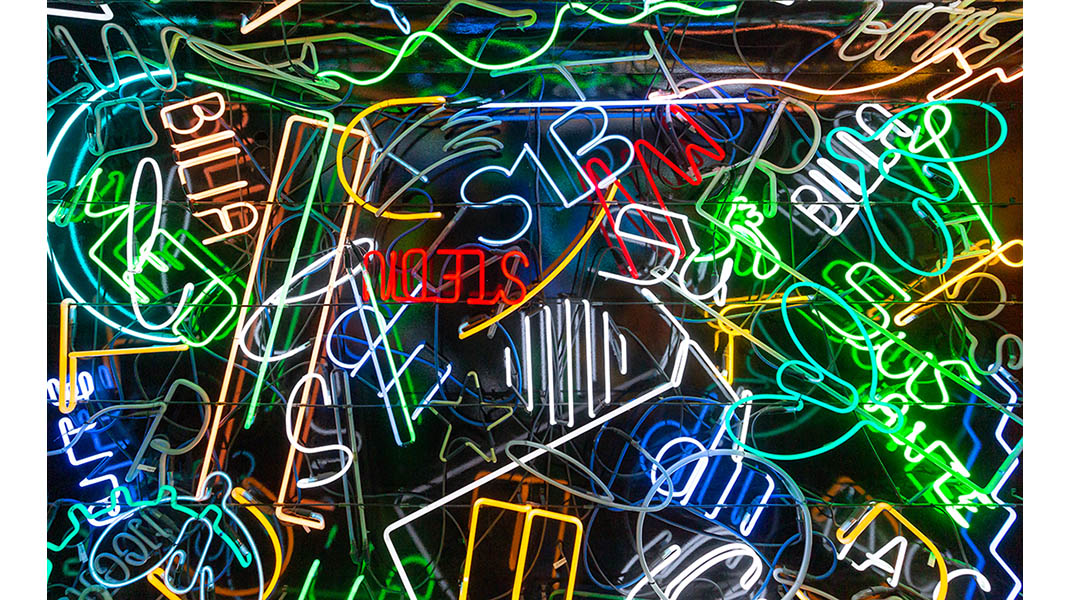
Title image by Corrado Serra for Arts Summary.

Marta Minujín: Menesunda Reloaded at New Museum, June 26 – September 29, 2019

“In 1965, at the Instituto Di Tella in Buenos Aires, Marta Minujín and Rubén Santantonín devised the now-legendary environment La Menesunda. This intricate labyrinth sought to provoke visitors and spur them into action, offering new modes of encounter with consumer culture, mass media, and urban life. While La Menesunda was created as a direct response to street life in Buenos Aires—the title is slang for a confusing situation—the work, alongside that of Christo, Allan Kaprow, Claes Oldenburg, Niki de Saint Phalle, and others, counts among the earliest large-scale environments made by artists, demonstrating how Minujín anticipated the contemporary obsession with participatory spaces, the lure of new pop-up museums, and the quest for an intensity of experience that defines social media today.

Occupying the Museum’s Third Floor, La Menesunda is composed of eleven distinct spaces through which visitors move, one at a time. Entering the work through a doorway in the shape of a human silhouette, visitors must then climb a set of stairs and proceed through a series of narrow hallways and staircases, discovering new spaces and situations intended to surprise and shock along the way. Moving through an environment simulating human intestines, a refrigerator, and the interior of a woman’s head, visitors encounter live performers and moving parts triggered by the visitors’ own actions; they emerge transformed by an encounter with unexpected textures, forms, and sensations. In 2015, the Museo de Arte Moderno de Buenos Aires presented a reconstruction of La Menesunda. The New Museum’s presentation of the work—titled Menesunda Reloaded—marks the second recreation of this installation, and its first-ever presentation in the US.” — New Museum

Photographs by Corrado Serra.

20190625-EW6A0170

20190625-EW6A0178

20190625-EW6A0180

20190625-EW6A0161

20190625-EW6A0182

20190625-EW6A0183-Edit

20190625-EW6A0196

20190625-EW6A0194

20190625-EW6A0189

20190625-EW6A0191

20190625-EW6A0186

20190625-EW6A0203

20190625-EW6A0199

20190625-EW6A0205

Marta Minujín: Menesunda Reloaded is curated by Massimiliano Gioni, Edlis Neeson Artistic Director, and Helga Christoffersen, Associate Curator. 

La Menesunda is co-produced by the New Museum and the Museo de Arte Moderno de Buenos Aires.

Ginny Ruffner: Reforestation of the Imagination and Michael Sherrill Retrospective at Renwick Gallery, Smithsonian American Art Museum, June 28, 2019 – January 5, 2020

“This summer, the Smithsonian American Art Museum presents two exhibitions that highlight the beauty of nature through botanically inspired sculptures. Ginny Ruffner: Reforestation of the Imagination turns the Renwick Gallery into a post-apocalyptic scene where, upon viewing her hand-blown glass-stump sculptures through an augmented reality lens, holograms of fictional flora sprout and transform the space into a thriving oasis. Visitors can download the free app Reforestation on their phones or use the iPads in the gallery to bring this second reality to life.

Michael Sherrill Retrospective was organized by The Mint Museum. The presentation at SAAM’s Renwick Gallery includes more than seventy-five objects from Sherrill’s earliest teapots and functional clay vessels to his recent mixed-media sculptures inspired by the landscape outside his studio in the mountains of North Carolina. In his delicately rendered sculptures in clay, glass, and metal, he seeks to elicit a sense of wonder from viewers, and to make them see the natural world anew. Sherrill’s most recent work reveals his naturalist’s sensitivity to botanical wonders.” — Renwick Gallery

Ginny Ruffner: Reforestation of the Imagination

“This is nature reimagining itself. The imagination can’t be exterminated. It just recreates itself.” — Ginny Ruffner

1.Flapping Tulip

Ginny Ruffner with Grant Kirkpatrick, Liriodendrum plausus (Flapping tulip), 2017, holographic image. Courtesy Ruffner Studio.

5.Pear with Windows

Ginny Ruffner with Grant Kirkpatrick, Pyrus fenestrata (Pear with windows), 2017, holographic image. Courtesy Ruffner Studio.

7.Magnolia Gondola

Ginny Ruffner with Grant Kirkpatrick, Canna grandiflora (Magnolia gondola), 2017, holographic image. Courtesy Ruffner Studio.

Ginny Ruffner with Grant Kirkpatrick, Musa saponifica (Soapy muse), 2017, holographic image. Courtesy Ruffner Studio.

Ginny Ruffner with Grant Kirkpatrick, Musa saponifica (Soapy muse), 2017, holographic image. Courtesy Ruffner Studio.

12.Woodpecker Flower

Ginny Ruffner with Grant Kirkpatrick, Picus germinabunt (Woodpecker flower), 2017, holographic image. Courtesy Ruffner Studio.

13.Morning Glory With Paul Klee Leaf

Ginny Ruffner with Grant Kirkpatrick, Scandent vinea clayaria (Morning glory with Paul Klee leaf), 2017, holographic image. Courtesy Ruffner Studio.

14.Kandinsky Tulip

Ginny Ruffner with Grant Kirkpatrick, Tulipia kandinskiana torquem (Kandinsky tulip), 2017, holographic image. Courtesy Ruffner Studio.

15.Hummingbird Flower

Ginny Ruffner with Grant Kirkpatrick, Avem iridis illuricae (Hummingbird flower), 2017, holographic image. Courtesy Ruffner Studio.

16.Blue Purple Flowering Vine

Ginny Ruffner with Grant Kirkpatrick, Astromaria zentada lillium (Blue/purple flowering vine), 2017, holographic image. Courtesy Ruffner Studio.

18.Rose with Eyelashes

Ginny Ruffner with Grant Kirkpatrick, Rosa cilliabunda (Rose with eyelashes), 2017, holographic image. Courtesy Ruffner Studio.

ROTI_Ruffner_Studio_Shot

Ginny Ruffner with Grant Kirkpatrick, Avem iridis illuricae (Hummingbird flower), 2017, sculpture (handblown glass with acrylic paint tree rings), island (plywood, low-density foam, fiberglass, epoxy, sand, pebbles, and acrylic paint), and holographic image. Sculpture: 15 x 12 x 6 ½ in. Installation view at MadArt Studio, 2018. Courtesy Ruffner Studio. Photo by Ruffner Studio.

OLYMPUS DIGITAL CAMERA

Ginny Ruffner with Grant Kirkpatrick, Digitalis artherium (Double art flowers), 2017, sculpture (handblown glass with acrylic paint tree rings), island (plywood, low-density foam, fiberglass, epoxy, sand, pebbles, and acrylic paint), and holographic image. Sculpture: 9 x 13 x 11 ½ in. Installation view at MadArt Studio, 2018. Courtesy Ruffner Studio. Photo by Marge Levy.

Michael Sherrill Retrospective

TwoSidesofTea

Michael Sherrill. Two Sides of Tea, 1992, ceramic. Left: 16 1/8 x 18 ½ x 8 ¼ in. Right: 16 3/8 x 18 5/8 x 7 ½. Gift of MCI. 2001.89.5.1A-B and 2001.89.5.2A-B. Smithsonian American Art Museum.

StarBottles

Michael Sherrill, Star Bottles, 1997, white stoneware, barium glaze. Tallest: 29 x 9 x 6 in. Shortest: 19 ½ x 10 x 5in. Collection of the artist. Photo by Scott Allen

Sherrill 2005.34 002

Michael Sherrill, Yellowstone Rhododendron, 2000, porcelain, glaze, steel. 11.25 x 15 x 11 in. Smithsonian American Art Museum, gift of David and Clemmer Montague, in memory of her mother Beatrice Slaton and her brother Carson Slaton, Mississippi Gardeners, 2005.34.

Stormy Rhododendron

Michael Sherrill, Stormy Rhododendron, 2005, porcelain, abraded glaze, forged steel. 16 x 17 x 14 in. Collection of Larry Brady. Photo by Tim Barnwell.

Yucca Temple of the Cool Beauty

Michael Sherrill, Temple of the Cool Beauty (Yucca), 2005, porcelain, Moretti glass, silica bronze. 54 x 38 in. Gift of Ann and Tom Cousins. 2014.78a-b. Collection of The Mint Museum.

MaysApples

Michael Sherrill, May’s Apples, 2006, porcelain, abraded glaze, steel. Left: 16 x 15 x 8 in. Right: 16 x 11 x 5 in. Collection of the artist. Photo by Scott Allen

Julesvernium

Michael Sherrill, Julesvernium (Seaflower), 2008, colored laminated porcelain, silica bronze, Moretti glass. 43 x 20 x 11 ½ in. Collection of Mark Parker.

BlackMedicine

Michael Sherrill, Black Medicine, 2014, silica bronze, Moretti glass. 38 x 34 x 20 in. Collection of Fleur Bresler. Photo by Scott Allen.

Dutch Solomon

Michael Sherrill, Dutch Solomon, 2015, porcelain, silica bronze, glass. 12 x 27 x 8 in. John Michael Kohler Arts Center, gift of the artist, 2015.022.001. Photo by Scott Allen.

Remnant

Michael Sherrill, Remnant, 2016, porcelain, silica bronze. 48 x 34 x 12 in. Private collection. Photo by Scott Allen.

ABeautifulDeath

Michael Sherrill, A Beautiful Death, 2017, porcelain, silica bronze, Moretti glass. 47 x 25 x 22 in. Collection of the artist. Photo by Scott Allen.

Velázquez, Rembrandt, Vermeer: Parallel Visions at Museo Nacional del Prado, June 25 – September 29,2019

“Velázquez, Rembrandt, Vermeer: Parallel visions is an exhibition that encourages visitors to not only appreciate the quality and importance of the 72 works on display, some by the most admired painters of 17th-century Europe, but also to establish points of comparison between them. 

The traditional and long-standing idea of the art produced in different parts of Europe is that it is notably different: that Velázquez, for example, is “very Spanish” and Rembrandt “very Dutch”. This viewpoint is based on the excessive influence that 19th- and 20th-century nationalist mindsets and ideologies have had on our way of understanding art. Studies from that period placed enormous importance on the idea that every nation had a different national character, as a result of which the notion that these differences were manifested in the art of each country became widespread. This perspective functioned to minimise the traits shared by European artists. 

The case of 17th-century Spanish and Dutch painting is symptomatic of this. Separated by a war, the art of these countries has traditionally been interpreted as opposing. Nonetheless, the legacy of Flemish and Italian painting, the influence of which defined all of European art, was interpreted in a similar way in the two places. In the 17th century both countries saw the emergence of an aesthetic that departed from idealism and which focused on the real appearance of things and the manner of representing it. In their works the artists represented in this exhibition did not express the “essence” of their nations but rather gave form to the ideas and approaches that they shared with an international community of creators.” — Museo Nacional del Prado 

“The unity of Western painting is one of the great realities that reveals the unity of European culture.” — José Ortega y Gasset

PAIR 1: 1A. Self-Portrait, CAREL FABRITIUS. Oil on panel, 65 x 49 cm, c. 1645. Rotterdam, Museum Boijmans Van Beuningen 1B. Jerónimo of Cevallos, EL GRECO. Oil on canvas, 64 x 54 cm, 1613. Madrid, Museo Nacional del Prado

PAIR 2: 2A. Democritus, JOSÉ DE RIBERA. Oil on canvas, 125 x 81 cm, 1630. Madrid, Museo Nacional del Prado 2B. Democritus, HENDRICK TER BRUGGHEN. Oil on canvas, 85,7 x 70 cm, 1628. Amsterdam, Rijksmuseum. Gift of B. Asscher, Amsterdam and H. Koetser, Amsterdam

PAIR 3: 3A. Menippus, DIEGO RODRÍGUEZ DE SILVA Y VELÁZQUEZ. Oil on canvas, 179 x 94 cm, c. 1638. Madrid, Museo Nacional del Prado 3B. Self Portrait as the Apostle Paul, REMBRANDT HARMENZOON VAN RIJN. Oil on canvas, 91 x 77 cm, 1661. Amsterdam, Rijksmuseum. De Bruijn-van der Leeuw Bequest, Muri, Switzerland

PAIR 4: 4A. Portrait of a Man, FRANS HALS .Oil on canvas, 79.5 x 66.5 cm, c. 1635. Amsterdam, Rijksmuseum. Gift if Jonkheer J.S.R. van de Poll, Arnhem 4B. The Buffoon el Primo, DIEGO RODRÍGUEZ DE SILVA Y VELÁZQUEZ. Oil on canvas, 106.5 x 82.5 cm, 1644. Madrid, Museo Nacional del Prado

PAIR 5: 5A, Mars, DIEGO RODRÍGUEZ DE SILVA Y VELÁZQUEZ. Oil on canvas, 179 x 95 cm, c. 1638. Madrid, Museo Nacional del Prado 5B. A Woman bathing in a Stream, REMBRANDT HARMENZOON VAN RIJN. Oil on panel, 61.8 x 47 cm, 1654. London, The National Gallery, London. Holwell Carr Bequest, 1831

PAIR 6: 6A. View of the Gardens of the Villa Medici, Rome, DIEGO RODRÍGUEZ DE SILVA Y VELÁZQUEZ. Oil on canvas, 48.5 x 43 cm, c. 1630. Madrid, Museo Nacional del Prado 6B. View of Houses in Delft, Known as The Little Street, JOHANNES VERMEER. Oil on canvas, 54.3 x 44 cm, c. 1658. Amsterdam, Rijksmuseum. Gift of H.W.A. Deterding, London

PAIR 7: 7A. Francisco Pacheco, DIEGO RODRÍGUEZ DE SILVA Y VELÁZQUEZ. Oil on canvas, 41 x 36 cm, c. 1620. Madrid, Museo Nacional del Prado 7B. Portrait of a Goldsmith, Probably Bartholomeus Jansz van Assendelft, WERNER VAN DEN VALCKERT. Oil on panel, 66 x 49.5 cm, 1617. Amsterdam, Rijksmuseum

“Neither Velázquez nor Vermeer nor other painters of the period expressed the essence of their nations in their art, as has often been said, but rather aesthetic ideas which they shared with an international community of artists.” — Alejandro Vergara, the exhibition’s curator 

The exhibition is curated by Alejandro Vergara, Chief Curator of Flemish Painting and the Northern Schools at the Museo del Prado.

Images courtesy Museo Nacional del Prado.  

National Geographic Photo Ark: Joel Sartore at Southampton Arts Center, June 27 – September 8, 2019

“The International Center of Photography (ICP) and the Southampton Arts Center (SAC) are presenting the National Geographic Photo Ark exhibition, featuring the compelling and visually stunning work of National Geographic photographer and Fellow Joel Sartore. The exhibition will highlight Sartore’s images from his work in more than 250 zoos, aquariums and animal rescue centers around the world.

Founded by Sartore in 2006, the National Geographic Photo Ark aims to document species living in zoos and wildlife sanctuaries, inspire action through education, and help save wildlife by supporting on-theground conservation efforts. National Geographic is showcasing this important project through multiple platforms, including this exhibition, to inspire people not just to care, but also to help protect these animals for future generations. In addition to creating an archival record for generations to come, this project is a hopeful platform for conservation and shines a light on individuals and organizations working to preserve species around the world.

Sartore estimates the completed National Geographic Photo Ark will include portraits of over 12,000 species representing several animal classes, including birds, fish, mammals, reptiles, amphibians, and invertebrates. In what will be the largest single archive of studio-quality photographs of biodiversity ever, the National Geographic Photo Ark now includes more than 9,500 species, thanks in part to Sartore’s enduring relationships with many of the world’s zoos and aquariums. These iconic portraits have captured the imagination of people around the world and have even been projected on the Empire State Building and St. Peter’s Basilica in Rome.” — ICP & SAC

A Coquerel’s sifaka, Propithecus coquereli, at the Houston Zoo. © Photo by Joel Sartore/National Geographic Photo Ark. natgeophotoark.org.

A federally threatened koala, Phascolarctos cinereus, with her babies at the Australia Zoo Wildlife Hospital. © Photo by Joel Sartore/National Geographic Photo Ark. natgeophotoark.org.

Two Golden snub-nosed monkeys, Rhinopithecus roxellana, at Ocean Park Hong Kong. © Photo by Joel Sartore/National Geographic Photo Ark. natgeophotoark.org.

An endangered Malayan tiger, Panthera tigris jacksoni, at Omaha Henry Doorly Zoo. © Photo by Joel Sartore/National Geographic Photo Ark. natgeophotoark.org.

An endangered baby Bornean orangutan, Pongo pygmaeus, named Aurora, with her adoptive mother, Cheyenne, a Bornean/Sumatran cross, Pongo pygmaeus x abelii, at the Houston Zoo. © Photo by Joel Sartore/National Geographic Photo Ark. natgeophotoark.org.

A Fiji Island banded iguana, Brachylophus fasciatus, at the Los Angeles Zoo. © Photo by Joel Sartore/National Geographic Photo Ark. natgeophotoark.org.

“The National Geographic Photo Ark has already inspired millions around the world with the message that it is not too late to save some of the world’s most endangered species,” said Kathryn Keane, vice president of Exhibitions, National Geographic Society.” Joel Sartore has demonstrated what one man can do using the power of photography—and now National Geographic wants to inspire people all over the country to contribute to this global challenge.” National Geographic Photo Ark is organized in collaboration with the National Geographic Society.

Images courtesy Joel Sartore/National Geographic Photo Ark, ICP and SAC.

Basquiat’s “Defacement”: The Untold Story at Solomon R. Guggenheim Museum, June 21 – November 6, 2019

“The Solomon R. Guggenheim Museum presents Basquiat’s “Defacement”: The Untold Story. This focused, thematic exhibition of work by Jean-Michel Basquiat (American, 1960–1988), supplemented with work by others of his generation, explores a formative chapter in the artist’s career through the lens of his identity and the role of cultural activism in New York City during the early 1980s.

The exhibition takes as its starting point the painting The Death of Michael Stewart, informally known as Defacement, created by Basquiat in 1983 to commemorate the fate of the young, black artist Michael Stewart at the hands of New York City transit police after allegedly tagging a wall in an East Village subway station. Originally painted on the wall of Keith Haring’s studio, the work was not meant to be seen widely and has rarely been exhibited in a public context. With approximately twenty paintings and works on paper by Basquiat and his contemporaries, this presentation will examine Basquiat’s exploration of black identity, his protest against police brutality, and his attempts to craft a singular aesthetic language of empowerment.” — Solomon R. Guggenheim Museum

Basquiat’s “Defacement”: The Untold Story is organized by guest curator Chaédria LaBouvier.

Jean-Michel Basquiat. The Death of Michael Stewart, 1983. Acrylic and marker on plasterboard, framed: 86.4 x 101.6 cm. Collection of Nina Clemente, New York © Estate of Jean-Michel Basquiat. Licensed by Artestar, New York. Photo: Allison Chipak © Solomon R. Guggenheim Foundation, 2018

Jean-Michel Basquiat. La Hara, 1981. Acrylic and oilstick on wood panel, 182.9 x 121.9 cm. Arora Collection © Estate of Jean-Michel Basquiat. Licensed by Artestar, New York

Jean-Michel Basquiat. Charles the First, 1982. Acrylic and oil stick on canvas, three panels, 198.1 x 165.1 cm. Estate of Jean-Michel Basquiat © Estate of Jean-Michel Basquiat. Licensed by Artestar, New York

Jean-Michel Basquiat. Back of the Neck, 1983. Screenprint with hand-coloring on paper, 127.6 x 259.1 cm. Edition 1/24. Brooklyn Museum, Charles Stewart Smith Memorial Fund © Estate of Jean-Michel Basquiat. Licensed by Artestar, New York

Jean-Michel Basquiat. Untitled (Sheriff), 1981. Acrylic and oilstick on canvas, 130.8 x 188 cm. Carl Hirschmann Collection © Estate of Jean-Michel Basquiat. Licensed by Artestar, New York

David Hammons. The Man Nobody Killed, 1986. Stenciled paint on commercially printed cardboard with cut-and-taped photocopy from a spiral bound periodical with works by various artists. From Eye magazine, no. 14, “Cobalt Myth Mechanics,” 1986. Publisher: Eye Publications, New York, Printer: the artist, New York. Each page: 27.9 x 21.6 cm, closed: 27.9 x 22.9 x 1.9 cm. The Museum of Modern Art, New York, Henry Church Fund (by exchange), 2015 © The Museum of Modern Art. Licensed by SCALA/ARS New York

Keith Haring. Michael Stewart – USA for Africa, 1985. Enamel and acrylic on canvas, 294.6 x 365.8 cm. Collection of Monique and Ziad Ghandour © The Keith Haring Foundation

Card for benefit at Danceteria, October 3, 1983 19.4 x 14 cm. Collection of Franck Goldberg. Photo: Allison Chipak © The Solomon R. Guggenheim Foundation

“Remember Michael Stewart” button, 1984. Design by Eric Drooker, 3.8 x 3.8 x 0.5 cm. Collection of Patricia A. Pesce, New York. Photo: Allison Chipak © The Solomon R. Guggenheim Foundation

Images courtesy Solomon R. Guggenheim Museum.

Collision/Coalition at The Shed, June 19 – August 25, 2019

The Shed presents three distinct yet interrelated new commissions in an exhibition that explores social and cultural confrontations and alliances. Collision/Coalition pairs new work by artists Tony Cokes and Oscar Murillo with screenings of a new documentary film about artist Beatriz González, directed by Yanina Valdivieso and Vanessa Bergonzoli. The commissions are on view in The Shed’s Level 4 Gallery.

Tony Cokes (b. 1956, Richmond, Virginia) lives and works in Providence, Rhode Island. Cokes creates video works in a recognizable style that piece together found footage or solid-color slides, animated quoted text, and pop music. He offers social critiques by quoting a range of sources including philosophers, musicians, activists, comedians, and other cultural figures. His works often include archival footage, images from Hollywood films, textual commentary, voiceovers, and popular music.

Oscar Murillo (b. 1986, La Paila, Colombia) is a multidisciplinary artist who works in painting, drawing, sculpture, video, installation, interventions, and performance. In exploring the conditions of contemporary globalization, Murillo considers the movement and use of people, things, and ideas. In 2019, Murillo was nominated for the prestigious Turner Prize.

Photographs by Corrado Serra.

Tony Cokes

Tony Cokes

Tony Cokes

Tony Cokes

Tony Cokes

Oscar Murillo

Oscar Murillo

Oscar Murillo

Oscar Murillo

Oscar Murillo

Oscar Murillo

Oscar Murillo

Oscar Murillo

Oscar Murillo

Oscar Murillo

Oscar Murillo

Oscar Murillo

Oscar Murillo

Collision/Coalition asks ,‘What is the role of art in the face of political, social, and economic power?’” said Emma Enderby. “The Shed is a place for conversation and reflection and by interconnecting three distinct commissions and angles—Tony Cokes, Oscar Murillo, and Yanina Valdivieso and Vanessa Bergonzoli’s documentary on Beatriz González’s work—questions are raised on art’s agency and relationship to capital, on its power to succumb or to subvert.”

Collision/Coalition is organized by Emma Enderby, Senior Curator, with Adeze Wilford, Curatorial Assistant.

Bodies of Knowledge at New Orleans Museum of Art, June 28 – October 13, 2019

The New Orleans Museum of Art (NOMA) presents Bodies of Knowledge. The exhibition brings together eleven international contemporary artists to reflect on the role that language plays in defining our cultural identities, and will be the first global contemporary exhibition of its kind at NOMA. Working with materials that range from books and silent film to ink and musical scores, artists Manon Bellet, Wafaa Bilal, Garrett Bradley, Mahmoud Chouki, Adriana Corral, Zhang Huan, William Kentridge, Shirin Neshat, Edward Spots, Donna Crump and Wilmer Wilson IV propose new ways of representing our collective past. 

Organized around a series of immersive installation and film projects, Bodies of Knowledge asks us to consider how we might write more inclusive narratives, reshape public space, and account for people and histories that have, in large measure, been shared.” — New Orleans Museum of Art

Bodies of Knowledge brings a global perspective to current discussions in New Orleans surrounding cultural preservation and historical memory,” said Susan Taylor, NOMA’s Montine McDaniel Freeman Director. “This exhibition invites visitors to consider the role that language plays in their lives, and explore the many ways history can be erased, rewritten, and reinterpreted.”

Manon Bellet, Brève braise, 2010-present, Site-specific installation, Burnt silk paper affixed to the wall, Dimensions variable, Installation image from Galerie Ausstellungsraum Klingental, Basel Switzerland, 2011, Photo by Viktor Kolibal © Manon Bellet

Manon Bellet, Brève braise, 2010-present, Site-specific installation, Burnt silk paper affixed to the wall, Dimensions variable, Installation image from Kunstmuseum Solothurn, Switzerland, 2013, Photo by Viktor Kolibal © Manon Bellet

Manon Bellet, Brève braise, 2010-present, Site-specific installation, Burnt silk paper affixed to the wall, Dimensions variable, Image courtesy the artist from a performance at the Contemporary Art Center New Orleans, Photo by Julie Verlinden, © Manon Bellet

Wafaa Bilal, 168:01, 2016 to present, Site-specific installation, Dimensions variable, Image courtesy of the artist, Photograph by John Dean © Wafaa Bilal

Wafaa Bilal, 168:01, 2016 to present, Site-specific installation, Dimensions variable, Image courtesy of the artist, Photograph by John Dean © Wafaa Bilal

Wafaa Bilal, The Ashes Series: Piano, 2003-2013, Archival inkjet photograph, 40 x 50 inches, Image courtesy of the artist © Wafaa Bilal

Wafaa Bilal, The Ashes Series: Pool, 2003-2013, Archival inkjet photograph, 40 x 50 inches, Image courtesy of the artist © Wafaa Bilal

Garrett Bradley, America (film still), 2019, Multi-Channel video installation, 35mm film transferred to video, black and white, sound, Image courtesy of the artist © Garrett Bradley 2019

Garrett Bradley, America (film still), 2019, Multi-Channel video installation, 35mm film transferred to video, black and white, sound, Image courtesy of the artist © Garrett Bradley 2019

Garrett Bradley, America (film still), 2019, Multi-Channel video installation, 35mm film transferred to video, black and white, sound, Image courtesy of the artist © Garrett Bradley 2019

Mahmoud Chouki in New Orleans, 2019, Photography by Marion Hill © Marion Hill

Adriana Corral, Memento, 2013-present, Site-specific installation, Dimensions variable, Female victim names (Juarez, Chihuahua, Mexico) transferred onto (three) walls: acetone, ash burial plot in the center of the space (dimensions of plot, 4ft x 8ft x1inch), Ashes obtained from burned name listings transferred onto wall, Installation image from the McNay Museum, San Antonio, Texas, 2013 © Adriana Corral

Adriana Corral, Memento, 2013-present, Site-specific installation, Dimensions variable, Female victim names (Juarez, Chihuahua, Mexico) transferred onto (three) walls: acetone, ash burial plot in the center of the space (dimensions of plot, 4ft x 8ft x1inch), Ashes obtained from burned name listings transferred onto wall, Installation image from the McNay Museum, San Antonio, Texas, 2013 © Adriana Corral

Wilmer Wilson IV, Black Mask, 2012, Single channel video, 5:56 minutes, Edition 3/5, New Orleans Museum of Art

Wilmer Wilson IV, Black Mask, 2012, Single channel video, 5:56 minutes, Edition 3/5, New Orleans Museum of Art

Wilmer Wilson IV, A Running Tour of Some Monuments of Rome (detail), 2014, Publication, dimensions variable. Courtesy the artist.

Wilmer Wilson IV, A Running Tour of Some Monuments of Philadelphia (detail), 2014, Publication, dimensions variable. Courtesy the artist.

Shirin Neshat, Rapture Series (Women with Writing on Hands), 1999, Chromogenic color print, 40 ½ x 60 ¼ inches, Edition of 5 + 2AP. New Orleans Museum of Art, Museum Purchase, 2001.292, © Shirin Neshat, courtesy Galerie Jérôme de Noirmont, Paris

Shirin Neshat, Rapture (Production still), 1999, Two-channel black and white video, sound (projection), 13 min loop, © Shirin Neshat, Courtesy the artist and Gladstone Gallery, New York and Brussels

Shirin Neshat, Fervor (Production still), 2000, Two-channel black and white video, sound (projection), 10 min loop, © Shirin Neshat, Courtesy the artist and Gladstone Gallery, New York and Brussels

William Kentridge, Zeno Writing, 2002, Video still of animated film using charcoal and pastel drawing, footage from theater performance, documentary material from First World War, 35mm and digital video, Video and DVD transfer, 12 minutes, Museum of Fine Arts, Houston, Joint acquisition of the Museum of Fine Arts, Houston, funded by Nina and Michael Zilkha; and the High Museum of Art, Atlanta, 2004.201, Image courtesy the artist and Marian Goodman Gallery © William Kentridge

William Kentridge, Zeno Writing, 2002, Video still of animated film using charcoal and pastel drawing, footage from theater performance, documentary material from First World War, 35mm and digital video, Video and DVD transfer, 12 minutes, Museum of Fine Arts, Houston, Joint acquisition of the Museum of Fine Arts, Houston, funded by Nina and Michael Zilkha; and the High Museum of Art, Atlanta, 2004.201, Image courtesy the artist and Marian Goodman Gallery © William Kentridge

William Kentridge, Zeno Writing, 2002, Video still of animated film using charcoal and pastel drawing, footage from theater performance, documentary material from First World War, 35mm and digital video, Video and DVD transfer, 12 minutes, Museum of Fine Arts, Houston, Joint acquisition of the Museum of Fine Arts, Houston, funded by Nina and Michael Zilkha; and the High Museum of Art, Atlanta, 2004.201, Image courtesy the artist and Marian Goodman Gallery © William Kentridge

Zhang Huan, Family Tree, 2000 (Detail), 9 Chromogenic color prints on Fuji Archival paper, Edition A/P 1, 80 x 70 inches each, Collection of Howard and Joy Osofsky, Photograph courtesy Zhang Huan Studio © Zhang Huan, courtesy Pace Gallery

Zhang Huan, Family Tree, 2000 (Detail), 9 Chromogenic color prints on Fuji Archival paper, Edition A/P 1, 80 x 70 inches each, Collection of Howard and Joy Osofsky, Photograph courtesy Zhang Huan Studio © Zhang Huan, courtesy Pace Gallery

Zhang Huan, Family Tree, 2000 (Detail), 9 Chromogenic color prints on Fuji Archival paper, Edition A/P 1, 80 x 70 inches each, Collection of Howard and Joy Osofsky, Photograph courtesy Zhang Huan Studio © Zhang Huan, courtesy Pace Gallery

Edward Spots, Photography by Louis Greenfield © Lois Greenfield

Bodies of Knowledge is organized by the New Orleans Museum of Art and co-curated by Katie Pfohl, Curator of Modern and Contemporary Art and Allison Young, The Andrew W. Mellon Curatorial Fellow for Modern and Contemporary Art. 

Images courtesy New Orleans Museum of Art.

Among Others: Photography and the Group at The Morgan Library & Museum, through August 18, 2019

“The Morgan Library & Museum presents a new exhibition about photography’s unique capacity to represent the bonds that unite people. From posed group portraits and candid street scenes to collages, constructions, and serial imagery, photographers have used many methods to place people in a shared frame of reference. Among Others: Photography and the Group brings together more than sixty exceptional works spanning the 1860s to the present to explore the complexity of a type of image that is often taken for granted. Drawn primarily from the Morgan’s collection, the works in the exhibition include images by Amy Arbus, Eve Arnold, Robert Frank, Peter Hujar, and August Sander.

Among Others presents the seemingly endless possibilities of the group photograph, placing historically important portraits alongside records of significant cultural moments and experiments that helped reinvent the genre. In representations of the group, artist, subjects, and circumstances come together to create an image that might call to mind a loving family, a chance encounter among strangers, an embodiment of the democratic spirit, or a photographer’s ability to read and respond to a crowd. The photographs in the exhibition come in many formats: not just exhibition prints, snapshots, and posters, but also photo books, painted wooden sculpture, collages, baseball cards, and even a wastepaper basket featuring Richard M. Nixon. In their range and ingenuity, the works pose questions about family, diversity, democracy, representation, and the varieties of visual delight.” — The Morgan Library & Museum

Amy Arbus (b. 1954), The Clash, NYC, 1981, gelatin silver print. The Morgan Library & Museum, Gift of Amy Arbus, 2018.74 Copyright © Amy Arbus.

Eugene Omar Goldbeck (1892–1986), Indoctrination Division, Air Training Command, Lackland Air Base, San Antonio, Texas, July 19, 1947, gelatin silver print. The Morgan Library & Museum, Purchased on funds given by members of the Photography Collectors Committee, 2018.63.

Peter Hujar (1934–1987), Contact sheet: Gay Liberation Front poster image shoot, 1969 or 1970, gelatin silver print. The Morgan Library & Museum, Peter Hujar Collection, Purchased on the Charina Endowment Fund; 2013.108:8.1263. © Peter Hujar Archive, LLC, courtesy Pace/MacGill Gallery, New York and Fraenkel Gallery, San Francisco.

Bob Adelman (1930–2016), People Wall, World’s Fair, New York, 1965, gelatin silver print. The Morgan Library & Museum, Purchased as the gift of Nancy and Burton Staniar, 2015.131. © Bob Adelman Estate.

Art Kane (1925–1995), Harlem, 1958, In “The Golden Age of Jazz,” Esquire, January 1959. The Morgan Library & Museum, Purchased on funds given by Peter J. Cohen, Ronald R. Kass, and Elaine Goldman; 2018.120. Photograph by Art Kane for Esquire, a publication of the Hearst Communications, Inc., Art Kane. Courtesy © The Art Kane Archive.

Mike Mandel (b. 1950), Baseball-Photographer Trading Cards, 1975, photo-offset lithography on cards. The Morgan Library & Museum, Purchased as the gift of Jane P. Watkins, 2013.5:1-135. © Mike Mandel, courtesy the artist and Robert Mann Gallery, New York.

Myers Cope Co. Atlantic City, Photo-multigraph of unidentified girl, ca. 1920s, gelatin silver print with postcard back. The Morgan Library & Museum, Gift of Peter J. Cohen, 2015.119:100.

Powell & Co. Anti-Slavery Constitutional Amendment Picture, 1865, albumen print. The Morgan Library & Museum, Purchased on the Charina Endowment Fund, 2018.64.

Studio Retrato-Escultura Victor, Fotoescultura with eight subjects, ca. 1940s, carved, painted, and assembled wood with hand-colored gelatin silver prints. The Morgan Library & Museum, Purchased as the gift of Richard and Ronay Menschel, 2016.163.

Photographer Unidentified, Group at the Main Building, Moscow State University, after 1953, gelatin silver print and mixed media. The Morgan Library & Museum, Purchased as the gift of Peter J. Cohen, 2018.129.

Photographer Unidentified, Untitled (women in aprons pose among trees), 1913, commercially processed gelatin silver print; postcard. The Morgan Library & Museum, Gift of Peter J. Cohen, 2015.119:101.

“The Morgan’s photography collection has grown and evolved in many directions since its founding in 2012, always with a dual emphasis on the camera’s creative possibilities and its role in shaping modern sensibilities,” said Colin B. Bailey, Director. “We are excited to present this wide-ranging selection of works, most of which are recent acquisitions and have never been exhibited before at the Morgan.” 

Joel Smith, the Morgan’s Richard L. Menschel Curator and Department Head, said, “The group is a subject we’re so accustomed to seeing in photographs, it’s easy to forget that the conventions around it had to be invented, and that they shape our picture of reality. This exhibition invites viewers to explore the many ways images have defined—since long before the selfie—how it looks to belong to a group and what it means to be represented.” 

Images courtesy The Morgan Library & Museum.

Drawing the Curtain: Maurice Sendak’s Designs for Opera and Ballet at The Morgan Library & Museum, June 14 – October 6, 2019

“A summer exhibition at the Morgan Library & Museum celebrates an extraordinary bequest from acclaimed author and illustrator of children’s books Maurice Sendak (1928–2012). Best known for his 1963 picture book Where the Wild Things Are, Sendak was an avid music and opera lover. Beginning in the late 1970s, he embarked on a second career as a designer for opera and ballet. Drawing the Curtain brings together nearly one hundred and fifty drawings from more than 900 by Sendak in the Morgan’s collection, including preliminary sketches, storyboards, finished watercolors, and painted dioramas. Also included are earlier works by Sendak on loan from The Maurice Sendak Foundation, and a number of props and costumes. This is the first museum exhibition dedicated to Sendak’s set and costume designs, offering new insights into the artist’s inspirations and creative process.” — The Morgan Library & Museum

Maurice Sendak (1928-2012), Diorama of Moishe scrim and flower proscenium (Where the Wild Things Are), 1979-1983, watercolor, pen and ink, and graphite pencil on laminated paperboard. © The Maurice Sendak Foundation. The Morgan Library & Museum, Bequest of Maurice Sendak, 2013.103:69, 70, 71. Photography by Graham Haber, 2018.

Maurice Sendak (1928-2012), Study for stage set #10 (Where the Wild Things Are), 1979-1983, watercolor, pen and ink, and graphite pencil on paper. © The Maurice Sendak Foundation. The Morgan Library & Museum, Bequest of Maurice Sendak, 2013.103:52. Photography by Janny Chiu.

Maurice Sendak (1928-2012), Study for Wild Things costume, with notes (Where the Wild Things Are), 1979, watercolor, pen and ink, and graphite pencil on paper. © The Maurice Sendak Foundation. The Morgan Library & Museum, Bequest of Maurice Sendak, 2013.103:19. Photography by Janny Chiu.

Maurice Sendak (1928-2012), Storyboard (Where the Wild Things Are), 1979, watercolor, pen and ink, and graphite pencil on paper. © The Maurice Sendak Foundation. The Morgan Library & Museum, Bequest of Maurice Sendak, 2013.103:72a-b. Photography by Janny Chiu.

Maurice Sendak (1928-2012), Design for show scrim (The Magic Flute), 1979-1980, watercolor and graphite pencil on paper on board. © The Maurice Sendak Foundation. The Morgan Library & Museum, Bequest of Maurice Sendak, 2013.104:120. Photography by Janny Chiu.

Maurice Sendak (1928-2012), The Edge of the Forest, interlude between Act II, scenes 2 and 3, for PBS broadcast (The Cunning Little Vixen), 1983, watercolor and graphite pencil on paper. © The Maurice Sendak Foundation. The Morgan Library & Museum, Bequest of Maurice Sendak, 2013.105:102. Photography by Janny Chiu.

Maurice Sendak (1928-2012), Costume study for Fox Golden-Stripe (The Cunning Little Vixen), 1981, watercolor and graphite pencil on paper. © The Maurice Sendak Foundation. The Morgan Library & Museum, Bequest of Maurice Sendak, 2013.105:77. Photography by Janny Chiu.

Maurice Sendak (1928-2012), Design for show curtain (The Love for Three Oranges), 1981, watercolor and graphite pencil on paper. © The Maurice Sendak Foundation. The Morgan Library & Museum, Bequest of Maurice Sendak, 2013.106:167. Photography by Janny Chiu.

Maurice Sendak (1928-2012), Design for March curtain, Act II (The Love for Three Oranges), 1981, watercolor and graphite pencil on paper. © The Maurice Sendak Foundation. The Morgan Library & Museum, Bequest of Maurice Sendak, 2013.106:166. Photography by Janny Chiu.

Maurice Sendak (1928-2012), Storyboard (The Love for Three Oranges), 1981-1982, watercolor, ink, and graphite pencil on board. © The Maurice Sendak Foundation. The Morgan Library & Museum, Bequest of Maurice Sendak, 2013.106:169. Photography by Janny Chiu.

Maurice Sendak (1928-2012), 5 Playing cards (The Love for Three Oranges), 1982, watercolor and pen and ink on laminated paperboard. © The Maurice Sendak Foundation. Collection of Justin G. Schiller. Photography by Graham S. Haber, 2018.

Maurice Sendak (1928-2012), Ship (Nutcracker), 1982-4, gouache and graphite pencil on paper. © The Maurice Sendak Foundation. The Morgan Library & Museum, Bequest of Maurice Sendak, 2013.107:289. Photography by Janny Chiu.

Maurice Sendak (1928-2012), Design for show curtain (Nutcracker), 1983, gouache and graphite pencil on paper.© The Maurice Sendak Foundation. The Morgan Library & Museum, Bequest of Maurice Sendak, 2013.107:262. Photography by Janny Chiu.

Maurice Sendak (1928-2012), Design for battle scene, Act I (Nutcracker), 1982-1983, gouache and graphite pencil on paper. © The Maurice Sendak Foundation. The Morgan Library & Museum, Bequest of Maurice Sendak, 2013.107:262. Photography by Janny Chiu.

“Few people know that Maurice Sendak had a long and productive relationship with the Morgan. It is exciting to focus on his work as a theater designer, which is an often overlooked but important aspect of his career as an artist,” said Director of the museum, Colin B. Bailey. “We are deeply grateful to The Maurice Sendak Foundation for their support in the planning of this exhibition and for lending several key works, including examples of Sendak’s charming Fantasy Sketches.” 

“This exhibition will be a wonderful surprise to those who are familiar with Sendak primarily through his beloved books,” said Rachel Federman, Assistant Curator in the Modern and Contemporary Drawings Department and the curator of the exhibition. “His designs for opera and ballet have all the beauty, humor, and complexity of his picture books and illustrations, but they also put on full display his passion for art, art history, and music.”

Images courtesy The Morgan Library & Museum.

Kokdu: A Story of Guardian Angels at Alice Tully Hall, Lincoln Center, Saturday June 29, 7pm

Film at Lincoln Center, the New York Asian Film Foundation, and the Korean Cultural Center New York present a special New York Asian Film Festival event: The US Premiere of Kokdu: A Story of Guardian Angels, a fantasy world where traditional Korean music (gugak) meets cinema. The event features live traditional accompaniment performed by a 20-member ensemble from the National Gugak Center.

Director Tae-yong Kim, Music Director Jun-Seok Bang and the National Gugak Center have joined forces to acquaint Korean music and dance to an international audience by bridging several art forms and building a unique, heartwarming story of loss and redemption, steeped in local Korean folklore but with a universal appeal.

Melding fantasy and reality, Kokdu weaves between cinematic storytelling and a staged theatrical piece, creating a moving and magical experience. It explores Korean myths and traditions while dealing deftly with dark themes of death, guilt and mourning, with an empathetic, poignant, and ultimately uplifting touch.

Images of Kokdu: A Story of Guardian Angels. Courtesy National Gugak Center.

This performance is presented by Film at Lincoln Center, New York Asian Film Foundation, and the Korean Cultural Center New York; performed by the National Gugak Center.

Walt Whitman: Bard of Democracy at The Morgan Library & Museum, June 7 – September 15, 2019

In celebration of the two hundredth anniversary of Walt Whitman’s birth, the Morgan Library & Museum exhibits the work of the beloved American poet. In a notebook in 1859, Whitman wrote, “Comrades! I am the bard of Democracy,” and over his 73 years (1819–1892) he made good on that claim. As he bore witness to the rise of New York City, the Civil War and other major transformations in American life, Whitman tried to reconcile the famous contradictions of this country through his inclusivity and his prolific body of work. The author of one of the most celebrated texts of American literature—Leaves of Grass (1855)—came from humble origins in Long Island and Brooklyn but eventually earned a global audience that has never stopped growing. Walt Whitman: Bard of Democracy traces the development of his writing and influence, from his early days producing local journalism and sensational fiction to his later years writing the visionary poems that would revitalize American letters.” — The Morgan Library & Museum

Walt Whitman (1819 – 1892), O Captain! my captain! April 27, 1890, autograph manuscript. The Morgan Library & Museum, MA 1212.1. Photography by Graham S. Haber, 2012.

Walt Whitman (1819 – 1892), Walt Whitman’s Books, broadside advertisement printed on linen, circa 1871. The Morgan Library & Museum, gift of Charles E. Feinberg, 1959; PML 50638. Photography by Graham S Haber 2017.

Napoleon Sarony (1821-1896), Carte de visite photograph of Oscar Wilde, 1882. The Morgan Library & Museum, purchased on the Drue Heinz Fund, 2017; MA 8916. Photography by Janny Chiu, 2019.

Moses P. Rice and Sons?, Walt Whitman and his rebel soldier friend Pete Doyle, 1865, photograph; albumen print on card mount. Library of Congress Prints and Photographs Division. Image provided courtesy of the Library of Congress.

Walt Whitman (1819-1892), An American Poet at Last!, self-review, Brooklyn, 1855. The Library of Congress. Image provided courtesy of the Library of Congress.

George Frank E. Pearsall (1841-1931), Walt Whitman, 1871, photographic print. The Library of Congress. Image provided courtesy of the Library of Congress.

Walt Whitman (1819-1892), Draft of preface for Democratic Vistas, circa 1871, autograph manuscript. The Library of Congress. Image provided courtesy of the Library of Congress.

Phillips & Taylor, Photograph of Walt Whitman, 1873. Prints and Photographs Division, Library of Congress. Image provided courtesy of the Library of Congress.

Walt Whitman’s cardboard butterfly, 1850. Manuscript Division, Thomas Biggs Harned Collection of Walt Whitman Papers, Library of Congress. Image provided courtesy of the Library of Congress.

Walt Whitman (1819-1892), Notebook with trial lines for Leaves of Grass, circa 1847-1854. The Library of Congress. Image provided courtesy of the Library of Congress.

Walt Whitman (1819-1892), Notebook with trial lines for Leaves of Grass, circa 1847-1854. The Library of Congress. Image provided courtesy of the Library of Congress.

Walt Whitman (1819-1892), Notebook with trial lines for Leaves of Grass, circa 1847-1854. The Library of Congress. Image provided courtesy of the Library of Congress.

“Walt Whitman’s poetry occupies a special place in American literature,” said Colin B. Bailey, director of the Morgan Library and Museum. “He was a New Yorker in that he not only captured the spirit of his bustling, complex, and contradictory city, but he also carved out a career path for himself through his ambition and surprisingly proactive self-promotion. We are excited to offer more insight into his inspirations, his world, and the evolution of his dynamic voice.” 

“It was a joy to work with the Morgan on this comprehensive exhibit, and to see New York City all over again, through his eyes,” said Ted Widmer, guest curator and Distinguished Lecturer at the Macaulay Honors College of the City University of New York. “It never stops moving and neither did he.” Widmer is also author of Young America: The Flowering of Democracy in New York City and many other works of history. 

Images courtesy The Morgan Library & Museum.