“The Austrian Cultural Forum New York and Undercurrent unveil un/mute, an international group exhibition of collaborative works by 28 artists across multiple disciplines. On view at both locations, this multi-media exhibition is the culmination of an 18-month-long project that was launched in 2020 to provide European and NYC-based artists an opportunity for critical exchange and collaboration during the COVID-19 global pandemic.
What do communication and collaboration mean in a time of uncertainty and isolation? How is the artistic process impacted by going ‘fully remote’? In un/mute, artists from 10 countries were paired to explore these questions. We recognize that effective communication requires active engagement of all the senses and an openness to diversity, interpretation and digitalization. But what does that look like in practice? The project challenged teams to overcome the limitations of lockdowns as they connected across artistic mediums, language, culture, generations and time zones to find new forms of expression and meaning within art.
un/mute is the physical manifestation of online conversations among strangers who became collaborators. What began as abstract, ephemeral and digital are now 14 tactile, analog and concrete artworks presented across two locations. The artists confronted the parameters imposed by the lockdowns and each team found creative solutions that we might all learn from. The common thread that runs through the sculptures, installations, films, drawings, photographs and performances is the importance of language.” — Austrian Cultural Forum & Undercurrent
Austrian Cultural Forum New York
Mo Kong (NYC) + Olesja Katšanovskaja-Münd (Estonia). Backwards Transition, 2021. Rock and video. Runtime: 26 sec.Mariella Cassar-Cordina (Malta) + Nicola Ginzel (Austria). Sonos Civitatem MMXX, 2020. Video,frottage and sheet music. Runtime: 9 minutes, 44 seconds. Mariella Cassar-Cordina (Malta) + Nicola Ginzel (Austria). Sonos Civitatem MMXX (sheet music), 2020. Justyna Górowska (Poland) + Ieva Mediodia (Lithuania). ARKTIKAANTARKTIKA 0.9, 2021. Giclee on Hahnemuhle. Photo Rag paper 13.5 x 41 inches. Video Runtime: 3 minutes, 17 seconds. Justyna Górowska (Poland) + Ieva Mediodia (Lithuania). ARKTIKAANTARKTIKA 0.9 (detail), 2021.Ada Van Hoorebeke (Flanders) + Luisa Muhr (Austria). Stoff Stuk / Go-to Shapes, 2021.Gabrielė Gervickaitė (Lithuania) + Yi Hsuan Lai (NYC). Where are you at this moment? – Bounding touch. Where are you at this moment? – Joint. Where are you at this moment? – Dancing in the day and night. (left to right), 2021. Aluminum prints, 40 x 30 inches each. Gabrielė Gervickaitė (Lithuania) + Yi Hsuan Lai (NYC). A dialogue in the cloud, 2021, unique zine, 8.25 x 10.5 inches. Alex Mirutziu (Romania) + Sydney Shavers (NYC). Alex Mirutziu. Seven places I can’t go to but talk to, 2021. Plaster and fishing line. Dimensions variable. Sydney Shavers. Untitled (Sit) 1, 2, 3, 4, 5, 2021. Wood, paint and fasteners, 24 x 10 x 24 inches each. Alex Camilleri (Malta) + Terttu Uibopuu (Estonia). 76% Humidity, Chance of Rain, 2020. Film Runtime: 3 minutes, 12 seconds. Kris Grey (NYC) +Barbara Maria Neu (Austria). Miss(ing), 2021. video (runtime: 4 minutes, 8 seconds), performance (15 minutes) and sculptures. Eren Aksu (Germany) + Sheila Maldonado (NYC). STILL, 2021. Carousel with 62 slides and printed text (8.5 x 11 inches). Aaron Bezzina (Malta) + Kyle Hittmeier (NYC). Aaron Bezzina, Double Catapult, 2021. Wood, screws, stain varnish and rubber 102.4 x 62 x 40 inches Aaron Bezzina (Malta) + Kyle Hittmeier (NYC). Kyle Hittmeier, Andromeda, 2021. Single channel projection. Edition 1 of 3. Runtime: 1 minute, 50 seconds.
Undercurrent
Lan Thao Lam (NYC) + Sanne De Wilde (Flanders, Belgium). HERE/tHERE, 2021. Site-specific window installation. Full color adhesive vinyl, ACFNY, 101 x 60 inches, 101 x 22 inches.Anna Bera (Poland) + Saddie Choua (Flanders, Belgium). Close Up Black, 2020-21. Video, sound, and personal objects (plants, ornamental animals, book, drawing and photos). Runtime: 8 minutes. Emily Shanahan (NYC) + Marie Lukáčová (Czech Republic). Conversations between February and May, 2021. A collection of drawings and Risographs from each artist. Emily Shanahan, Grid drawing, 2021, collage, ink, and graphite on paper, 14″ x 11″ each. Marie Lukáčová, Snakes, 2021, 4 color Risograph, edition of 30 each with unique titles, 16.5″ x 11.4″ each. Emily Shanahan (NYC) + Marie Lukáčová (Czech Republic). Conversations between February and May (detail), 2021.
Exhibition was co-curated by Daina Mattis and Melinda Wang.
Images courtesy Austrian Cultural Forum New York & Undercurrent.
“Priscilla Aleman transforms the Sunroom into a devotional environment that references the body as an innate, recurring symbol used in ceremonies to convey the sacred, the afterlife and the deities of our time. In an homage to traditional sculptures and ancient symbolism, Aleman examines material culture and ecological transformations in the Americas, creating sites for ritualized performances and spiritual contemplation. Citing the ocean as a connective tissue, Origins of Devotion speculates about historic and imagined moments of contact between peoples of the Global South, bringing together materials collected from related regions, including belongings from Aleman’s Caribbean family members, replicas of pre-Columbian artifacts and tropical flora from various horticultural facilities, including Wave Hill.” — Wave Hill
“Having worked closely with Priscilla on this project for almost two years, I found it compelling to see how the installation evolved as she honed in on the social, cultural, physical and spiritual interconnections between humans and the land, more specifically teasing out connections to Yemaya, a water goddess in African diasporic cultures. Discussions with Wave Hill’s horticulturalists about the Aquatic and Monocot gardens further informed Aleman’s incorporation of water elements and tropical plants, such as the banana leaf, into her,” says Jeng Lynch.
Priscilla Aleman, Origins of Devotion, 2021 (in progress), gypsum, Florida rainwater, tears, palm leaves, rubber, blue tarp and ceramic replicas of fruits grown by family, dimensions variable. Courtesy of the artist and YoungArts.
Priscilla Aleman, Origins of Devotion, 2021 (in progress), gypsum, Florida rainwater, tears, palm leaves, rubber, blue tarp and ceramic replicas of fruits grown by family, dimensions variable. Courtesy of the artist and YoungArts.
Priscilla Aleman, Origins of Devotion, 2021 (in progress), gypsum, Florida rainwater, tears, palm leaves, rubber, blue tarp and ceramic replicas of fruits grown by family, dimensions variable. Courtesy of the artist and YoungArts.Priscilla Aleman, Origins of Devotion, 2021 (in progress), gypsum, Florida rainwater, tears, palm leaves, rubber, blue tarp and ceramic replicas of fruits grown by family, dimensions variable. Courtesy of the artist and YoungArts.Priscilla Aleman, Stillness is in the Eye of the Hurricane, 2021 (detail), plaster, blue hurricane tarp, collected palm boots, coconuts, mamey seeds, avocados from the Deering Estate, tree snails collected by grandparents, fragment of US-1, women’s softball cleats, palm tree leaves, painter’s tape, sapote, ceramics, 25 x 25 x 5 feet. Courtesy of the artist and YoungArts.
Priscilla Aleman, Banana Boat, 2021, mixed media, 10 x 7 x 1 inches. Courtesy of the artist and YoungArts.
Priscilla Aleman, Only Kings and High Priests, 2021, mixed media, 10 x 7 x 1 inches. Courtesy of the artist and YoungArts.
Priscilla Aleman, Oils and Herbs, 2021, mixed media, 10 x 7 x 1 inches. Courtesy of the artist and YoungArts.
Priscilla Aleman, Transcendance, 2021, mixed media, 10 x 7 x 1 inches. Courtesy of the artist and YoungArts.
Priscilla Aleman, Submerge, 2021, mixed media, 10 x 7 x 1 inches. Courtesy of the artist and YoungArts.
Priscilla Aleman in her studio at YoungArts in Miami, FL. Courtesy of the artist and YoungArts.
An acclaimed public garden and cultural center in the Bronx, Wave Wave Hill’s landscape serves as a catalyst for emerging artists exhibiting in its Sunroom Project Space. The 2021 season’s seven installations round out with Priscilla Aleman’s Origins of Devotion. Aleman will also participate in an onsite “Meet the Artist” talk with Eileen Jeng Lynch, Wave Hill’s Curator of Visual Arts.
The Sunroom Project Space is organized by Curator of Visual Arts Eileen Jeng Lynch. Wave Hill’s curatorial team also includes Gabriel de Guzman (Director of Arts and Chief Curator) and Jesse Bandler Firestone (Curatorial Assistant).
“Legendary Italian glassblower, artist & teacher Lino Tagliapietra, who just celebrated his 87th birthday, started his career at the age of twelve, as an apprentice in a glass factory on his native island of Murano. He earned the title of maestro vetraio (master glassmaker) at twenty-one, and in the late 1970s set off to pursue the path of a studio artist. In July 2021, after more than 75 years in the hotshop, he announced his retirement from the furnace to afford himself the freedom to pursue projects beyond glassblowing.
Tagliapietra’s glass forms are firmly based in the 20th century Italian design idiom. Each of his pieces is a de-facto encyclopedia of classical Muranese glassmaking techniques characterized by bold colors and exuberant patterning. His work radiates vibrant optimism and effortless virtuosity.” — Heller Gallery
LINO TAGLIAPIETRA, SPIGOITONDI, 2021, glass, 17 1/2 x 12 1/4 x 5 1/4 in. (44.5 x 31.1 x 13.3 cm).
LINO TAGLIAPIETRA, FENICE, 2012, glass, 13 x 47 x 4 3/4 in. (33 x 119.4 x 12.1 cm).
LINO TAGLIAPIETRA, MEDUSA, 2006, glass, 19 1/2 x 18 1/4 x 7 in. (49.5 x 46.4 x 17.8 cm).
LINO TAGLIAPIETRA, FUJI, 2017, glass, 33 1/4 x 15 1/2 x 6 in. (84.5 x 39.4 x 15.2 cm).
LINO TAGLIAPIETRA, APOLLINEO, 2019, glass, 13 1/2 x 10 1/2 x 9 1/4 in. (34.3 x 26.7 x 23.5 cm).
LINO TAGLIAPIETRA, AVVENTURINE CASE, 2012, glass, 9 1/4 x 38 3/4 x 5 1/2 in. (23.5 x 98.4 x 14 cm).
LINO TAGLIAPIETRA, BATMAN, 2000, glass, 10 3/4 x 11 x 4 1/2 in. (27.3 x 27.9 x 11.4 cm).
LINO TAGLIAPIETRA, MANDARA, 2005, glass, 21 x 11 1/4 x 7 1/4 in. (53.3 x 28.6 x 18.4 cm).
LINO TAGLIAPIETRA, VIENNA, 2009, glass, 21 x 14 x 7 1/2 in. (53.3 x 35.6 x 19.1 cm).
LINO TAGLIAPIETRA, MANDARA 751, 2013, glass, 19 1/2 x 18 3/4 x 7 1/2 in. (49.5 x 47.6 x 19.1 cm).
LINO TAGLIAPIETRA, ASTURIA, 2003, glass,12 1/4 x 10 3/4 x 5 3/4 in. (31.1 x 27.3 x 14.6 cm).
Art historian and curator Tina Oldknow summarized his influence: “Today, artists from around the world use a Venetian glass vocabulary to make work that would never, ever be produced in Venice, and the dissemination of this remarkably creative and vibrant craft language may be Lino’s most important legacy. Lino came to America to discover what there might be here for him and to teach others to work glass. In the process, he helped to pioneer an industry – not for commerce, but for art.”
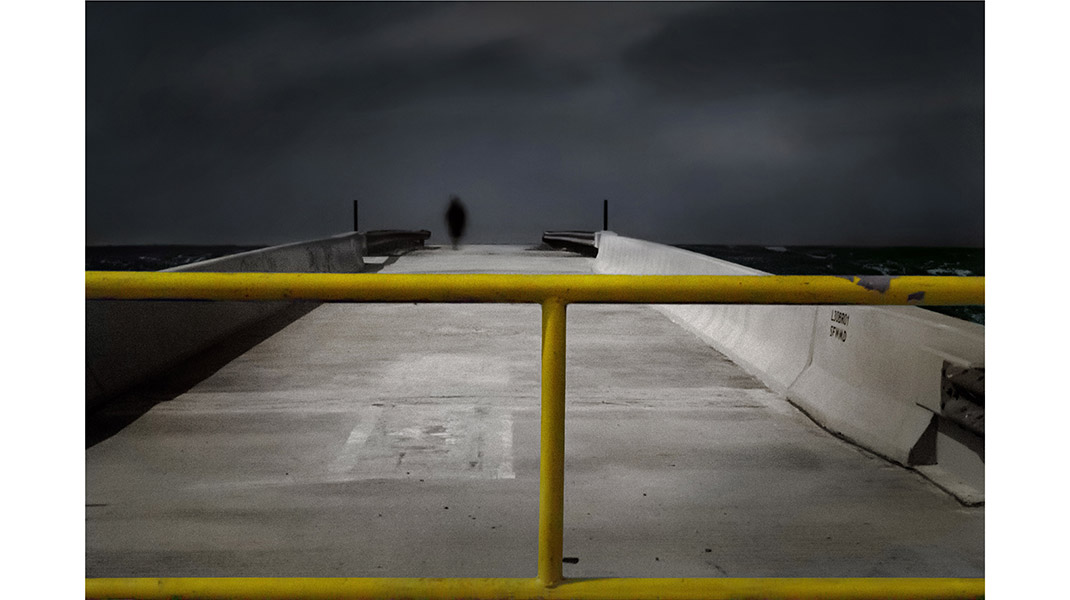
“Gory, a street photographer, describes his practice as one in which he randomly explores the street to discover a scene of visual interest. He intuits that “images come to him” as opposed to being artificially arranged. Gory is captivated by scenes perceived to have an undiscovered, hidden, or unusual quality. When he happens upon a scene, in the quiet of the night, without people nearby, he recognizes its undiscovered, hidden, or unusual qualities.The fascinating results yield an unexpected atmosphere and mood—characteristics that define his gaze. Gory adopted Glen Miller’s song title “Moonlight Serenade” because it resonates with the subject of the photographic series—of houses, cars, abandoned trains, trolleys, a vintage drugstore, and a bar that would not have had the attraction they did had the artist seen them during daylight. “Moonlight Serenade” was also music that Gory and his wife Lucia, a poet, listened to together, in its many variations, throughout the years. The exhibition is dedicated to her memory.” — Paragraph from the exhibition’s essay “The Night Comes First” by Julia P. Herzberg, Ph.D.
Rogelio López Marín (Gory). Classic Cars, 2012Rogelio López Marín (Gory). Road Blocked by a Low Yellow Metal Rail, 2012Rogelio López Marín (Gory). Pebble Road with a Yellow Open Metal Rail, 2012Rogelio López Marín (Gory). Pebbles under the Guardrail, 2012Rogelio López Marín (Gory). Stone Building with Interior Bathrooms, 2012Rogelio López Marín (Gory). Old Black Car, Mail Boxes, and Trailer Home, 2012Rogelio López Marín (Gory). Covered Car, White House, and Blue Decorative Shutters, 2015Rogelio López Marín (Gory). Three Miami Trolleys -03, -05, -01, 2014Rogelio López Marín (Gory). Allen’s Drugs, 2012Rogelio López Marín (Gory).Abandoned Yellow Train Car, 2012
Rogelio López Marín (Gory). Black Car and Street Mural, 2013
Rogelio López Marín (Gory). Yellow Vintage Car on a Lift, 2013Rogelio López Marín (Gory). Las Rosas and David Bowie, 2018
The exhibition was curated by Julia P. Herzberg, Ph.D.
All photographs are digital prints on luster paper, edition of 5 + 2AP, 20 x 30 inches. Images courtesy LnS Gallery.
“The Solomon R. Guggenheim presents Etel Adnan: Light’s New Measure. This focused survey, installed along the first two ramps of the museum’s rotunda, marks the first solo exhibition of the artist’s work at a New York City institution.
Over the course of a lifetime that spans almost a century, Etel Adnan’s creative and intellectual vision has been expressed in many forms. In addition to being a visual artist, she is a renowned poet, a prominent journalist, and the author of Sitt Marie Rose (1977), one of the defining novels of the modern Arab world. Adnan’s biography is notable for its rich convergence of cultural influences. She was born in Beirut in 1925 to a Greek mother and Syrian father; grew up speaking French, Arabic, and Greek; and as an adult has lived for extended periods in Lebanon, the United States, and France. She began to paint in the late 1950s, while working as a professor of philosophy in Northern California. It was a period when, in protest of France’s colonial rule in Algeria, she renounced writing in French and declared that she would begin ‘painting in Arabic’.” — Solomon R. Guggenheim Museum
Etel Adnan: Light’s New Measure is organized by Katherine Brinson, Daskalopoulos Curator, Contemporary Art, and Lauren Hinkson, Associate Curator, Collections.
“The Solomon R. Guggenheim Museum presents Vasily Kandinsky: Around the Circle. Drawing from the Guggenheim’s exceptional collection of works by Kandinsky, the exhibition features approximately eighty paintings, watercolors, and woodcuts, as well as a selection of his illustrated books, spanning the artist’s earlier years in Russia and Germany and through his exile in France at the end of his life. The presentation, installed along the midsection of the museum’s spiral rotunda, reconsiders Kandinsky’s career not as a fixed path from representation to abstraction, but as a circular passage through persistent themes centered around the pursuit of one dominant ideal: the impulse for spiritual expression.” — Solomon R. Guggenheim Museum
Vasily Kandinsky, Around the Circle, May–August 1940. Oil and enamel on canvas, 38 1/4 x 57 5/8 inches (97.2 x 146.4 cm), Solomon R. Guggenheim Museum, New York, Solomon R. Guggenheim Founding Collection 49.1222
Vasily Kandinsky, Capricious Forms (Formes capricieuses), July 1937. Oil on canvas, 35 x 45 3/16 inches (88.9 x 114.8 cm). Solomon R. Guggenheim Museum, New York, Solomon R. Guggenheim Founding Collection 45.977
Vasily Kandinsky, Dominant Curve (Courbe dominante), April 1936 (detail). Oil on canvas, 50 7/8 × 76 1/2 inches (129.2 × 194.3 cm). Solomon R. Guggenheim Museum, New York, Solomon R. Guggenheim Founding Collection 45.989
Vasily Kandinsky, Yellow Painting (La toile jaune), July 1938. Oil and enamel on canvas, 45 13/16 x 35 inches (116.4 x 88.9 cm). Solomon R. Guggenheim Museum, New York, Solomon R. Guggenheim Founding Collection 45.964
Vasily Kandinsky, Striped (Rayé), November 1934. Oil with sand on canvas, 31 7/8 × 39 3/8 inches (81 × 100 cm). Solomon R. Guggenheim Museum, New York, Solomon R. Guggenheim Founding Collection 46.1022
Vasily Kandinsky, Several Circles (Einige Kreise), January–February 1926. Oil on canvas, 55 3/8 x 55 1/4 inches (140.7 x 140.3 cm). Solomon R. Guggenheim Museum, New York, Solomon R. Guggenheim Founding Collection, By gift 41.283
Vasily Kandinsky, Three Sounds (Drei Klänge), August 1926. Oil on canvas, 23 3/4 x 23 1/2 inches (60.3 x 59.7 cm). Solomon R. Guggenheim Museum, New York, Solomon R. Guggenheim Founding Collection, By gift 41.282
Vasily Kandinsky, Composition 8 (Komposition 8), July 1923. Oil on canvas, 55 1/4 x 79 inches (140.3 x 200.7 cm). Solomon R. Guggenheim Museum, New York, Solomon R. Guggenheim Founding Collection, By gift 37.262
Vasily Kandinsky, Black Lines (Schwarze Linien), December 1913. Oil on canvas, 51 3/8 x 51 5/8 inches (130.5 x 131.1 cm). Solomon R. Guggenheim Museum, New York, Solomon R. Guggenheim Founding Collection, By gift 37.241
Vasily Kandinsky, Improvisation 28 (Second Version) (Improvisation 28 [zweite Faßung]), 1912. Oil on canvas, 44 5/16 × 64 inches (112.6 × 162.5 cm). Solomon R. Guggenheim Museum, New York, Solomon R. Guggenheim Founding Collection, By gift 37.239
Vasily Kandinsky, Painting with White Border (Bild mit weißem Rand), May 1913. Oil on canvas, 55 1/4 × 78 7/8 inches (140.3 × 200.3 cm). Solomon R. Guggenheim Museum, New York, Solomon R. Guggenheim Founding Collection, By gift 37.245
Vasily Kandinsky, Landscape with Factory Chimney (Landschaft mit Fabrikschornstein), 1910. Oil on canvas, 26 × 32 1/4 inches (66 × 81.9 cm). Solomon R. Guggenheim Museum, New York, Solomon R. Guggenheim Founding Collection, By gift 41.504
Vasily Kandinsky, Blue Mountain (Der blaue Berg), 1908–09. Oil on canvas, 42 1/4 x 38 7/16 inches (107.3 x 97.6 cm). Solomon R. Guggenheim Museum, New York, Solomon R. Guggenheim Founding Collection, By gift 41.505
Presented concurrently with Vasily Kandinsky: Around the Circle is a solo exhibition that features the work of contemporary artist Etel Adnan, followed by solo exhibitions of the work of Jennie C. Jones, and Cecilia Vicuña.
Vasily Kandinsky: Around the Circle is organized by Megan Fontanella, Curator, Modern Art and Provenance.
“The New-York Historical Society honors the late Ruth Bader Ginsburg (RBG)—the trailblazing Supreme Court justice and cultural icon—with a special exhibition this fall. Notorious RBG: The Life and Times of Ruth Bader Ginsburg is based on the popular Tumblr and bestselling book of the same name. A traveling exhibition organized by the Skirball Cultural Center in Los Angeles, the show takes an expansive and engaging look at the justice’s life and work, highlighting her ceaseless efforts to protect civil rights and foster equal opportunity for all Americans.
Notorious RBG features archival photographs and documents, historical artifacts, contemporary art, media stations, and gallery interactives spanning RBG’s varied roles as student, wife to Martin “Marty” Ginsburg, mother, lawyer, judge, women’s rights pioneer, and internet phenomenon. Highlights include a robe and jabot from RBG’s Supreme Court wardrobe; the official portraits of RBG and Sandra Day O’Connor—the first two women to serve on the Supreme Court—on loan from the National Portrait Gallery; and QR-code listening stations where visitors can hear RBG’s delivery of oral arguments, majority opinions, and forceful dissents in landmark Supreme Court cases on their own devices.” — New-York Historical Society
“It is a great honor that we celebrate Ruth Bader Ginsburg, a native New Yorker whose impact on the lives of contemporary Americans has been extraordinary,” said Dr. Louise Mirrer, president and CEO of New-York Historical. “Justice Ginsburg fought hard to achieve justice and equality for all, inspiring us with her courage and tenacity in upholding our fundamental American ideals. A special friend to New-York Historical, in 2018 she presided over a naturalization ceremony in our auditorium. The exhibition is a memorial tribute to her achievements and legacy.”
Official portrait of United States Supreme Court Justice Ruth Joan Bader Ginsburg. Courtesy Steve Petteway, Collection of the Supreme Court of the United States.
Ruth Bader as a child, 1935. Collection of the Supreme Court of the United States
The Alpha Epsilon Phi sorority at Cornell University in 1953, featuring Ruth Bader, class of 1954, pictured third from right standing in front of the porch. Published in The Cornellian, 1953. Division of Rare and Manuscript Collections, Cornell University Library.
RBG and Marty with their daughter, Jane, 1958. Collection of the Supreme Court of the United States.
Ruth Bader Ginsburg teaching at Columbia Law School, 1972. Courtesy of Columbia Law School.
RBG and Marty taking a break from work, 1972. Collection of the Supreme Court of the United States.
Justice Antonin Scalia and RBG riding an elephant, 1994. Collection of the Supreme Court of the United States.
Courtroom sketch of Justice Ginsburg’s dissent in Shelby County v. Holder, June 25, 2013. Sketch by Art Lien.
Ari Richter, RBG Tattoo II, 2018. Pigmented human skin on glass. Courtesy of the artist.
Roxana Alfer Geffen, Dissent Collar #9, 2016. Courtesy of the artist.
RBG image projected onto New York State Civil Supreme Court building in Manhattan, September 19, 2020. Courtesy Reuters/Andrew Kelly/Alamy Photo.
50th Street subway stop altered in tribute to RBG, 2020. Courtesy Adrian Wilson and Matt Duncan.
Fearless Girl with jabot, 2020. Courtesy Jennifer M. Mason / Shutterstock.com
Notorious RBG: The Life and Times of Ruth Bader Ginsburg has been coordinated at New-York Historical by Valerie Paley, senior vice president and Sue Ann Weinberg Director, Patricia D. Klingenstein Library; Laura Mogulescu, curator of women’s history collections; and Anna Danziger Halperin, Andrew W. Mellon Postdoctoral Fellow in Women’s History and Public History, Center for Women’s History.
“Using sound, movement, and film by the multidisciplinary Amsterdam-based artists DRIFT, Fragile Future transforms The Shed’s galleries with experiential multi-sensory installations that suggest alternative solutions for a positive future. Marking DRIFT’s first New York solo presentation and featuring a soundtrack created by ANOHNI, the monumental exhibition and series of special performances builds on DRIFT’s practice of creating experiences that inspire a reconnection to our planet and its natural processes, as well as empathy towards anthropomorphic non-living objects. On view September 29 through December 19, 2021, Fragile Future is presented by Superblue, the ground-breaking new venture dedicated to producing, presenting, and engaging audiences with experiential art, and The Shed, the innovative new arts center on Manhattan’s west side.” — The Shed
Installation views of DRIFT, Fragile Future at The Shed. Photos by Corrado Serra.
DRIFT, Fragile Future, 2007 – 21 DRIFT, Fragile Future. Coded Coincidence, 2021 DRIFT, Coded CoincidenceDRIFT, Ego, 2020 – 21DRIFT, Ego, 2020 – 21DRIFT, Ego, 2020 – 21DRIFT, Ego, 2020 – 21 DRIFT, Drifter performance, 2021. Performed with a soundtrack by ANOHNI.DRIFT, Drifter performance, 2021. Performed with a soundtrack by ANOHNI.DRIFT, Drifter performance, 2021. Performed with a soundtrack by ANOHNI.
Organized by Kathleen Forde, Senior Curator, Superblue, the premiere of Fragile Future marks Superblue’s debut presentation in New York, following the launch of its experiential art center in Miami this past May, and coincides with several major projects by DRIFT this fall. This November, a solo exhibition of DRIFT’s “Materialism” series will be presented by Pace Gallery in New York, exploring the raw materials that make up everyday objects.
“Jasper Johns (b. 1930) is arguably the most influential living American artist. Over the past sixty-five years, he has produced a radical and varied body of work marked by constant reinvention. In an unprecedented collaboration, the Philadelphia Museum of Art and the Whitney will stage a retrospective of Johns’s career simultaneously across the two museums, featuring paintings, sculptures, drawings, and prints, many shown publicly for the first time. Inspired by the artist’s long-standing fascination with mirroring and doubles, the two halves of the exhibition will act as reflections of one another, spotlighting themes, methods, and images that echo across the two venues. A visit to one museum or the other will provide a vivid chronological survey; a visit to both will offer an innovative and immersive exploration of the many phases, facets, and masterworks of Johns’s still-evolving career.
This exhibition is co-organized by the Whitney Museum of American Art and the Philadelphia Museum of Art. The organizing curators are Carlos Basualdo, Keith L. and Katherine Sachs Senior Curator of Contemporary Art, Philadelphia Museum of Art, and Scott Rothkopf, Senior Deputy Director and Nancy and Steve Crown Family Chief Curator, Whitney Museum of American Art, New York, with Sarah B. Vogelman, exhibition assistant, in Philadelphia, and Lauren Young, curatorial assistant, in New York.” — Whitney Museum of American Art
Adam D. Weinberg, the Whitney’s Alice Pratt Brown Director, commented, “We are delighted to present this unique retrospective together with the Philadelphia Museum of Art, an important occasion for both museums, which have had connections with the artist going back decades. The Whitney has been collecting and showing Johns since the 1960s and we are thrilled to celebrate his extraordinary career. Enigmatic, poetic, rich, and profoundly influential, Johns’s work is always ripe for reexamination.”
“In the last three decades, exhibitions and publications have established the rightful place of figures such as Dial and the quilters of Gee’s Bend, Alabama, in the canon of twentieth-century art. The focus has often been on the impressive works of assemblage—whether of found objects or fabric—that have emerged from the Southern United States. Artists only one or two generations removed from slavery, and subjected to the abuses of Jim Crow, developed ingenious formal techniques using found materials and skills learned outside the classroom and studio. Many, like Dial, Rowe, and Holley, exhibited their creations at their homes in elaborate ‘yard shows,’ drawing the attention of passersby and art-world figures alike.
Another Tradition focuses on the genre of drawing, which, like assemblage, is an art of ‘making do.’ Its accessibility and directness have always appealed to both artists and their audiences. While some works in the exhibition were produced on traditional artist’s papers, others incorporate the unique qualities of found supports. The range of media includes watercolor, ballpoint pen, crayon, and even glitter. But the impact of these works ultimately transcends their innovative means. Although each of the eight artists represented speaks with a distinctive voice, the intimate space of the Morgan’s Thaw Gallery illuminates formal and thematic connections that arise from their shared geographies and experiences.” — The Morgan Library & Museum
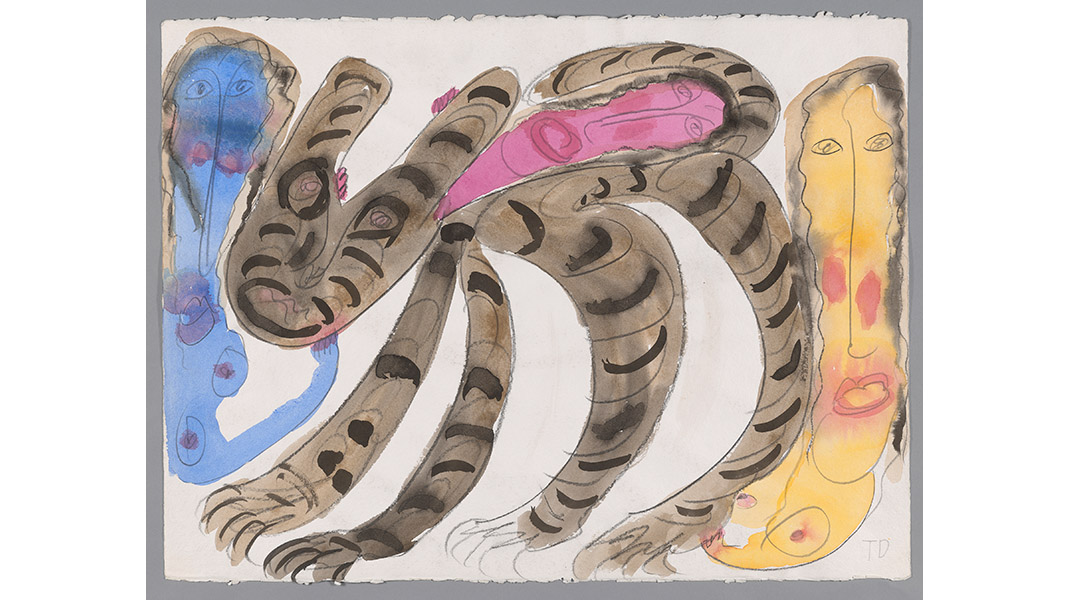
Henry Speller (1903 – 1997). Courthouse, 1986. Wax crayon, porous-point pen, and graphite on wove paper. 18 × 24 in. (45.7 × 61 cm). The Morgan Library & Museum, Gift of the Souls Grown Deep Foundation from the William S. Arnett Collection and purchase on the Manley Family Fund, 2018.102r. Photography by Janny Chiu.
Henry Speller (1903 – 1997). Glorie Jean and Her Friends, 1987. Porous-point pen, wax crayon, and graphite on wove paper. 18 × 24 in. (45.7 × 61 cm). The Morgan Library & Museum, Gift of the Souls Grown Deep Foundation from the William S. Arnett Collection and purchase on the Manley Family Fund, 2018.103r. Photography by Janny Chiu.
“The acquisition of eleven works from the Souls Grown Deep Foundation in 2018 profoundly enriched our collection of modern and contemporary drawings,” said exhibition curator Rachel Federman, the Morgan’s Associate Curator of Modern and Contemporary Drawings. “Black artists from the South have contributed tremendously to the visual culture of the United States with extraordinary quilts and assemblage sculptures, but also, as this exhibition makes clear, in the realm of drawing.”
“The Museum of Modern Art presents Shigeko Kubota: Liquid Reality, on view from August 21, 2021, through January 1, 2022. Likening video technology to a ‘new paintbrush,’ New York–based Shigeko Kubota (Japanese, 1937– 2015), whose career spanned more than five decades, was one of the first artists to commit to the video medium in the early 1970s. Formally trained as a sculptor, Kubota’s varied accomplishments as an artist, collaborator, curator, and critic helped to shape a pivotal period in the evolution of video as an art form. Shigeko Kubota: Liquid Reality is organized by Erica Papernik-Shimizu, Associate Curator, with the support of Veronika Molnar, Intern, Department of Media and Performance.
MoMA’s presentation takes its name from Kubota’s observation that, ‘[In] video’s reality, infinite variation becomes possible…freedom to dissolve, reconstruct, mutate all forms, shape, color, location, speed, scale…liquid reality.’ Featuring works from MoMA’s collection and key loans from the Shigeko Kubota Video Art Foundation, this exhibition highlights six intrepid video sculptures from a critical decade between 1976 and 1985, during which Kubota pivoted from her sculptural reinterpretations of works by artist Marcel Duchamp to her ‘autobiographical objects.” — MoMA
Associate Curator Erica Papernik-Shimizu explains, “Kubota’s ‘liquid reality’ positions video as both a total liberation from precedent and a way of life. Her visionary sculptures, through poetic contradictions and an economy of means, masterfully combine a bold interrogation of her own identity with prescient investigations of technology itself.”
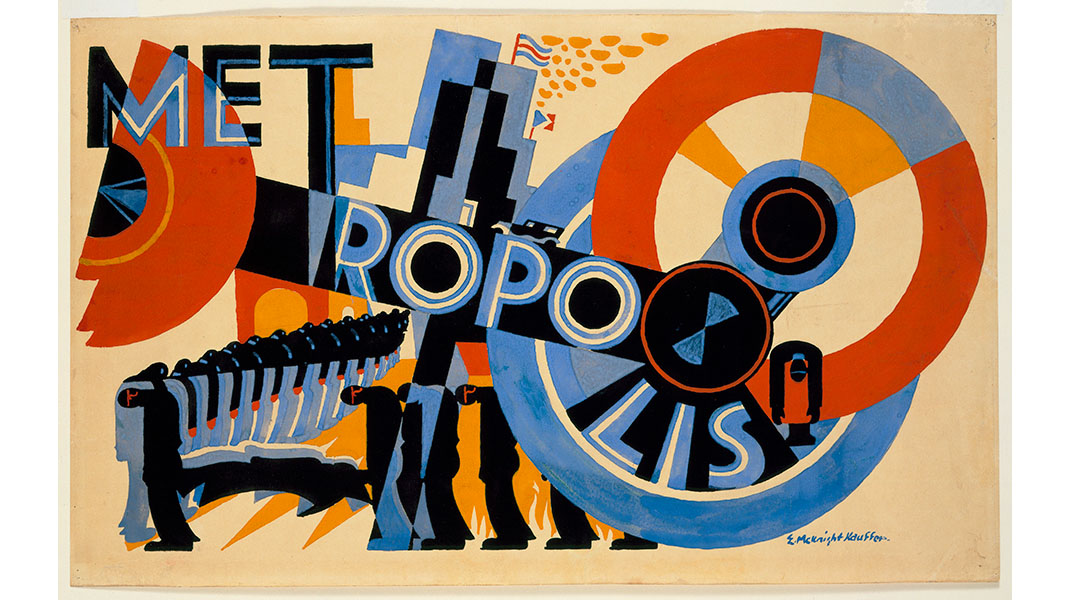
“Cooper Hewitt, Smithsonian Design Museum presents the largest-ever exhibition of works by E. McKnight Kauffer (American, 1890–1954), a pioneer of commercial art—the profession known today as graphic design. ‘Underground Modernist: E. McKnight Kauffer’ features some 200 objects to examine the designer’s impact and legacy across media.
Hailed in his lifetime as ‘the poster king,’ Kauffer brought design to many creative industries. He made modernism accessible by applying cutting-edge styles to designs for advertising, literature, theater, transportation and more. He adopted emerging avant-garde aesthetics in provocative ways to promote services and products.
Cooper Hewitt holds one of the most extensive collections of Kauffer’s designs in the world, comprising material in both the Drawings, Prints & Graphic Design department and the Archives department. The exhibition is organized by Caitlin Condell, associate curator and head of Drawings, Prints & Graphic Design at Cooper Hewitt, and Emily M. Orr, Ph.D., assistant curator of modern and contemporary American design at Cooper Hewitt.” — Cooper Hewitt
“The artist in advertising is a new kind of being,” Kauffer wrote in 1938. “His responsibilities are to my mind very considerable. It is his business constantly to correct values, to establish new ones, to stimulate advertising and help to make it something worthy of the civilization that needs it.”
Poster, Soaring to Success! Daily Herald—the Early Bird, 1919; Designed by E. McKnight Kauffer (American, 1890–1954); Lithograph; Published by Daily Herald (London, England); Printed by T. B. Lawrence Ltd. (London, England); Courtesy of William W. Crouse
Poster, Aeroshell Lubricating Oil, 1932; Designed by E. McKnight Kauffer (American, 1890–1954); Published by Shell-Mex and BP Ltd. (London, England); Printed by Chorley & Pickersgill, Ltd. (London, England); Lithograph; 76.2 × 114.3 cm (30 × 45 in.); Merrill C. Berman Collection
“‘Underground Modernist’ reveals new stories and research to position Kauffer not simply as a designer of posters, but as a figure who applied the graphic arts broadly to creative pursuits,” Condell said. “He transformed the public’s perception of modernism and influenced the work of other equally significant artists, designers and writers on both sides of the Atlantic.”
“Drawing heavily on Cooper Hewitt’s unique holdings of Kauffer’s work, the exhibition explores the wide circulation and popular resonance of Kauffer’s designs,” Orr said. “Motivated by a desire to serve the public, Kauffer brought art closer to all people. He believed that advertising was an opportunity to introduce new visual expression.”
Images courtesy Cooper Hewitt, Smithsonian Design Museum.








You must be logged in to post a comment.