Crafting the Ballets Russes: The Robert Owen Lehman Collection at The Morgan Library & Museum, June 28 – September 22, 2024

“The Morgan Library & Museum is pleased to present Crafting the Ballets Russes: The Robert Owen Lehman Collection, on view June 28 through September 22, 2024. The Robert Owen Lehman Collection, which has been on deposit at the Morgan for half a century, is the finest private collection of autograph manuscripts of Western music in the world. Among its many splendid works are deep holdings of early twentieth-century ballet materials, which will be shown together for the first time in this exhibition. 

Crafting the Ballets Russes highlights the rise of women in leading creative roles in the creation of these seminal ballets, including the choreographer Bronislava Nijinska and the dancer/producer Ida Rubinstein. Organized around a series of ballets, the exhibition features sketches, drafts, and choreographic notations to show how composers, choreographers, and designers together created works of astonishing originality and lasting influence. On view are over 100 objects including rare music and dance manuscripts, photographs, and costume designs by artists Léon Bakst, Alexandre Benois, and Natalia Goncharova.” — The Morgan Library & Museum

Léon Bakst (1866–1924), “Firebird and the Prince (Tsarevitch),” poster design for Firebird, 1915. Harvard Theatre Collection, Houghton Library, Howard D. Rothschild Collection.
Léon Bakst (1866–1924). Set design for bedroom scene for Schéhérazade, [1910]. Gouache on paper. Boris Stavrovski Collection, New York. Photography by Janny Chiu
Alexandre Benois (1870–1960). Set design for the “Butter Week Fair” for Petrouchka, scene 1, 1911.
Graphite, tempera, and watercolor on paper. Wadsworth Atheneum Museum of Art, Hartford, CT. The Ella Gallup Sumner and Mary Catlin Sumner Collection Fund, 1933.402. Photography by Allen Phillips. © 2024. Artists Rights Society (ARS), New York / ADAGP, Paris
Dover Street Studios (London, active ca. 1906–12). Vaslav Nijinsky as Petrouchka, [1911], no. 2054. Library of Congress, Ida Rubinstein Collection
Alexandre Benois (1870–1960). Costume design for a moujik (peasant) in Petrouchka, n.d. Gouache and black ink with graphite on paper. The Joseph F. McCrindle Collection, The Morgan Library & Museum, 2009.23. Photography by Steven H. Crossot. © 2024 Artists Rights Society (ARS), New York / ADAGP, Paris
Léon Bakst (1866–1924). Costume design for a nymph in The Afternoon of a Faun (L’Après-midi d’un Faune), 1912. Watercolor, pencil, and gold paint on paper. Harvard Theatre Collection, Houghton Library, Stravinsky-Diaghilev Foundation Collection; pfMS Thr 495 (261).
Vaslav Nijinsky (1890–1950). The Afternoon of a Faun (L’Après-midi d’un Faune). Choreographic notation, ca. 1913–15. Library of Congress, Bronislava Nijinska Collection
Natalia Goncharova (1881–1962). Curtain design for Les Noces, 1915. Opaque watercolor over graphite on paper. Philadelphia Museum of Art: Gift of Christian Brinton, 1941, 1941-79-96. © 2024 Artists Rights Society (ARS), New York / UPRAVIS, Moscow
Program for Les Ballets de Madame Ida Rubinstein. Académie Nationale de Musique et de Danse, May 1929. Library of Congress, Ida Rubinstein Collection

“We are pleased to celebrate our centennial year with a presentation from the Robert Owen Lehman Collection, one of our most significant and cherished holdings at the Morgan,” said Colin B. Bailey, the Katharine J. Rayner Director of the Morgan Library & Museum. “We are immensely grateful to have the collection on deposit, where it can be shared with scholars, students, and visitors alike. This exhibition, combining music manuscripts with loans relating to choreography and design, brings some of the most pioneering and enduring early twentieth-century classical music to life.”

Crafting the Ballets Russes: The Robert Owen Lehman Collection is organized by Robinson McClellan, Associate Curator of Music Manuscripts and Printed Music.

Images courtesy The Morgan Library & Museum.

Pino Pascali at Fondazione Prada Milan, through September 23, 2024

“The exhibition, curated by Mark Godfrey, is divided into four sections, each presenting a unique perspective on Pascali’s work, and unfolds through three buildings of the Milan venue: the Podium, the Nord and the Sud galleries. The set design, conceived by 2×4, includes forty-nine works by Pino Pascali from Italian and international museums and distinguished private collections; nine artworks by prominent post-war artists; selected photographs portraying Pascali with his works and a video.” — Fondazione Prada 

As Mark Godfrey writes in his exhibition catalog essay, “Pascali explored the relationship of sculpture and stage props, and contrasted sculpture with functional objects. Works that looked from a distance like readymades revealed themselves close-up to be constructed from found materials. Pascali thought about what a ‘fake’ or ‘feigned’ sculpture could be. He titled pieces as if they were solid masses, winking to his audiences who knew they were empty volumes. He used the natural elements of earth and water alongside construction materials like Eternit fiber cement panels and divided his seas and fields into units with repeated measurements. Pascali brought new consumer products and synthetic fabrics to the studio to fashion animals, traps, and bridges. There is no doubt whatsoever as to the complexity of his approach to sculpture, and yet the genius and originality of his contribution lies somewhere else. Pascali is important today because he was an ‘exhibitionist’. […] Pascali recognized that the postwar artist had to devote as much of their energies to exhibition-making as to refining their work in the studio.”

Exhibition view of “Pino Pascali” at  Fondazione Prada, Milan. Photos: Roberto Marossi. Courtesy: Fondazione Prada.

Calder. Sculpting Time at Museo d’arte della Svizzera italiana, Lugano, through October 6, 2024

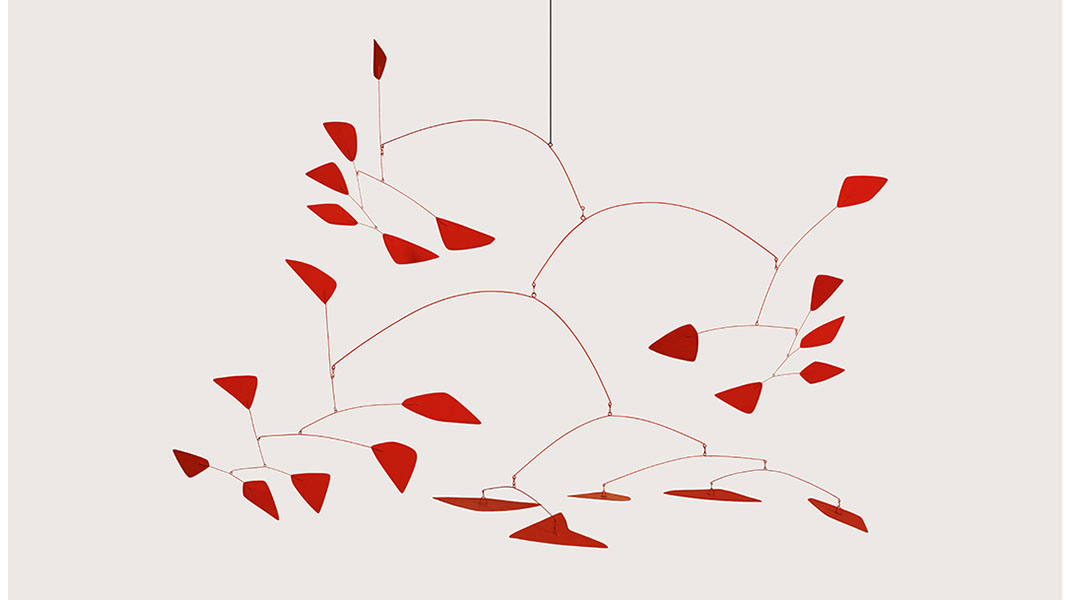
“MASI Lugano presents Calder. Sculpting Time, the first comprehensive monographic exhibition in a Swiss public institution devoted to Alexander Calder in nearly fifty years. By introducing movement to the static art form of sculpture, Calder extended the medium beyond the visual into the temporal dimension. Drawing from major international public and private collections—including a large body of works loaned from the Calder Foundation, New York—Calder. Sculpting Time features over 30 of the artist’s masterpieces created between 1931 and 1960. 

Calder. Sculpting Time at MASI explores the profound and transformative impact of this revolutionary artist, delineating his development of a formal and sculptural language characterized by unprecedented innovation during the 1930s and 1940s. The exhibition, designed as an open plan without walls, offers the public the opportunity to see works that span Calder’s early abstractions or sphériquesto a magnificent selection of later mobiles, stabiles and standing mobiles of various sizes. Also on view is a large body of constellations—a term proposed by Marcel Duchamp and James Johnson Sweeney for the artist’s sculptures made of wood and wire in 1943.” — MASI Lugano

Installation view, “Calder. Sculpting Time” MASI Lugano, Switzerland. Photograph by Luca Meneghel © 2024 Calder Foundation, New York / Artists Rights Society (ARS), New York

“Calder’s legacy endures not only in the physical presence of his works but also in the profound impact his art has had on shaping the way we perceive and interact with sculpture. His contribution to art history extends far beyond the innovative use of materials and the employment of new techniques, capturing the subtle essence of fleeting moments. Engaging with this temporal dimension is the goal of this exhibition,” the curators conclude.

Calder. Sculpting Time was curated by Carmen Giménez and Ana Mingot Comenge.

Title image: Alexander Calder. Quatre systèmes rouges, 1960. Iron and painted steel. 155 × 200 × 200 cm. Louisiana Museum of Modern Art, Humlebæk, Denmark. Donation: The New Carlsberg Foundation. Photo: Louisiana Museum of Modern Art / Poul Buchard / Brøndum & Co © 2024 Calder Foundation, New York / Artists Rights Society (ARS), New York. 

Jenny Kendler: Other of Pearl at Historic Fort Jay on Governors Island, through the end of October

“Governors Island Arts and NRDC (Natural Resources Defense Council) have opened Other of Pearl, a site-specific public art exhibition by Jenny Kendler telling the story of our planet’s changing climate, in the historic Fort Jay on Governors Island. 

Other of Pearl considers the oyster and whale as central players in the ecological and economic entanglement between human and nonhuman beings. The artist confronts contemporary environmental issues—ocean noise, chemical pollution, climate change and sea level rise—while pointing to the extractive histories that form the origin stories of our climate crisis.

Kendler’s first solo exhibition in New York City, Other of Pearl features a series of seven intimate, delicate works—all displayed in the cavernous, subterranean magazine of historic Fort Jay, a star-shaped fortification built on Governors Island between 1775 and 1776. In darkened rooms that echo with whale song, visitors encounter pearl sculptures grown inside oysters, bells rung by fossilized whale ear bones, a crystalline whale eye cast of sea salt and human tears, glass vials filled with oil from long dead whales, and a human nervous system meticulously strung from thousands of tiny pearls. In the adjoining galleries, two large handblown glass instruments evoke the organs humpback and sperm whales use to communicate, inviting visitors sonic’ activation. David Gruber of Project CETI has provided the whale recordings that become part of these sound works.” — Governors Island Arts

Exhibition as viewed from the entrance. Featured in the center is “Other of Pearl, 2022-2024,” with “Whale Bells, 2023” (Jenny Kendler and Andrew Bearnot) visible within the room on the left and “Mother, of Pearl (Nervous System), 2024,” visible within the room on the right.
“Mother, of Pearl (Nervous System), 2024,” viewed from a distance, with “Other of Pearl, 2022-2024,” visible in the lower left corner of the photo.
Detail, “Mother, of Pearl (Nervous System), 2024.”
Detail, “Other of Pearl, 2022-2024.”
Detail, “Seashell Resonance (Objects for Contemplation), 2024.”
“Body Burden (Blue Whale Eyeball), 2024.”

“I am thrilled that Other of Pearl is the centerpiece of our 2024 Governors Island Arts programming,” said Lauren Haynes, Head Curator and Vice President for Arts and Culture at the Trust for Governors Island. “Working with Jenny, NRDC, and the Governors Island team on a project that touches on many of the pillars of our programming has been a delight and we look forward to welcoming visitors to the Island this summer to experience it.”

“While climate change can be overwhelming, confusing and polarizing—art has a unique ability to reach people and help us process the challenge,” said Kristin Wilson-Palmer, Chief Communications Officer for NRDC. “This beautiful and powerful new exhibit from Jenny Kendler brings people together for reflection and conversation on the most significant environmental challenge of our time—and, hopefully, will inspire them to act.”

Photos by Timothy Schenck.

Images courtesy Governors Island Arts.

Myths, Secrets, Lies, and Truths: Photography from the Doug McCraw Collection at Boca Raton Museum of Art, June 12 – October 13, 2024

“The Boca Raton Museum of Art presents Myths, Secrets, Lies, and Truths: Photography from the Doug McCraw Collection (on view June 12 ‒ October 13) featuring five artists: Sheila Pree Bright, Liesa Cole, Karen Graffeo, Spider Martin and Hank Willis Thomas. The exhibition of 100+ works from the Doug McCraw Collection is an original presentation by the Museum, and was curated by Kathleen Goncharov, the Museum’s Senior Curator. The works explore themes of survival, exposure, concealment, exploitation, race, and cultural-defining design. They include still photography and installations, capturing moments that transcend boundaries of insight, and reveal how fabricated myths can shape our perceptions and distort our beliefs.” — Boca Raton Museum of Art

Doug McCraw is the co-founder of one of South Florida’s cultural gems: the FATVillage Arts District which promotes creativity, artist residences, exhibitions, research, and education. “Myths, Secrets, Lies and Truths presents five distinct voices that delve into and illuminate so many aspects of life,” says Irvin Lippman, the Executive Director of the Boca Raton Museum of Art. “Our thanks to Doug McCraw who has built an extraordinary and stimulating collection that will facilitate insightful conversations.”

Shanae Rowland, by Sheila Pree Bright (Chromogenic print), 2007. (Collection of Doug McCraw)
Sugar Baby, by Liesa Cole (Archival dye sublimation on metal), 2019. (Collection of Doug McCraw)
Two Minute Warning Sequence Frame 1, by Spider Martin. (Archival digital print on exhibition fiber paper), 1965. (Collection of Doug McCraw)
Celebrate your Specialness, by Hank Willis Thomas (Lightjet print). Original ad photo from 1997; re-conceptualized by Thomas in 2008. (Collection of Doug McCraw)
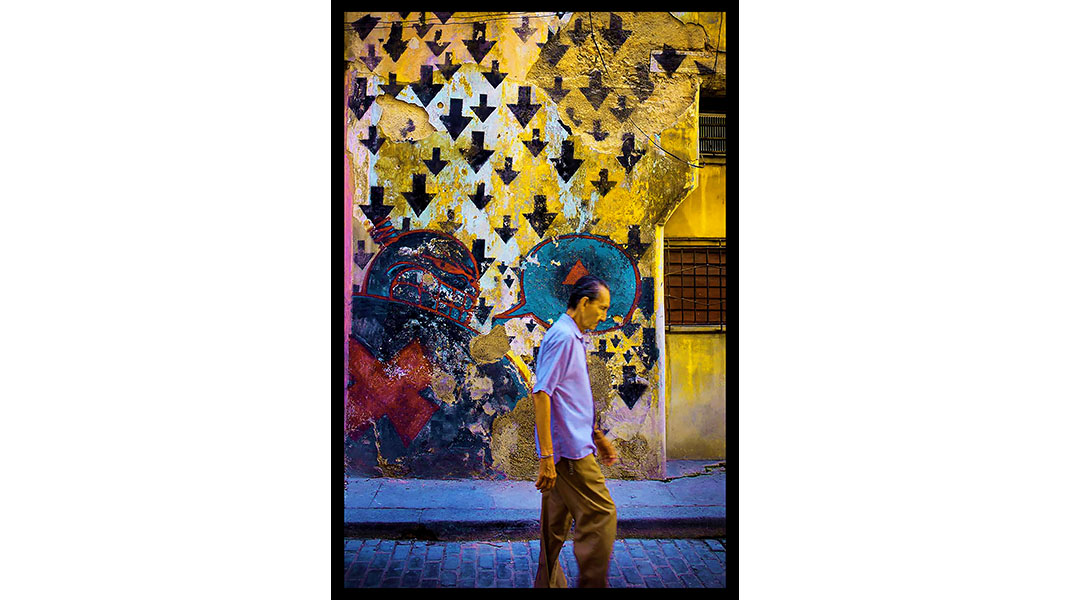
Havana: the weight of life, by Karen Graffeo, 2020. (Collection of Doug McCraw)

Images courtesy Boca Raton Museum of Art.

Biennale Gherdëina 9: The Parliament of Marmots in The Dolomites and Val Gardena, Italy, through September 1, 2024

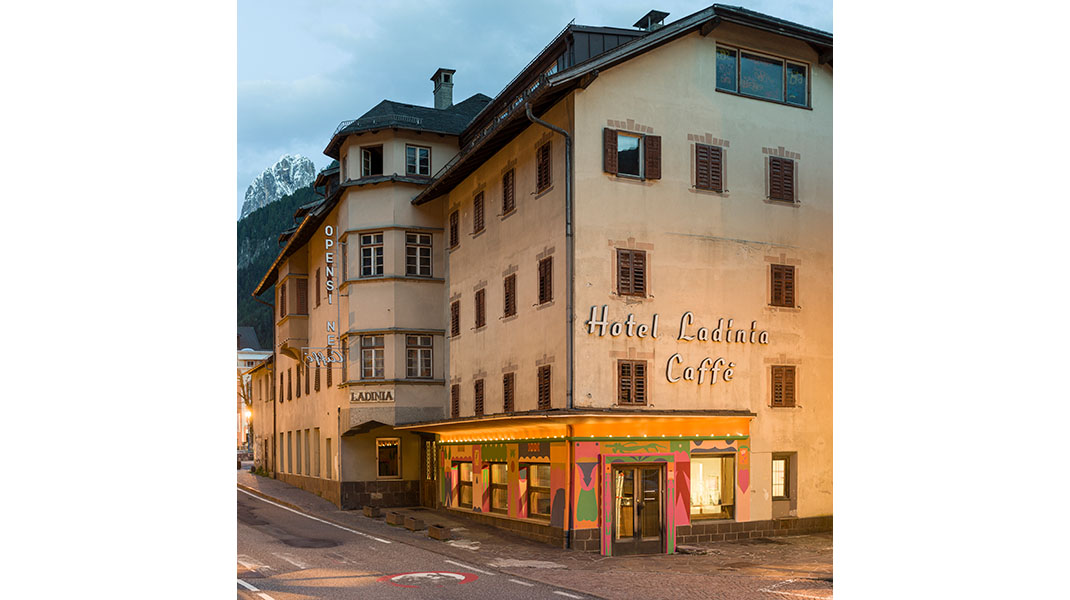
“From May 31 to September 1, 2024, with opening days on Friday May 31 and Saturday June 1, 2024, in Ortisei and within the unique setting of the Dolomites and Val Gardena, The Parliament of Marmots, the 9th edition of the Biennale Gherdëina, curated by Lorenzo Giusti with Marta Papini as associate curator, will open to the public. The Parliament of Marmots is inspired by the Kingdom of Fanes, one of the most fascinating Ladin myths of the Dolomites, which tells of the breaking of a pact established between animals and humans. This orally transmitted legend shares some key figures with Mediterranean culture and speaks of transformations, celebrating wild nature, the cycles of life, and the intimate and profound relationship between all species. In this perspective, the mountains and the Dolomites — remnants of gigantic coral reefs that surfaced 250 million years ago — transform from a barrier into a passage, a meeting point, and thus a place of encounter and contamination.” — Biennale Gherdëina

“According to anthropologist Anna Tsing, the ability to create worlds is not a prerogative of humans; hence it is necessary to turn to ways of world-making or modes of existence beyond the human,” explains curator Lorenzo Giusti. “This does not mean adopting a post-human perspective — where the human disappears — but opening up to the telling of ‘more-than-human’ stories, in which humans lose their centrality, in the awareness that no organism can become itself without the assistance of other species. In trying to compose a possible vision of these worlds, Biennale Gherdëina 9 presents a hybrid mosaic of artistic proposals, opening up the possibility of cultural and political reconciliation between the Alps and the Mediterranean, between origins and perspectives.”  

Atelier dell’Errore, Marmottoloide, 2024. Mixed Technique and Gold Leaf on Polyester and Carbon Fibre. Variable Dimensions. Commissioned by Biennale Gherdëina 9. Photo by Tiberio Sorvillo
Ingela Ihrman, First Came the Ocean, 2024. Environmental Installation, 25 x 5 m. Courtesy the Artist and Ögonblicksteatern i Umeå, Sweden. Photo by Tiberio Sorvillo
Nassim Azarzar, The Edge of the Forest, 2024. Wallpainting. Variable Dimensions. Commissioned by Biennale Gherdëina 9. Photo by Tiberio Sorvillo
Julius von Bismarck, Beatle On A Horse, 2024. Stone Pine Wood. 444 x 125 x 233 cm. Commissioned by Biennale Gherdëina 9. Supported by IFA – Institut für Auslandsbeziehungen. Photo by Tiberio Sorvillo
Arnold Holzknecht, Schwarzweiß / Bianconero, 2024. 2 Carved, Planed and Turned Sculptures in Wood, Sheep Wool, Acrylic. 240 x 45 x 100 cm. Commissioned by Biennale Gherdëina 9. Photo by Tiberio Sorvillo
Michael Höpfner, Plateau – A Walking Life, 2024. Installation Silver Gelatine Prints, Drawings, Collages, Yarn. Variable Dimensions. Commissioned by Biennale Gherdëina 9. Supported by La Boîte, Tunis. Photo by Tiberio Sorvillo
Markus Vallazza + Martino Gamper, Die Frauen aus Fanis, 1991/92 – 2024. Drawing. Installation with Wooden Frames. Variable Dimensions. Commissioned by Biennale Gherdëina 9. Photo by Tiberio Sorvillo
Eva Papamargariti, A whisper, a murmur, a roar, 2024. Three-Channel HD Video, Color, Sound, 9’. Commissioned by Biennale Gherdëina 9. Supported by LUMA Arles. Photo by Tiberio Sorvillo
Alex Ayed, Untitled (Beit el hmam II), 2023. Clay, Olive Wood, Hay, Steel, Limewash. 280 x 107,5 x 118 cm. Courtesy of the Artist and ZERO…, Milan and Galerie Balice Hertling, Paris. Photo by Tiberio Sorvillo
Laurent Le Deunff, Chouette des neiges, Crocodile, Escargot, 2024. Installation with Concrete Sculptures, Earth, Tree Bark, Dead Leaves, Moss and Various Species of green Plants and Saplings. Variable Dimensions. Courtesy of the Artist and Semiose, Paris. Photo by Tiberio Sorvillo
Tribute to Lin May Saeed, Works 2006 – 2023. Sculptures, Reliefs, Cut-Paper Silhouette. Realized by GAMeC, Bergamo in Collaboration with Biennale Gherdëina 9. Courtesy of The Estate of Lin May Saeed and Jacky Strenz, Frankfurt/Main. Photo by Tiberio Sorvillo

Images courtesy Biennale Gherdëina.

Collecting Inspiration: Edward C. Moore at Tiffany & Co. at The Met Fifth Avenue, June 9 – October 20, 2024

“Edward C. Moore (1827–1891)—the creative force who led Tiffany & Co. to unparalleled originality and success during the second half of the 19th century—amassed a vast collection of decorative arts of exceptional quality and in various media, from Greek and Roman glass and Japanese baskets to metalwork from the Islamic world. The objects were a source of inspiration for Moore, a noted silversmith in his own right, as well as the designers he supervised. The exhibition Collecting Inspiration: Edward C. Moore at Tiffany & Co. (opening June 9, 2024) will feature more than 180 extraordinary examples from Moore’s personal collection, which he bequeathed to The Met, alongside 70 magnificent silver objects designed at Tiffany & Co. under his direction. Drawn primarily from the Museum’s holdings, the display will also include seldom-seen examples from a dozen private and public lenders. A defining figure in the history of American silver, Moore played a pivotal role in shaping the legendary Tiffany design aesthetic and the evolution of The Met’s collection.” — The Metropolitan Museum of Art 

Goelet Cup. Tiffany & Co. (1837–present). 1888. Silver, silver gilt. 17 5/8 x 9 3/4 x 9 3/4 in. (44.8 x 24.8 x 24.8 cm) New York Yacht Club (1982.023)
Glass garland bowl. Early Imperial, Augustan. Late 1st century BCE. Roman. Glass; cast and cut. H. 1 13/16 in. (4.6 cm), diameter 7 1/8 in. (18.1 cm). Edward C. Moore Collection, Bequest of Edward C. Moore, 1891. 91.1.1402
Tea Set. Tiffany & Co. (1837–present). 1866–67. Silver, silver gilt, ivory. Teapot: 8 1/2 x 8 x 6 in. (21.6 x 20.3 x 15.2 cm);. Sugar bowl: 7 1/2 x 8 x 6 in. (19.1 x 20.3 x 15.2 cm);. Creamer: 7 x 6 x 5 in. (17.8 x 15.2 x 12.7 cm). Philadelphia Museum of Art, Gift of the Friends of the Philadelphia Museum of Art, 1973 (1973-94-9a-c)
Tea and Coffee Set. Tiffany & Co. (1837–present). 1876. Coffeepot: 9 1/4 × 8 3/8 × 5 5/8 in. (23.5 × 21.3 × 14.3 cm). Sugar bowl: 5 5/8 × 7 1/4 × 5 1/16 in. (14.3 × 18.4 × 12.9 cm). Waste bowl: 3 5/8 × 5 3/8 in. (9.2 × 13.7 cm). Collection of Martin Eidelberg. L.2016.71.1.1–.3
Pitcher. Tiffany & Co. (1837–present). 1874–75. Silver. 9 3/8 × 7 × 8 3/8 in. (23.8 × 17.8 × 21.3 cm). Sansbury-Mills Fund, 2018. 2018.374
Helmet with Talismanic Inscriptions. 18th–early 19th century. Made in Iran Steel; damascened with gold. Overall helmet with chain: H. 27 1/2 in. (69.9 cm) Diam. 7 1/2 in. (19.1 cm) Overall with mount: Ht. 33 1/4 in. (84.5 cm) Diam. 7 1/2 in. (19.1 cm). Edward C. Moore Collection, Bequest of Edward C. Moore, 1891. 91.1.749
Vase. Tiffany & Co. (1837–present). 1878. Silver, etched iron, copper, fire-gilded copper, gold-copper-silver alloys, niello. H. 20 1/4 in. (51.4 cm). Private Collection, New York
Waterpot. Edo period (1615–1868). ca. 1850. Japan. Pottery covered with glaze and designs in enamel (Awata ware). H. 5 3/4 in. (14.6 cm); Diam. of foot 2 1/8 in. (5.4 cm). Edward C. Moore Collection, Bequest of Edward C. Moore, 1891. 91.1.173

Collecting Inspiration: Edward C. Moore at Tiffany & Co.  is curated by Medill Higgins Harvey, Ruth Bigelow Wriston Curator of American Decorative Arts and Manager, The Henry R. Luce Center for the Study of American Art, The Met. 

Title image: The Bryant Vase. Manufactured by Tiffany & Co. (1837–present). Designed by James Horton Whitehouse (1833– 1902). Chased by Eugene J. Soligny (1832–1901). Medallions by Augustus Saint-Gaudens (American, Dublin 1848–1907 Cornish, New Hampshire). 1876.  33 1/2 x 14 x 11 5/16 in. (85.1 x 35.6 x 28.7 cm); Diam. 11 5/16 in. (28.7cm); 452 oz. 16 dwt. (14084.2 g).  Gift of William Cullen Byrant, 1877  77.9.

Images courtesy The Metropolitan Museum of Art.


Jewish Museum Presents Overflow, Afterglow: New Work in Chromatic Figuration, through September 15, 2024

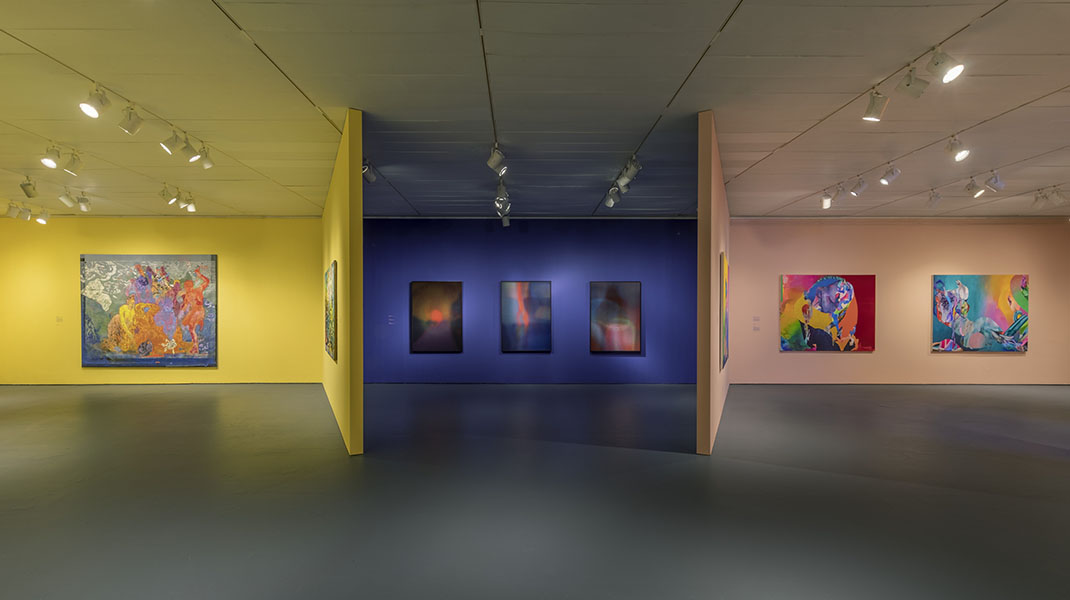
“The Jewish Museum presents Overflow, Afterglow: New Work in Chromatic Figuration, on view from May 24 through September 15, 2024. New works in painting, sculpture, and installation by Sula Bermúdez-Silverman, Sasha Gordon, Sara Issakharian, Chella Man, Ilana Savdie, Austin Martin White, and Rosha Yaghmai explore how supernatural color and uncanny luminescence challenge the boundaries of traditional figuration. The exhibition highlights the figure’s malleability and continual metamorphosis, expressing the lived experiences of a multiethnic, multiracial, and otherwise multifaceted group of makers. 

Overflow, Afterglow brings together seven young artists who use color to distort the figure and expand cultural norms—whether nodding to pop culture and digital immersion, the vibrancies of their heritages, or spaces of youthful and queer liberation. Responding to the social and political turmoil of the past decade and absorbing input from different backgrounds and histories, these artists articulate new visual vocabularies. The exhibition also builds upon the Jewish Museum’s ongoing practice of exploring contemporary art in real time, providing a platform for each new generation of artists.” — Jewish Museum

Installation view of Overflow, Afterglow: New Work in Chromatic Figuration featuring works by Sara Issakharian at the Jewish Museum, NY, May 24-September 15, 2024. Photo © Frederick Charles, fcharles.com
Installation view of Overflow, Afterglow: New Work in Chromatic Figuration featuring works by Sara Issakharian and Sula Bermúdez-Silverman at the Jewish Museum, NY, May 24-September 15, 2024. Photo © Frederick Charles, fcharles.com
Installation view of Overflow, Afterglow: New Work in Chromatic Figuration featuring works by Austin Martin White and Sula Bermúdez-Silverman at the Jewish Museum, NY, May 24-September 15, 2024. Photo © Frederick Charles, fcharles.com
Installation view of Overflow, Afterglow: New Work in Chromatic Figuration featuring works by Austin Martin White, Rosha Yaghmai, and Ilana Savdie at the Jewish Museum, NY, May 24-September 15, 2024. Photo © Frederick Charles, fcharles.com
Installation view of Overflow, Afterglow: New Work in Chromatic Figuration featuring works by Rosha Yaghmai at the Jewish Museum, NY, May 24-September 15, 2024. Photo © Frederick Charles, fcharles.com
Installation view of Overflow, Afterglow: New Work in Chromatic Figuration featuring works by Ilana Savdie at the Jewish Museum, NY, May 24-September 15, 2024. Photo © Frederick Charles, fcharles.com
Installation view of Overflow, Afterglow: New Work in Chromatic Figuration featuring works by Sasha Gordon at the Jewish Museum, NY, May 24-September 15, 2024. Photo © Frederick Charles, fcharles.com
Installation view of Overflow, Afterglow: New Work in Chromatic Figuration featuring the work of Chella Man at the Jewish Museum, NY, May 24- September 15, 2024. Photo © Frederick Charles, fcharles.com

The exhibition is organized by Liz Munsell, Barnett & Annalee Newman Curator of Contemporary Art, The Jewish Museum, and Kristina Parsons, Leon Levy Assistant Curator, The Jewish Museum.

Images courtesy Jewish Museum.

Alejandra Seeber: Interior with Landscapes at Americas Society, June 5 – July 27, 2024 

“Americas Society presents Alejandra Seeber: Interior with Landscapes, the first solo institutional presentation of the Argentine artist in New York. The exhibit showcases boldly colorful paintings depicting domestic interiors that highlight the tension between representation and abstraction.

In this exhibition, the artist challenges the idea of interior and exterior by incorporating an artificial landscape inside the art gallery: to guide the viewers through her works, the show is accompanied by a site-specific installation in the form of a minigolf course in Americas Society’s gallery.” — Americas Society

“By inviting visitors to play alongside her works, she presents a specific path by which to view her last twenty-five years of work—a journey that is both guided and open to interpretation,” says Aimé Iglesias Lukin, curator of the exhibition and Director and Chief Curator, Art at Americas Society. 

Misiones / Urquiza (lapacho y algodon / bambu y cubo mágico), 2004. Oil on canvas, 48 × 641 ⁄ 8 inches (121.9 × 162.8 cm). Courtesy of. Institute for Studies on Latin American Art (ISLAA), New York
InExterior (Chandelier), 2014. Oil on canvas, 551 ⁄ 8 × 65¾ inches (140 × 167 cm). Courtesy of Häusler Contemporary. Photo: Wolfgang Stahl
Le Corbusier Tropical, 2008. Oil on canvas, 36 5 ⁄ 8 × 44 3 ⁄ 8 inches (93.5 × 113 cm). Photo: Marcelo Setton
Eden Island, 2006. Oil on canvas, 661 ⁄ 8 × 791 ⁄ 8 inches (168 × 201 cm). Atlas and Cyrus de Voldere Collection New York
Disco Years 2024 All Shuffled, 2024. Oil on canvas, 74 × 96 inches (187.9 × 243.4 cm). Photo: Arturo Sanchez

Alejandra Seeber: Interior with Landscapes is curated by Aimé Iglesias Lukin. The installation Grammatical Minigolf is made in collaboration with Iair Rosenkranz and Lalana Rugs by Florencia Cherñajovsky.

Title image: Alejandra Seeber, Big Leaves, 2022. Oil on canvas, 14 × 27 inches (35.5 × 68.5 cm). Photo: Arturo Sanchez.

Images courtesy Americas Society.

Yto Barrada: Part-Time Abstractionist at ICP, May 22 – September 2, 2024

“This summer, ICP presents a solo exhibition of work by internationally acclaimed multi-disciplinary artist, Yto Barrada. Part-Time Abstractionist, a survey of 20 years of Barrada’s work in photography, will explore her investigations into photography and abstraction, beginning in the early 2000s through the present. These two modes of working are consistent throughout Barrada’s work and offer an insight into the ways she examines the social, political, and industrial structures that have and continue to shape society. 

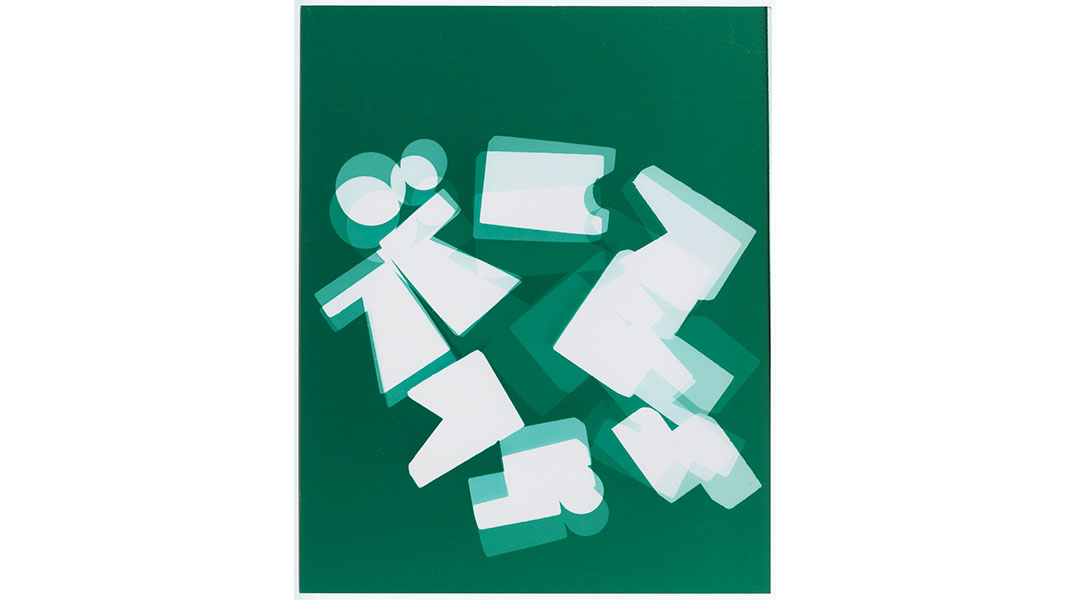
A specific focus on play, childhood, and learning will course throughout the show, including works from found-object photogram series—Bonbon (2016-17), colorful, abstract works made with candy wrappers, Blockhead Toy (2017), printed with a child’s set of blocks, and Practice Piece (2017), contact prints of found sewing lessons—as well as her work with homemade rural North African toys from the collection of the Musée du quai Branly, Paris. In acknowledgement of ICP’s school and active darkroom classes, many of these series use alternative darkroom processes, including the more recent Untitled (burning and dodging tools) (2021), which will also be on view.” — International Center of Photography 

Yto Barrada, Tumbling Blocks 53, 2017. © Yto Barrada, Courtesy Pace Gallery
Yto Barrada, Tumbling Blocks 49, 2017. © Yto Barrada, Courtesy Pace Galle
Yto Barrada, Bonbon 4, 2016. © Yto Barrada, Courtesy Pace Gallery

Curator Elisabeth Sherman has remarked, “Barrada has kept a deep commitment to photography and image making throughout her career, while always questioning the boundaries of these categories and their relationship to painting, sculpture, craft and the unexplored origins of a modernist vocabulary. These investigations, coupled with her uncovering of hidden histories and their shaping of our present, make Barrada one of the most important artists of her generation.” 

Images courtesy International Center of Photography (ICP).

Sleeping Beauties: Reawakening Fashion at The Met 5th Avenue, May 10 – September 2, 2024 

“The Metropolitan Museum of Art unveiled The Costume Institute’s spring 2024 exhibition, Sleeping Beauties: Reawakening Fashion. On view from May 10 through September 2, 2024, the exhibition features 220 garments and accessories that are connected visually through nature, which also serves as a metaphor for the transience of fashion. The show will bring to life the sensory capacities of these masterworks through a wide range of encounters: visitors are invited to smell the aromatic histories of hats bearing floral motifs; to touch the walls of galleries that are embossed with the embroidery of select garments; and to experience—via the illusion technique known as Pepper’s ghost—how the ‘hobble skirt’ restricted women’s stride in the early 20th century. Punctuating the galleries are a series of ‘sleeping beauties’—garments that can no longer be dressed on mannequins due to their extreme fragility.” — The Metropolitan Museum of Art

Max Hollein, the Museum’s Marina Kellen French Director and Chief Executive Officer, said: “The Met’s innovative spring 2024 Costume Institute exhibition pushes the boundaries of our imagination and invite us to experience the multisensory facets of a garment—those facets that deteriorate and become lost after entering a museum collection as an object. Sleeping Beauties heightens our engagement with these masterpieces of fashion by evoking what it was like to feel, move, hear, smell, and interact with them when they could be worn, ultimately offering a deeper appreciation of the integrity, beauty, and artistic brilliance of the works on display.” 

Gallery View, Title Gallery. Photo © The Metropolitan Museum of Art
Gallery View, Dior’s Garden. Photo © The Metropolitan Museum of Art
Gallery View, Poppies. Photo © The Metropolitan Museum of Art
Gallery View, The Red Rose. Photo © The Metropolitan Museum of Art
Gallery View, The Specter of the Rose. Photo © The Metropolitan Museum of Art
Gallery View, Scent of a Man, Photo © The Metropolitan Museum of Art
Gallery View, Scent of a Woman. Photo © The Metropolitan Museum of Art
Gallery View, Reseda Luteola. Photo © The Metropolitan Museum of Art
Gallery View, Garden Life. Photo © The Metropolitan Museum of Art
Gallery View, Butterflies. Photo © The Metropolitan Museum of Art
Gallery View, The Nightingale and the Rose. Photo © The Metropolitan Museum of Art
Gallery View, The Siren. Photo © The Metropolitan Museum of Art
Gallery View, The Mermaid. Photo © The Metropolitan Museum of Art
Gallery View, The Mermaid Bride. Photo © The Metropolitan Museum of Art

Andrew Bolton, Curator in Charge of The Costume Institute, commented: “When an item of clothing enters our collection, its status is changed irrevocably. What was once a vital part of a person’s lived experience is now a motionless ‘artwork’ that can no longer be worn or heard, touched, or smelled. The exhibition endeavors to animate these artworks by re-awakening their sensory capacities through a range of technologies, affording visitors sensorial ‘access’ to rare historical garments and rarefied contemporary fashions. By appealing to the widest possible range of human senses, the show aims to reconnect with the works on display as they were originally intended—with vibrancy, with dynamism, and ultimately with life.”

The exhibition is organized by Andrew Bolton, Curator in Charge of The Costume Institute. Nick Knight is the Creative Consultant for the exhibition, with SHOWstudio developing and realizing the various technological activations. Exhibition design is by Leong Leong in collaboration with The Met’s Design Department. ST smell researcher and artist Sissel Tolaas will develop smells to accompany select objects in the show.

Title image: Dress, Jun Takahashi (Japanese, born 1969) for Undercover (Japanese, founded 1990), spring/summer 2024; Courtesy Undercover. Photography © Nick Knight, 2024. Image courtesy of The Metropolitan Museum of Art. :

Images courtesy The Metropolitan Museum of Art.

Jenny Holzer: Light Line at Guggenheim Museum, May 17– September 29, 2024

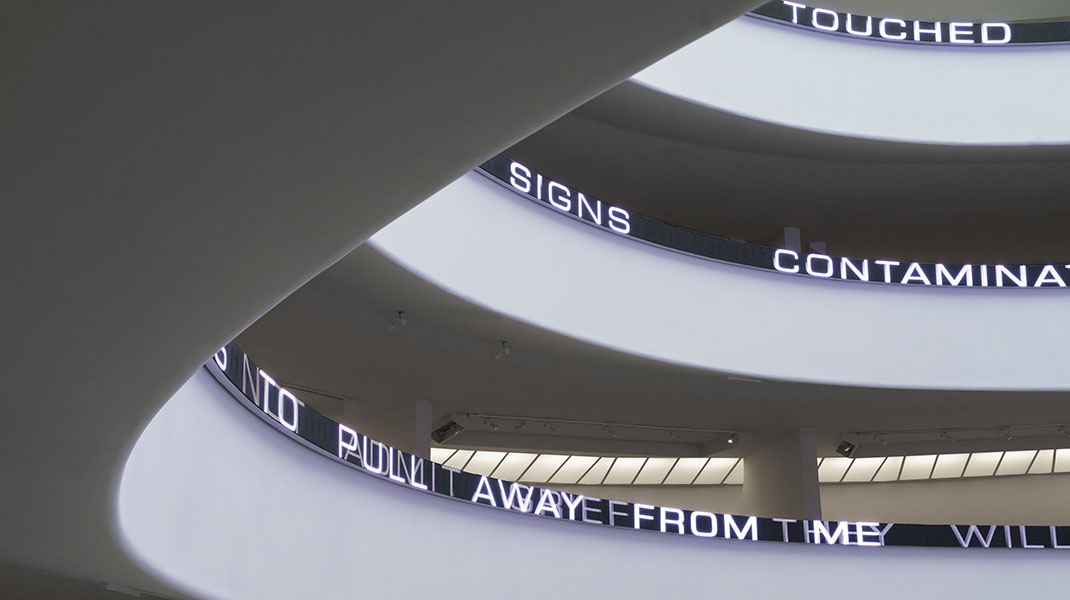
“Almost thirty-five years ago, Jenny Holzer (b. 1950, Gallipolis, Ohio) created a spiraling LED display for her Guggenheim Museum exhibition. The LED sign—blinking while changing colors, fonts, and special effects—was the longest in the world at the time and is considered a masterpiece of text-based art. Open today through September 29, 2024, the Guggenheim presents the solo exhibition Jenny Holzer: Light Line, featuring a reimagining of Holzer’s 1989 landmark artwork. Holzer has treated the entire museum as an installation, placing pieces inunexpected spaces, such as outdoor planters and a restroom, to echo chance encounters with her work on city streets. Holzer’s voice is vital and incisive, and her work, whether on posters, electronic signs, stone benches, or paintings, explores some of the most pressing issues of our time, from climate justice to women’s rights, from corruption to war.

The new manifestation of Holzer’s electronic sign, Installation for the Solomon R. Guggenheim Museum (1989/2024), transforms the building with an updated and expanded display of scrolling texts, featuring language from her iconic series, such as Truisms and Inflammatory Essays. Taking up three revolutions of the Frank Lloyd Wright–designed rotunda in the 1989 exhibition, the new installation climbs all six ramps up to the building’s oculus, realizing the artist’s original vision.” — Guggenheim Museum

Installation view, Jenny Holzer: Light Line, May 17–September 29, 2024, Solomon R. Guggenheim Museum, New York. © 2024 Jenny Holzer, Artists Rights Society (ARS), New York. Photo: Ariel Ione Williams © Solomon R. Guggenheim Foundation, New York
Jenny Holzer For the Guggenheim, 2008. Light projections, dimensions variable. Solomon R. Guggenheim Museum, New York, Commissioned by the Solomon R. Guggenheim Foundation, in honor of Peter B. Lewis, 2008 2008.23 © 2024 Jenny Holzer, member Artists Rights Society (ARS), NY. Photo: Kristopher McKay © Solomon R. Guggenheim Foundation, New York

Jenny Holzer: Light Line is organized by Lauren Hinkson, Associate Curator for Collections with Jenny Holzer.

Images courtesy Solomon R. Guggenheim Museum.