Edges of Ailey at Whitney Museum of American Art, September 25, 2024 – February 9, 2025

Edges of Ailey, opening at the Whitney Museum of American Art on September 25, is the first large-scale museum exhibition to celebrate the life, dances, influences, adjacencies, and enduring legacy of visionary artist and choreographer Alvin Ailey (b. 1931, Rogers, TX; d. 1989, New York, NY). This dynamic showcase brings together visual art, live performance, music, a range of archival materials, and a multi-screen video installation drawn from recordings of Alvin Ailey American Dance Theater (AAADT) repertory to explore the full range of Ailey’s personal and creative life. Presented in three parts, Edges of Ailey consists of an immersive exhibition in the Museum’s 18,000 square-foot fifth-floor galleries, an ambitious suite of performances in the Museum’s third-floor Theater, and an accompanying scholarly catalogue.” — Whitney Museum of American Art

Edges of Ailey is one of—if not the—most ambitious and complex exhibitions undertaken in the Whitney’s history,” said Scott Rothkopf, the Alice Pratt Brown Director of the Whitney. “Now is Ailey’s time and our time as an art museum to recognize his immense creative force not simply as one of the 20th century’s greatest American choreographers, nor as its greatest Black choreographer, but as one of the greatest artists working in any medium anywhere in the world. This exhibition situates Ailey—and those he drew on and inspired—smack in the middle of the avant-garde, right where they belong. In so doing, it pressures and even redefines the trajectory of art history by making it contend with stories and forms it had once ignored. Ailey, quite simply, forged a capacious new mode for ‘expressing the Black experience,’ as he put it, and to share this legacy with our visitors is an honor.”

Installation view of Edges of Ailey (Whitney Museum of American Art, New York, September 25, 2024-February 9, 2025). Photograph by Audrey Wang.
Installation view of Edges of Ailey (Whitney Museum of American Art, New York, September 25, 2024-February 9, 2025). Lynette Yiadom Boakye, A Knave Made Manifest, 2024. Photograph by Audrey Wang.
Installation view of Edges of Ailey (Whitney Museum of American Art, New York, September 25, 2024-February 9, 2025). David Hammons, Untitled, 1992. Photograph by Audrey Wang.
Installation view of Edges of Ailey (Whitney Museum of American Art, New York, September 25, 2024-February 9, 2025). Edges of Ailey Video Surround, created by Josh Begley and Kya Lou with Adrienne Edwards. Music licensing, clearance, and research by Reality Club; archival production by Rebecca Kent; archival clearance assistance by Alessandra Bellizia, 2024. Photograph by Audrey Wang.
Installation view of Edges of Ailey (Whitney Museum of American Art, New York, September 25, 2024-February 9, 2025). Lynette Yiadom-Boakye, Fly Trap, 2024. Photograph by Audrey Wang.
Installation view of Edges of Ailey (Whitney Museum of American Art, New York, September 25, 2024-February 9, 2025). From left to right: John Outterbridge, The Elder, Ethnic Heritage Series, 1979; Jennifer Packer, Not Yet Titled, 2024; Eldren Bailey, Dancers, 1960s; Richmond Barthé, African Dancer, 1933. Photograph by Audrey Wang.
Installation view of Edges of Ailey (Whitney Museum of American Art, New York, September 25, 2024-February 9, 2025). Mickalene Thomas, Katherine Dunham: Revelation, 2024. Photograph by Audrey Wang.

“Following six years of dreaming, planning, and researching, the extravaganza that is Edges of Ailey finally enters the world,” said Adrienne Edwards, Engell Speyer Family Senior Curator and Associate Director of Curatorial Programs. “Throughout this process, we have had the gift of Mr. Ailey’s guidance, available to us in his notebooks, interviews, dances, and by the way he did things, to which we have kept very close, and which has shaped every aspect of this show. Until now, there have been many exhibitions in art museums about dance but none about Ailey, a true icon and unquestionably deserving subject. Along the way, every time I told someone that I was working on this project, they would share their own Ailey experience. So many of us have a story about Ailey, the dance company. Such is the extent of his importance and reach. Now audiences will have the chance to know his story. It is no small task to hold someone’s legacy of this cultural magnitude in your hands. We have made something that aims to have the same imagination, sparkle, generosity, rigor, and daring as did he.”

Edges of Ailey is organized by the Whitney Museum of American Art in collaboration with the Alvin Ailey Dance Foundation. The exhibition is curated by Adrienne Edwards, Engell Speyer Family Senior Curator and Associate Director of Curatorial Programs, with Joshua Lubin-Levy, Curatorial Research Associate, and CJ Salapare, Curatorial Assistant.

Images courtesy Whitney Museum of American Art.

Ilit Azoulay: Mere Things at the Jewish Museum, September 13, 2024 – January 5, 2025 

“The Jewish Museum presents Ilit Azoulay: Mere Things, the first U.S. solo museum exhibition dedicated to the work of interdisciplinary artist Ilit Azoulay (Israeli, b. 1972; lives and works in Berlin), from September 13, 2024, through January 5, 2025. The exhibition features selections of Azoulay’s work from 2010 to the present, showcasing large scale digital photocollages of archival objects that explore how images and objects transmit knowledge, shape memory, and support or undermine historical narratives. The presentation includes a new work that responds to the collections and context of the Jewish Museum, as well as selections from the series Queendom (2022), first presented as part of Azoulay’s solo exhibition for the Israeli Pavilion at the 59th Venice Biennale in 2022.” — Jewish Museum

Installation view of Ilit Azoulay: Mere Things at the Jewish Museum, NY, September 13, 2024-January 5, 2025.
Photo by Kris Graves. Courtesy the Jewish Museum.
Ilit Azoulay, Shifting Degrees of Certainty (2014). Eighty-five inkjet prints, audio. Overall: 99 × 355 inches (251.5 × 901.7 cm). Fund for the Twenty-First Century, The Museum of Modern Art, NY. © Ilit Azoulay. Photo by Kris Graves.
Installation view of Ilit Azoulay: Mere Things at the Jewish Museum, NY, September 13, 2024-January 5, 2025.
Photo by Kris Graves. Courtesy the Jewish Museum.
Installation view of Ilit Azoulay: Mere Things at the Jewish Museum, NY, September 13, 2024-January 5, 2025.
Photo by Kris Graves. Courtesy the Jewish Museum.
Installation view of Ilit Azoulay: Mere Things at the Jewish Museum, NY, September 13, 2024-January 5, 2025.
Photo by Kris Graves. Courtesy the Jewish Museum.
Installation view of Ilit Azoulay: Mere Things at the Jewish Museum, NY, September 13, 2024-January 5, 2025.
Photo by Kris Graves. Courtesy the Jewish Museum.
Installation view of Ilit Azoulay: Mere Things at the Jewish Museum, NY, September 13, 2024-January 5, 2025.
Photo by Kris Graves. Courtesy the Jewish Museum.
Installation view of Ilit Azoulay: Mere Things at the Jewish Museum, NY, September 13, 2024-January 5, 2025.
Photo by Kris Graves. Courtesy the Jewish Museum.

“The mounting of Azoulay’s first solo exhibition in the U.S. builds on the Jewish Museum’s ongoing practice of exploring contemporary art in real time, providing a platform for each emerging generation of artists. Dating back to the 1960s, when the Museum hosted the first solo exhibitions of path-breaking artists like Jasper Johns and Robert Rauschenberg, the Museum has organized major solo exhibitions of such influential artists as Louise Bourgeois, Eva Hesse, Louise Nevelson, Man Ray, Ad Reinhardt, Martha Rosler, and Art Spiegelman.” — Jewish Museum

Ilit Azoulay: Mere Things is organized by Shira Backer, Leon Levy Associate Curator, The Jewish Museum.

Mexican Prints at the Vanguard at The Met Fifth Avenue, September 12, 2024–January 5, 2025

“Opening September 12, 2024, at The Metropolitan Museum of Art, Mexican Prints at the Vanguard explores the rich tradition of printmaking in Mexico—from the 18th to the mid-20th century—through works drawn from the Museum’s collection. Among the early works presented are those by Mexico’s best-known printmaker, José Guadalupe Posada, whose depictions of skeletons engaged in different activities helped establish a global identity for Mexican art. Following the Mexican Revolution (1910–1920), printmaking proved to be the ideal medium for artists wanting to address social and political concerns and voice resistance to the rise of fascism around the world. Artists also turned to printmaking to reproduce Mexican murals from the 1920s and to create exhibition posters, prints for the popular press, and portfolios celebrating Mexican dress and customs. 

Featuring over 130 works, including woodcuts, lithographs, and screen prints, by artists such as Posada, Diego Rivera, José Clemente Orozco, Elizabeth Catlett, and Leopoldo Méndez, the exhibition explores how prints were central to artistic identity and practice in Mexico and highlights their effectiveness in addressing social and political issues, a role of the graphic arts that continues today. The bulk of The Met’s expansive collection came through the French-born artist Jean Charlot, whose association with the Museum began in the late 1920s. Charlot donated many of his own prints and works by other artists to The Met, and in the mid-1940s acted on behalf of the Museum to acquire prints in Mexico.” — The Metropolitan Museum of Art 

Diego Rivera (Mexican, 1886–1957). Emiliano Zapata, 1932. Printed by George C. Miller (American, 1894–1965).
Published by the Weyhe Gallery, New York. Lithograph.
The Metropolitan Museum of Art, New York, Harris Brisbane Dick Fund, 1933 (33.26.7) © 2024 Banco de México Diego Rivera Frida Kahlo Museums Trust, Mexico, D.F. / Artists Rights Society (ARS), New York
José Clemente Orozco (Mexican, 1883–1949) Rear Guard: women carrying rifles and children, 1929. Printed by George C. Miller (American, 1894– 1965). Published by Weyhe Gallery, New York. Lithograph. The Metropolitan Museum of Art, New York, Harris Brisbane Dick Fund, 1929 (29.63.4) © 2024 Artists Rights Society (ARS), New York / SOMAAP, Mexico City
José Guadalupe Posada (Mexican, 1852–1913).
Artist: Manuel Manilla (Mexican, 1830–1895).
Publisherd by Antonio Vanegas Arroyo (Mexican 1850–1917). In proof of true love, ca. 1890–1896. Sheet: 15 3/4 × 11 13/16 in.
(40 × 30 cm). Type-metal engraving, letterpress.
The Metropolitan Museum of Art, New York, The Elisha Whittelsey
Collection, The Elisha Whittelsey Fund, 1946 (46.46.311)
Attributed to Alfredo Zalce (Mexican, 1908–2003).
The expropriation of foreign oil interests, 1938.
Printed by Cooperativa de Artes Gráficas, Mexico City. Lithograph of linocut. The Metropolitan Museum of Art, New York, The Elisha Whittelsey Collection, The Elisha Whittelsey Fund, 1946 (46.46.491)© 2024 Artists Rights Society (ARS), New York / SOMAAP, Mexico City
Julio Ruelas (Mexican, 1870–1907). The Critic, ca. 1905–07. Etching.
Sheet: 11 7/16 × 8 11/16 in. (29 × 22 cm).
Plate: 9 1/8 × 6 3/4 in. (23.2 × 17.1 cm).
The Metropolitan Museum of Art, New York, The Elisha Whittelsey Collection, The Elisha Whittelsey Fund, 1946 (46.46.597)
Unidentified Mexican artist. Exhibition of works by José Guadalupe Posada at the Palace of Fine Arts, Mexico City, 1943.
Printed by Talleres Gráficos de la Nación, Mexico, D.F. Lithograph.
The Metropolitan Museum of Art, New York, Gift of Walter
Pach, 1944 (44.88)

“This remarkable exhibition evokes the continued resonance of the graphic arts in Mexico and illuminates treasures of The Met collection— many of which have never been exhibited before,” said Max Hollein, The Met’s Marina Kellen French Director and Chief Executive Officer. “Reflecting a vibrant tradition that is deeply imbued with political and social history, these works exemplify the extraordinary power of print as a medium and the importance of creative expression as response to specific cultural moments.”

Mark McDonald, Curator, Department of Drawings and Prints at The Met, said, “As a long-preferred medium for artists to challenge and support social and political issues, printmaking provides a rich visual record of Mexican history. This exhibition activates The Met’s unique ability to explore this visual history through its extensive holdings of Mexican prints in addition to highlighting a key moment in the Museum’s collecting activity.” 

Mexican Prints at the Vanguard is curated by Mark McDonald, Curator, Department of Drawings and Prints, The Met.   

Images courtesy The Metropolitan Museum of Art.

The Masters Series: Stefan Sagmeister at SVA Chelsea Gallery, August 29 – October 12, 2024

“This fall, School of Visual Arts (SVA) honors design giant Stefan Sagmeister with its 33rd Masters Series Award and Exhibition. A career retrospective that includes elements of Sagmeister’s past exhibitions, published books, design and film work, the exhibition will be on view Thursday, August 29 through Saturday, October 12, 2024, at the SVA Chelsea Gallery.

‘The Masters Series: Stefan Sagmeister’ incorporates multiple ‘eras’ of the artist’s long and storied career, with more than three decades of sketchbooks, many posters including ones commissioned by SVA as part of the College’s Subway Poster series, and design work dating back to the late 1980s. The show includes a miniature theatre where Sagmeister’s film will screen on a loop, interactive installations, and even special take-home posters for visitors to the gallery. Augmented Timeline by Interval.ooo, in collaboration with Stefan Sagmeister. Interval studio is led by Yannick Jacquet & Nicolas Boritch.”  — SVA

“It is a true pleasure to receive this award and to see decades of my work exhibited at my very favorite art school in New York City,” Sagmeister says. “Bringing together all of the different facets of my career for people to enjoy and interact with at SVA, where I had the privilege of teaching for many years, is especially meaningful. It’ll be a whole lot of fun.”

Installation view of “The Masters Series: Stefan Sagmeister”. Photo by Chromatics Studio NYC.

Images courtesy School of Visual Arts (SVA).

Table of Silence Project 9/11 at Josie Robertson Plaza, Lincoln Center, September 11, 2024, at 8:05 a.m. ET

“On Wednesday, September 11, 2024, at 8:05 a.m. ET, Buglisi Dance Theatre, in partnership with Lincoln Center for the Performing Arts, will present the 14th annual ‘Table of Silence Project 9/11,’ a profound public performance ritual and global call to action for peace. This free event will be held in person at Josie Robertson Plaza at Lincoln Center and livestreamed worldwide.

The ‘Table of Silence Project 9/11,’ conceived and choreographed by Jacqulyn Buglisi, Artistic Director of Buglisi Dance Theatre, first debuted in 2011 as a tribute to the 10th anniversary of the September 11th attacks. This moving work has evolved into an annual tradition, resonating with audiences across the globe as it addresses contemporary issues such as social justice, environmental sustainability, and the universal longing for freedom from oppression.” — Lincoln Center for the Performing Arts

Table of Silence Project 9/11 choreography (c) Jacqulyn Buglisi, Buglisi Dance Theatre. Photo by Paul B. Goode
Tabl of Silence Project 9/11 (c) Jacqulyn Buglisi, Buglisi Dance Theatre. Photo by Terri Gold
Table of Silence Project 9/11 (c) Jacqulyn Buglisi, Buglisi Dance Theatre. Photo by Darial Sneed
Table of Silence Project 9/11 (c) Jacqulyn Buglisi, Buglisi Dance Theatre. Photo (c) Terri Gold
Table of Silence Project 9/11 (c) Jacqulyn Buglisi, Buglisi Dance Theatre. Photo by Paul B Goode 2020

“Scattering the seeds of hope, we recognize the need for healing, compassion, and the courage that it takes to make change.” – Artistic Director/Choreographer Jacqulyn Buglisi

“We are deeply honored to present this powerful work, offering New Yorkers and viewers worldwide a way to remember those we’ve lost,” said Shanta Thake, Ehrenkranz Chief Artistic Officer of Lincoln Center for the Performing Arts. “Art plays a crucial role in fostering community, solace, and shared understanding as we move through the world. We’re proud to partner with Buglisi Dance Theatre on this project year after year.”

This year’s performance features a collaboration of esteemed artists, including Buglisi Dance Theatre Co-Founder/Bell Master/Principal Dancer Terese Capucilli, Visual Artist Rossella Vasta, Composer/Violinist Daniel Bernard Roumain, Principal Dancer Virginie Mécène, Composer/Percussionist Paula Jeanine Bennett, Conch/Flute Artist John Ragusa, Percussionists Jeremy Smith and Stahv Danker, Sopranos Carla Lopez-Speziale, Film/Livestream Producer Nel Shelby of Nel Shelby Productions, and over 150 dancers for peace. Notable performers include Lloyd Knight, Blakeley White-McGuire, Leslie Andrea Williams, Lauren Jaeger, Jessica Sgambelluri, Jai Perez and Isabella Pagano.

Images courtesy Lincoln Center for the Performing Arts.

Gold from Dragon City: Masterpieces of Three Yan from Liaoning, 337– 436 at China Institute Gallery, September 5, 2024 – January 5, 2025

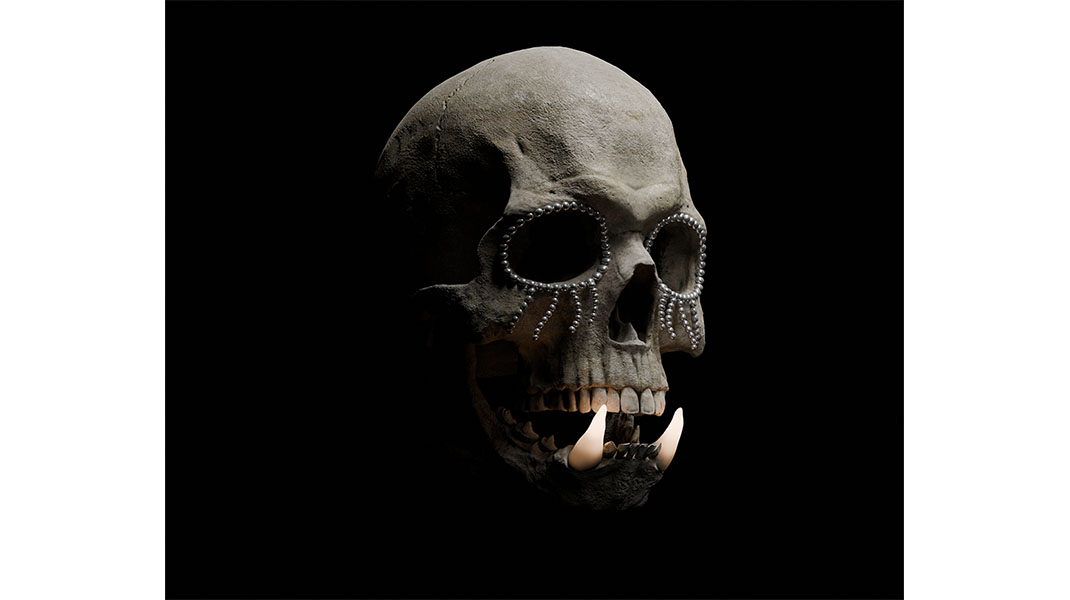
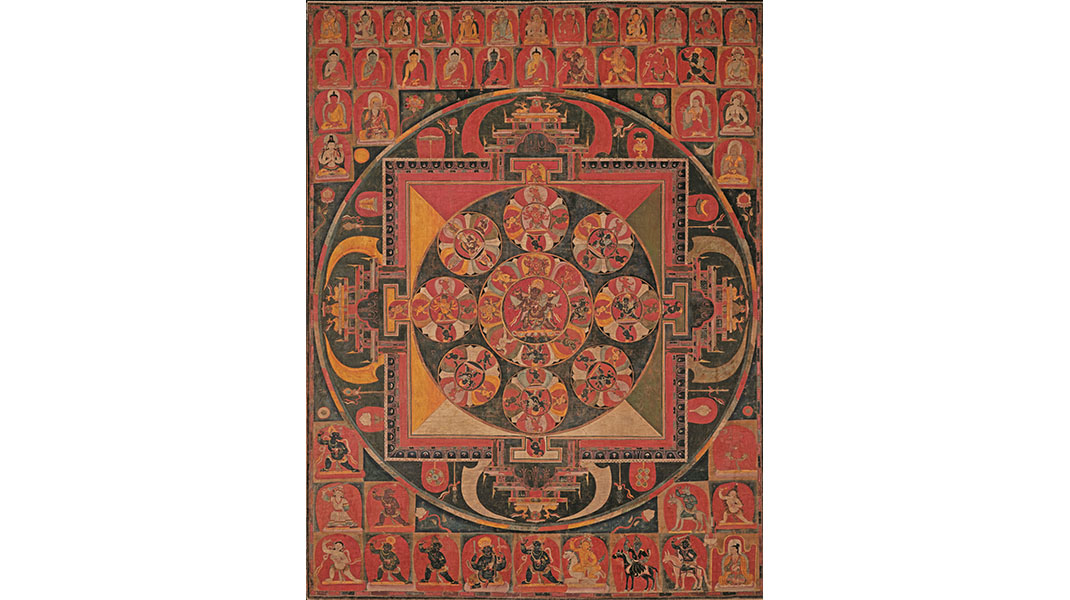
“Treasures from nearly 70 years of archeological excavations in China are revealed in a landmark exhibition at China Institute Gallery this fall. Gold from Dragon City: Masterpieces of Three Yan from Liaoning, 337–436 presents artworks and cultural objects on view for the first time in the United States from September 5, 2024 through January 5, 2025. The exhibition features sculptures, bronze mirrors, inkstones, imperial seals, equestrian objects, and ceramic vessels, as well as jewelry and ornaments, many made of gold. The unearthed archeological discoveries are from ‘Dragon City,’ now present-day Chaoyang in Liaoning Province. A fully illustrated catalogue will accompany the exhibition.” — China Institute Gallery

“This extraordinary exhibition illustrates the remarkable achievements of the Three Yan civilization, which is now no longer lost to history. We have gained a deeper understanding of how ethnic integration and the cultural exchange of East and West inspired and enriched cultures along the Silk Road,” said Willow Weilan Hai. “Just as in today’s world, cultural exchange serves as the most important bridge to promoting mutual understanding and progress. Over my three decades of organizing exhibitions at China Institute Gallery, I have sought to present an exhibition that illustrates this crucial theme and am so pleased to present it now.”

Head of a foreigner. Tang Dynasty (618–907). Grey pottery. Excavated in 2003 from old city ruins of Chaoyang. Liaoning Provincial Institute of Cultural Relics and Archaeology.
Offering Food and Libation. Original: Sixteen Kingdoms, Former Yan (337-70). Facsimile painted from tomb mural excavated at Yuantaizi, Chaoyang in 1982. Liaoning Provincial Museum.
Vessel in the shape of a tiger. Sixteen Kingdoms, Northern Yan (407-36). Bronze; H. 23.1, L.38.5, Weight 6.3 kg. Excavated in 1965 from the tomb of Feng Sufu (d. 415), Xiguanyingzi, Beipiao. Liaoning Provincial Museum.
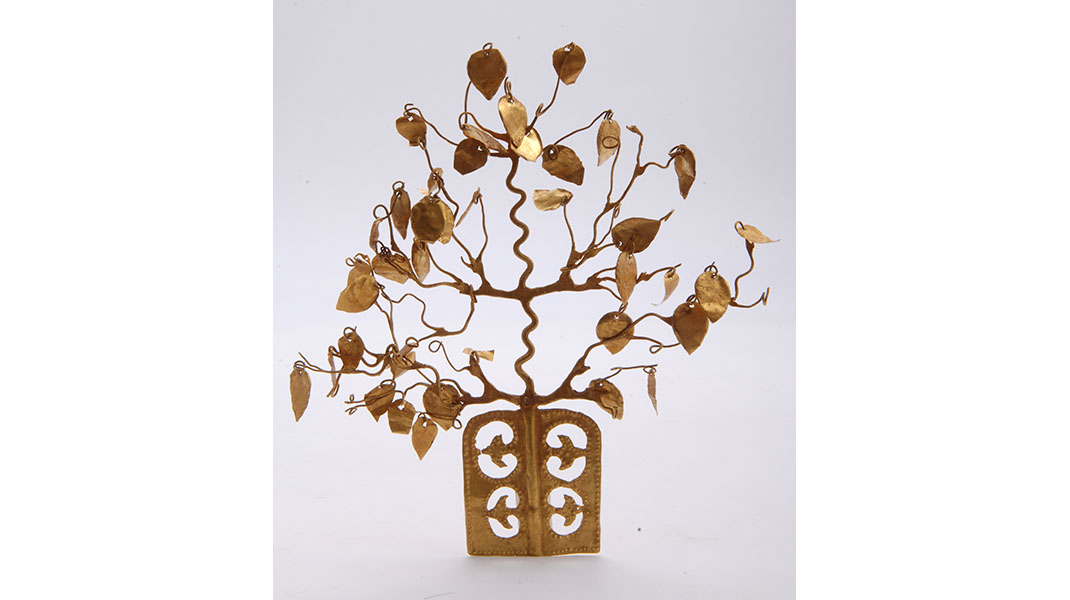
Hat ornament. Sixteen Kingdoms, Former Yan (337–70). Gold; Base: H. 5 cm, W. 4.6–4.8 cm; Branches, W. 13.7 cm, L. 17.8 cm with remaining 35 leafs. Excavated in 1989 from tomb No. 2 of Tiancaogou, Xiyingzixiang, Chaoyang. Liaoning Provincial Institute of Cultural Relics and Archaeology.
Ring inlaid with green and blue stones. Western Jin (266-317). Gold. Excavated in 1957 from tomb No. 2 at Fangshencun, Xusihuayingzixiang, Beipiao. Liaoning Provincial Museum.
Seal of Duke of Fanyang. Sixteen Kingdoms, Northern Yan (407-36). Gold; H.1.9 cm,
W. 2.35cm, L. 2.27cm, Weight 100g. Excavated in 1965 from the tomb of Feng Sufu (d. 415), Xiguanyingzi, Beipiao. Liaoning Provincial Museum.

The exhibition is jointly organized by China Institute Gallery and the Liaoning Provincial Museum. Willow Weilan Hai, Senior Vice President of China Institute in America and Director and Chief Curator of China Institute Gallery, directed and executed the exhibition. It was curated by Dr. Liu Ning, Deputy Director of Liaoning Provincial Museum, with assistance from the Liaoning Provincial Institute of Cultural Relics and Archaeology and the Chaoyang County Museum.

Images courtesy China Institute Gallery.

Scott Burton: Shape Shift, September 6, 2024 – February 2, 2025 at Pulitzer Arts Foundation

“This fall the Pulitzer Arts Foundation examines the legacy of Scott Burton (1939–1989), an American original whose wide-ranging practice anticipated many of the strategies of today’s art. 

As the most comprehensive exhibition of Burton’s work ever mounted in the United States, Scott Burton: Shape Shift underscores the breadth of the artist’s vision. By the time of his death at the age of 50 from an AIDS-related illness, Burton had functioned as sculptor, public artist, performance artist, choreographer, art critic, and exhibition curator. 

The survey spans Burton’s career, featuring nearly 40 sculptures, more than 70 photographs, drawings, and ephemera, and the only known extant video of the artist’s performance work. Almost all of the archival photographs, diagrams, drawings, and ephemera are generously on loan from the Museum of Modern Art (MoMA) Archives, which maintains the Scott Burton Papers, its largest single-artist holding.” — Pulitzer Arts Foundation 

Scott Burton. Rock Settee, 1988-1990. Granite, 35 1⁄2 x 106 x 62 1⁄2 inches © Estate of Scott Burton / Artists Rights Society (ARS), New York. Photograph by Robert Pettus
Scott Burton. Bronze Chair (Street Furniture) installed at Artist’s Space, Wooster Street, December 1975; Scott Burton, 1975 6 5/8 × 10 inches (16.8 × 25.4 cm). Scott Burton Papers, V.35. The Museum of Modern Art Archives, New York
© 2024 Estate of Scott Burton/ Artist Rights. Digital Image © The Museum of Modern Art/Licensed by SCALA / Art Resource, NY
Scott Burton. Aluminum Chair, 1980–81. Aluminum, lacquer, 30 × 23 1/2 × 70 inches (76.2 × 59.7 × 177.8 cm) © 2024 Estate of Scott Burton/ Artist Rights Society (ARS), NY. Photo Credit: The Art Institute of Chicago / Art Resource, NY Gift of the Lannan Foundation
Scott Burton. Perforated Metal Settee and Perforated Metal Chairs, 1988-89 Aluminum Settee 33 3/8 x 34 7/8 x 60 1/8 inches (84.8 x 88.6 x 152.7 cm); each chair 33 1/16 x 24 1/2 x 31 ¼ inches (84 x 62.2 x 79.4 cm). Scott Burton Fund © 2024 Estate of Scott Burton/ Artist Rights. Digital Image © The Museum of Modern Art/Licensed by SCALA / Art Resource, NY
Scott Burton. Public Table, 1978-79. Cast concrete, 32 11/16 x 240 3/16 inches (83 x 610 cm). Museum purchase, with a grant from the National Endowment for the Arts and a matching gift from the Mildred Andrews Fund © Estate of Scott Burton / Artists Rights Society (ARS), New York. Photo Credit: Princeton University Art Museum / Art Resource, NY
Scott Burton. Installation view of Furniture Landscape, July 31, 1970 6 9/16 × 9 ¾ inches (16.7 × 24.8 cm). Scott Burton Papers, V.36. The Museum of Modern Art Archives, New York © 2024 Estate of Scott Burton/ Artist Rights
Digital Image © The Museum of Modern Art/Licensed by SCALA / Art Resource, NY
Scott Burton sitting on a granite bench at the University of Houston, College of Agriculture Building, ca. 1986.
Gelatin silver print, 8 × 10 inches (20.3 × 25.4 cm). Scott Burton Papers, V.37. The Museum of Modern Art Archives, New York. Photo: Jonathan E. Jareb. The Museum of Modern Art/New York, NY/U.S.A. © 2024 Estate of Scott Burton/ Artist Rights. Digital Image © The Museum of Modern Art/Licensed by SCALA / Art Resource, NY

“During Scott Burton’s lifetime, the intentionality behind his expansive practice and the connecting thread of gay identity in his work were infrequently discussed. And, nowadays, many know him only from his public art,” says Cara Starke, executive director, Pulitzer Arts Foundation. “We aim to present a fuller picture of an artist who developed an original and ever-more-relevant body of artwork over the course of a career that hardly lasted more than 20 years.”

The exhibition is organized by independent curator Jess Wilcox, with Heather Alexis Smith, Assistant Curator, Pulitzer Arts Foundation. “The making of Shape Shift has been an exciting process of historical recovery. We’ve been able to unpack aspects of Burton’s work that are still too little known because of the relative anonymity of his public sculpture,” says Wilcox.  

Title image: Scott Burton. Five-Part Storage Cubes, 1982. Painted wood, 53 x 57 x 43 1/2 inches (134.6 x 144.8 x 110.5 cm). Number 1 from the edition of 2. © 2024 Estate of Scott Burton/ Artist Rights Society (ARS), NY © 2022 Phillips Auctioneers LLC, All Rights Reserved, Collection of Ugo Rondinone.

LIMITLESS at MERCER LABS, Museum of Art and Technology

Mercer Labs, Museum of Art and Technology, newly opened in Lower Manhattan at 21 Dey Street, is co-founded by Michael Cayre and Roy Nachum.

“Mercer Labs, the Museum of Art and Technology, redefines the museum experience. The experimental institution stands at 36,000 square ft and emerged in the heart of downtown New York City. Through fifteen exhibition spaces, interactive multisensory experiences, unique 4D sound listening encounters and installations featuring LED mirrored infinity rooms and 16K projections, the symbiotic relationship between art and technology is reimagined.

Mercer Labs currently presents Limitless, the inaugural exhibition by Nachum. In Limitless, he transitions between narrative and abstraction, inviting exploration of the intricate spatial framework of source imagery and technical direction. His experimental approach incorporates elements from art history, conceptualism and interactivity, to confront conventional artistic boundaries and explore sensory substitution, hypnagogic imagery, internal representations, and mental rotation.” — Mercer Labs

“The Map Room” Courtesy Mercer Labs
“The Dragon” Courtesy Mercer Labs
“Pneumatic Transmission” Courtesy Mercer Labs
“Ecosystem” Courtesy Mercer Labs
“The Music Box” Courtesy Mercer Labs

Nachum said, “My hope is to give a heightened sense of involvement to the viewer. It’s not about what I have created, it’s about how viewers complete it through their own unique experience or interaction. The function of art is to see the world with new eyes.”

Mary Sully: Native Modern at The Met 5th Avenue, July 18, 2024 – January 12, 2025 

“The Metropolitan Museum of Art presents the exhibition Mary Sully: Native Modern, opening July 18, 2024. Born Susan Mabel Deloria on the Standing Rock Reservation in South Dakota, Mary Sully (1896–1963) was a little-known, reclusive Yankton Dakota artist who, between the 1920s and 1940s, produced highly distinctive work informed by her Native American and settler ancestry. The exhibition is part of The American Wing at 100, a series of gallery reinstallations and exhibitions marking the wing’s 2024 centennial. 

Working without patronage, in near obscurity, and largely self-taught, Sully produced approximately 200 intricately designed and vividly colored drawings in colored pencil, graphite, and ink on paper that captured meaningful aspects of her Dakota community mixed with visual elements observed from other Native nations and the aesthetics of urban life. Euro-American celebrities from popular culture, politics, and religion inspired some of her most striking works, which she called ‘personality prints’—abstract portraits arranged as vertical triptychs. 

Featuring 25 rarely seen Sully compositions—primarily her ‘personality prints’—as well as archival family material and other Native American items from The Met collection, the exhibition offers a fresh and nuanced lens through which to consider American art and life in the early 20th century.” — The Metropolitan Museum of Art 

Mary Sully, Alice. ca. 1920s–40s. 
Colored pencil, black ink, gilt, white paint, pastel crayon, on paper, 34 3/8 × 19 in. (87.3 × 48.3 cm). Top panel: 12 7/8 × 18 in. Center panel: 12 × 19 in. Bottom panel:
9 1/2 × 12 in.)
Mary Sully, Lunt & Fontaine (Alfred Lunt, American, 1892 – 1977), (Lynn Louise Fontainne, Born, UK 1887, died America, 1983). ca. 1920s–40s. 
Colored pencil, black ink, gilt, white paint, pastel crayon, on paper, 34 3/8 × 19 in. (87.3 × 48.3 cm). Top panel: 12 7/8 × 18 in. Center panel: 12 × 19 in. Bottom panel: 9 1/2 × 12 in.)
Mary Sully. Eugene Field (American, 1850 – 1895).
ca. 1920s–40s. Colored pencil, black ink, gilt, white paint, pastel crayon, on paper. 34 3/8 × 19 in. (87.3 × 48.3 cm). Top panel: 12 7/8 × 18 in. Center panel:
12 × 19 in. Bottom panel: 9 1/2 × 12 in.
Mary Sully, JT (Julia). ca. 1920s–40s. Colored
pencil, black ink, gilt, white paint, pastel crayon, on paper, 34 3/8 × 19 in. (87.3 × 48.3 cm). Top panel: 12 7/8 × 18 in. Center panel: 12 × 19 in. Bottom panel: 9 1/2 × 12 in.)
Mary Sully, Babe Ruth (American, 1895 – 1948). ca. 1920s–40s. Colored pencil, black ink, gilt, white paint, pastel crayon, on paper, 34 3/8 × 19 in. (87.3 × 48.3 cm). Top panel: 12 7/8 × 18 in. Center panel: 12 × 19 in. Bottom panel: 9 1/2 × 12 in.)
Mary Sully, Gertrude Stein (American, 1874 – 1946). ca. 1920s–40s. Colored pencil, black ink, gilt, white paint, pastel crayon, on paper, 34 3/8 × 19 in. (87.3 × 48.3 cm). Top panel: 12 7/8 × 18 in. Center panel:
12 × 19 in. Bottom panel: 9 1/2 × 12 in.)

“This compelling exhibition celebrates how Mary Sully’s cultural sensibilities influenced her unconventional body of work,” said Max Hollein, The Met’s Marina Kellen French Director and Chief Executive Officer. “Sully translated her life and experiences into a unique graphic language, culminating in an intensely creative perspective from which to consider Indigenous cultures and imagery.”

Sylvia Yount, Lawrence A. Fleischman Curator in Charge of the American Wing, said: “We’re thrilled to present Mary Sully: Native Modern as a special feature of the department’s 100th anniversary in 2024. Born of particular Native and Euro-American cultural entanglements, Sully’s work is highly relevant and resonant for the American Wing, The Met’s historic department of a broadly defined American art by diverse makers, with a deepening concentration of work by women and artists of color.”

Images courtesy The Metropolitan Museum of Art.

Out of Africa: Seminal Works from Contemporary Africa and Its Diaspora at Ethan Cohen Gallery at the KuBe Art Center, July 19 – October 1, 2024

“As part of its ongoing mission to promote world-class visual arts programming, Ethan Cohen Gallery at the KuBe Art Center is proud to present Out of Africa: Seminal Works From Contemporary Africa And Its Diaspora. The exhibition will be on view in Beacon, New York at The KuBe Art Center in the Joan Lebold Cohen and Jerome A Cohen Center for Visual Arts. The exhibition is part of the larger Summer School programming at the KuBe Art Center and will be on view from July 19, 2024, as part of the Hudson Valley’s coordinated Upstate Art Weekend and will continue through October 1st, 2024.

The eleven artists included in the exhibition are a small sample of art produced by contemporary African artists and artists from the African diaspora. The works presented offer insights often unseen by American audiences. We welcome you to come view these artists and experience their work in person. Included in the exhibition are: Olasunkanmi Akomolehin, Armand Boua, Gerardo Castro, Òmó Oba (HRH) Adetomiwa A. Gbadebo, Innocent Nkurunziza, Catheris Mondombo, N’Dorah, Aboudia, Bob Dilworth, Kiné Aw, and Gonçalo Mabunda.” — Ethan Cohen Gallery

Aboudia. Jazz Gallery, 2014, Acrylic and oil pastel on canvas. 200 x 300 cm, 78 3/4 x 118 in
Olasunkanmi Akomolehin. The story of us, 2022. Oil and acrylic on canvas. 177.8 x 182.88 cm. 70 x 72 in
Kine Aw. La femme et le saxophone, 2016. Signed and dated. Charcoal on paper. 88.9 x 64.8 cm, 35 x 25 1/2 in
Armand Boua. Young people from Yopougon Gesco Abidjan – Deux amis II, 2019. Mixed media on Cardboard. 43 1/4 x 41 3/8 in, 110 x 105 cm
Gerardo Castro.
Nemonte Nenquimo – Mi Tierra No Se Vende, “My Land Is Not for Sale”, 2020, Signed & Dated, mixed media and oil on paper. 182.9 x 61 cm.
72 x 24 in
Bob Dilworth. The March, 2023. Acrylic paint, enamel paint on wood. 72 x 66.5 cm,
28 1/4 x 26 1/4 in
Òmó Oba (HRH) Adètòmíwà A. Gbadébò. Imoye ibile – mu lati ago awon orisa (Traditional knowledge – Drink from the cup of the gods), 2020 – 2023. Exterior latex house paint, Acrylic paint, ink, graphite, pastel, owo eyo, Adura on vinyl. 274.32 x 182.88 cm,
108 x 72 in
Gonçalo Mabunda. Masque No.8, 2014. Metal and recycled gun parts.
43.2 x 45.7 x 17.8 cm,. 17 x 18 x 7 in
Catheris Mondombo. Untitled (4), 2021. Mixed media on denim.
120 x 2 x 120 cm, 47 1/4 x 3/4 x 47 1/4 in
N’Dorah. The Shields, 2020. Hair, fiber, colored razor
blades, elastic threads, nail polish , braiding, weaving.
127 x 71.1 cm, 50 x 28 in
Innocent Nkurunziza. Imprints (Bodies Series), 2019. Pigments, Earth, Metallics, and Raffia on
Ficus Barkcloth. 175.3 x 388.6 cm, 69 x 153 in
Algernon Miller. Warp #2, 2022. Acrylic on canvas. 243.8 x 121.9 cm, 96 x 48 in

Images courtesy Ethan Cohen Gallery.

Christoph Büchel: Monte di Pietà by Fondazione Prada, Ca’ Corner della Regina, Venice, through November 24, 2024

“Fondazione Prada presents ‘Monte di Pietà’, a project conceived by artist Christoph Büchel, in its Venice venue, Ca’ Corner della Regina, from April 20 to November 24, 2024.

 Originally the home of Venetian merchants Corner di San Cassiano, Ca’ Corner della Regina was built between 1724 and 1728 on the ruins of the Gothic palazzo in which Caterina Corner, the future Queen of Cyprus, was born in 1454. In 1800, the building became the property of Pope Pius VII, who assigned it to the charitable Congregation of the Padri Cavanis. From 1834 to 1969, it hosted the Monte di Pietà (Mount of Piety) of Venice, whereas, in 1975, it became the Historical Archive of the Venice Biennale and has been the Venice permanent space of Fondazione Prada since 2011. 

The layered history of the building is Büchel’s framework for constructing an articulated network of spatial, economic, and cultural references. ‘Monte di Pietà’ is a deep dive into the notion of debt as the root of human society and the primary vehicle by which political and cultural power is exercised. Historically, a crossroads of commercial and artistic exchange and intermingling, the city of Venice is an ideal context for exploring the relationships between these complex topics and the deep dynamics of contemporary society.” — Fondazione Prada

Installation view of “Monte di Pietà”. A project by Christoph Büchel. Fondazione Prada, Venice. Photo: Marco Cappelletti. Courtesy: Fondazione Prada

Title image: Installation view of “Monte di Pietà”. A project by Christoph Büchel. Fondazione Prada, Venice. Photo: Marco Cappelletti. Courtesy: Fondazione Prada. 

Julien des Monstiers “Dehors Dedans” at the Château de Chamborg, through November 3, 2024 and “Dessus Dessous” at The Suquet des Artistes, Cannes, through September 22, 2024

“The Domaine national de Chambord has invited Julien des Monstiers to take up residency at the estate, followed by an exhibition from May 26 to November 3 2024. In close dialogue with the monument and its history, wild animals, both real and fantastical, are counterbalanced by an abstract rhythm in which motif and colour flow freely. 

From May 26 to November 3, 2024, Julien des Monstiers’ works will bring the walls of Chambord to life with contemporary motifs from the distant past. The meticulous construction of the works through the superimposition of flat layers of paint allows different temporalities to coexist in the same space. Blurred images are recomposed in a tangle of motifs and colours dominated by the complementary pairing of orange and blue. 

Julien des Monstiers adopts forms and gestures borrowed from great stories, but also from the history of his motifs: hunting scenes, floral decorations, tapestries, with a certain predilection for animal scenes. Julien des Monstiers uses a transfer technique to create his paintings: he paints his drawings on a sheet of Plexiglas, then transfers the fresh paint to a layer of crystal-clear paper, pressing the resulting motif onto the canvas in a series of incessant to-and-fro movements. Thanks to his virtuoso and innovative approach to oil painting, Julien des Monstiers is now considered a rising star in contemporary art.” — The Domaine national de Chambord

Installation view of Julien des Monstiers “Dehors Dedans” at the Château de Chamborg. Photo © Sophie Lloyd

“The Suquet des Artistes de Cannes presents «Dessus / dessou», an exhibition devoted to the artist Julien des Monstiers. Somewhere between the fine arts and the applied arts, Julien des Monstiers experiments with the limits of painting, seeking out depth, surfaces, textures, folds and fractures. The works presented at Suquet des Artistes, whether figurative or abstract, are intended to show that the subject is not in the image but in the way it is made.” — The Suquet des Artistes

Installation view of Julien des Monstiers “Dessus Dessous” at The Suquet des Artistes, Cannes © Olivier Calvel

Title image: Julien Des Monstiers. Le Réel, 2021. Oil on canvas, 230 x 170 cm (90 1/2 x 66 7/8 in.). Courtesy Julien des Monstiers & Galerie Christophe Gaillard © Julien des Monstiers Adagp, Paris. Photo © Jean-Louis Losi.

Images courtesy The Domaine national de Chambord and The Suquet des Artistes.