“Making Home—Smithsonian Design Triennial,” opening November 2 at Cooper Hewitt, Smithsonian Design Museum, features 25 debut commissions that illustrate the ways design is embedded in contemporary life. Ranging from domestic objects to built environments to social systems, the exhibition considers home as an expansive framework with varying cultural and environmental contexts, and ‘making home’ as a universal design practice. Organized in collaboration with Smithsonian’s National Museum of African American History and Culture, the seventh iteration of Cooper Hewitt’s Triennial series will be on view through August. 10, 2025.
Installed throughout the Andrew and Louise Carnegie Mansion, the exhibition explores design’s role in shaping the physical and emotional experiences of home across the U.S., U.S. territories and tribal nations. The museum floors are organized by familiar interactions—’Going Home’ (ground and first floor), ‘Seeking Home’ (second floor) and ‘Building Home’ (third floor)—interpreted in 25 installations by designers, architects, artists and their collaborators from across the nation.” — Cooper Hewitt, Smithsonian Design Museum
The exhibition is organized by Alexandra Cunningham Cameron, Cooper Hewitt’s curator of contemporary design and Hintz Secretarial Scholar; Christina L. De León, Cooper Hewitt’s acting deputy director of curatorial and associate curator of Latino design; and Michelle Joan Wilkinson, curator of architecture and design at the National Museum of African American History and Culture; with curatorial assistants Sophia Gebara, Caroline O’Connell, Julie Pastor, and Isabel Strauss.
Exhibition design by Los Angeles–based Johnston Marklee. Graphic design by New York City–based Office Ben Ganz.
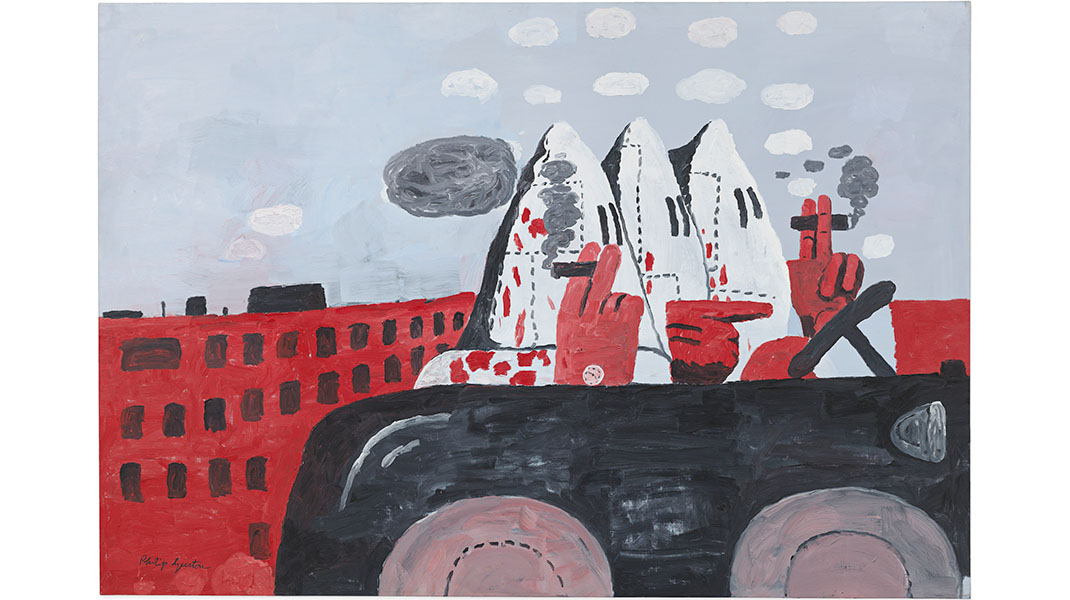
“Draw Them In Paint, Them Out: Trenton Doyle Hancock Confronts Philip Guston examines Philip Guston’s influence on Trenton Doyle Hancock and both artists’ shared commitment to investigating the legacy of white supremacism in the United States. On view November 8, 2024, through March 30, 2025, the exhibition presents the work of painter Philip Guston (American, b. Canada 1913–1980), the child of Jewish immigrants from Odessa (present-day Ukraine), and Trenton Doyle Hancock (American, b. 1974), a leading Black contemporary artist based in Houston, Texas, in dialogue for the first time. The exhibition explores resonant connections between their work and the role that artists play in the pursuit of social justice.
Organized by the Jewish Museum, the exhibition features key works by Guston including his now iconic, late satirical Ku Klux Klan paintings in dialogue with major works Hancock created in response to his inspirational mentor, highlighting their parallel thematic explorations of the nature of evil, self-representation, otherness, and art activism. Foregrounding works that depict the Klan, the exhibition demonstrates how both artists engage with and at times even inhabit these hateful figures to explore their own identities and more broadly examine systems of institutionalized power and their feelings of complicity within them. Yet, despite the difficult subject matter and at times violent imagery presented in their work, both Hancock and Guston share an ability to conquer the pain and emotion of their art through humor that is both dark and undeniable, engaging with their shared embrace of the visual language of comics.” — Jewish Museum
Installation views of “Draw Them In, Paint Them Out: Trenton Doyle Hancock Confronts Philip Guston” at the Jewish Museum, NY, November 8, 2024-March 30, 2025. Photographs by Gregory Carter / Document Art. Courtesy Jewish Museum.
Draw Them In, Paint Them Out: Trenton Doyle Hancock Confronts Philip Guston is organized by Rebecca Shaykin, Curator, The Jewish Museum, in partnership with Trenton Doyle Hancock. The exhibition is designed by Isometric Studio with graphic design by Morcos Key.
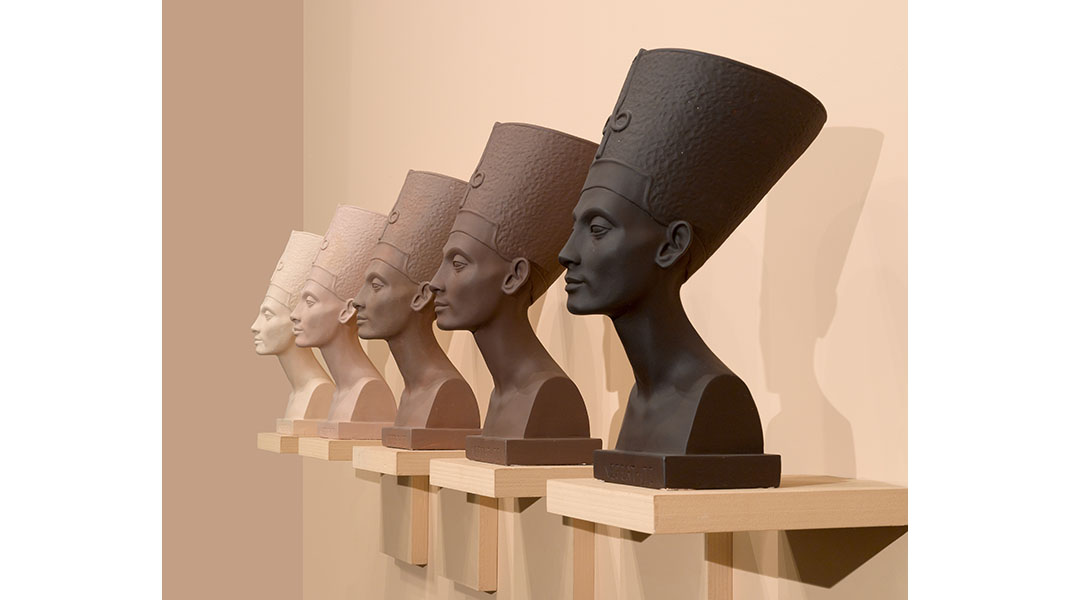
“Flight into Egypt: Black Artists and Ancient Egypt, 1876–Now will present nearly 200 works of art that demonstrate the many ways in which ancient Egypt has been a source of inspiration and identity for Black artists and other cultural figures
Opening at The Met on November 17, 2024, the major exhibition Flight into Egypt: Black Artists and Ancient Egypt, 1876–Now will examine how Black artists and other cultural figures have engaged with ancient Egypt through visual, sculptural, literary, musical, scientific, scholarly, religious, political, and performative pursuits. The multisensory exploration of nearly 150 years of artistic and cultural production will feature nearly 200 works of art in a wide range of media from The Met collection and public and private collections, including critical international loans from Africa, Asia, the Caribbean, and Europe. Thematic sections will trace how Black artists and other agents of culture have employed ancient Egyptian imagery to craft a unifying identity, the contributions of Black scholars to the study of ancient Egypt, and the engagement of modern and contemporary Egyptian artists with ancient Egypt.” — The Metropolitan Museum of Art
Installation views of Flight into Egypt: Black Artists and Ancient Egypt, 1876–Now, on view November 17, 2024–February 17, 2025 at The Metropolitan Museum of Art. Photos by Eileen Travell, Courtesy of The Met.
“Ancient Egypt is a symbolic source for people of the African diaspora that continues to inspire. This groundbreaking exhibition brings to light a modern history that has developed over nearly 150 years and is also an active creative tradition existing outside the walls of the Museum and in daily life,” said Max Hollein, The Met’s Marina Kellen French Director and Chief Executive Officer. “Unprecedented in scope, the exhibition broadly lays out the many ways in which Black artists and cultural figures have engaged and continue to engage with ancient Egypt as a point of reference, inspiration, and connection. Our hope is that it furthers and deepens exploration of this topic.”
“The exhibition takes its title from The Met’s painting Flight into Egypt (1923), an emblem of fugitivity and timeless creativity by the expatriate artist Henry Ossawa Tanner—the first internationally recognized African American painter—who traveled to Egypt in 1897, and includes works as recent as Madeline Hunt-Ehrlich’s film Cleopatra at the Mall (2024), which reflects on the rediscovery of Edmonia Lewis’s major sculpture The Death of Cleopatra (1876),” saidAkili Tommasino, Curator in the Department of Modern and Contemporary Art at The Met and the curator of the exhibition. “Flight into Egypt: Black Artists and Ancient Egypt, 1876–Now challenges Eurocentric constructions of ancient Egypt, offering a more expansive history that celebrates the contributions of cultural figures of African descent.”
Flight into Egypt: Black Artists and Ancient Egypt, 1876–Now is organized by Akili Tommasino, Curator, with McClain Groff, Research Associate, in the Department of Modern and Contemporary Art at The Met.
Title image: Fred Wilson (American, born 1954). Grey Area (Brown version), 1993. Brooklyn Museum, Bequest of William K. Jacobs, Jr. and bequest of Richard J. Kempe, by exchange (2008.6a–j).
“The Solomon R. Guggenheim Museum presents Harmony and Dissonance: Orphism in Paris, 1910–1930, the first in-depth examination of Orphism, which emerged in Paris among a cosmopolitan group of artists in the early 1910s—when changes brought on by modernity were radically altering notions of time and space. Open from November 8, 2024, to March 9, 2025, the presentation features over 80 artworks comprising painting, sculpture, works on paper, and ephemera, installed across five levels of the museum’s spiral rotunda.
The poet Guillaume Apollinaire coined the term ‘Orphism’ in 1912 to describe artists who were moving away from Cubism, toward an abstract, multisensory mode of expression. Apollinaire’s concept referenced the Greek mythological poet and lyre player Orpheus who swayed nature and challenged death with his song equating the ephemeral abstraction of music with Orphism’s transcendent character.” — Solomon R. Guggenheim Museum
Harmony and Dissonance: Orphism in Paris, 1910–1930 is organized by Tracey Bashkoff, Senior Director of Collections and Senior Curator, and Vivien Greene, Senior Curator, 19th- and Early 20th-Century Art, with the support of Bellara Huang, Curatorial Assistant, Exhibitions.
Title image: Robert Delaunay, Circular Forms (Formes circulaires), 1930. Oil on canvas, 50 3/4 X 76 3/4 in. (128.9 X 194.9 cm). Solomon R. Guggenheim Museum, New York, Solomon R. Guggenheim Founding Collection 49.1184. Photo: Kristopher McKay, Solomon R. Guggenheim Museum, New York.
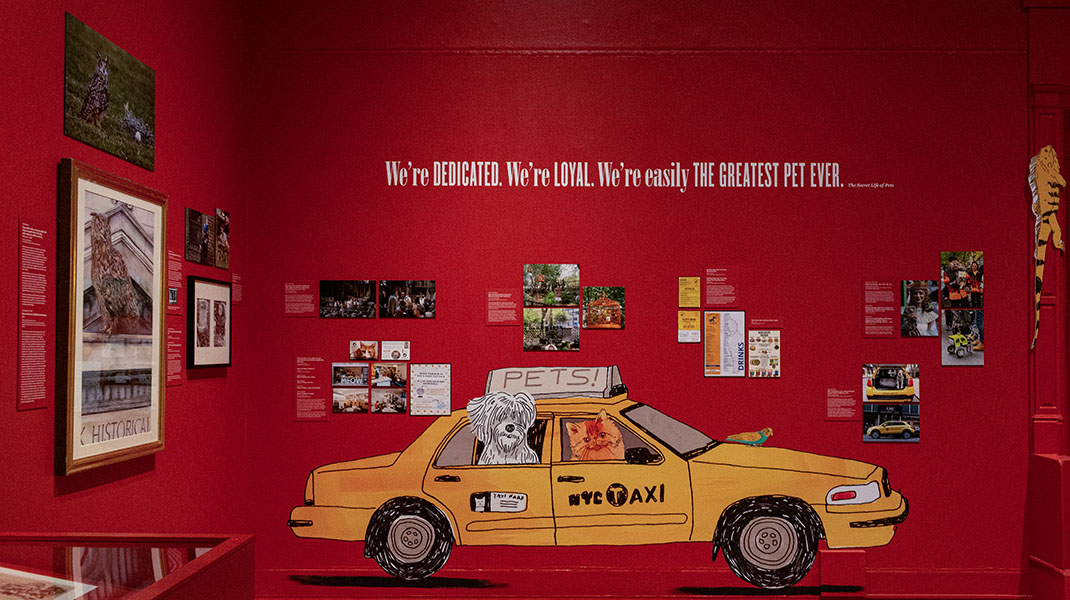
“This fall, the New-York Historical Society presents a special exhibition that explores the rich, complex, and varied relationships between New Yorkers and their animal companions across the last three centuries. Pets and the City, on view October 25, 2024, through April 20, 2025, surveys how the conception of pets has evolved in tandem with the development of New York—from the role of animals among Indigenous cultures, such as the Lenape and Haudenosaunee, and the hunting culture that accompanied settlers from Europe, to the pampered pets that are considered members of the family today. Througha broad spectrum of works of art, objects, photographs, documents, and memorabilia drawn largely from New-York Historical’s Museum and Library collections, as well as film and television clips,the immersive exhibition also examines the broader social context for New York’s pet population and related topics, including pet adoption, the trafficking of exotic animals, animal rights laws, and the role of service animals. Pets and the City is curated by Roberta J.M. Olson, curator of drawings emerita.” — New-York Historical Society
Installation views of Pets and the City at New-York Historical Society, on view October 25, 2024 through April 20, 2025. Photos by Corrado Serra.
“New York City residents have always loved their pets, and this exhibition reveals the important role that pets have played throughout the city’s history beyond providing companionship to their owners,” said Louise Mirrer, president and CEO, New-York Historical. “I hope visitors come away from this exhibition with a deeper appreciation for the profound impact pets have had on our city’s culture and society and a more nuanced understanding of the complexities of our animals.”
“In New York City alone, it is estimated there are more than two million animal companions who reign over human hearts, homes, and pocket books,” said Roberta J.M. Olson, curator of drawings emerita. “Given that, it’s fascinating to explore how these creatures rose to such a place of distinction. From the origins of pets among Indigenous people to today’s doggy daycares and cat cafés, this exhibition offers a visual journey through the evolving relationship between Gotham’s people and its animals as the city and its population transformed into a diverse metropolis. City dwellers’ relationships with animals and pets illuminate humanity’s relationship with nature and are the bellwether of our shared future and the fate of our planet.”
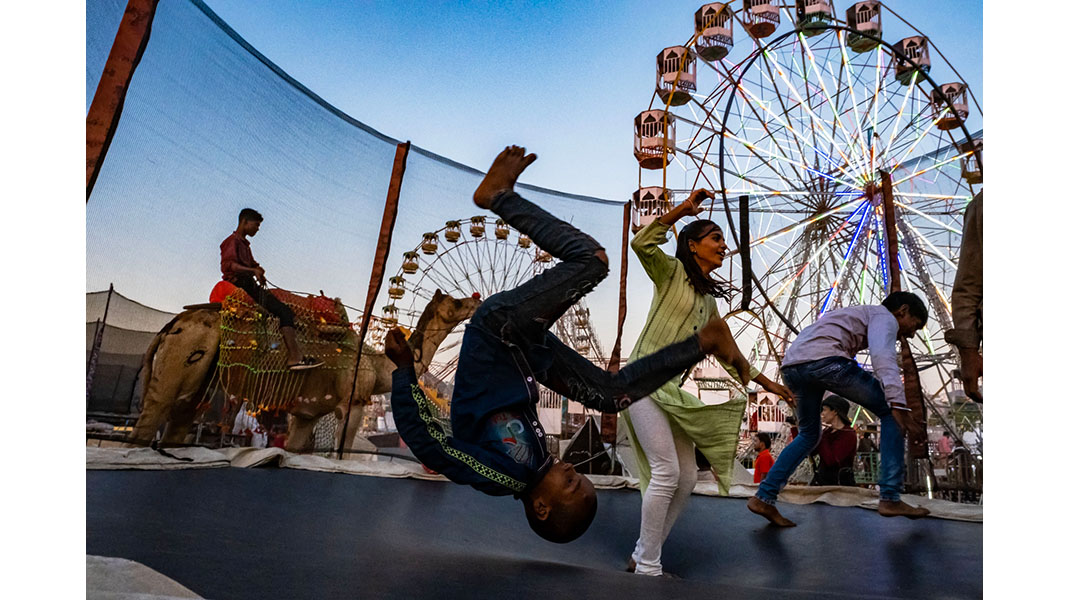
“The International Center of Photography (ICP) presents We Are Here: Scenes from the Streets, an in-depth exploration into 50 years of contemporary public life documented through the lens of over 30 street photographers from around the world, beginning in the 1970s. Guest curated by Isolde Brielmaier, PhD, with Noa Wynn, Independent Curatorial Assistant, We Are Here opens at ICP on September 25, 2024 and runs through January 6, 2025.
Featuring works by photographers from Algeria, China, Egypt, Germany, India, Japan, Russia, South Africa, the USA, and beyond, We Are Here reframes our understanding of ‘the street’ and the activities and exchanges that occur in diverse public and community spaces. In a world fraught with misunderstanding and societal tension, the exhibition highlights street photography’s unique viewpoints on local culture and unfolding events. Documenting both dramatic and everyday moments—from street style to protests—the works in We Are Here testify to the resilience and similarities of the human experience.” — International Center of Photography
“We Are Here invites viewers to confront the richness and complexities of our modern, multifaceted life, emphasizing our shared humanity beyond geographic and cultural divides,” Brielmaier said of the exhibition. “Today’s world moves fleetingly, but these images prove that though circumstances might change, humanity is not going anywhere; the stories of our lives will remain.”
“Street photographers often navigate the complexities of power dynamics and privilege,” Elisabeth Sherman, ICP Senior Curator and Director of Exhibitions and Collections said. “We hope this exhibition sparks reflection and conversation about the historical and current dynamics of public spaces that are shaped and mediated by gender, race, and socio-economic status, and how we critically understand the ways they govern our lives.”
“As we end ICP’s 50th anniversary celebration with We Are Here, we are reaffirming our mission to educate the public on the power of visual storytelling and to foster international dialogue about what it means to be a concerned photographer today,” said Bob Jeffrey, ICP
Images courtesy International Center of Photography (ICP).
“For me the machine is above all an instrument that permits me to be poetic. If you respect the machine, if you enter into a game with the machine, then perhaps you can make a truly joyous machine—by joyous, I mean free.” — Jean Tinguely
“From October 10, 2024, to February 2, 2025, Pirelli HangarBicocca presents ‘Jean Tinguely’, the most comprehensive retrospective held in Italy since the artist’s death.
The aim of the exhibition is to highlight the radical and experimental nature of Jean Tinguely, one of the artists who shaped the history of 20th century art, and to underline his contemporary relevance and status even today.
The show includes a nucleus of 40 works made from the 1950s to the 1990s, which will fill the 5,000 square meters of the vast Navate space at Pirelli HangarBicocca. Comprising many of his most important pieces, from his pioneering experimental kinetic sculptures to his monumental machines, the exhibition invites visitors into a unique and enthralling audio and visual environment.” — Pirelli HangarBicocca
“‘I am a movement artist. I started with painting, but I got stuck, I was at a dead end’ (from ‘Tinguely talks about Tinguely’. interview broadcasted by Belgian Radio Television on December 13, 1982). This is how the artist, one of the most subversive figures of the last century, described himself. Tinguely focused all his experiments on overcoming two-dimensionality, tirelessly researching the movement of matter and objects, and constant change, with the aim of overturning the notion of a permanent, definitive composition. This artistic attitude speaks to broader existential issues, such as the uncertainty and transience of the human condition and the evolution of social and political contexts.” — Pirelli HangarBicocca
The “Jean Tinguely” exhibition is organized by Pirelli HangarBicocca in collaboration with Museum Tinguely, Basel. The exhibition project is curated by Camille Morineau, Lucia Pesapane and Vicente Todolí with Fiammetta Griccioli.
“The Brooklyn Artists Exhibition opened on the occasion of the Museum’s 200th anniversary. This extensive group show highlights the remarkable creativity and diversity of Brooklyn’s artistic communities. Reflecting on a rich history of fostering creativity and championing artists of all backgrounds, the Museum’s bicentennial is an opportunity to honor the borough’s artistic heritage while looking ahead to its bright and creative future. Artists were selected through a collaborative effort led by esteemed Artist Committee members Jeffrey Gibson, Vik Muniz, Mickalene Thomas, and Fred Tomaselli, all of whom are Brooklyn Museum Artist Trustees. The selection process consisted of two phases: invitations from the Artist Committee and a public Open Call that garnered nearly 4,000 applications.
Showcasing a snapshot of Brooklyn’s creative output over the past five years, the artists in this exhibition explore and challenge contemporary themes that resonate both locally and globally, such as migration, cross-cultural exchange, identity, history, and memory. The presentation also highlights collective care, healing, joy, solidarity, uncertainty, and turbulence, intertwined with material experimentation.” — Brooklyn Museum
Installation views of “The Brooklyn Artists Exhibition” at Brooklyn Museum, October 10, 2024 – January 26, 2025. Photos by Corrado Serra.
“For years artists have been asking us to organize a big Brooklyn artists exhibition, and now we’ve done it!” says Anne Pasternak, Shelby White and Leon Levy Director, Brooklyn Museum. “Brooklyn has more artists than anywhere, and we are thrilled to expand the ways we support the excellence of our incredible borough.”
The Brooklyn Artists Exhibition is organized by Jeffrey Gibson, Vik Muniz, Mickalene Thomas, and Fred Tomaselli and coordinated by Sharon Matt Atkins, Deputy Director for Art; Lauren Bierly, Senior Exhibition Project Manager; and Jennie Tang, Special Exhibition Administrator; with support from Kimberli Gant, Curator, Modern and Contemporary Art; Carmen Hermo, former Associate Curator, Elizabeth A. Sackler Center for Feminist Art; and Catherine Morris, Senior Curator, Elizabeth A. Sackler Center for Feminist Art, Brooklyn Museum.
“Having selected a primary form, such as a circle, I study its structural possibilities as a means of activating it, aiming for the best results with the maximum economy.” — Marina Apollonio
“From October 12, 2024, through March 2, 2025, the Peggy Guggenheim Collection presents Marina Apollonio: Beyond the Circle, the most comprehensive museum retrospective in Italy dedicated to Marina Apollonio, a leading figure in the international Optical and Kinetic avant-garde whose work was championed by Peggy Guggenheim.
Marina Apollonio: Beyond the Circle is a deserved tribute to the Triestine artist, tracing her career from 1963 to the present. The show highlights her rigorous visual investigations, encompassing painting, sculpture, drawing, as well as static, moving, and environmental works, black-and-white or chromatic paintings, and experimentations in a variety of media and techniques. The fact that this homage is presented in the galleries of Palazzo Venier dei Leoni is particularly fitting, not only because Venice is Apollonio’s adoptive city, where she lived as a girl and took her first steps as an artist, but also because it highlights the role of visionary collector Peggy Guggenheim in her career. Indeed, in 1968, after having visited the artist’s solo exhibition at the Galleria Paolo Barozzi in Venice, Guggenheim commissioned Rilievo n. 505 (ca. 1968), currently part of the museum’s collection, which testifies to her support of young Italian avant-garde artists.” — Peggy Guggenheim Collection
Installation views of Marina Apollonio: Beyond the Circle at Peggy Guggenheim Collection, October 12, 2024 – March 2, 2025. Photos by Matteo De Fina. Courtesy Peggy Guggenheim Collection.
Organized by independent art historian and curator Marianna Gelussi, the exhibition features about one hundred works on loan from the artist’s collection, as well as from national and international museums, including the Neue Gallery in Graz; the Fondation Villa Datris in L’Isle-sur-la-Sorgue, France; the Galleria Nazionale d’Arte Moderna e Contemporanea in Rome; MART in Rovereto, Italy; the Galleria Civica d’Arte Moderna e Contemporanea in Turin; the Kunsthalle Recklinghausen and the Museum Ritter in Waldenbuch, Germany; and the Museum Haus Konstruktiv in Zurich.
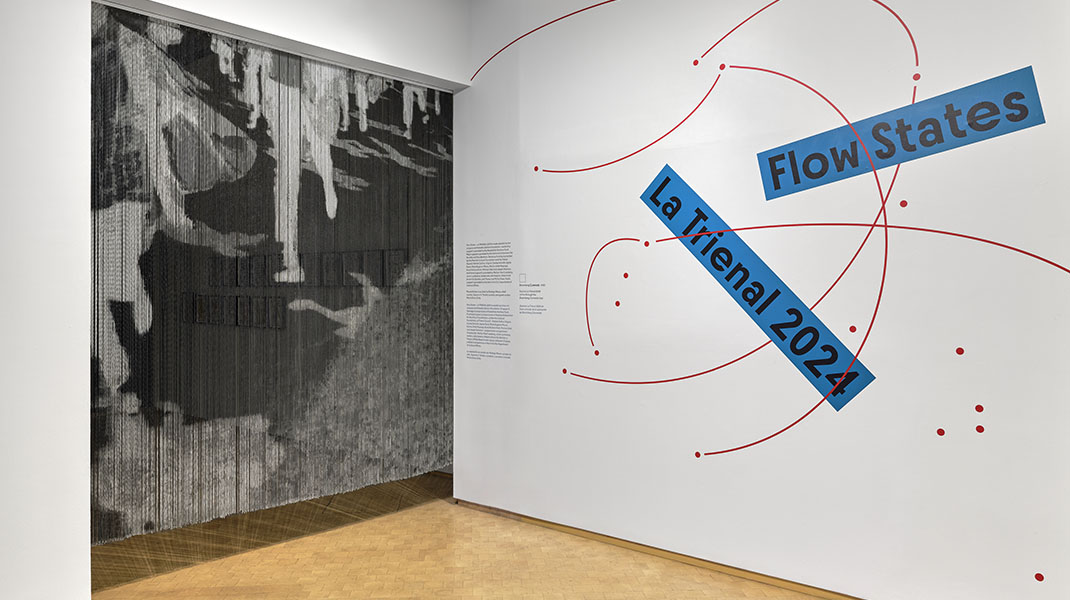
“El Museo del Barrio announces commissioned projects, exhibition highlights, illustrated catalogue, and opening week programming for Flow States – La Trienal 2024, the museum’s second large-scale triennial of Latinx contemporary art. Organized by El Museo del Barrio’s chief curator Rodrigo Moura, curator Susanna V. Temkin, and guest curator María Elena Ortiz, the exhibition will feature 33 artists working across the United States, Puerto Rico, and—for the first time—geographies that reflect the complexities of diasporic flows, with artists based in the Americas, the Caribbean, Europe, and Asia.
Emphasizing plurality and a sense of movement, the exhibition’s title, Flow States, borrows from the psychology of creative focus and the fluidity of geographic boundaries and cultural exchanges. As such, the phrase reflects the ever-changing paths of Latinx artistic diasporas that inform the exhibition. Participating artists share interests in transformation, hybrid belongings, collective memories, porosities of landscape, and material exchanges. These threads come together against a background of displacements and migrations that continue to transform our local and global ecosystems.” — El Museo del Barrio
Installation view of Cosmo Whyte, Persona Non Grata, 2024, in Flow States – LA TRIENAL 2024 at El Museo del Barrio, New York. Courtesy the artist and Anat Egbi Gallery, Los Angeles / New York. Commissioned for LA Trienal. Photograph by Matthew Sherman/Courtesy of El Museo del Barrio, New York. Installation view of Flow States – LA TRIENAL 2024 at El Museo del Barrio, New York. Photograph by Matthew Sherman/Courtesy of El Museo del Barrio, New York.Installation view of Flow States – LA TRIENAL 2024 at El Museo del Barrio, New York. Photograph by Matthew Sherman/Courtesy of El Museo del Barrio, New York.Installation view of Flow States – LA TRIENAL 2024 at El Museo del Barrio, New York. Photograph by Matthew Sherman/Courtesy of El Museo del Barrio, New York.Installation view of Flow States – LA TRIENAL 2024 at El Museo del Barrio, New York. Photograph by Matthew Sherman/Courtesy of El Museo del Barrio, New York.Installation view of Flow States – LA TRIENAL 2024 at El Museo del Barrio, New York. Photograph by Matthew Sherman/Courtesy of El Museo del Barrio, New York.Installation view of Flow States – LA TRIENAL 2024 at El Museo del Barrio, New York. Photograph by Matthew Sherman/Courtesy of El Museo del Barrio, New York.Installation view of Maria A. Guzman Caprón, En Tu Mirada [In Your Eyes], Las Curlies, and Aquí Para Ti [Here for you], 2024, in Flow States – LA TRIENAL 2024 at El Museo del Barrio, New York. Courtesy the artist. Photograph by Matthew Sherman/Courtesy of El Museo del Barrio, New York.Installation view of Flow States – LA TRIENAL 2024 at El Museo del Barrio, New York. Photograph by Matthew Sherman/Courtesy of El Museo del Barrio, New York.
“For the second edition of LA TRIENAL, we have broadened the geographic scope to emphasize the multiplicity of the Latinx cultural experience as a lens to frame the contemporary artistic landscape. Importantly, this edition acknowledges the resonances and connections among Latinx, Filipinx, Caribbean, and Indigenous identities,” says Moura.
“Flow States – LA TRIENAL 2024 presents itself as a summit in which the works of the selected artists reflect affinities and solidarities, as well as distinct perspectives and individualized points of departure. Together, they offer strategies for resistance and diverse imaginations for the future,” says Temkin.
Commenting on the significance of the exhibition at this particular moment, Maria Elena Ortiz, guest curator and curator at the Modern Art Museum of Fort Worth, adds: “This exhibition validates Latinx art, focusing on its diasporic realities to expand on the mainstream notion of Latino. Breaking away from national boundaries, it is an opportunity to admire the work of emerging voices, celebrate underrepresented artists, and include other narratives into the discourse.”
“Flow States – LA TRIENAL 2024 demonstrates El Museo del Barrio’s unwavering commitment to championing Latinx art and amplifying the voices of underrepresented artists. This edition extends our reach beyond the United States and Puerto Rico to include new geographies that reflect the complexities of diasporic flows, with artists based in the Americas, the Caribbean, Europe, and Asia. We invite audiences to challenge established narratives and find their own stories mirrored in the powerful works of art that will be on display,” says Patrick Charpenel, Executive Director, El Museo del Barrio.
“Opening at Americas Society on September 4, 2024, the exhibition The Appearance: Art of the Asian Diaspora in Latin America & The Caribbean, is the first show in New York City to center on the artistic production of the Asian diaspora in the region from the 1950s to the present.
Focusing on postwar and contemporary art, the exhibition showcases the work of twenty-nine artists from fifteen countries working in a range of artistic mediums including painting, sculpture, performance, photography, and video.
The Appearance sheds light on the often-overlooked experiences and artistic trajectories of Asian diasporic subjects and collectives across Latin America and the Caribbean, contextualizing them within histories of transoceanic migration, displacement, and resettlement.
The exhibition includes the artworks of artists like Kazuya Sakai in Argentina, Albert Chong in Jamaica, Wifredo Lam in Cuba, Mimiam Hsu in Costa Rica and Tomie Ohtake, Mario Ishikawa and Tikashi Fukushima in Brazil.” — Americas Society
Installation views of The Appearance: Art of the Asian Diaspora in Latin America & The Caribbean at Americas Society, September 4 – December 14, 2024. Photos: Arturo Sanchez.
Curated by Tie Jojima and Yudi Rafael, this exhibition “mobilizes ‘appearance’ as an open-ended framework whose elusiveness is symptomatic of the conditions of Asian diasporic experiences and whose potential meanings and symbolisms are in constant negotiation and transformation,” said the curators.
“On display in Room 16B of the Villanueva Building until February 16, 2025 and benefiting from the collaboration of the Comunidad de Madrid, this exhibition features more than 30 works including paintings executed by Rubens himself, works by his assistants and others resulting from different degrees of collaboration between them.
Through the figure of Peter Paul Rubens, one of the most prolific and successful painters of the Early Modern age, the exhibition aims to reveal how European artists produced their paintings in workshops, making use of numerous collaborators.
Shown alongside these paintings is a recreation of Rubens’s workshop which includes all the tools he needed for his artistic activities: canvases and panels, easels, brushes, pigments and binders, palettes and mahlsticks, as well as various elements that evoke the painter himself, such as a cloak and hat inspired by portraits of him.” — Museo Nacional del Prado
“If I had done the entire work with my onw hand, it would be worth twice as much” — Rubens, 1621
“In this room many young painters sat, all painting different pieces which had been sketched out by Mr. Rubens.” — Otto Sperling, 1621
“It is impossible for me to accept the young man whom you recommend. From all sides applications reach me […]. Some young men remain in Antwerp for several years with other masters, awaiting a vacancy in my studio.” — Rubens, 1611
“Your excellency must not think that the others are mere copies, for they are so well retouched by my hand that they are hardly to be distinguished from originals.” — Rubens, 1618
“He never let me understand clearly whether this picture was to be a true and entire original or merely retouched by my hand.” — Rubens, 1621












You must be logged in to post a comment.