Henry Arnhold’s Meissen Palace: Celebrating a Collector at The Frick Collection*

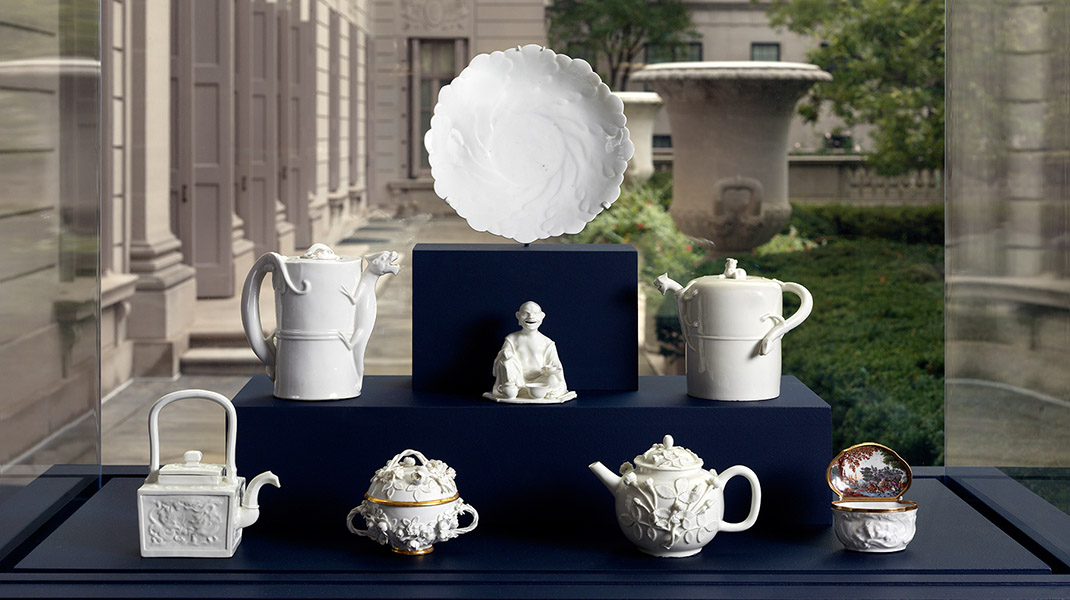
“The Frick Collection presents Henry Arnhold’s Meissen Palace, an exhibition of works from the famed European porcelain manufactory along with several Asian examples that inspired such wares. The pieces are drawn from the collection of the late Henry H. Arnhold (1921–2018), whose foundation made a promised gift of more than 100 objects to the institution nearly a decade ago and supported the creation of the Portico Gallery, where the exhibition is shown. Organized by Charlotte Vignon, the Frick’s Curator of Decorative Arts, the show offers a fresh take on this esteemed collection, transforming the gallery into an eighteenth-century ‘porcelain room,’ and grouping the works on view by color. This type of installation emulates a historic approach and allows visitors to experience these fragile, luxurious objects in much the same way one would have in eighteenth-century Europe. 

Vignon adds, ‘In looking a new at these wondrous pieces given to the Frick by the late Henry Arnhold, I have considered his attraction to them alongside the fascination they held for the most famous patron of such objects, Augustus II (1670–1733), king of Poland and elector of Saxony. Reflecting on the ways both men lived with their collections, I wanted to explore the idea that Arnhold was creating his own palace of porcelain. Indeed, he acquired many objects commissioned by Augustus, which we are including in the exhibition. We hope visitors to the show enjoy looking at these whimsical works through the eyes of both enthusiasts’.” — The Frick Collection

1_Meissen_Cup_and_Saucer_2000

Bowl and Saucer. Hard-paste porcelain, ca. 1720. Decorated outside the factory, ca. 1745. Saucer, D: 5 1/8 inches. Tea Bowl, H: 1 ¾ inches. The Frick Collection, Gift of Henry H. Arnhold, 2019. Photo: Michael Bodycomb

Vase and CoverMeissen porcelain, c. 1725 H: 9 ¼ inches Private Collection

Vase with Cover. Hard-paste porcelain, ca. 1725. Meissen Porcelain Manufactory. H: 9 ¼ inches. The Frick Collection, Gift of Henry H. Arnhold, 2019. Photo: Michael Bodycomb

Teapot

Teapot. Hard-paste porcelain, ca. 1729–31. Meissen Porcelain Manufactory. H: 4 7/8 inches. The Frick Collection, Gift of Henry H. Arnhold, 2019. Photo: Michael Bodycomb

4_2014.9_2000

Teapot. Hard-paste porcelain, ca. 1725-30. Meissen Porcelain Manufactory. Decoration: Attributed to the workshop of Bartholomäus Seuter, (ca. 1678–1754). H.: 6 inches. The Frick Collection, Gift of Henry H. Arnhold, 2019. Photo: Michael Bodycomb

5_2019.9_2000

Incense Burner in the form of a Seated Buddhist Divinity. Hard-paste porcelain, ca. 1715-20. Meissen Porcelain Manufactory. H. 3 7/8 inches. The Frick Collection, Gift of Henry H. Arnhold, 2019. Photo: Michael Bodycomb

6_2014.9_2000

Mounted Tankard. Hard-paste porcelain with gilt-metal mounts, ca. 1723-24. Meissen Porcelain Manufactory. Decoration attributed to Johann Gregorius Höroldt, (1696–1775). H. (with lid): 7 1/4 inches. The Frick Collection, Gift of Henry H. Arnhold, 2019. Photo: Michael Bodycomb

7_2014.9_2000

Mounted Meissen Group. Hard-paste porcelain with gilt-bronze mounts (Probably French), ca. 1728–30. Meissen Porcelain Manufactory. Model attributed to George Christian Fritsche, (act. 1681–1709). H.: 6 inches. The Frick Collection, Gift of Henry H. Arnhold, 2019. Photo: Michael Bodycomb

Birdcage Vase,

One of a pair of “Birdcage” vases. Hard-paste porcelain, after 1730. Meissen Porcelain Manufactory. 20 1/4 × 14 × 14 inches. The Frick Collection, Gift of Henry H. Arnhold, 2015. Photo: Michael Bodycomb

13_2016.9_2000

Mustard Pot and Cruet. Hard-paste porcelain, ca. 1737−39. Meissen Porcelain Manufactory. Modeled by Johann Joachim Kändler (1706 -1775). Cruet height: 7 inches. Mustard pot height: 7 ½ inches. The Frick Collection, Gift of Henry H. Arnhold, 2019. Photo: Michael Bodycomb

14_2016.9_2000

Figure of Hofnarr Fröhlich. Hard-paste porcelain, 1738. Meissen Porcelain Manufactory. Modeled by Johann Joachim Kändler, (German, 1706–1775). H.: 9 3/4 inches. The Frick Collection, Gift of Henry H. Arnhold, 2019. Photo: Michael Bodycomb

15a_Meissen_BrushHandle_ToiletteService_2000

Brush Handle from the Toilette Service Sent to the Queen of Naples. Hard-paste porcelain, 1745–47. Decorated by Gottlob Siegmund Birckner (1712–1771). 1 ¾ x 4 1/8 x 5 ¼ inches. The Frick Collection, Gift of Henry H. Arnhold, 2019. Photo: Michael Bodycomb

15b_Meissen_BrushHandle_ToiletteService_2000

Brush Handle from the Toilette Service Sent to the Queen of Naples. Hard-paste porcelain, 1745–47. Decorated by Gottlob Siegmund Birckner (1712–1771). 1 ¾ x 4 1/8 x 5 ¼ inches. The Frick Collection, Gift of Henry H. Arnhold, 2019. Photo: Michael Bodycomb

Images courtesy The Frick Collection.

*PLEASE NOTE: The Frick Collection is temporarily closed to the public.

RAFFAELLO 1520 – 1483 published by Skira Editore. Exhibition at Scuderie del Quirinale, Roma, through June 2, 2020*

Published in collaboration with the Scuderie del Quirinale and the Uffizi to celebrate the 500th anniversary of Raphael’s death, the book published by Skira Editore serves as a complement to the Scuderie del Quirinale’s major exhibition and tribute to Raphael.

The once-in-a-life-time exhibition, Raphael 1520-1483 traces the entire creative life of the “divin pittore” of Urbino and presents a stunning selection of over 200 masterpieces: original works along with paintings, cartoons, drawings, tapestries, and architectural projects inspired by him.

World-famous paintings such as Madonna del Granduca and Woman with a Veil from the Uffizi, the St Cecilia altarpiece from the Pinacoteca di Bologna, Alba Madonna from the National Gallery of Washington, Madonna of the Rose from the Prado and the iconic Portrait of Baldassarre Castiglione from the Louvre are commented by international experts under the direction of Marzia Faietti and Matteo Lafranconi with the support of an international scientific committee headed by Sylvia Ferino-Pagden.

Portrait de Baldassare Castiglione, Ècrivain et diplomate (1478-1529)

Raffaello. Ritratto di Baldassare Castiglione / Portrait of Baldassarre Castiglione, 1513. Oil on canvas. Parigi, musée du Louvre, département des Peintures © Musée du Louvre, Dist. RMN – Grand Palais / Angèle Dequier

3

Raffaello. La Madonna della Rosa / Madonna of the Rose, 1518-1520. Oil on panel transferred to canvas. Madrid, Museo Nacional del Prado © 2020. Image Copyright Museo Nacional del Prado

9

Raffaello. Madonna dell’Impannata, 1511. Oil on panel. Firenze, Gallerie degli Uffizi, Galleria Palatina Gabinetto fotografico delle Gallerie degli Uffizi  – By concession of Ministero per i Beni e le Attività Culturali e del Turismo

7

Raffaello. Ritratto di donna detta “La Velata” / Portrait of woman called “La Velata”, circa 1512-1513. Oil on canvas. Firenze, Gallerie degli Uffizi, Galleria Palatina Gabinetto fotografico delle Gallerie degli Uffizi – By concession of Ministero per i Beni e le Attività Culturali e del Turismo

8

Raffaello. Ritratto di donna nei panni di Venere (“Fornarina”) / Portrait of woman in the role of Venus (“Fornarina”), circa 1519-1520. Oil on panel. Roma, Gallerie Nazionali d’Arte Antica di Roma, Barberini Gallerie Nazionali di Arte Antica, Roma (MIBACT) – Biblioteca Hertziana, Istituto Max Planck per la storia dell’arte/Enrico Fontolan

CECILIA

Raffaello. Santa Cecilia con i santi Paolo, Giovanni Evangelista, Agostino e Maria Maddalena (Estasi di Santa Cecilia) / Ecstasy of Sant Cecilia ante, 1518. Panel trasported to canvas. Bologna, Polo Museale dell’Emilia Romagna, Pinacoteca Nazionale By concession of Ministero per i Beni e le Attività Culturali e del Turismo, Polo Museale dell’Emilia Romagna

1

Raffaello. Ritratto di Leone X tra i cardinali Giulio de’ Medici e Luigi de’ Rossi / Portrait of Pope Leone X, 1518-1519. Oil on panel. Firenze, Gallerie degli Uffizi, Gallerie delle Statue e delle Pitture. The restoration of the work was made possible thanks to the support of Lottomatica Holding. Gabinetto fotografico delle Gallerie degli Uffizi – By concession of Ministero per i Beni e le Attività Culturali e del Turismo

16

Raffaello. Autoritratto / Self portrait, 1506-1508. Oil on poplar panel. Firenze, Gallerie degli Uffizi, Galleria delle Statue e delle Pitture
Gabinetto fotografico delle Gallerie degli Uffizi – By concession of Ministero per i Beni e le Attività Culturali e del Turismo

Raffaello 1520 – 1483 was edited by Marzia Faietti and Matteo LaFranconi with Francesco P. Di Teodoro and Vincenzo Farnelli. The President of the Scientific Committee was Sylvia Ferino-Pagden.

The book is currently available only in Italian. The English version will be available from September 2020.

Images courtesy Skira Editore.

*PLEASE NOTE: Scuderie del Quirinale is temporarily closed to visitors until further notice.

Ballet Hispánico B Unidos Instagram Video Series In Celebration 50th Anniversary Celebration, 2020

Motivational Mondays

Ballet Hispánico continues 50th Anniversary Celebration with B Unidos, its new Instagram video series. The series features a series of videos posted each weekday, created by the three arms of the Ballet Hispánico: the professional company, the School of Dance, and Community Arts Partnership (CAP) and featuring the hashtag #BUnidos at www.instagram.com/ballethispanico/.

Each weekday at 3pm ET, the company releases a new video generated by the dancers, teachers and administrators with the goal of serving as class, exercise, and inspiration: Motivational Mondays (inspirational messages), Take Action Tuesdays (technique tips for young dancers), Wepa Wednesdays (explorations of the many varied styles of Latin Dance), Therapeutic Thursdays (focus on conditioning, health and wellness, stretching), and Flashback Fridays (retrospective looks at past 50 years from Ballet Hispánico’s archives).

Antonio Cangiano and Shelby Colona Photo by Rachel Neville

Antonio Cangiano and Shelby Colona. Photo by Rachel Neville.

The Joyce Theatre, now temporarily closed, had scheduled in April the Ballet Hispánico’s New York premiere of 18+1 by Gustavo Ramírez Sansano, Tiburones by Annabelle Lopez Ochoa, Jardi Tancat by Nacho Duato and New Sleep duet by William Forsythe.

Dancer

Antonio Cangiano. Photo by Rachel Neville

Jardi Tancat - Photo by Paula Lobo Web

Jardi Tancat. Photo by Paula Lobo Web

Dancer

Lyvan Verdecia. Photo by Rachel Neville

Dancer

Melissa Verdecia. Photo by Rachel Neville

Dancer

Shelby Colona. Photo by Rachel Neville

“As a community of dancers, artists, and human beings, we are all in this together. We will persevere through this challenging time and we hope that these videos provide a coping outlet, for you, for our followers and the community overall,” said Eduardo Vilaro, artistic director and CEO of Ballet Hispánico. “Now more than ever, it is important to band together in support of the arts. The personal and professional challenges that we have already endured and will continue to face over the next few weeks or months are significant. What we can take from this time of cancellations, uncertainty and social distancing is a chance to use our creativity to connect with the community on a new level. Social distancing does not mean emotional distancing. Ballet Hispánico was founded upon and has always believed in the importance of reaching and servicing our community through dance and culture. As this pandemic occurs during our 50th Anniversary, it provides us with an opportunity to reflect on how far we have come, get back to our roots by reaching out to community near and far, and look forward to what is ahead.”

Images courtesy Ballet Hispánico.

Lygia Clark: Painting as an Experimental Field, 1948–1958 at Guggenheim Museum Bilbao, through May 24, 2020*

“The Guggenheim Museum Bilbao presents Lygia Clark: Painting as an Experimental Field, 1948–1958. A pioneer in abstraction, Lygia Clark (b. 1920, Belo Horizonte, Brazil; d. 1988, Rio de Janeiro, Brazil) was a major artist of the second half of the twentieth century. This exhibition presents a reexamination of Clark’s crucial formative years from 1948 to 1958, when she was experimenting between figuration and abstraction to articulate the compelling visual language that defined her mature production. Along with a pertinent representation of her early figurative work, this show assembles paintings from major series created during this early period to provide a fundamental overview of the first decade of Clark’s artistic career.

Viewing painting as an ‘experimental field,’ a phrase from a keynote lecture given by the artist in 1956, Clark sought to redefine the medium by pushing the boundaries of traditional painting. Dedicating herself to art without formal training, she embedded herself within the artistic milieu of Rio de Janeiro in the late 1940s and participated in seminal artistic movements, such as Concrete art and geometric abstraction, throughout the 1950s. This focused exhibition traces Clark’s artistic evolution in three structured historical sections: ‘The Early Years, 1948–1952’; ‘Geometric Abstraction, 1953–1956’; and ‘Variation of Form: Modulating Space, 1957–1958.’ Each chapter addresses Clark’s most significant ideas and provides an in-depth representation of her artistic development through a concise selection of works.” — Guggenheim Museum Bilbao

Screen Shot 2020-03-30 at 10.08.08 AM copy

Lygia Clark. The Violoncellist (O Violoncelista), 1951. Oil on canvas, 105.5 x 81 x 2.7 cm. Private collection. © Courtesy of “The World of Lygia Clark” Cultural Association

00648

Lygia Clark. Composition (Composição), 1951. Oil on canvas, 105 x 81 cm. Colección Patricia Phelps de Cisneros. © Courtesy of “The World of Lygia Clark” Cultural Association

00545_ESCANEADA

Lygia Clark. Staircase (Escada), 1951. Oil on canvas ,100.4 x 74 cm. Acervo Museu de Arte Brasileira – MAB FAAP, São Paulo. Photo: Fernando Silveira. © Courtesy of “The World of Lygia Clark” Cultural Association

IMG_0540

Lygia Clark. Untitled, 1952. Oil on canvas, 54.5 x 81.5 cm. Joâo Sattamini Collection on loan to the Museu de Arte Contemporânea de Niterói. © Courtesy of “The World of Lygia Clark” Cultural Association

00647

Lygia Clark. Composition (Composição), 1953. Oil on canvas, 116.7 x 80.7 x 2.5 cm. Colección Patricia Phelps de Cisneros. © Courtesy of “The World of Lygia Clark” Cultural Association

00781_ESCANEADA

Lygia Clark. Composition (Composição), 1953. Oil on canvas, 89 x 106 cm. Collection MAM, Donation, Sul América Seguros. © Courtesy of “The World of Lygia Clark” Cultural Association

IMG_0541

Lygia Clark. Untitled, 1954. Oil on canvas, 56 x 42 cm. Joâo Sattamini Collection on loan to the Museu de Arte Contemporânea de Niterói. © Courtesy of “The World of Lygia Clark” Cultural Association

A&D_041508_Frente

Lygia Clark. Untitled, 1956. Oil on canvas, 113.5 x 79.5 cm. Private collection, São Paulo. © Courtesy of “The World of Lygia Clark” Cultural Association

01008

Lygia Clark. Modulated Surface No. 20 (Superfície modulada no. 20), 1956. Industrial paint on wood, 60 x 120.5 cm. Fundação Edson Queiroz Collection, Fortaleza. © Courtesy of “The World of Lygia Clark” Cultural Association

00358#

Lygia Clark. Modulated Surface (Superfície modulada), 1957. Industrial paint on wood, 49.5 x 94.5 x 8 cm. Collection Marcos Ribeiro Simon. © Courtesy of “The World of Lygia Clark” Cultural Association

00435

Lygia Clar. Planes in Modulated Surface (Planos em superfície modulada), 1958. Synthetic polymer paint on wood, 100 x 150 x 7 cm. Private collection, Rio de Janeiro. © Courtesy of “The World of Lygia Clark” Cultural Association

01312

Lygia Clark. Counter Relief (Contra relevo), 1959. Industrial paint on wood, 140 x 140 x 2.5 cm. Collection Jones Bergamin, Rio de Janeiro. © Courtesy of “The World of Lygia Clark” Cultural Association

Exhibition was curated by Geaninne Gutiérrez-Guimarães, Associate Curator, Guggenheim Museum Bilbao, Solomon R. Guggenheim Museum and Foundation.

Images courtesy Guggenheim Museum Bilbao.

*PLEASE NOTE: Guggenheim Museum Bilbao is temporarily closed to visitors until further notice.

Niki de Saint Phalle: Structures for Life at MoMA PS1. Preview of exhibition until MoMA PS1 reopens to the public

“MoMA PS1 will present the first New York museum exhibition of the work of visionary feminist and activist artist Niki de Saint Phalle (American and French, 1930‒2002). On view from April 5 to September 7, 2020, the exhibition will feature over 100 works created from the 1970s until the artist’s death, including sculptures, prints, drawings, jewelry, and archival material. Highlighting Saint Phalle’s interdisciplinary approach and engagement with key social and political issues, the exhibition will focus on works that she created to transform environments, individuals, and society.

Early in her career, Saint Phalle pushed against accepted artistic practices, creating work that used assemblage and performative modes of production. Collaboration was always central to her work, including several co-authored sculptures made with the artist Jean Tinguely. Beginning in the late 1960s, Saint Phalle starting making large-scale sculptures, which led to an expansion of her practice into architectural projects, sculpture gardens, books, prints, films, theater sets, clothing, jewelry, and, famously, her own perfume.

Saint Phalle’s central life project, Tarot Garden, is a massive architectural park outside Rome, Italy, which she began constructing in the late 1970s and continued to develop alongside key collaborators until her death. Opened to the public in 1998, the garden and its structures, which are based on the Major Arcana of the tarot deck, allow for moments of interaction and reflection that underscore Saint Phalle’s use of art to alter perception. The exhibition will include photographs and drawings of Tarot Garden as well as models that Saint Phalle created for its various structures.” — MoMA PS1

Photo de la Hon repeinte

Niki de Saint Phalle. Photo de la Hon repeinte. 1979. © 2020 NIKI CHARITABLE ART FOUNDATION. Photo: Katrin Baumann

Affiche "What is now known was once only imagined"

Niki de Saint Phalle. What is now known was once only imagined. 1979. Offset print. © 2020 NIKI CHARITABLE ART FOUNDATION. Photo: NCAF Archives

Tarot Garden, 1991

Niki de Saint Phalle. Tarot Garden. 1991. Lithograph, 23.7 x 31.5″ (60.3 x 80 cm). © 2020 NIKI CHARITABLE ART FOUNDATION. Photo: Ed Kessler

Granser-for-Press-TG-multi-2000x1335

Niki de Saint Phalle. Tarot Garden, Garavicchio, Italy. © 2020 FONDAZIONE IL GIARDINO DEI TAROCCHI. Photo: Peter Granser

Granser-for-Press-TG-inside-Empress-2000x1335

Niki de Saint Phalle. Interior view of Empress, Tarot Garden, Garavicchio, Italy © 2020 FONDAZIONE IL GIARDINO DEI TAROCCHI. Photo: Peter Granser

Book cover 'AIDS - You can't catch it holding hands', 1986

Niki de Saint Phalle. Book cover for AIDS, you can’t catch it holding hands. 1986. © 2020 NIKI CHARITABLE ART FOUNDATION. Photo: NCAF Archives

NdsP-TG-Bluke-1358x2000

Niki de Saint Phalle at Tarot Garden, Garavicchio, Italy, 1980s. Photographer unknown.

Niki de Saint Phalle: Structures for Life is organized by Ruba Katrib, Curator, MoMA PS1.

Images courtesy MoMA PS1.

Out of Place: A Feminist Look at the Collection at Brooklyn Museum, through September 13, 2020* 

“This exhibition presents more than 50 works from across the Brooklyn Museum’s collections. Following the 2018 exhibition Half the Picture: A Feminist Look at the Collection, Out of Place also explores collection works anew through an intersectional feminist framework. Out of Place features more than forty artists from remarkably different contexts whose unconventional materials and approaches call for a broader and more dynamic understanding of modern and contemporary art. 

Examining how contexts change the way we see art, Out of Place: A Feminist Look at the Collection showcases artists who have traditionally been seen as ‘out of place’ in most major collecting museums. The exhibition is organized around three distinct cultural contexts for making and understanding creativity—museums and art spaces, place-based practices, and the domestic sphere—and explores significant histories that have been, until recently, overlooked and undervalued, despite their influence outside of the mainstream. Out of Place traces how cultural institutions are challenged and changed by the ways artists work. Over half of the works in the exhibition are on view for the very first time, including important collection objects as well as significant new acquisitions, such as highlights from the recent Souls Grown Deep Foundation Gift of works by Black artists of the American South.” — Brooklyn Museum

DIG_E_2020_Out_of_Place_01_PS11

Installation view, Out of Place: A Feminist Look at the Collection. Photo: Jonathan Dorado.

DIG_E_2020_Out_of_Place_02_PS11

Installation view, Out of Place: A Feminist Look at the Collection. Photo: Jonathan Dorado.

DIG_E_2020_Out_of_Place_03_PS11

Installation view, Out of Place: A Feminist Look at the Collection. Photo: Jonathan Dorado.

DIG_E_2020_Out_of_Place_04_PS11

Installation view, Out of Place: A Feminist Look at the Collection. Photo: Jonathan Dorado.

DIG_E_2020_Out_of_Place_05_PS11

Installation view, Out of Place: A Feminist Look at the Collection. Photo: Jonathan Dorado.

DIG_E_2020_Out_of_Place_06_PS11

Installation view, Out of Place: A Feminist Look at the Collection. Photo: Jonathan Dorado.

DIG_E_2020_Out_of_Place_07_PS11

Installation view, Out of Place: A Feminist Look at the Collection. Photo: Jonathan Dorado.

DIG_E_2020_Out_of_Place_08_PS11

Installation view, Out of Place: A Feminist Look at the Collection. Photo: Jonathan Dorado.

Artists featured include Louise Bourgeois, Beverly Buchanan, Chryssa, Thornton Dial, Helen Frankenthaler, Lourdes Grobet, Louise Nevelson, Dorothea Rockburne, Betye Saar, Miriam Schapiro, Judith Scott, Joan Snyder, and May Wilson, among others. 

Out of Place: A Feminist Look at the Collection is curated by Catherine Morris, Senior Curator for the Elizabeth A. Sackler Center for Feminist Art, and Carmen Hermo, Associate Curator, Elizabeth A. Sackler Center for Feminist Art.

Title image: Photograph by Corrado Serra.

*PLEASE NOTE: Brooklyn Museum is temporarily closed to the public.

Contemporary Muslim Fashions at Cooper Hewitt, Smithsonian Design Museum, through August 23, 2020*

Contemporary Muslim Fashions, the first major museum exhibition to explore the rise of the modest fashion industry at Cooper Hewitt, Smithsonian Design Museum. This pioneering exhibition examines how Muslim women—those who cover and those who do not—have become arbiters of style within and beyond their communities. The exhibition features approximately 80 ensembles drawn from established and emerging designers in high-end fashion, streetwear, sportswear and couture, as well as about 40 photographs that will contextualize the garments on view.

In recent years, there has been increased awareness of Muslim consumers as an important segment of the global fashion industry, and increased visibility for designers and brands whose clothing responds to diverse interpretations of modesty. Featuring garments and styles from around the world, Contemporary Muslim Fashions focuses on the intersection of regional dress styles, global fashion trends and personal attitudes toward modesty. It considers how Muslim women define themselves and are defined by their dress, providing a snapshot of the current moment in Muslim modest fashion. Modest fashion refers to garments that are both highly fashionable and provide sufficient body cover to address cultural concerns for modesty. Many Muslim women and men dress modestly, in accordance with their faith, but individual and collective interpretations of modesty vary widely.” — Cooper Hewitt

Yunasz_1

Itang Yunasz (b. Jakarta, 1958) for Itang Yunasz (Indonesian, est. 1986); Ensemble (abaya, wrap, and hijab); Tribalux Collection, Spring/Summer, 2018; Silk satin, tulle, antique cotton warp-faced plain weave with warp-resist dyeing (Sumba ikat); Jewelry by MannaQueen for Itang Yunasz, 2018; Photograph © Sebastian Kim

Pelangi_1

Dian Pelangi (b. 1991, Indonesia); Ensemble (tunic, pants, inner headscarf, and scarves); Co-Identity Collection, Jakarta Fashion Week, 2016; Cotton denim with beading and embroidery, complex weave with fringe appliqué, spandex knit with beading, wax-resist dyed (batik) Thai silk; Photograph © Sebastian Kim

Pelangi_2

Dian Pelangi (b. 1991, Indonesia); Ensemble (maxi dress, turtleneck, inner headscarf, and scarves); Co-Identity Collection, Jakarta Fashion Week, 2016; Cotton drill and crepe with fringe appliqué, spandex knit with beading, Thai silk, wax-resist dyed (batik) Thai silk; Photograph © Sebastian Kim

Bağzıbağlı_1

Raşit Bağzıbağlı (b. 1985, United Kingdom) for MODANISA (est. 2011, Turkey); Feather Detailed Sequined Ensemble (evening gown, shawl, and turban); Spring/Summer 2018 ‘Desert Dream’ Collection; Polyester chiffon faux feathered, sequins; Photograph © Sebastian Kim

Vernon_3

Céline Semaan Vernon (b. 1982, Lebanon) for Slow Factory (est. 2012, United States); BANNED scarf; 2017; Cotton and silk; Courtesy of Slow Factory © Slow Factory

Sabet_1

Shereen Sabet (b. Egypt, 1970) for Splashgear, LLC (est. United States, 2005), Ensemble (shirt, pants, and swimhood); Hawaiian Colorway Collection, 2006, Polyester knit; Courtesy of Splashgear, LLC © Shereen Sabet / Splashgear LLC

Rahim_1

Haslinda Rahim (b. 1971, Malaysia) for Blancheur (est. 2014, Malaysia); Ensemble (dress, half-vest, jacket, and hijab); Spring/Summer 2018; Cotton blend with silk finishing and topstitching; viscose knit © Datin Haslinda Abdul Rahim for Blancheur / Spring/Summer 2018

Rahim_2

Haslinda Rahim (b. 1971, Malaysia) for Blancheur (est. 2014, Malaysia); Hoodie praying (dress and skirt [telekung]); Spring/Summer 2017; Silk linen, silk gauze with supplementary-weft patterning, rhinestones, paste stones Datin Haslinda Abdul Rahim for Blancheur / Spring/Summer 2017. © Datin Haslinda Abdul Rahim for Blancheur / Spring/Summer 2017

Chohan_1

Barjis Chohan (b. 1971, Pakistan) for Barjis (est. 2011, United Kingdom); Ensemble (top, jacket, pants, and headscarf); Spring/Summer 2015; Cotton; digital-printed silk crepe; polyester chiffon; and Maxi dress; Spring/Summer 2015; Digital-printed silk crepe and synthetic net; Courtesy of Barjis © Courtesy of Barjis; models: Marcie Dvorak and Maria Plavska / Bookings Models London

Bouguessa_1

Faiza Bouguessa (b. 1983, France) for Faiza Bouguessa (est. 2014, United Arab Emirates); “Two-Tone Crepe Snood” 70˚ Collection, 2014; Polyester crepe, satin lining; Courtesy of Bouguessa © Bouguessa

Bouguessa_2

Faiza Bouguessa (b. 1983, France) for Faiza Bouguessa (est. 2014, United Arab Emirates); “Geometric Abaya” dress with belt; 70˚ Collection, 2014; Polyester crepe, satin lining; Courtesy of Bouguessa © Bouguessa

Contemporary Muslim Fashions is organized by Jill D’Alessandro, curator in charge of costume and textile arts, and Laura L. Camerlengo, associate curator of costume and textiles at the Fine Arts Museums of San Francisco. Reina Lewis, professor of cultural studies at London College of Fashion, University of the Arts London, serves as consulting curator. The New York presentation of “Contemporary Muslim Fashions” is organized by Susan Brown, associate curator of textiles, Cooper Hewitt.

Title image: Melinda Looi (b. 1973, Malaysia) for Melinda Looi (est. 2000, Malaysia); Ensemble (dress, turban, earrings, rings, and shoes); Sunset in Africa Collection, 2012; Tie-dyed silk chiffon with feathers, semi-precious stones, and Swarovski crystals, silk satin lining; Photograph © Sebastian Kim

Images courtesy Cooper Hewitt, Smithsonian Design Museum.

*PLEASE NOTE: Cooper Hewitt and all Smithsonian museums are temporarily closed.

Brian Clarke: The Art of Light at Museum of Arts and Design (MAD), September 17, 2020 – February 21, 2021

The Museum of Arts and Design (MAD) presents a major exhibition works by celebrated architectural artist and painter Brian Clarke (b. 1953, United Kingdom). The first museum exhibition in the U.S. of Clarke’s stained-glass screens, compositions in lead, and related drawings on paper, Brian Clarke: The Art of Light showcases the most considerable artistic and technical breakthrough in the thousand-year history of stained glass.

“There is a world that can only be seen through stained glass. It is like no other. The range of experience I can deliver through it is greater than anything I’ve known in my life,” Clarke said. “Many of the greatest artists have been intensely involved with stained glass — Mondrian, Matisse, Albers, Cocteau, De Kooning, Le Corbusier, Richter. I believe the medium has the potential to have the same kind of uplifting impact on our urban engagement as it had on architecture in the 15th century. I want to surpass the Middle Ages, not equal them. This exhibition demonstrates that stained glass has an authority and potential to deal with every human condition,” said Clarke.

He continued, “The history of art and the history of architecture and design are linked like siblings. Modernity wrenched them apart, celebrating portable art as a monetized market and distancing design and architecture into isolated worlds of their own, with interaction between the disciplines moving from creative collaboration into arbitrary acquaintance. MAD are committed to supporting the healthier, challenging relationship between the arts and I fully behind them in this.”

Images from The Art of Light at the Sainsbury Centre, supported and organised in association with HENI.

02_Flowers-for-Zaha-Brian-Clarke_The-Art-of-Light-supported-and-organised-in-association-with-HENI-©-Fraser-Watson-scaled

Brian Clarke. Flowers for Zaha. Photo © Fraser Watson

06_Detail-from-World-Without-End-Brian-Clarke_The-Art-of-Light-supported-and-organised-in-association-with-HENI-©-Chris-Gascoigne-scaled

Brian Clarke. World Without End (detail). Photo © Matthias Kirchberger

13_Seville-Brian-Clarke_The-Art-of-Light-at-the-Sainsbury-Centre-supported-and-organised-is-association-with-HENI-©-Matthias-Kirchberger-scaled

Brian Clarke. Seville (detail). Photo © Chris Gascoigne

25_Clarke-SCVA-71-scaled

Brian Clarke. Manhattan. Photo © Chris Gascoigne

35_PRESS_DAY_NORWICH-55-scaled

Brian Clarke. Study for Portrait of The Five Sisters, 2007, lead on lead. Photo © Matthias Kirchberger

Brian Clarke: The Art of Light is organized by the Sainsbury Centre in association with the Museum of Arts and Design. It is curated by Director Paul Greenhalgh.

Images courtesy Museum of Arts and Design.

Judd at The Museum of Modern Art, through July 11, 2020*

The Museum of Modern Art’s exhibition Judd, on view in the Steven and Alexandra Cohen Center for Special Exhibitions in the David and Peggy Rockefeller Building is the first major US retrospective dedicated to the work of Donald Judd (1928–1994) in over three decades. Presented solely at MoMA, the exhibition explores the remarkable vision of an artist who revolutionized the history of sculpture, highlighting the full scope of Judd’s career through 70 works in sculpture, painting, drawing, and prints, from public and private collections in the US and abroad. Donald Judd was among a generation of artists in the 1960s who sought to entirely do away with illusion, narrative, and metaphorical content. He turned to three dimensions as well as industrial working methods and materials in order to investigate ‘real space,’ by his definition.” — MoMA

“Half a century after Judd established himself as a leading figure of his time, there remains a great deal to discover,” said Temkin. “MoMA’s presentation covers the full arc of his career, aiming to reveal its largely unexpected variety and complexity.”

Installation views of Judd, The Museum of Modern Art, New York. Digital Image © 2020 The Museum of Modern Art, New York. Photos by Jonathan Muzikar.

Judd (March 1st, 2020 - July 11th, 2020)

Judd (March 1st, 2020 - July 11th, 2020)

Judd_PRESS-003_CCCR-2000x1125

Judd (March 1st, 2020 - July 11th, 2020)

Judd (March 1st, 2020 - July 11th, 2020)

Judd (March 1st, 2020 - July 11th, 2020)

Judd (March 1st, 2020 - July 11th, 2020)

Judd_PRESS-009_CCCR-2000x1333

Judd (March 1st, 2020 - July 11th, 2020)

Judd is organized by Ann Temkin, The Marie-Josée and Henry Kravis Chief Curator of Painting and Sculpture, with Yasmil Raymond, former Associate Curator; Tamar Margalit, Curatorial Assistant; and Erica Cooke, Research Fellow, Department of Painting and Sculpture, MoMA.

Images courtesy The Museum of Modern Art.

*PLEASE NOTE: The Museum of Modern Art is temporarily closed to the public.

Edvard Munch and the Cycle of Life: Prints from the National Gallery of Art at Chrysler Museum of Art, through May 17, 2020*

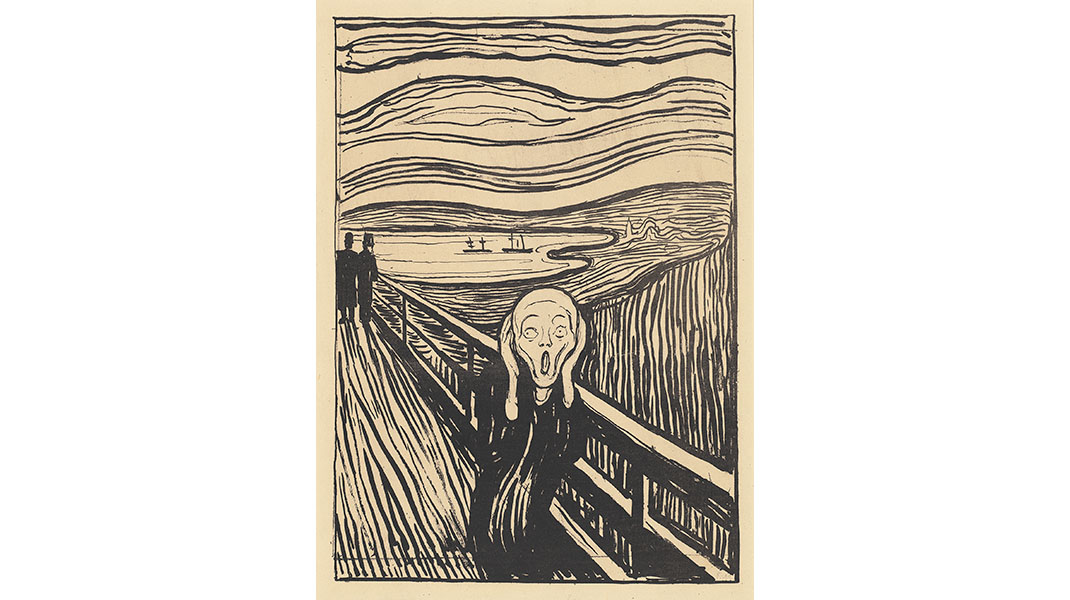
“The Chrysler Museum of Art presents its first-ever exhibition of Edvard Munch’s iconic works in Edvard Munch and the Cycle of Life: Prints from the National Gallery of Art. The show consists of 50 prints, including The Scream and Madonna. It includes images Munch developed for his 1902 exhibition Frieze of Life, as well as the entire 1908–1909 series Alpha and Omega, his invented story of the first humans. The exhibition also offers Munch’s satirical look at his own life and failures at love. ‘The work of the Norwegian artist has come to symbolize the crisis of modern life. The Chrysler’s exhibition is an original concept that focuses on Munch’s career-long obsession with the theme of the cycle of life, from the seeds of love and the passing of love to anxiety and death,’ said Lloyd DeWitt, Ph.D., the Chrysler’s chief curator and Irene Leache Curator of European art.” — Chrysler Museum of Art

Munch_01_Madonna

Edvard Munch (Norwegian, 1863–1944). Madonna, 1985. Color lithograph and woodcut (1902 printing) on oriental paper: lithograph printed from 3 stones in beige, red and black; woodcut printed from 1 block in blue. National Gallery of Art, Washington, The Epstein Family Collection, 1990

Munch_02_Geschrei_The_Scream

Edvard Munch (Norwegian, 1863–1944). Geschrei (The Scream), 1895. Lithograph. National Gallery of Art, Washington, Rosenwald Collection, 1943

Munch_03_The_Urn

Edvard Munch (Norwegian, 1863–1944). The Urn, 1896. Lithograph in black on Japan paper. National Gallery of Art, Washington, Gift of the Epstein Family Collection, 2010

Munch_04_Omega_and_the_Flower

Edvard Munch (Norwegian, 1863–1944). Omega and the Flower from Alpha and Omega, 1908–09. Lithograph in black. National Gallery of Art, Washington, The Epstein Family Collection, 2002

Munch_05_Alpha's_Despair

Edvard Munch (Norwegian, 1863–1944). Alpha’s Despair from Alpha and Omega, 1908–09. Lithograph in black. National Gallery of Art, Washington, The Epstein Family Collection, 2002

Munch_06_Funeral_March

Edvard Munch (Norwegian, 1863–1944). Funeral March, 1897. Lithograph in black. National Gallery of Art, Washington, Gift of the Epstein Family Collection, 2006

Munch_07_Crowds_In_a_Square

Edvard Munch (Norwegian, 1863–1944). Crowds in a Square, 1920. Color woodcut. National Gallery of Art, Washington, Gift of the Epstein Family Collection, 2013

Munch_08_In_a_Man's_Brain

Edvard Munch (Norwegian, 1863–1944). In a Man’s Brain (Reclining Woman), ca. 1897. Black chalk rubbing from woodblock heightened with brush and black ink on red-orange paper. National Gallery of Art, Washington, Epstein Family Fund and the Director’s Discretionary Fund, 2000

Munch_10_Peer_Gynt

Edvard Munch (Norwegian, 1863–1944). Peer Gynt, 1896. Lithograph in black on light brown wove paper. National Gallery of Art, Washington, Gift of the Atlas Foundation, 1995

Munch_11_Café_Bauer_Berlin

Edvard Munch (Norwegian, 1863–1944). Café Bauer, Berlin, 1902. Drypoint. National Gallery of Art, Washington, Rosenwald Collection, 1944

Munch_12_The_Brooch_Eva_Mudocci

Edvard Munch (Norwegian, 1863–1944). The Brooch (Eva Mudocci), 1903. Lithograph in black on oriental paper. National Gallery of Art, Washington, Gift of the Epstein Family Collection, 2006

“These are fragile prints that can only be exhibited every few years in order to protect them against light exposure so that future generations can enjoy them,” said DeWitt.  “The National Gallery of Art and the Epstein family have been exceptionally generous in lending an astounding 50 sheets so that our audience can experience the full range of work of one of the most well-known and powerful artists of the 19th and 20th centuries.”

Images courtesy Chrysler Museum of Art.

*PLEASE NOTE: The Chrysler Museum of Art is temporarily closed to the public.

Aubrey Beardsley at Tate Britain, London, through May 25, 2020*

“Tate Britain’s major new exhibition celebrates the brief but astonishing career of Aubrey Beardsley. Although he died tragically young at the age of just 25, Beardsley’s strange, sinuous black-and-white images have continued to shock and delight for over a century. Bringing together 200 spectacular works, this is the largest display of his original drawings in over 50 years and the first exhibition of his work at Tate since 1923.

Beardsley (1872-98) became one of the enfants terribles of fin-de-siècle London, best remembered for illustrating Oscar Wilde’s controversial play Salomé. His opulent imagery anticipated the elegance of Art Nouveau but also alighted on the subversive and erotic aspects of life and legend, shocking audiences with a bizarre sense of humour and fascination with the grotesque. Beardsley was prolific, producing hundreds of illustrations for books, periodicals and posters in a career spanning just under seven years. Line block printing enabled his distinct black-and-white works to be easily reproduced and widely circulated, winning notoriety and admirers around the world, but the original pen and ink drawings are rarely seen. Tate Britain exhibits a huge array of these drawings, revealing his unrivalled skill as a draughtsman in exquisite detail.” — Tate Britain

Aubrey Beardsley works

Illustration for Oscar Wilde’s Salome, 1893.
The Peacock Skirt. Line block print on paper. Stephen Calloway. Photo: © Tate

Self-Portrait 1892

Self Portrait, 1892.
Ink on paper. British Museum

Aubrey Beardsley works

The Yellow Book Volume I, 1894. Bound volume. Stephen Calloway. Photo: © Tate

How la Beale Isoud Wrote to Sir Tristram c.1893

How la Beale Isoud Wrote to Sir Tristram, c.1893. Ink on paper, 
276 x 215 mm. Alessandra and Simon Wilson

Volpone Adoring his Treasure 1898

Volpone Adoring his Treasure, 1898. Ink over graphite on paper, 290 x 204 mm. Courtesy of the Princeton University Library

How Arthur saw the Questing Beast 1893

How Arthur saw the Questing Beast, 1893. Ink and wash on paper, 378 x 270 mm. Victoria and Albert Museum

Frederick Evans - Portrait of Aubrey Beardsley

Frederick Evans, 1853-1943.
Portrait of Aubrey Beardsley, 1893. Photo-etching and platinum print on paper, 115 x 165 mm. Wilson Centre for Photography

Aubrey Beardsley is organised by Tate Britain in collaboration with the Musée d’Orsay, Paris. It is curated by Caroline Corbeau-Parsons, Curator of British Art 1850-1915, and Stephen Calloway with Alice Insley, Assistant Curator, Historic British Art.

Images courtesy Tate Britain.

*PLEASE NOTE: Tate Britain is temporarily closed until at least 1 May, in line with advice from Public Health England.

We Fight to Build a Free World: An Exhibition by Jonathan Horowitz at Jewish Museum, October 1, 2020 – January 24, 2021

We Fight to Build a Free World: An Exhibition by Jonathan Horowitz looks at how artists have responded to the rise of intolerance and authoritarianism, addressing issues surrounding immigration, assimilation, and cultural identity. Jonathan Horowitz (b. 1966, New York City) is an artist working in a wide range of mediums, including video, installation, painting, sculpture, and photography, exploring subjects ranging from environmentalism to the American political process.

The exhibition features works of art primarily from the early 20th century until now, including examples of American social realism from the 1930s and 1940s, new works by Jonathan Horowitz, and newly commissioned political posters by contemporary artists. The nearly 80 works draw connections between historical oppression and today’s political and cultural challenges. A range of media — video, sculpture, painting, photography, and prints — is represented.

The exhibition’s title, We Fight to Build a Free World, is from a series of World War II propaganda posters designed by Ben Shahn for the United States Office of War Information. The designs incorporate imagery by four other artists – Edward Millman (Suppression), Käthe Kollwitz (Starvation), Yasuo Kuniyoshi (Torture), and Bernard Perlin (Murder), as well as by Shahn (Slavery). Like much of Shahn’s work for the OWI, most of the posters were never produced. Shahn’s painting, We Fight for a Free World!, c. 1942, which incorporates images of the five posters, will be on view.” — Jewish Museum

Shahn, We Fight For A Free World

Ben Shahn, We Fight For A Free World!, c. 1942, gouache and tempera on board. Michael Rosenfeld Gallery LLC, New York, NY Artwork © Estate of Ben Shahn / Licensed by VAGA at Artists Rights Society (ARS), NY; image courtesy of Michael Rosenfeld Gallery LLC, New York, NY

Horowitz, Power

Jonathan Horowitz, Power, 2019, UV print on PVC board, vinyl sticker. Artwork © Jonathan Horowitz, courtesy Sadie Coles HQ, London; photography by Robert Glowacki

Horowitz, Tennyson, Jasper and Bob

Jonathan Horowitz, Tennyson, Jasper and Bob, 2014, UV ink on canvas, embroidery, frame. Collection of the artist Artwork © Jonathan Horowitz; image courtesy the artist and Xavier Hufkens, Brussels; photograph by HV-studio, Brussels

tjm-2005-29_1-blumenfeld

Erwin Blumenfeld, The Dictator, c. 1936, gelatin silver print. The Jewish Museum, NY, Purchase: Gift of John and Helga Klein, 2005-29.Artwork © Estate of Erwin Blumenfeld

Colescott, George Washington Carver Crossing the Delaware

Robert Colescott, George Washington Carver Crossing the Delaware: Page from an American History Textbook, 1975, acrylic on canvas. Private collection. Artwork © Estate of Robert Colescott / Artists Rights Society (ARS), New York; image courtesy Blum & Poe

The Hundredth Psalm

Philip Evergood, The Hundredth Psalm, c. 1938-39, oil on canvas. The Jewish Museum, NY, Purchase: Miriam and Milton Handler and Kristie A. Jayne Funds, 2000-16

Lepkoff, Lower East Side

Rebecca Lepkoff, Lower East Side, 1947, gelatin silver print. Columbus Museum of Art, Ohio: Photo League Collection, Museum Purchase with funds provided by Elizabeth M. Ross, the Derby Fund, John S. and Catherine Chapin Kobacker, and the Friends of the Photo League, 2001.020.085 © Estate of Rebecca Lepkoff, Courtesy of Howard Greenberg Gallery, New York

Destruction of the Ghetto, Kiev,

Abraham Manievich, Destruction of the Ghetto, Kiev, 1919, oil on canvas. The Jewish Museum, Purchase: Gift of Deana Bezark in memory of her husband Leslie Bezark, 1991-30

Montoya, Cristobal Colon

Malaquias Montoya, Cristobal Colón, 1992, offset lithograph. Artwork © and courtesy Malaquias Montoya

Orthodox Boys

Bernard Perlin, Orthodox Boys, 1948, tempera on board. Tate: Presented by Lincoln Kirstein through the Institute of Contemporary Arts 1950. Artwork © Bernard Perlin; image courtesy Tate

Walker, Middle Passages 1

Kara Walker, Middle Passages (1), 2004, gouache, cut paper and collage on board. Collection of Marc Mills via Sikkema Jenkins & Co., New York. © Kara Walker, courtesy of Sikkema Jenkins & Co., New York

Walker, Middle Passages 2

Kara Walker, Middle Passages (2), 2004, gouache, cut paper and collage on board. Collection of Marc Mills via Sikkema Jenkins & Co., New York. © Kara Walker, courtesy of Sikkema Jenkins & Co., New York

Walker, Middle Passages 3

Kara Walker, Middle Passages (3), 2004, gouache, cut paper and collage on board. Collection of Marc Mills via Sikkema Jenkins & Co., New York. © Kara Walker, courtesy of Sikkema Jenkins & Co., New York

Walker, Middle Passages 4

Kara Walker, Middle Passages (4), 2004, gouache, cut paper and collage on board. Collection of Marc Mills via Sikkema Jenkins & Co., New York. © Kara Walker, courtesy of Sikkema Jenkins & Co., New York

Hope

Max Weber, Hope, 1941, oil on canvas. The Jewish Museum, NY, Gift of the children of Gladys and Selig S. Burrows, 2001-58

Lou Beach

Lou Beach, inkjet print, 2020. © Lou Beach

LAW

Eric J. Garcia, inkjet print, 2020. © Eric J. Garcia

Christine Sun Kim

Christine Sun Kim, inkjet print, 2020. © Christine Sun Kim

“Three years ago, the Jewish Museum invited me to develop a project that responded to the resurgence of anti-Semitism,” Jonathan Horowitz said. “I chose to address the subject within a broad context, looking at how artists have historically responded to the rise of authoritarianism and xenophobia, including anti-Semitism and other forms of bigotry.”

The exhibition is a project by artist Jonathan Horowitz, organized in consultation with Ruth Beesch, Senior Deputy Director, and Shira Backer, Leon Levy Assistant Curator, The Jewish Museum.

Images courtesy Jewish Museum.