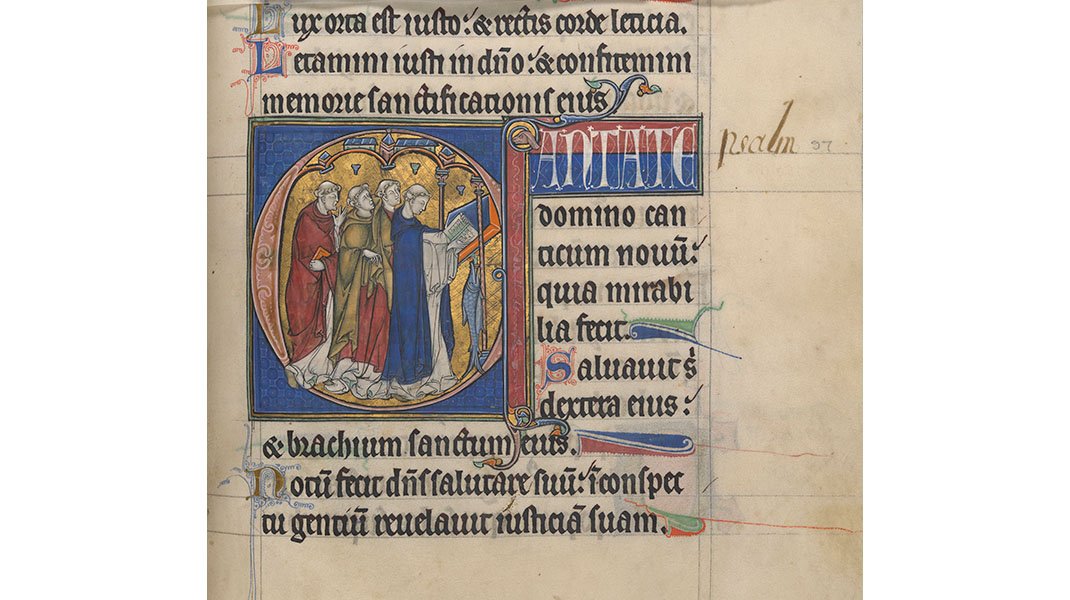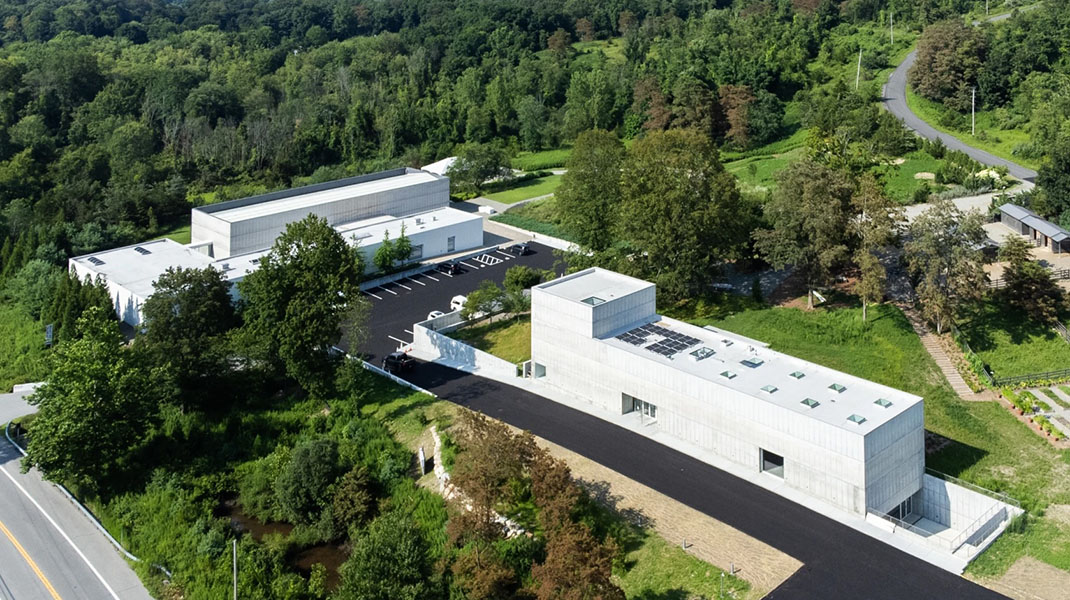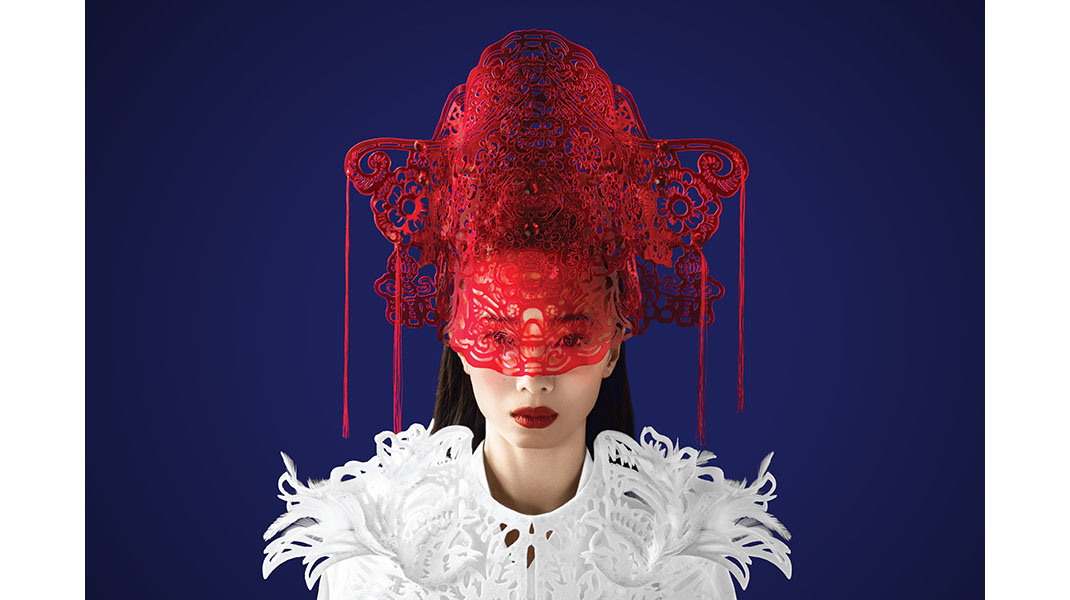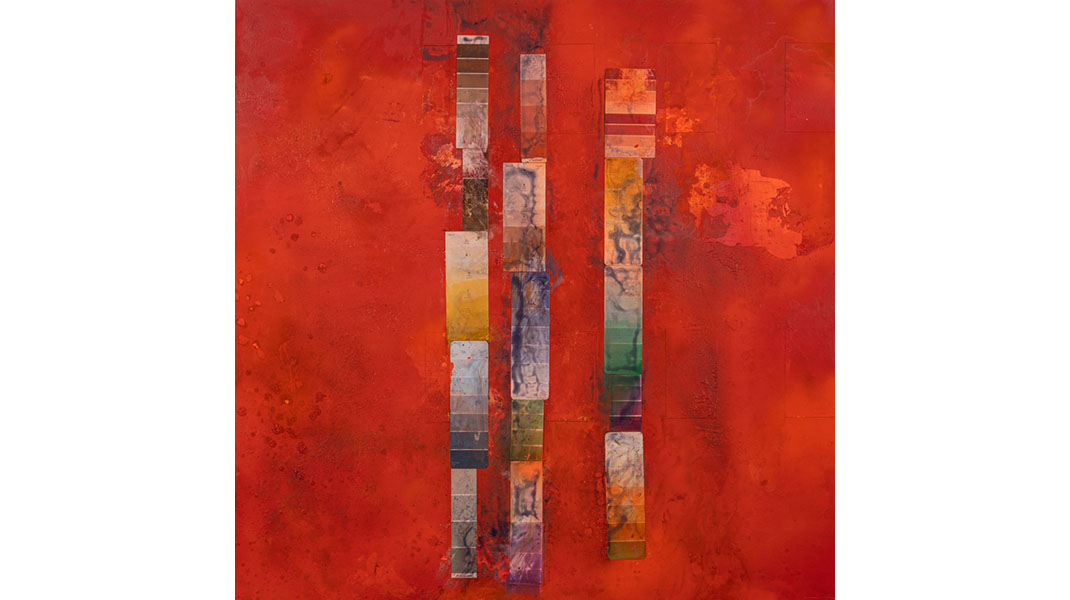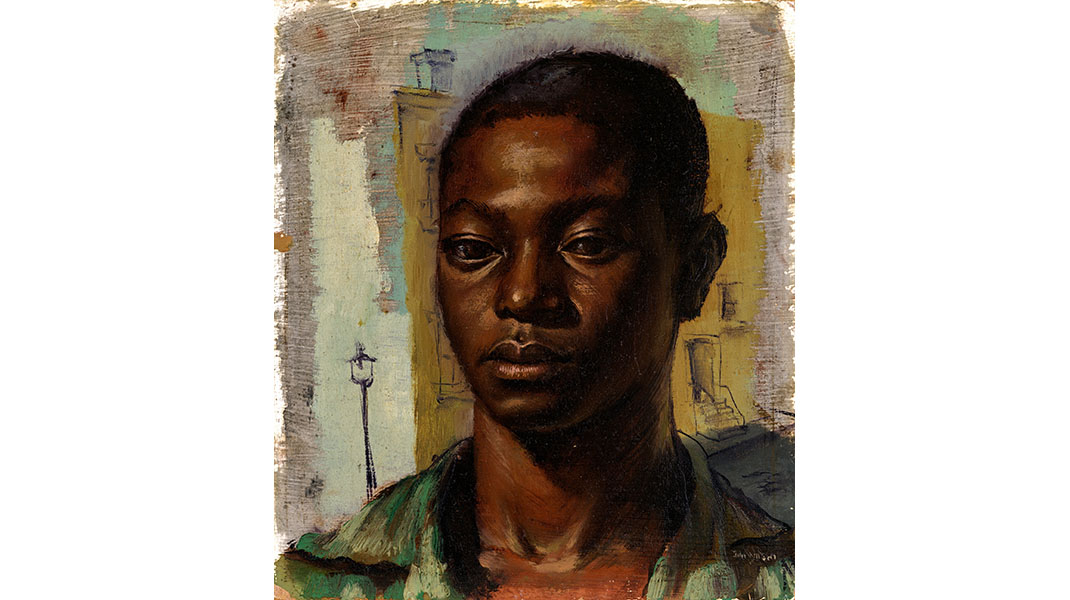
“This summer, The Metropolitan Museum of Art presents The Magical City: George Morrison’s New York, opening July 17, 2025. Born in Chippewa City, a remote Native American village on the shore of Lake Superior in northern Minnesota, George Morrison (Wah-wah-ta-ga-nah-gah-boo and Gwe-ki-ge-nah-gah-boo, Grand Portage Band of Lake Superior Chippewa, 1919–2000) overcame innumerable challenges—poverty, a life-threatening childhood illness, social isolation, racial and cultural barriers—to become a leader of the American Abstract Expressionist movement, which he collaboratively defined both publicly and behind the scenes.” — The Metropolitan Museum of Art
“George Morrison’s life and work has inspired generations of artists,” said Max Hollein, The Met’s Marina Kellen French Director and Chief Executive Officer. “Anchored by works from his time in New York, this meaningful exhibition celebrates Morrison’s creative achievements and explores how his American Indigenous perspective shaped his unique cultural legacy.”
Installation views of The Magical City: George Morrison’s New York, on view July 17, 2025–May 31, 2026 at The Metropolitan Museum of Art. Photos by Paul Lachenauer, courtesy of The Met.
Patricia Marroquin Norby (P’ urhépecha), Associate Curator of Native American Art in The Met’s American Wing, said: “This celebration of George Morrison’s work at The Met is long overdue. We are thrilled to honor the artist’s major contributions to the New York School with this exhibition and publication. Morrison strongly impacted the development of the American Abstract Expressionist movement as well as the work of his professional colleagues—artists who respected him as a leader and a voice for their generation. This exhibition offers an important opportunity to engage deeply with Morrison’s evolving practice, supported by rarely seen archival materials that reveal the depth and complexity of his artistic journey.”
The Magical City: George Morrison’s New York is curated by Patricia Marroquin Norby (P’ urhépecha), Associate Curator of Native American Art in The Met’s American Wing.
“This joyful outdoor sculpture installation featuring the art of inventive contemporary creators is presented in conjunction with our current exhibition, I SPY! Walter Wick’s Hidden Wonders. The sculptural works on view throughout the Museum’s thirty-six acre site are inspired by each artist’s imagination and the exhibition’s themes of seek and find miniature worlds, optical illusions, I SPY games and puzzle challenges, curiosity shop, and craft-build environments.
Artists showcased in the exhibition include: Robert Bangiola, Harold Grinspoon, Brian McQuillan, Barbra Fletcher, Robert Markey, Erika Crofut, Stephen Klema, William Carlson, Stephanie Wenzel, Ricky Bernstein, Erik Johnsen, Andy Gingras, Chris Plaisted, and Pedro S. de Movellán.” — Norman Rockwell Museum
Robert Markey, Good Luck Dragon. Painted welded steel with glass eyes.
Brian McQuillan, Flight of Fancy. Welded steel, brass, machine parts, tools, and antique metal pieces.
Erik Johnsen. Walter Wick Tribute Display. Fiberglass, steel, and foam.
Harold Grinspoon, Dinosaur. Painted live oak segments.
Ricky Bernstein, Time on His Hands. Wood, glass, aluminum, polyglass, mixed media objects, Benjamin Moore outdoor paint.
Barbara Fletcher, Goldberg Variations. Mixed media, metal, various objects, coated for outdoor weather.
Exhibition was curated by Stephanie Plunkett.
Title image: Stephen Klema, Rybee House 5. Wood stained and painted.
“Experimentation and heightened creativity characterized the European avant-garde movements of the early twentieth century, as artists pursued multifaceted stylistic innovations. Modern European Currents examines this dynamic period through nearly twenty paintings and watercolors from the Guggenheim’s holdings by influential figures from the Austro-Hungarian, German, and Russian Empires—including Natalia Goncharova, Vasily Kandinsky, Franz Marc, Liubov Popova, and Egon Schiele. The exhibition invites audiences to engage with celebrated collection highlights, such as Franz Marc’s Yellow Cow (1911), as well as hidden gems, among them Heinrich Campendonk’s Farmer with Horse and Wagon (1918), which has not been shown since entering the collection in 1948. This Collection in Focus presentation illuminates a seismic moment of transnational interchange and transformation, when artists tested new possibilities for visual representation.” — Solomon R. Guggenheim Museum
As curator Vivien Greene notes, “The Collection in Focus series foregrounds beloved collection artworks and prescient new acquisitions. Modern European Currents, in particular, showcases a rotating cycle of delicate works on paper that the museum rarely exhibits due to their fragility.” Cocurator Megan Fontanella adds, “Some of these luminary exemplars of early twentieth-century European modernism have not been on view in a decade or more.”
Title image: Franz Marc, Yellow Cow (Gelbe Kuh), 1911. Oil on canvas, 55 3/8 × 74 1/2 in. (140.7 × 189.2 cm). Solomon R. Guggenheim Museum, New York, Solomon R. Guggenheim Founding Collection 49.1210. Photo: Ariel Ione Williams, Solomon R. Guggenheim Museum, New York
“Shifting Landscapes at the Whitney Museum of American Art, explores how evolving political, ecological, and social issues motivate artists and their representations of the world around them. While the traditional art historical landscape genre has long been associated with picturesque vistas and documentary accounts of place, artworks drawn from the Whitney’s collection for this exhibition, most on view at the Museum for the first time, suggest a more expansive interpretation.
Shifting Landscapes features 120 works by more than 80 artists, including Firelei Báez, Jean-Michel Basquiat, Jane Dickson, Teresita Fernández, Gordon Matta-Clark, and Purvis Young, spanning the 1960s to the present. Photographs, installations, films, videos, sculptures, paintings, drawings, prints, and digital artworks depict the effects of industrialization on the environment, grapple with the impact of geopolitical borders, and give shape to imagined spaces as a way of destabilizing the concept of a “natural” world. Organized in thematic sections, these works bring the many meanings embedded in land and place into focus, foregrounding how we shape and are shaped by the spaces around us.” — Whitney Museum of American Art
Installation view of Shifting Landscapes (Whitney Museum of American Art, New York, November 1, 2024-January 2026). From left to right: rafa esparza, New American Landscapes. Self Portrait: Catching Feelings (Ecstatic), 2017; Theo Triantafyllidis, BugSim (Pheromone Spa), 2023; Mundo Meza, Merman with Mandolin, 1984. Photograph by Ron Amstutz.Installation view of Shifting Landscapes (Whitney Museum of American Art, New York, November 1, 2024-January 2026). Amalia Mesa-Bains, Cihuateotl with Hand Mirror from Venus Envy Chapter III: Cihuatlampa, the Place of the Giant Women, 1997-2022. Photograph by Ron Amstutz.Installation view of Shifting Landscapes (Whitney Museum of American Art, New York, November 1, 2024-January 2026). From left to right: Miguel Luciano, The People’s Pulpit, 2022; Hiram Maristany, Hydrant: In the Air, 1963, printed 2021; Hiram Maristany, Juan Gonzalez, Minister of Education of the Young Lords, at original storefront office headquarters, 1969, printed 2021; Sophie Rivera, Untitled, c. 1982; Sophie Rivera, Untitled, c. 1982; John Ahearn, Miss Kate, 1982; Rigoberto Torres, Julio, José, and Junito, 1991/1995; Tabboo!, Looking Uptown from My Roof, 1998; Michael Joo, Salt Transfer Cycle, 1994; Piliāmo‘o, Hoʻopulu ke kuahiwi me ka mano wai, 5.13.90, 1990; An-My Lê, 29 Palms: Guard, Combat Operations Center, 2003-04. Photograph by Ron Amstutz. Installation view of Shifting Landscapes (Whitney Museum of American Art, New York, November 1, 2024-January 2026). From left to right: Diane Burns, Alphabet City Serenade, 1988; Jean-Michel Basquiat, Untitled, 1980; Miguel Luciano, The People’s Pulpit, 2022; Hiram Maristany, Hydrant: In the Air, 1963, printed 2021; Hiram Maristany, Juan Gonzalez, Minister of Education of the Young Lords, at original storefront office headquarters, 1969, printed 2021; Sophie Rivera, Untitled, c. 1982; Sophie Rivera, Untitled, c. 1982; John Ahearn, Miss Kate, 1982; Rigoberto Torres, Julio, José, and Junito, 1991/1995; Tabboo!, Looking Uptown from My Roof, 1998. Photograph by Ron Amstutz.Installation view of Shifting Landscapes (Whitney Museum of American Art, New York, November 1, 2024-January 2026). From left to right: rafa esparza, New American Landscapes. Self Portrait: Catching Feelings (Ecstatic), 2017; Melvonna Ballenger, Rain (Nyesha), 1978; Purvis Young, Angel, City, and Eye Assemblage, c. 1990-95; Arch Connelly, Personal Explosion, 1984; Arch Connelly, Leaf, 1982; Dalton Gata, I Don’t Need You To Be Warm, 2021. Photograph by Ron Amstutz.Installation view of Shifting Landscapes (Whitney Museum of American Art, New York, November 1, 2024-January 2026). From left to right: Chioma Ebinama, amor mundi, 2021; Mundo Meza, Merman with Mandolin, 1984; María Berrío, A Universe of One, 2018; Firelei Báez, Untitled (Tabula Anemographica seu Pyxis Navtic), 2021. Photograph by Ron Amstutz.
“Shifting Landscapes reflects the Whitney’s ongoing commitment to telling diverse stories in American art,” said Jennie Goldstein, Jennifer Rubio Associate Curator of the Collection; Marcela Guerrero, DeMartini Family Curator; and Roxanne Smith, Senior Curatorial Assistant at the Whitney. “Landscape—in its formal, social, and political implications—feels like a particularly dynamic and urgent subject today, and we are excited that over half of the works in this exhibition are new to the collection and on view at the Museum for the first time.”
Shifting Landscapes is on view through January 2026 at the Whitney Museum of American Art. The exhibition is organized by Jennie Goldstein, Jennifer Rubio Associate Curator of the Collection; Marcela Guerrero, DeMartini Family Curator; Roxanne Smith, Senior Curatorial Assistant; with Angelica Arbelaez, Rubio Butterfield Family Fellow; with thanks to Araceli Bremauntz-Enriquez and J. English Cook for research support.
“From June 28 to September 14, 2025, on the iconic site of Saint-Gervais Mont-Blanc, the contemporary art biennial Artocène presents its 4th edition. Titled Augmented Bodies, this edition brings together twelve artists exploring the evolution of the body (or bodies) through science and technology. Augmented Bodies offers a reflection on how organisms evolve or adapt to their environment, whether through natural processes (evolutionary biology) or via science and technology.
Since its beginnings, humankind has enhanced its capabilities through tools. The mechanical tool was followed by the digital tool, virtually extending or amplifying human faculties. The recent emergence of connected tools and artificial intelligence marks a new era, fundamentally altering how humans relate to their environment. Exploring the relationship between bodies and landscape, Augmented Bodies takes the Alpine landscape and the practice of mountaineering as the starting point for its curatorial approach.” — Artocène
“From April 12 through September 15, 2025, the Peggy Guggenheim Collection presents Maria Helena Vieira da Silva: Anatomy of Space, a comprehensive solo exhibition dedicated to one of the most unique and original artists of the twentieth century, organized by Flavia Frigeri, art historian and curator at the National Portrait Gallery, London. After Venice, the exhibition will be on view at the Guggenheim Museum Bilbao from October 15, 2025, through February 22, 2026.
Through a selection of about seventy works—on loan from leading international museums, including the Centre Georges Pompidou, Paris; the Guggenheim New York; the Museum of Modern Art, New York; and Tate Modern, London, as well as renowned galleries such as Jeanne Bucher Jaeger, Paris, and cultural institutions such as the Comité Arpad Szenes-Viera da Silva, Paris, and Arpad Szenes-Vieira da Silva Foundation, Lisbon—the exhibition provides an in-depth exploration of the evolution of the visual language of Portuguese-born French artist Maria Helena Vieira da Silva(1908–1992). Highlighting the important relationship between abstraction and figuration in her work, the exhibition explores key moments in Vieira da Silva’s career from the 1930s to the late 1980s.” — Peggy Guggenheim Collection
Installation views of Maria Helena Vieira da Silva: Anatomy of Space at Peggy Guggenheim Collection, April 12 through September 15, 2025. Photos: Matteo De Fina.
Maria Helena Vieira da Silva: Anatomy of Space is accompanied by an illustrated catalogue, published by Marsilio Arte, with essays by curator Flavia Frigeri, artist Giulia Andreani, writer and essayist Lauren Elkin, and art historian Jennifer Sliwka
“The Morgan Library & Museum presents A Lively Mind: Jane Austen at 250, a major exhibition devoted to the life and legacy of the beloved literary icon. On view from June 6 through September 14, 2025, A Lively Mind immerses viewers in the inspiring story of Jane Austen’s authorship and her gradual rise to international fame. Iconic artifacts from Jane Austen’s House in Chawton, England, will join manuscripts, books, and artworks from the Morgan, as well as from a dozen other institutional and private collections, to present compelling new perspectives on Austen’s literary achievement, her personal style, and her global legacy.” — Morgan Library & Museum
“Jane Austen has inspired generations of readers, and the Morgan is honored to join the celebrations marking the 250th anniversary of her birth,” said Colin B. Bailey, Katharine J. Rayner Director of the Morgan Library & Museum. “Bringing together the Morgan’s expansive collection of Austen works, particularly her letters, alongside many exquisite loans, A Lively Mind is a rare opportunity to experience Austen’s many facets at once, from her family life to her authorship and her legacy.”
Silhouettes of Rev. George Austen and Cassandra Leigh Austen, early nineteenth century, on loan from Jane Austen’s House, Chawton.
Jane Austen (1775–1817). Autograph letter to Cassandra Austen, Godmersham, June 20–22, 1808. The Morgan Library & Museum, purchased by J. P. Morgan Jr., 1920; MA 977.16. Photography by Janny Chiu.
William Blake (1757–1827). Portrait of Mrs. Q [Harriet Quentin], 1820. Stipple etching/engraving with mezzotint. The Morgan Library & Museum, gift of Charles Ryskamp in memory of Michael S. Currier; 1998.36:4. Photography by Steven H. Crossot.
Jane Austen (1775–1817). Autograph letter to Cassandra Austen, Bath, June 2, 1799. The Morgan Library & Museum, purchased by J. P. Morgan Jr., 1920; MA 977.4. Photography by Janny Chiu.
Morning dresses from Gallery of Fashion (London: N. Heideloff, 1798), fig. 198. The Morgan Library & Museum; PML 5680.
J. Austen: after an original family portrait. Steel engraving [New York: 1873]. The Morgan Library & Museum, purchased by J. P. Morgan Jr., 1920; MA 977.43. Photography by Graham S. Haber.
Jane Austen (1775–1817). Emma, 3 vols. London: printed for John Murray, 1816. The Morgan Library & Museum, purchased by J. P. Morgan Jr., 1928; PML 25476–78. Photography by Janny Chiu.
Jane Austen (1775–1817). Emma, volume 2. Philadelphia: M. Carey, 1816. Courtesy of Goucher College Special Collections & Archives, Alberta H. and Henry G. Burke Collection.
Anonymous, Miniature portrait of Jane Austen, 19th century. The Morgan Library & Museum, AZ078.
“A Lively Mind examines how it was possible for Austen to publish her now-beloved novels when women generally were not permitted to become writers, much less encouraged to be,” said Dale Stinchcomb, Drue Heinz Curator of Literary and Historical Manuscripts at the Morgan Library & Museum. “In addition to her own brilliance, many people—friends, family, readers—made her who she is today, and we hope visitors come away feeling that they can have a profound impact on literature and the arts as well.”
“It’s exciting to share books and artworks, many of which have never been exhibited before, to bring to light how American readers first encountered and responded to Austen’s novels,” said Juliette Wells, co-curator of the exhibition and Professor of Literary Studies at Goucher College, “as well as to show how American advocates broadened Austen’s readership later in the nineteenth century.”
Organized by Dale Stinchcomb, the Morgan’s Drue Heinz Curator of Literary and Historical Manuscripts, and Juliette Wells, Professor of Literary Studies at Goucher College.
“NYBG becomes the canvas for the colorful brush strokes of one of the world’s most revered artists during Van Gogh’s Flowers, where you’ll revel in the beauty of the flowers that inspired his iconic paintings—by day, and by night. Find yourself immersed in botanical displays and large-scale art as you wander through a breathtaking lawn of monumental sunflowers, and see the expressive masterpieces bloom in recreations made of living flowers. You’ve seen the paintings, now see them come to life in a way that only NYBG can deliver—and let Vincent van Gogh’s unforgettable world of art and nature envelop you in a vibrant daydream during this botanical celebration of the internationally acclaimed painter.” — NYBG
The Conservatory Lawn will be blooming with a massive field of monumental sunflower sculptures by artist Cyril Lancelin alongside living sunflowers and other plants, all inspired by the flowers in Van Gogh’s famed artwork.“Pyramid Sunflower”, 2025, Cyril Lancelin (b. 1975, France). EVA foam, plywood, steel, Nylon 3D printing, astroturf, cork, and urethane paint.The garden of the hospital in Arles, which Van Gogh painted in 1889, comes alive in a magnificent rendition of living flowers and architectural elements.“Imperial Fritillaries: Van Gogh Eren,” Amie Jacobsen (b. 1975, United States). Imperial Fritillaries: Van Gogh Eren, 2025. Mixed Media (Painted steel, Extira composite, and MDO plywood).
“His Flowers in the Round,” Graphic Rewilding (Lee Baker, United Kingdom, b. 1969 & Catherine Borowski, United Kingdom, b. 1975). His Flowers in the Round, 2025 Steel, printed aluminium.
“Irises on Yellow Columns” by Graphic Rewinding at Van Gogh’s Flowers.“His Flowers in the Round,” Graphic Rewilding (Lee Baker, United Kingdom, b. 1969 & Catherine Borowski, United Kingdom, b. 1975). His Flowers in the Round, 2025 Steel, printed aluminium.Rendering of Starry Nights drone show finale during Van Gogh’s Flowers. On select evenings Starry Nights features a dazzling drone show—the first of its kind at a cultural institution in NYC.
“Explore the captivating world of Walter Wick, the acclaimed photographer and creator of the I Spy books, in this special exhibition. With a career spanning over 50 years, Wick’s work combines artistry, technical innovation, and mind-bending puzzles. The exhibition showcases his iconic photographic illustrations, including miniature worlds, optical illusions, and more.
Titled after his recent book, I SPY! Walter Wick’s Hidden Wonders spans 50 years of innovation, wonder, and imagination. Tracing the span of Wick’s career, the exhibition is organized by themes that have long fascinated Wick, including Miniature Worlds; Floor Games; Craft-Built Worlds; Optical Illusions; I Spy Games; Puzzle Challenges, Wonders of Science; Connecticut Woods; and Curiosity Shop. This special exhibition is organized by the New Britain Museum of American Art.” — Norman Rockwell Museum
Walter Wick . Sky High from Can You See What I See? Dream Machine, 2003 . Pigmented inkjet photograph . Gift of Walter Wick and Linda Cheverton Wick. 2015.116.6LICWalter Wick . Puss in Boots from Can You See What I See? Once Upon a Time, 2006 . Pigmented inkjet photograph . Gift of Walter Wick and Linda Cheverton Wick. 2015.116.44LICWalter Wick. Yikes! from I SPY Fantasy, 1994. Pigmented inkjet photograph . Gift of Walter Wick and Linda Cheverton Wick . 2015.116.5LICWalter Wick. Flatland from Can You See What I See? Hidden Wonders, 2021. Pigmented inkjet photograph . Gift of Walter Wick and Linda Cheverton Wick. 2024.5.3Walter Wick. City Blocks from I SPY Fantasy, 1994 . Pigmented inkjet photograph. Gift of Walter Wick and Linda Cheverton Wick. 2015.116.9LICWalter Wick. The Marionettes from Can You See What I See? Hidden Wonders, 2021. Pigmented inkjet photograph . Gift of Walter Wick and Linda Cheverton Wick. 2024.5.18 Walter Wick . Clouds from I SPY Fantasy, 2021. Pigmented inkjet photograph. Gift of Walter Wick and Linda Cheverton Wick 2024.5.28
This exhibition is organized by the New Britain Museum of American Art, New Britain, Connecticut in partnership with the artist, Walter Wick. Walter Wick: Hidden Wonders! is made possible by The Saunders Foundation and the Cheryl Chase and Stuart Bear Family Foundation.
“The Morgan Library & Museum presents Arresting Beauty: Julia Margaret Cameron, a major exhibition exploring the revolutionary work of one of photography’s most pioneering and influential figures. On view from May 30 through September 14, 2025, it brings together a remarkable selection of Cameron’s evocative portraits and staged compositions, offering a rare glimpse into the artistic vision of a woman who transformed photography into an expressive art form. Organized by the Victoria and Albert Museum (V&A), London, the exhibition features works drawn from the V&A’s extensive holdings of nearly one thousand of Cameron’s photographs, which comprise the largest and most comprehensive collection of her work in the world. Arresting Beauty includes an array of Cameron’s most striking works, including her celebrated portraits of preeminent Victorians, allegorical tableaux, and a selection of her subjects inspired by literature and biblical themes. Also on view are pages from Cameron’s unfinished memoir, Annals of My Glass House.” — The Morgan Library & Museum
Colin B. Bailey, Katharine J. Rayner Director of the Morgan, said, “We invite the public to discover the daring and poetic world of Julia Margaret Cameron. This exhibition offers an opportunity to witness the artistry of a woman who redefined photography and secured its place among the fine arts.”
“Julia Margaret Cameron was a pioneer in photography,” said Joel Smith, the Morgan’s Richard L. Menschel Curator of Photography. “At a time when photographers were expected to do little more than find an attractive vantage point and make a correct exposure, she wielded her camera as an instrument of imagination and emotion. Arresting Beauty is a showcase for Cameron’s gaze—one that saw photography not as an exercise in accuracy, but as a pursuit of feeling.”
Arresting Beauty: Julia Margaret Cameron is organized by the Victoria and Albert Museum, London, and presented in collaboration with the Morgan Library & Museum. The exhibition at the Morgan is curated by Joel Smith, Richard L. Menschel Curator of Photography, and Allison Pappas, Jane P. Watkins Assistant Curator of Photography
“In the first show to be held in The Frick Collection’s new Ronald S. Lauder Exhibition Galleries, three works by Johannes Vermeer will be presented from June 18 through August 31, 2025. The unprecedented installation Vermeer’s Love Letters unites the Frick’s iconic Mistress and Maid with two special loans: The Love Letter from the Rijksmuseum, Amsterdam, and Woman Writing a Letter with Her Maid from the National Gallery of Ireland, Dublin. Displayed together in a single gallery for the first time, this trio of works will offer visitors the opportunity to consider Vermeer’s exploration of the theme of letter writing and epistolary exchange in the context of the seventeenth-century domestic settings for which the artist is renowned.” — The Frick Collection
Johannes Vermeer (1632–1675). Mistress and Maid, ca. 1664–67. Oil on canvas. 35 1/2 x 31 in. (90.2 x 78.7 cm). The Frick Collection, New York. Photo: Joseph Coscia Jr..
Johannes Vermeer (1632–1675). The Love Letter, ca. 1669–70. Oil on canvas. 17 5/16 x 15 3/16 in. (44 x 38.5 cm). Rijksmuseum, Amsterdam; purchased with the support of the Vereniging Rembrandt.
Stated Axel Rüger, the Frick’s Anna-Maria and Stephen Kellen Director, “This is the first exhibition in New York City since 2001 dedicated to works by Vermeer, one of the most famous artists in the world. We are excited to present this unprecedented examination of a fascinating aspect of the artist’s oeuvre in our new gallery space, designed by Selldorf Architects. We thank guest curator Dr. Robert Fucci, a distinguished scholar of seventeenth-century Dutch art from the University of Amsterdam, for his work on the show and the accompanying catalogue. For his role in securing exceptional support and much more, all due credit and heartfelt thanks go to my esteemed predecessor, Ian Wardropper, along with Xavier F. Salomon, Deputy Director and Peter Jay Sharp Chief Curator, and Aimee Ng, John Updike Curator, for their essential contributions.”
Added Salomon, “On the heels of the museum’s public reopening on April 17, it is fitting that we are debuting our new special exhibition galleries with a closer look at the work of Vermeer, one of the most popular artists in our collection. His Mistress and Maid is the final masterpiece that museum founder Henry Clay Frick acquired before his death, making this inaugural show a particularly appropriate tribute to his legacy as a collector.”
Title image: Gallery view of Vermeer’s Love Letters at The Frick Collection, June 18 through August 21, 2025. Photo by Joseph Coscia Jr.
“The exhibition Fanny Sanín: Geometric Equations, highlights Sanín’s important contributions to the development of abstract art in both Latin America and the United States. Featuring colossal acrylic paintings, intimate smaller compositions, and insightful pencil studies, the exhibition guides visitors through the evolution of the artist’s geometric explorations, highlighting the subtle transformations in Sanín’s use of color and form” — Americas Society
“The works on view—from preliminary small studies to final, often monumental, finished products—trace her evolution from gesture to hard-edged nonobjectivity while providing a window into the nature of her complex process,” said Sullivan, who is the Helen Gould Shepard Professor in the History of Art at New York University and the curator of the exhibition.
The show is part of a mission to preserve Sanín’s work and make it available for future generations. “We are proud at Americas Society to contribute towards that goal with the hopes that this exhibition is the first of many solo shows exploring the richness of Sanín’s expansive career,” says Americas Society’s Director and Chief Curator of Art Aimé Iglesias Lukin.
Installation views of Fanny Sanín: Geometric Equations at Americas Society, June 4 through July 26, 2025. Photos by Arturo Sanchez.
In the exhibition’s catalogue, Ana María Reyes, Associate Professor of Latin American Art History, Boston University, writes that Sanín’s paintings “inspire spiritual and emotional respite during these times of uncertainty.”
According to Reyes, Sanín’s carefully constructed compositions provide “a meditative experience, reinforcing the timeless human pursuit of order and harmony.” In Acrylic No.1, 2021 (see above) diagonal lines and red tones dominate, reinforcing an aspiration toward transcendence and spiritual elevation, said Reyes. “Sanín juxtaposes dark colors with vibrant tones in order to generate energy,” she wrote.
You must be logged in to post a comment.