Diane Arbus: Constellation, June 5 – August 17, 2025, at Park Avenue Armory, New York

“This summer, Park Avenue Armory and LUMA co-present the North American premiere of Constellation, the most comprehensive presentation of work by revolutionary photographer Diane Arbus to date. Bringing together more than 450 prints, many of them still unpublished, the exhibition offers new perspectives on Arbus’s iconic images and the breadth of humanity captured through her lens. Constellation invites viewers to chart their own course through the exhibition, revealing unexpected connections between the works and highlighting the alchemy of chance, chaos, and exploration that underlies creativity. Curated by Matthieu Humery and presented in the Armory’s Wade Thompson Drill Hall, the exhibition comes to New York City—Arbus’s hometown and where she made most of her photographs—from June 5 through August 17, 2025, following its highly acclaimed debut at LUMA Arles.” — Park Avenue Armory 

“Diane Arbus’s work is inseparable from the spirit of New York—its streets, its people, its contradictions, and its beauty. We are thrilled to be partnering with LUMA and Maja Hoffmann for this presentation of Constellation which, in many ways, is a homecoming—a chance to experience her images in a setting that echoes the scale and complexity of the city that so deeply captivated her,” said Pierre Audi, the Armory’s Anita K. Hersh Artistic Director. “Just as Arbus once wandered the streets of New York in search of potential subjects, visitors are encouraged to meander through the installation and create their own encounters with the people and places that caught the artist’s eye.” 

Added Rebecca Robertson, the Adam R. Flatto Founding President and Executive Producer of Park Avenue Armory, “The Armory is a place for discovery, where audiences can have new experiences even with the work of one of America’s most celebrated photographers. This inventive presentation breaks with the traditional ‘exhibition’ format, allowing visitors to step into the Drill Hall and immerse themselves within Arbus’s world—one marked by raw humanity, curiosity, and deep empathy.”

Diane Arbus: Constellation, 2025, Park Avenue Armory. All artworks © The Estate of Diane Arbus Collection Maja Hoffmann/LUMA Foundation. Photo: Nicholas Knight

“Diane Arbus changed the way we see photography and, in many ways, the way we see ourselves. Constellation brings together some of her most powerful and intimate images and grants audiences the freedom to bring their own interpretation to the works,” said curator Matthieu Humery. “The emotional depth of her photographs is amplified within the Armory’s Drill Hall, drawing viewers into a world where the ordinary becomes extraordinary, and the familiar is revealed anew. It is an honor to present this exhibition in such a singular setting, where Arbus’s vision can resonate in profound and unexpected ways.” 

“What I like about this show is that it is totally unconventional, a comprehensive body of work presented in a fractal way,” said Maja Hoffmann, Founder and Executive Chairperson of LUMA Foundation and LUMA Arles. “The show was meant for Arles as an experiment. Presenting it in New York is certainly a challenge, but it reflects LUMA Foundation’s mission to engage new contexts and audiences in the ongoing interpretation of Diane Arbus’s work.”

Title image: Diane Arbus: Constellation, 2025, Park Avenue Armory. Artwork © The Estate of Diane Arbus Collection Maja Hoffmann/LUMA Foundation. Photo: Nicholas Knight. 

Images courtesy Park Avenue Armory.

The Met Reopens Newly Reimagined Galleries in The Michael C. Rockefeller Wing Dedicated to the Arts of Africa, the Ancient Americas, and Oceania 

“The Metropolitan Museum of Art reopened The Michael C. Rockefeller Wing, following the completion of a major renovation. The wing includes the collections in the Arts of Africa, the Ancient Americas, and Oceania galleries, and features over 1,800 works spanning five continents and hundreds of cultures. These three major world traditions stand as independent entities in a wing that is in dialogue with neighboring gallery spaces. The galleries have been closed to the public and under renovation since 2021, and reopened to the public on May 31, 2025, 

The reinstallation of all three collection areas—in the Arts of Africa, the Ancient Americas, and Oceania galleries—reflects new scholarship, undertaken in collaboration with international experts and researchers. Digital features and new wall text allow for deeper contextualization of objects. Highlights of the collections that are well known to long-time visitors to The Met are showcased in innovative ways with a completely new gallery design, which also incorporates filtered daylight through a custom-designed, state-of-the-art sloped glass wall on the south facade, adjacent to Central Park. Additionally, across each collection, there are objects on view for the first time, including major new acquisitions of historic and contemporary art in the Arts of Africa galleries; a gallery dedicated to light-sensitive ancient Andean textiles, which are the first of its kind in the United States; and several new commissions for the Oceania galleries by Indigenous artists and a range of new digital features that present contemporary perspectives.” — The Metropolitan Museum of Art  

Arts of Africa, Gallery 341, The Michael C. Rockefeller Wing, The Metropolitan Museum of Art, New York. Photo by Bridgit Beyer
Arts of the Ancient Americas, Gallery 360, The Michael C. Rockefeller Wing, The Metropolitan Museum of Art, New York. Photo by Bridgit Beyer
Arts of Oceania, Gallery 350, The Michael C. Rockefeller Wing, The Metropolitan Museum of Art, New York. Photo by Bridgit Beyer

“The complete renovation of The Michael C. Rockefeller Wing reflects The Met’s profound commitment to—and deep expertise in—caring for and expanding understandings of the works in the Museum’s collection. Together with our collaborative and community-based approach to curating these collections, the transformation of these galleries allows us to further advance the appreciation and contextualization of many of the world’s most significant cultures,” said Max Hollein, The Met’s Marina Kellen French Director and Chief Executive Officer. “When the wing first opened in 1982, it brought a much broader perspective on global art history to The Met, and this thoughtful and innovative reimagining reflects our ambition to continually expand and even complexify narratives. We’re deeply grateful to the many artists, scholars, community leaders, and cultural figures who are partnering with us on this essential and ongoing work.” 

Alisa LaGamma, Ceil and Michael E. Pulitzer Curator of African Art and Curator in Charge of The Michael C. Rockefeller Wing, said: “The primary goal of this considerable institutional project is to deepen appreciation for the greatness of the art displayed within. While the creation of the wing asserted the place of the arts of sub-Saharan Africa, the ancient Americas, and Oceania in the world’s leading museum, the new edition underscores their autonomy from one another and foregrounds the artists responsible for those achievements. The new galleries devoted to three major collections presented in The Michael C. Rockefeller Wing allow us to reintroduce them with to the public enriched with a wealth of contextual detail. Those layers of information range from artist bios to interviews with experts in the region that relate the works presented to specific historical sites in the form of audio guide commentary and documentary films produced as an integral part of the experience.” 

The design of The Michael C Rockefeller Wing was led by WHY Architecture, in collaboration with The Met’s Design Department. Beyer Blinder Belle was the executive architect and led the design of the exterior sloped glazing wall.

Images courtesy The Metropolitan Museum of Art.

Encounters in the Milky Way, Hayden Planetarium Space Show at the American Museum of Natural History, opens June 9, 2025

“Illuminating the thrilling cosmic movements that shape our galactic neighborhood and our place in the universe, the American Museum of Natural History’s new Hayden Planetarium Space Show, Encounters in the Milky Way, will open to the public on June 9, 2025. Narrated by Pedro Pascal, Encounters in the Milky Way debuts during the 25th anniversary of the Museum’s iconic Frederick Phineas and Sandra Priest Rose Center for Earth and Space, which since 2000 has transported millions of visitors to the edge of the observable universe with increasingly sophisticated visualizations based on observations from groundbreaking space missions and leading-edge scientific models.

Our lives are measured in movement: Earth spins on its axis giving us day and night. Seasons change, and years pass, as we travel around the Sun. While the stars in our night sky appear fixed, the constellations unchanging, they are all in motion. Our own star, the Sun, is part of this galactic migration, and it’s taking us along for the ride. Encounters in the Milky Way, the Hayden Planetarium’s seventh Space Show, is the first to focus on the story of this cosmic motion and how it impacts our solar system.” — American Museum of Natural History

Milky Way collision with Sagittarius dwarf galaxy. A visualization of the Milky Way’s collision with the Sagittarius dwarf galaxy—which has been ongoing for several billion years—is shown for the first time in Encounters in the Milky Way using computer models simulating multiple close passes. a). Jon Parker / © AMNH b). © AMNH
Local bubble. This visualization shows the “local bubble,” a clearing within dense clouds of gas and dust that our solar system entered about 5 million years ago, around the time that early human ancestors were beginning to walk upright. © AMNH
Oort cloud neighborhood. Our Oort cloud (center), a shell of icy bodies that surrounds the solar system and extends oneand-a-half light years in every direction, is shown in this scene from Encounters in the Milky Way along with the Oort clouds of neighboring stars. The more massive the star, the larger its Oort cloud. © AMNH
Oort cloud spiral discovery. While fine-tuning a simulation of the Oort cloud, a vast expanse of ice material left over from the birth of our Sun, the Encounters in the Milky Way production team noticed a very clear shape: a structure made of billions of comets and shaped like a spiral-armed galaxy, seen here in a scene from the final Space Show (curving, dusty S-shape behind the Sun). © AMNH
Gliese 710 flyby. In about 1.3 million years, the star system Gliese 710 is set to pass directly through our Oort Cloud, an event visualized in a dramatic scene in Encounters in the Milky Way. During its flyby, our systems will swap icy comets, flinging some out on new paths. © AMNH
James Webb Space Telescope. Encounters in the Milky Way features an exhilarating close-up of the groundbreaking observatory that is peering beyond the Milky Way: NASA’s James Webb Space Telescope (JWST), operating since 2022 a million miles away from Earth. JWST is providing researchers with stunning views of galaxies millions of lightyears away but with characteristics similar to those of our own Milky Way. © AMNH

“We’re thrilled to celebrate the Rose Center’s 25th anniversary with the premiere of Encounters in the Milky Way, the latest in a succession of dazzling and eye-opening Hayden Planetarium Space Shows,” said Museum President Sean M. Decatur. “We’re lucky to be living in a golden age of space science and exploration, when new tools and technologies are fueling discoveries and new knowledge about the cosmos. Encounters in the Milky Way combines observations from the Gaia Space Observatory with the latest science visualization capabilities, along with newly upgraded sound technology in our Hayden Planetarium Space Theater, to take visitors on a thrilling journey to experience our galaxy, its history and future, and the dynamic changes continually underway. We can’t wait to share it with our visitors.”

“It’s a once-in-a-generation time in astrophysics as we are mapping our galactic neighborhood and learning the dynamic history and future of our corner of the Milky Way,” says Jackie Faherty, senior research scientist in the Museum’s Astrophysics Department and a senior education manager in the Education Division, who specializes in brown dwarf and exoplanet research and who served as curator on Encounters in the Milky Way. “This Space Show highlights recent discoveries that have revolutionized our understanding of the solar system’s journey through the galaxy.”

Encounters in the Milky Way is curated by Jackie Faherty, senior research scientist in the Museum’s Astrophysics Department and a senior education manager in the Education Division, and directed by Carter Emmart, the Museum’s director of astrovisualization and one of the original team members of the NASA-funded Digital Universe and OpenSpace projects. Rosamond Kinzler, senior director of science education and principal investigator on the OpenSpace project, is the executive producer, and Vivian Trakinski, who directs the Museum’s science visualization program, is the producer. John Parker is the technical director, and Laura Moustakerski, a writer and producer in the Museum’s science visualization group, wrote the script. Narration direction was by filmmaker Shawn Levy, a Museum Trustee. The score is by Robert Miller, a New York City composer who scored four of the previous Hayden Planetarium Space Shows.

Title image: Milky Way collision with Sagittarius dwarf galaxy. A visualization of the Milky Way’s collision with the Sagittarius dwarf galaxy—which has been ongoing for several billion years—is shown for the first time in Encounters in the Milky Way using computer models simulating multiple close passes. a). Jon Parker / © AMNH. b). © AMNH

Images courtesy American Museum of Natural History.
Ben Shahn, On Nonconformity at Jewish Museum, May 23 through October 12, 2025     

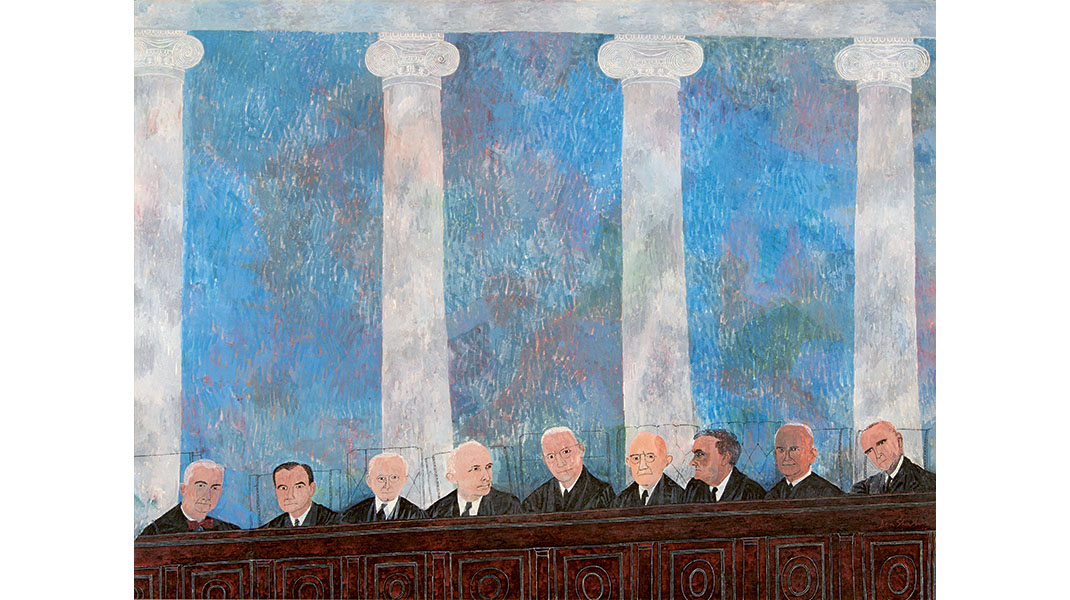
“This spring, the Jewish Museum presents the first U.S. retrospective in nearly half a century dedicated to social realist artist and activist Ben Shahn (1898-1969). Ben Shahn, On Nonconformity examines the prolific and progressive artist’s commitment to chronicling and confronting crucial issues of his era, spanning from the Great Depression to the Vietnam War, as well as his exploration of spirituality and Jewish texts. Featuring 175 artworks and objects from the 1930s to the 1960s, including paintings, mural studies, prints, photographs, commercial designs, and ephemera, the exhibition highlights the enduring relevance of Shahn’s art across media, while revealing new insights into the complexity of his aesthetic and his decisive shift from documentary to allegorical and poetic styles in pursuit of a visual language that would resonate widely.” — Jewish Museum

Ben Shahn, On Nonconformity offers a reappraisal of the artist through a contemporary lens,” said Dr. Laura Katzman, guest curator. “Shahn’s understanding of art’s critical role in the perpetual struggle for a more just future resonates powerfully today. The exhibition invites visitors to examine the issues that were important to Shahn through our modern understanding of social justice. It also uplifts the richness and complexity of his aesthetic, which drew inspiration from various artistic movements in the postwar era—from abstract expressionism to conceptual art—and capitalized on the reach of mass media, raising commercial production to a high art.”  

Installation views of “Ben Shahn, On Nonconformity” at the Jewish Museum, New York, May 23–October 12, 2025. Photos by Dario Lasagni.
 

“Ben Shahn is one of the great American artists of the twentieth century who believed in the value of dissent and the essential function of art in the life of a democratic society,” said Dr. Stephen Brown, Jewish Museum curator. “The first major presentation of his work in the U.S. in decades, the Jewish Museum exhibition is something of a homecoming for Shahn, who has been part of our collection since 1947 and who was educated and politicized in New York City.”

The exhibition is organized by Dr. Laura Katzman, guest curator, in collaboration with Dr. Stephen Brown, Jewish Museum curator, and is drawn from the recent retrospective curated by Dr. Katzman at the Museo Nacional Centro de Arte Reina Sofía, Madrid.”

Title image: Ben Shahn, Integration, Supreme Court, 1963, tempera on paper mounted on masonite, 35 ½ x 47 ½ in. (90.2 x 120.7 cm.) Des Moines Art Center Permanent Collections; Purchased with funds from the Edmundson Art Foundation, Inc., 1964.6. © 2025 Estate of Ben Shahn / Licensed by VAGA at Artists Rights Society (ARS), NY

Images courtesy Jewish Museum.

Nordic Echoes — Tradition in Contemporary Art at Scandinavia House, through August 2, 2025

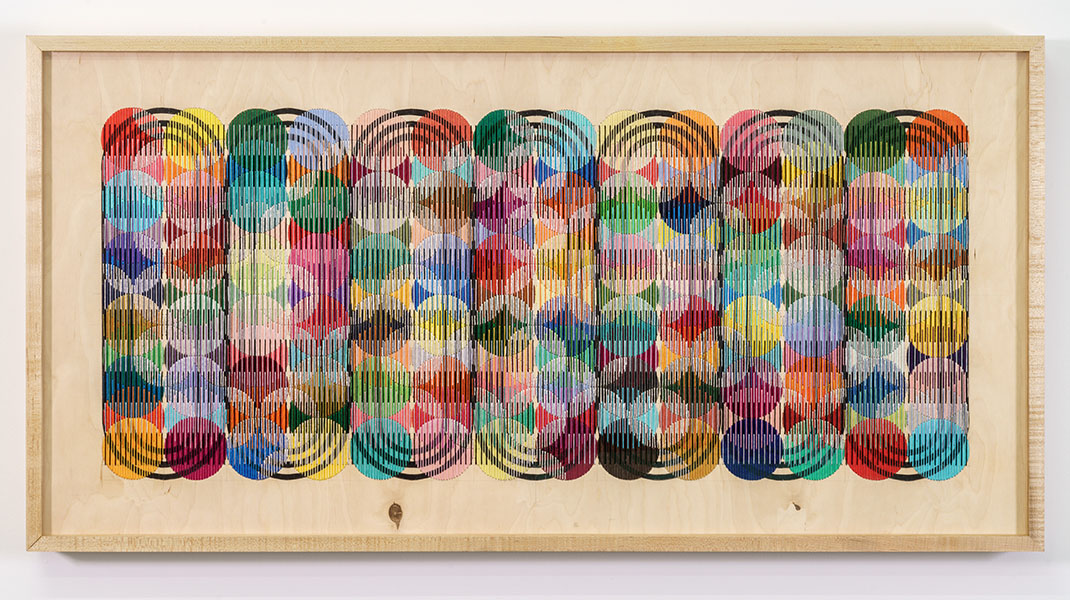
“Opening in April 5, 2025 at Scandinavia House: The Nordic Center in America, Nordic Echoes — Tradition in Contemporary Art is the first major traveling exhibition of contemporary Nordic folk arts and cultural traditions from the Upper Midwest. Featuring 55 works by 24 contemporary artists whose practices are informed by Nordic traditional skills, the exhibition showcases the malleability and persistence of these traditions in the U.S. Looking at painting and textile traditions as well as works in wood and metal, Nordic Echoes highlights how variations on traditional themes and innovations have led to the emergence of living, evolving forms. No longer static objects rooted in an imagined past, these works explore themes of identity and belonging as well as how traditions have been shaped by their U.S.-based environments.” — Scandinavia House

Installation views of Nordic Echoes — Tradition in Contemporary Art at Scandinavia House, April 5 through August 2, 2025. Photos by Eileen Travell.

Nordic Echoes: Tradition in Contemporary Art was organized by The American-Scandinavian Foundation (ASF) with partial support from The National Endowment for the Arts. It was curated by Sally Yerkovich, Director of Educational Exchange & Special Projects at The American-Scandinavian Foundation.

Title image: Tia Keobounpheng. WHO DO YOU THINK YOU ARE No. 11, 2023. Pencil, colored pencil, thread on wood. 24 4/5 x 49 x 2 3/4 inches. Photo by E.G. Schempf

Images courtesy Scandinavia House.

Kim En Joong: Colors of the Invisible at Domaine National de Chambord, through August 31, 2025

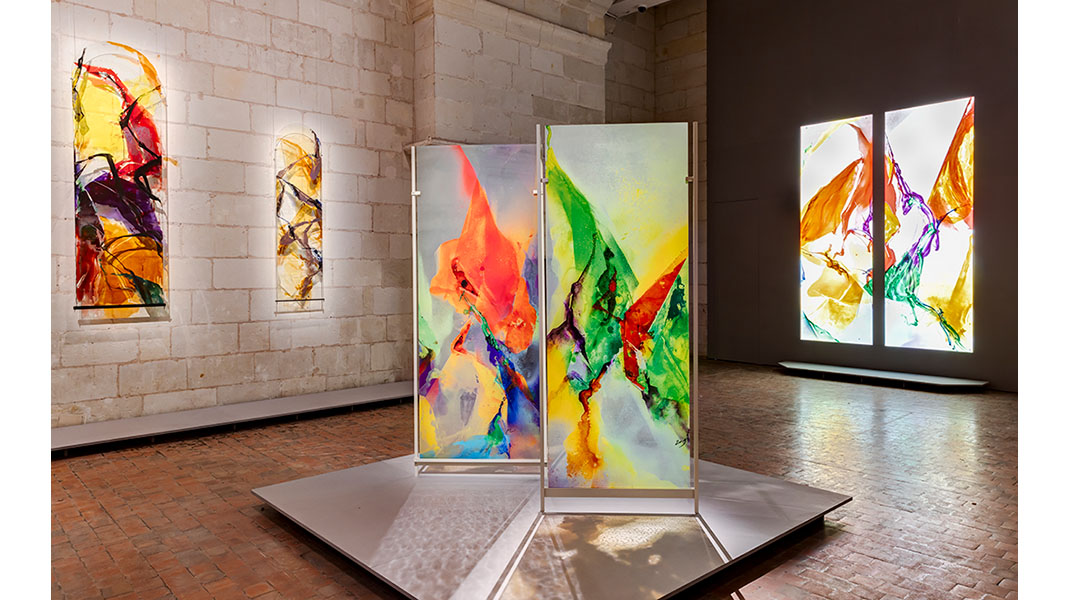
“For the first time, the Domaine National de Chambord is hosting a stained glass artist, Kim En Joong, a major figure in this centuries old art, for the exhibition Colors of the Invisible, from March 29 to August 31, 2025. The artist has been invited for a six-week residency at Chambord to create three canvases, one of which will be selected for the exhibition. Some of Father Kim’s most beautiful stained glass works, displayed in the transepts and rooms on the second floor of the château, resonate deeply with the spirit of a monument whose very architecture is an ode to the circulation of light. The painting created during the residency will be exhibited alongside around forty stained glass pieces, paintings, and ceramics.

After welcoming around thirty artists, including Lionel Sabatté, Wang Keping, Pablo Reinoso, and Julien des Monstiers, the Domaine National de Chambord now invites stained glass artist Kim En Joong for a residency, followed by an exhibition. Since 2011, Chambord has served as a creative laboratory, hosting artists and writers in residence, leading to unique exhibitions.” — Chambord

“The works presented in this exhibition are the result of more than 60 years of creation. In the sublime and serene space of the château de Chambord, visitors will discover the radiant light of the stained glass— a light that will illuminate not only the space but also their souls.” — Kim En Joong

Installation view of Chambord: Colors of the Invisible © Sophie Lloyd

“Chambord is a château filled with windows, some adorned with stained glass, with an architecture designed to circulate light. Father Kim En Joong’s works will find a luminous resonance here. By inviting a stained glass artist for the first time, we aim not only to highlight his talent but also to celebrate this everevolving art form that blends tradition and modernity.” Pierre-Gilles Girault, Director of Public Engagement and Cultural Programs at the Domaine national de Chambord

This exhibition is the result of a close collaboration between the Domaine National de Chambord and the International Stained Glass Center in Chartres, where Kim En Joong’s work was in the spotlight until February 2025. The center’s director, Jean-François Lagier, is the associate curator for the exhibition.

Images courtesy Domaine National de Chambord.

Collection in Focus: The Reach of Faith Ringgold at Guggenheim New York, May 9–September 14, 2025 

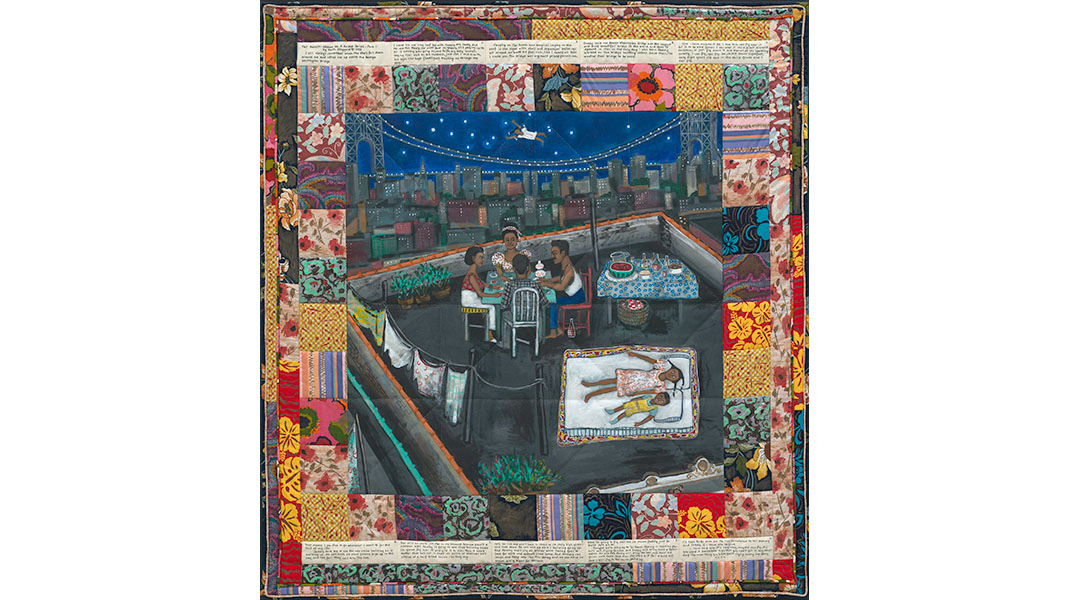
“The Guggenheim New York presents the Collection in Focus exhibition centering one of the most important works by the renowned artist, writer, and activist Faith Ringgold. The Reach of Faith Ringgold will spotlight Woman on a Bridge #1 of 5: Tar Beach (1988), the first in a series of five monumental quilts that tells the story of a young girl who soars from her Harlem rooftop, celebrating her own freedom and self-possession. Looking to one key work, the exhibition explores Ringgold’s critical position in the canon of art history, building off the modernists who preceded her, and inspiring those who followed.

Marking the Guggenheim’s first presentation of Woman on a Bridge #1 of 5: Tar Beach (1988), The Reach of Faith Ringgold will investigate her artistic forerunners and the lasting impact she has had on subsequent generations of artists. Tar Beach will be contextualized within the broader narrative of modern and contemporary art through works from the Guggenheim New York’s collection and the Peggy Guggenheim Collection. The exhibition will include pieces by modernists such as Marc Chagall, Jacob Lawrence, and Pablo Picasso, who preceded or were contemporaries of Ringgold, and contemporary American artists such as Sanford Biggers, Tschabalala Self, Mickalene Thomas, and Carrie Mae Weems whose work reflects her legacy.” — Guggenheim New York

Installation views, The Reach of Faith Ringgold, May 9–September 14, 2025, Solomon R. Guggenheim Museum, New York. Photos: David Heald © Solomon R. Guggenheim Foundation, New York.

“Ringgold left an indelible imprint on the art world through her practice and activism,” states Naomi Beckwith, Deputy Director and Jennifer and David Stockman Chief Curator, “and she also activated millions of children’s imaginations through her contributions as an author. The Guggenheim New York is utterly thrilled to center one of Ringgold’s iconic artworks, which was the subject of one of her award-winning books, in an exhibition that is sure to delight our visitors of every age.”

The Reach of Faith Ringgold is organized by Naomi Beckwith, Deputy Director and Jennifer and David Stockman Chief Curator.

Title image: Faith Ringgold, Woman on a Bridge #1 of 5: Tar Beach, 1988. Acrylic paint, canvas, printed fabric, ink, and thread, 74 5/8 × 68 1/2 in. (189.5 × 174 cm). Solomon R. Guggenheim Museum, New York  Gift, Mr. and Mrs. Gus and Judith Leiber 88.3620 © 2025 Anyone Can Fly Foundation/Artists Rights Society (ARS), New York. Photo: Ariel Ione Williams.

Images courtesy Guggenheim New York.

Clifford Ward: I’ll Make Me a World at Grounds For Sculpture, May 18, 2025 through January 11, 2026

“Grounds For Sculpture (GFS) presents Clifford Ward: I’ll Make Me a World, an exhibition guest curated by Noah Smalls, which are on view in the Museum Building from May 18, 2025 through January 11, 2026. Spanning over a decade of creative work, much of which was created at Clifford Ward’s studio on the GFS campus, this exhibition presents a rich tapestry of themes and concepts in his expansive practice. Ward is inspired by a diverse array of cultural influences, including contributions from the African diaspora, Australian Aboriginal people, and Native American and Māori cultures. His work often explores geometry, Cubism, mythology, and anthropomorphism. Together, these myriad influences, themes and concepts transcend temporal and geographical confines, resonating with the collective human experience.” — Grounds For Sculpture

“Having always felt the inclination to create, I made a significant piece one night using a long balloon wrapped around a cranberry juice jar, applied paper mâché, and painted it. This simple piece was the impetus that changed my life—leading to my becoming a professional artist,” remarked Clifford Ward. “Since then, I’ve expanded this technique to create wall reliefs and figures ranging from six feet to nine feet, and I look forward to sharing approximately 60 works that use this technique at my upcoming exhibition at Ground For Sculpture.”

Clifford Ward, Animism, 2013-2024, mixed media, dimensions variable, Collection of the Artist, photo: Bruce M. White
Clifford Ward, Animism (detail), 2013-2024, mixed media, dimensions variable, Collection of the Artist, photo:
Bruce M. White
Clifford Ward, Allegro Moderato, 2024, acrylic on canvas, 60 x 180 in, Collection of the Artist, photo: Bruce M. White
Clifford Ward, Within the News, 2024, woven newspaper, plaster bandage, acrylic paint, 96 x 48 x 4 inches; King from King and Queen Sarcophagi, 2005, plaster bandage, iridescent marbles, rice paper, lights, 83.5 x 28.5 x13 inches, Collection of the Artist, photo: Bruce M. White
Clifford Ward, Fluidity series, 2024, metal wire hanger, nylon stockings, acrylic paint, dimensions variable; Encaustic Bust, 2022, plastic, melted crayon, 32.5 x 12 x 7.5 inches; Ode to George 1, 2011, plaster bandage, rice paper, melted crayon, acrylic paint, 42 x 21 x 20 inches; Ode to George 2, 2011, plaster bandage, rice paper, melted crayon, acrylic paint, 50.5 x 19.5 x 28 inches, Collection of the Artist, photo: Bruce M. White
Clifford Ward, Ode to George 1, 2011, plaster bandage, rice paper, melted crayon, acrylic paint, 42 x 21 x 20 inches, Collection of the Artist, photo: Bruce M. White

“I am deeply honored to curate this exhibition alongside Clifford Ward, whose unwavering vision and dedication to his masterful artistic practice has been a constant source of inspiration throughout this project,” added the exhibition’s curator, Noah Smalls. “Much of the work Clifford has created over the past decade has never been exhibited before, and it is with great excitement that I look forward to sharing these extraordinary pieces with the GFS community and audiences beyond.”

Images courtesy Grounds For Sculpture.

Porcelain Garden: Vladimir Kanevsky at The Frick Collection, through October 6, 2025

“In honor of the reopening of The Frick Collection’s renovated Fifth Avenue buildings on April 17, 2025, the museum presents an installation of commissioned porcelain sculptures throughout its restored and newly built galleries. The display pays homage to a historical detail from the Frick’s original debut, which featured carefully curated floral arrangements—personally selected by Helen Clay Frick, daughter of the museum’s founder—that enhanced key galleries when they were unveiled to the public in December 1935. Inspired by her vision, this tradition is now reimagined with an installation of porcelain sculptures by artist Vladimir Kanevsky (b. 1951, Ukraine). Shown on both levels of the original Frick mansion, including in a suite of new second-floor galleries open to the public for the first time, the nineteen lifelike installations by Kanevsky will remain on view for six months.” — The Frick Collection

Vladimir Kanevsky (b. 1951, Ukraine). Cascading Roses, 2024–25. Installed in the Fragonard Room of The Frick Collection, New York. Parian body, copper, and terracotta. Courtesy of the artist. Photo: Joseph Coscia Jr.
Vladimir Kanevsky (b. 1951, Ukraine). Cherry Blossoms, 2024–25. Installed in the Oval Room of The Frick Collection, New York. Parian body, glazes, copper, and terracotta. Courtesy of the artist. Photo: Joseph Coscia Jr.
Vladimir Kanevsky (b. 1951, Ukraine). Lemon Tree, 2024–25. Installed in the Garden Court of The Frick Collection, New York. Soft-paste porcelain, parian body, glazes, and copper. Courtesy of the artist. Photo: Joseph Coscia Jr.
Vladimir Kanevsky (b. 1951, Ukraine). Tulip Stems, 2024–25. Installed in the Du Paquier Passage of The Frick Collection, New York. Soft-paste porcelain, glazes, overglaze, and copper. Courtesy of the artist. Photo: Joseph Coscia Jr.
Vladimir Kanevsky (b. 1951, Ukraine). Pomegranate Plant, 2024-25. Installed in the Gold-Grounds Room of The Frick Collection, New York. Soft-paste porcelain, glazes, copper and terracotta. Courtesy of the artist. Photo: Joseph Coscia Jr.
Vladimir Kanevsky (b. 1951, Ukraine). Black Poppies, 2024-25. Installed in the Walnut Room of The Frick Collection, New York. Soft-paste porcelain, black porcelain, glazes, copper and terracotta. Courtesy of the artist. Photo: Joseph Coscia Jr.

“As we reopen the Frick after a five-year closure, it felt only fitting to celebrate the occasion in a similar fashion to the 1935 opening,” stated Xavier F. Salomon, Deputy Director and Peter Jay Sharp Chief Curator, who organized the installation. “Vladimir Kanevsky’s exquisite porcelain creations allow us to honor this tradition—along with the museum’s important collections of historic porcelain and ceramics. His artistry bridges past and present, echoing the museum’s longstanding dedication to beauty and innovation.” 

Adds Kanevsky, “It is an honor to have my work featured during and beyond the Frick’s reopening celebrations. The museum, both presently and throughout its history, is an endless source of inspiration.

Title image: Vladimir Kanevsky (b. 1951, Ukraine). Camellia Branches, 2024–25. Installed in the Library Gallery of The Frick Collection, New York. Soft-paste porcelain, glazes, and copper. Courtesy of the artist. Photo: Joseph Coscia Jr.

Images courtesy The Frick Collection.

in situ: Refik Anadol at Guggenheim Bilbao, through October 19, 2025

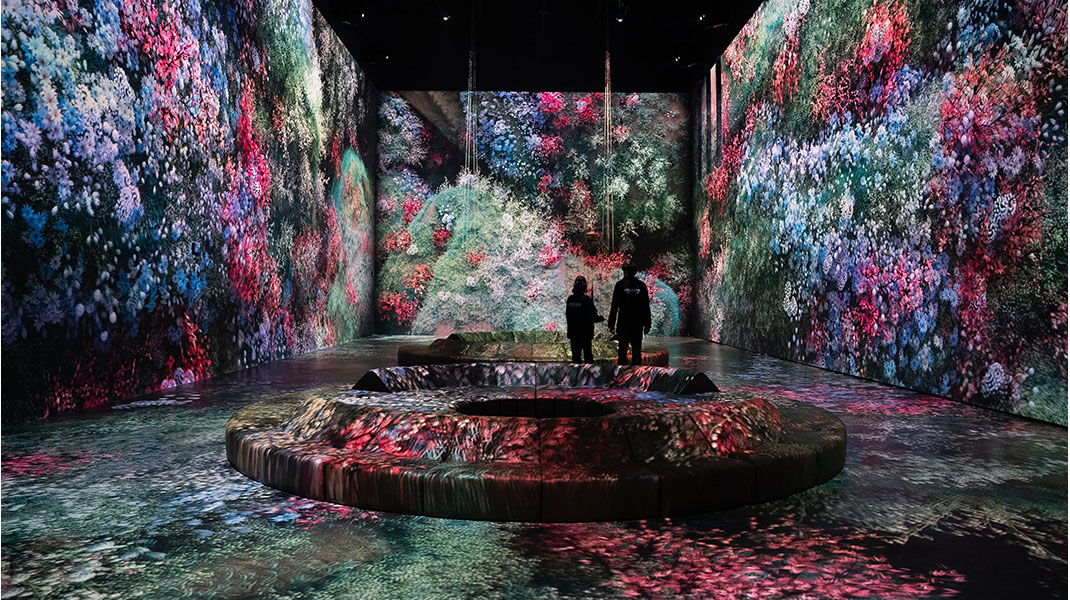
“This exhibition marks the launch of in situ, a new series dedicated to site-specific installations that push the boundaries of contemporary practices. Bringing together artists whose work spans visual art, technology, music, and performance, in situ explores new ways of perceiving and inhabiting space.

in situ: Refik Anadol presents Living Architecture: Gehry, a groundbreaking audiovisual installation that reimagines Frank Gehry’s architectural legacy through artificial intelligence (AI) and generative art. Developed by Refik Anadol Studio, the custom-built AI model Large Architecture Model (LAM) is based on advanced technology and has been trained for months on a vast archive of open-access imagery, sketches, and blueprints to transform Gehry’s architectural language into ever-changing landscapes of dynamic form, color, and movement. Augmenting this visual spectacle is an immersive soundscape composed by Kerim Karaoglu, blending AI-generated audio with material recordings captured within the Museum itself.” — Guggenheim Museum Bilbao

Refik Anadol Studio. Installation views of Living Architecture: Gehry at the Guggenheim Museum Bilbao © Refik Anadol, Bilbao 2025. Images courtesy Guggenheim Museum Bilbao.

The exhibition is supported by 1OF1 as Exhibition Partner; Euskaltel as Technology Partner, and with the collaboration of Google Cloud.

Images courtesy Guggenheim Museum Bilbao.

The New Art: American Photography, 1839 –1910 at The Metropolitan Museum of Art, New York, through July 20, 2025    

“The Metropolitan Museum of Art presents an adventurous new history of American photography from the medium’s birth in 1839 to the first decade of the 20th century. Drawn from the Museum’s William L. Schaeffer Collection—a magnificent recent promised gift to The Met by trustee Philip Maritz and his wife Jennifer—major works by lauded artists such as Josiah Johnson Hawes, John Moran, Carleton E. Watkins, and Alice Austen, will be presented in dialogue with extraordinary photographs by obscure or unknown practitioners made in small towns and cities from coast to coast. The exhibition’s many photographs by little-studied makers, early practitioners, and intrepid amateurs have been selected to reveal the artists’ ingenuity, aesthetic ambition, and lasting achievement. In some 275 photographs—most never before seen—The New Art: American Photography, 1839–1910 explores the nation’s shifting sense of self, driven by the immediate success of photography as a cultural, commercial, artistic, and psychological preoccupation. The presentation is on view from April 11 through July 20, 2025.” — The Met

Unknown Maker. Young Man with Rooster, 1850s. Daguerreotype with applied color. Case (open):
3 5/8 × 6 1/4 in. (9.2 × 15.9 cm). The Metropolitan Museum of Art, William L. Schaeffer Collection, Promised Gift of Jennifer and Philip Maritz, in celebration of the Museum’s 150th Anniversary.
Unknown Maker. Woman Wearing a Tignon, ca. 1850. Daguerreotype with applied color. Case (open): 3 1/8 × 7 1/4 in. (8 × 18.4 cm). The Metropolitan Museum of Art, William L. Schaeffer Collection, Promised Gift of Jennifer and Philip Maritz, in celebration of the Museum’s 150th Anniversary.
Unknown Maker. Musician with Lock of Hair, 1870s. Tintype with applied color. Case (open):
2 in. x 3 1/2 in. William L. Schaeffer Collection, Promised Gift of Jennifer and Philip Maritz, in celebration of the Museum’s 150th Anniversary.
Unknown Maker. Studio Photographer at Work, ca. 1855. Salted paper print from glass negative. 5 1/8 × 3 13/16 in. (13 × 9.7 cm). The Metropolitan Museum of Art, William L. Schaeffer Collection, Promised Gift of Jennifer and Philip Maritz, in celebration of the Museum’s 150th Anniversary.
Alice Austen (American, 1866–1952). Group on Petria, Lake Mahopac, August 9, 1888. Albumen silver print from glass negative. 6 × 8 1/8 in. (15.2 × 20.7 cm). The Metropolitan Museum of Art, William L. Schaeffer Collection, Promised Gift of Jennifer and Philip Maritz, in celebration of the Museum’s 150th Anniversary.
Chauncey L. Moore (American, died 1895). Young Man Laying on Roof, 1880s–90s. Albumen silver print. Mount: 4 1/4 × 6 1/2 in. (10.8 × 16.5 cm). The Metropolitan Museum of Art, William L. Schaeffer Collection, Promised Gift of Jennifer and Philip Maritz, in celebration of the Museum’s 150th Anniversary.

“Through an impressive array of 19th- and early 20th-century images that capture the complexities of a nation in the midst of profound transformation, this exhibition offers something new even for those well-versed in the history of photography,” said Max Hollein, The Met’s Marina Kellen French Director and Chief Executive Officer. “Thanks to the generosity of Jenny and Flip Maritz, we can study and celebrate these formerly hidden treasures by hundreds of both known and unknown makers finally ready for their close-ups. Our hope is to give these works their rightful place in the ever-expanding history of the medium.” 

Jeff L. Rosenheim, Joyce Frank Menschel Curator in Charge of the Department of Photographs, added, “The camera and its myriad democratic products—rivals to the greatest literature of the era—are clearly the origin of modern communication and global image-sharing today. If we want to forge a deeper appreciation of contemporary art and the role of the camera in the lives of today’s picture makers, we must recognize and respect the stunning visual power and authenticity of early American photography.”

The New Art: American Photography, 1839–1910 is curated by Jeff L. Rosenheim, Joyce Frank Menschel Curator in Charge of the Department of Photographs. Virginia McBride, Research Associate in the Department of Photographs, provided assistance.

Title image: Installation view of The New Art: American Photography, 1839–1910, on view April 11–July 20, 2025 at The Metropolitan Museum of Art. Photo by Eugenia Tinsley, Courtesy of The Met

Images courtesy The Metropolitan Museum of Art.    

Maestros and the Machines, from April 24, 2025 at Mercer Labs, Museum of Art and Technology

“Mercer Labs, Museum of Art and Technology, a pioneering cultural institution where art and technology converge, unveils Maestros and the Machines, an exhibition debuting April 24, 2025, that challenges the very essence of art and its relationship to time. In this groundbreaking exploration, Maestros and the Machines pushes boundaries, inviting visitors to imagine what the great maestros of the past – Mozart and Da Vinci to Hokusai – would have created if they had access to modern technology. Maestros and the Machines is a living, breathing dialogue between past and future, reimagining what art can be in a world where technology is a tool to the creative process.

Conceived and directed by artist Roy Nachum, Maestros and the Machines asks a provocative question:’What happens when the timeless mastery of iconic artists meets the disruptive power of modern technology?’ This exhibition reimagines masterpieces through technology – creating a living, evolving experience for the viewer. Art is not bound by time. It is immortal. The exhibition brings together the classical mastery of history’s greatest artists and experiments with cutting-edge digital tools, immersive soundscapes, and interactive installations, making art an experience in constant transformation.” — Mercer Labs

“Art has always been alive, ever evolving, and constantly shaped by new tools and perspectives,” says Nachum. “In Maestros and the Machines, we ask: What would these masters have made if they were alive today, equipped with the technology we now have? This exhibition is a conversation between the past and the future, where technology amplifies creativity and reveals new dimensions of what art can be.”

Installation views of Maestros and the Machines at Mercer Labs, Museum of Art and Technology, from April 24, 2025

Images courtesy Mercer Labs, Museum of Art and Technology.