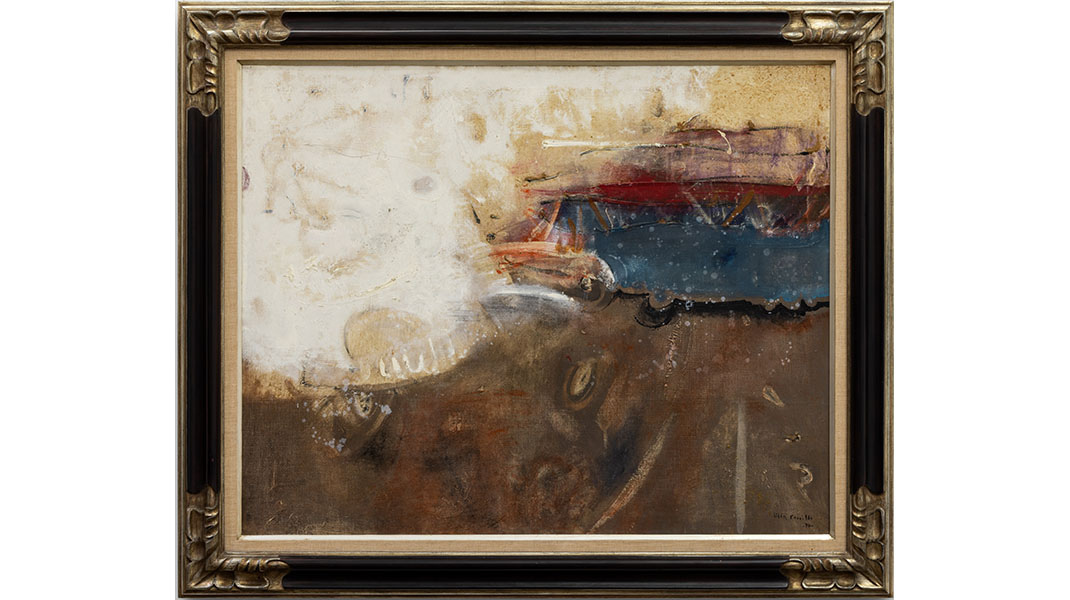
“Americas Society is pleased to announce the exhibition Lilia Carrillo: Ruptures and Premonitions, opening on May 13, 2026. Curated by Tobias Ostrander, this landmark show introduces the work of Lilia Carrillo (1930–1974) to a New York audience, positioning her as a central force of the postwar group of Mexican painters known as the Generación de la Ruptura or the Rupture Generation.
The show, which will be on view until August 1, 2026, features two dozen of her most accomplished paintings from 1961 until 1974, alongside a selection of archival photographs, letters, invitations, and publications which document her active role in the diverse and often-controversial cultural landscape of her time.” — Americas Society
Playa escondida (Hidden beach), 1961. Mixed medium on canvas. 59 x 70 4/5 in. (150 x 180 cm.) Rocío and Boris Hirmas Collection. LC_026. Photo Credit: Gerardo Landa RojanoContaminación primaveral (Spring pollution), 1968. Oil on canvas. 39 1/2 x 51 3/10 in. (100.5 x 130.5 cm.) Secretaría de Cultura / INBAL. Collection of the. Museo de Arte Moderno. LC_016. Photo: Gerardo Landa RojanoDetrás del muro (Behind the wall), 1968. Oil on canvas. 31 1/2 x 42 1/2 in. (80 x 108 cm.). Private Collection, Courtesy of Pablo Goebel Fine. Arts Gallery, Mexico City. LC_020. Photo Credit: Edher Moreno
“While Lilia Carrillo’s paintings dialogue with the gestural practices of her European informalist and North American Abstract Expressionist peers, they also allude these tendencies through the diversity of their mark-making and layered surfaces, maintaining an enigmatic uniqueness, one that additionally has no equivalent within the artist’s Generación de la Ruptura,” said Ostrander, who is the curator at large at Estrellita B. Brodsky and Latin American Art at Tate Modern.
“By focusing on ‘ruptures’ and ‘premonitions,’ the exhibition seeks to highlight the works’ mysterious and ritual character, while also addressing their references to the challenging environmental and political contexts in which they were made,” added the curator.
Title image: Premonición (Premonition), 1970. Acrylic on canvas. 31 1/2 x 39 2/5 x 4/5 in. (80 x 100 x 2 cm.). Courtesy of kurimanzutto, Mexico City / New York. LC_024. Photo Credit: Gerardo Landa Rojano
“Following exhibitions dedicated to Piero Gilardi (Tappeto natura, 2022) and Michelangelo Pistoletto (Welcome to New York, 2023–2024), Magazzino Italian Art continues its in-depth program focused on each of the artists associated with the Arte Povera movement through a series of focused exhibitions. Within this context, the new exhibition Tutto Boetti 1966–1993, opening to the public on April 26, 2026, will be presented in the Main Building, establishing a dialogue with the museum’s permanent Arte Povera collection.
Tutto Boetti 1966–1993 presents approximately 30 works by Alighiero Boetti (1940– 1994), beginning with a core group from the museum’s permanent collection, including a selection of early works from the 1960s, alongside loans from the Boetti estate and an important private collection. Among the works on display are several monumental pieces such as Mazzo di tubi (1966), Da mille a mille (1975), Insicuro Noncurante (1975–76), and the large kilim Alternando da uno a cento e viceversa (1993).
The exhibition will be complemented by a symposium on April 25, 2026, featuring leading curators, critics, and artists invited to reflect on Boetti’s legacy, affirming his central role as one of most influential figures in the history of contemporary art. The symposium is organized in collaboration with the Fondazione Alighiero e Boetti in Rome.
The title of the exhibition evokes the idea of a broad presentation of the artist’s research across nearly three decades of activity. At the same time, it explicitly alludes to the celebrated Tutto series, large textile compositions begun in the 1980s that juxtapose a dense weave of images and signs.” — Magazzino Italian Art
“This exhibition stems from Magazzino’s ongoing commitment to developing an increasingly precise understanding of our collection,” explains Nicola Lucchi, Director of Magazzino Italian Art. “We are preparing guided tours and educational workshops for schools that will accompany this project, expanding its educational reach. We also look forward with particular interest to the publication of the catalogue, which will allow us to further consolidate and disseminate this line of research.”
Nancy Olnick and Giorgio Spanu, co-founders of Magazzino Italian Art, state: “The historic nucleus of works by Alighiero Boetti presented here, brought together thanks to the important relationship we have developed over the years with Gianfranco Benedetti from Galleria Christian Stein, now allows for a full critical reassessment of a foundational moment in the artist’s career and in the history of Arte Povera. We are also very pleased with the collaboration of the Fondazione Alighiero e Boetti for the symposium and of all those who made significant loans possible, contributing in a substantial way to the completeness of the exhibition project.”
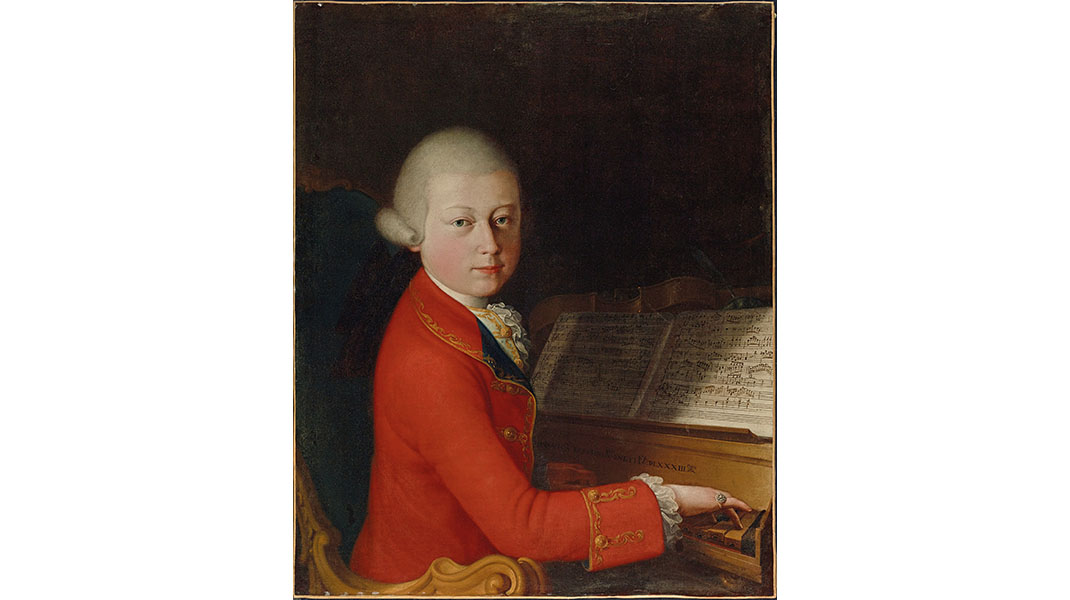
“In an unprecedented collaboration, the Morgan Library & Museum and the Mozarteum Foundation of Salzburg have partnered to organize Wolfgang Amadeus Mozart: Treasures from the Mozarteum Foundation of Salzburg, an exhibition that traces the extraordinary life and enduring legacy of Wolfgang Amadeus Mozart (1756–1791). On view March 13 through May 31, 2026, this two-gallery exhibition combines the Morgan’s significant holdings in Mozart manuscripts and first editions with remarkable objects, on view in the United States for the first time, from the Mozarteum Foundation of Salzburg. These include Mozart’s clavichord on which he composed The Magic Flute and his childhood violin, as well as famous portraits, letters, and personal objects of Mozart and his family.” — Morgan Library & Museum
“The Morgan is deeply grateful to the Mozarteum Foundation for its generous partnership and for opening its vaults so that we can present this comprehensive exhibition dedicated to one of the most significant figures in Western music,” said Colin B. Bailey, Katharine J. Rayner Director of the Morgan Library & Museum. “Mozart’s influence is still heard everywhere today, from piano lessons and concerts to children’s rhymes. Anchored around Mozart’s compositions, the exhibition will offer visitors an unprecedented opportunity to engage with the life and work of an artist whose music they recognize and hold dear.”
“The exhibition highlights the ways in which Mozart’s life and career were extraordinary even in his own time,” said Robinson McClellan, Mary Flagler Cary Curator of Music Manuscripts and Printed Music. “It gives insight into his environment and humanizes this great composer, illuminating his loves, passions, triumphs, and sorrows.”
Wolfgang Amadeus Mozart (1756–1791). Mozart’s earliest compositions [1761]. Andante in C (K. 1a), between February and April 1761. Musical Manuscript in the hand of Leopold Mozart . Allegro in C (K. 1b), between February and April 1761. Allegro in F (K. 1c), 11 December 1761. Minuet in F (K. 1d), 16 December 1761. The Morgan Library & Museum, Mary Flagler Cary Music Collection. Photography by Anthony Troncale
Michel-Barthélémy Ollivier (1712–1784). English Tea in the Salon des Quatre-Glaces at the Maison du Temple, 1770. Oil on canvas. Christopher J. Salmon Collection, New York. Formerly in the collection of Louis Philippe (1773–1850), Duc d’Orléans and future King of the French (r. 1830–48)
Pietro Antonio Lorenzoni (1721–1782). Mozart in Courtly Attire, Salzburg,1763 Oil on canvas. International Mozarteum Foundation Salzburg, Mozart Museums
Jean-Baptiste Delafosse (1721–1806), after Louis Carrogis de Carmontelle (1717–1806). The Mozart Family, Paris, 1764. Copperplate engraving. Christopher J. Salmon Collection, New York
Wolfgang Amadeus Mozart (1756–1791). Postscript to Leopold Mozart’s letter to Anna Maria and Maria Anna “Nannerl” Mozart, Wörgl, December 14, 1769. The Morgan Library & Museum. MLT M9397.M9395. Photography by Graham S. Haber
Wolfgang Amadeus Mozart (1756–1791). Letter to Leopold Mozart, April 4, 1787. Internationale Stiftung Mozarteum, Bibliotheca Mozartiana. Formerly in the collection of Maurice Sendak (1928–2012). International Mozarteum Foundaion, Salzburg
Wolfgang Amadeus Mozart (1756–1791). Piano Sonata No. 8 in A Minor (K. 310). Autograph manuscript, Paris, 1778. The Morgan Library & Museum, Robert Owen Lehman Collection, on deposit. Photography by Janny Chiu
Wolfgang Amadeus Mozart (1756–1791). “Non so più cosa son, cosa faccio” (I do not know what I am, what I do). Aria from Le nozze di Figaro (The Marriage of Figaro, K. 492/6). Arranged for piano, violin, and voice by Mozart. Autograph manuscript, Vienna, late 1785/early 1786. The Morgan Library & Museum, Heineman Music Collection MS 157. Photography by Anthony Troncale
Josef Gail (1755–1830). Set design for act 2, scene 4, in the original production of Die Zauberflöte (The Magic Flute, K. 620), Vienna, 1791. Graphite and ink on paper. Christopher J. Salmon Collection, New York. Formerly in the Mayr-Fajt Collection of XVII and XIX Century Stage Designs
Title image: Attributed to Giambettino Cignaroli (1706–1770). Mozart in Verona [1770]. Oil on canvas. On loan to the Mozarteum from a private collection.International Mozarteum Foundation, Salzburg
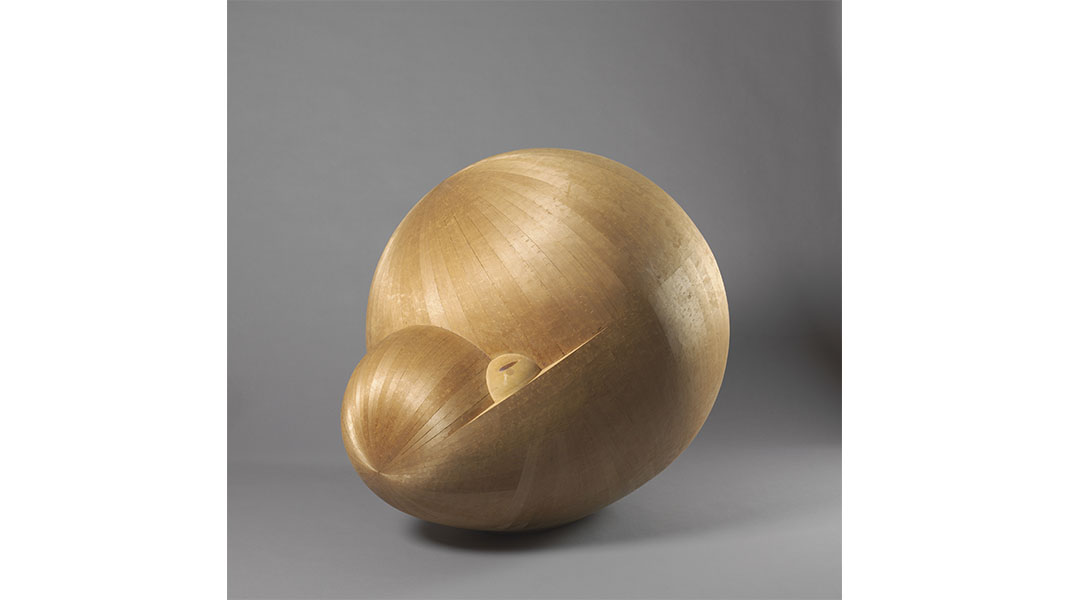
“The Cleveland Museum of Art (CMA) is pleased to present, a career survey of the preeminent sculptor Martin Puryear (American, b. 1941). For more than half a century, Puryear has captivated the public with works of astonishing beauty and elaborate craftsmanship whose sources of inspiration range from global cultures and social history to the natural world. Co-organized with the Museum of Fine Arts, Boston (MFA), Martin Puryear: Nexus is the first comprehensive exhibition of the artist’s work in nearly two decades. Assembling some 50 works from across Puryear’s career, the exhibition focuses on his use of a rich variety of materials and media—from sculptures in wood, rawhide, glass, marble, and metal, to rarely shown drawings, prints, and maquettes.” — The Cleveland Museum of Art
“Martin Puryear is best known for his sculptures, which are startingly beautiful abstract forms. But beyond their beauty, these works invite us to see with fresh eyes the world that we inhabit—they are timeless and contemporary all at once,” reflected Emily Liebert, Lauren Rich Fine Curator of Contemporary Art and Chair of Art of the Americas and Modern and Contemporary Art. “Puryear’s hands have been on every sculpture that leaves his studio. The thought, care, and precision lavished on each work of art by its maker is palpable.”
The exhibition is co-curated by Emily Liebert, Lauren Rich Fine Curator of Contemporary Art and Chair of Art of the Americas and Modern and Contemporary Art, The Cleveland Museum of Art, and Reto Thüring, Head of Culture at the Foundation for Art, Culture, and History in Winterthur, Switzerland and former Beal Family Chair, Department of Contemporary Art at the Museum of Fine Arts, Boston with Gabriella Shypula, Leigh and Mary Carter Director’s Research Fellow, The Cleveland Museum of Art. The MFA’s presentation is organized by Ian Alteveer, Beal Family Chair, Department of Contemporary Art with Daisy Alejandre, Curatorial Assistant, Contemporary Art. The High’s presentation is organized by Michael Rooks, Wieland Family Senior Curator of Modern & Contemporary Art.
“Raphael: Sublime Poetry, on view at The Metropolitan Museum of Art March 29 to June 28, 2026, will be the first comprehensive, international loan exhibition in the United States on Raphael (Raffaello di Giovanni Santi; 1483–1520), considered one of the greatest artists of all time. This landmark exhibition will explore the full breadth of his life and career, from his origins in Urbino to his prolific years in Florence, where he began to emerge as a peer to Leonardo da Vinci and Michelangelo, to his final decade at the papal court in Rome. Bringing together more than 200 works, including over 170 of Raphael’s most important drawings, paintings, tapestries, and decorative arts from public and private collections around the world, the exhibition will offer a fresh perspective on this defining figure of the Italian Renaissance, presenting his renowned masterpieces alongside rarely seen treasures to reveal an extraordinarily creative mind.”— The Metropolitan Museum of Art
Installation views of Raphael: Sublime Poetry, on view March 29–June 28, 2026 at The Metropolitan Museum of Art. Photos by Eileen Travell, Courtesy of The Met.
“This unprecedented exhibition will offer a groundbreaking look at the brilliance and legacy of Raphael, a true titan of the Italian Renaissance,” said Max Hollein, The Met’s Marina Kellen French Director and Chief Executive Officer. “Visitors will have an exceptionally rare opportunity to experience the breathtaking range of his creative genius through some of the artist’s most iconic and seldom loaned works from around the globe—many never before shown together.”
“The seven-year journey of putting together this exhibition has been an extraordinary chance to reframe my understanding of this monumental artist,” said Carmen Bambach, the Marica F. and Jan T. Vilcek Curator in The Met’s Department of Drawings and Prints. “It is a thrilling opportunity to engage with his unique artistic personality through the visual power, intellectual depth, and tenderness of his imagery.”
Raphael: Sublime Poetry is curated by Carmen C. Bambach, the Marica F. and Jan T. Vilcek Curator in the Department of Drawings and Prints at The Metropolitan Museum of Art.
Title image: Raphael (Raffaello Sanzio or Santi), Italian, Urbino 1483–1520 Rome. The Virgin and Child with the Infant Saint John the Baptist in a Landscape (The Alba Madonna), ca. 1509-11. Oil on canvas, transferred from wood. 37 3/16 in. (94.5 cm). Framed: 55 1/4 in. x 6 1/4 in. (140.3 x 15.9 cm). National Gallery of Art, Washington, D.C. (1937.1.24). Lender Obj. No.: 1937.1.24
“Opening March 8, the Whitney Museum of American Art presents Whitney Biennial 2026, the 82nd edition of the Museum’s landmark exhibition series and the longest-running survey of American art. Featuring fifty-six artists, duos, and collectives across most of the Museum’s galleries, the Biennial is accompanied by a robust schedule of performance and public programs at the Museum and online. Co-organized by Marcela Guerrero and Drew Sawyer, the exhibition brings together artists working across media and disciplines, reflecting evolving notions of American art.
Whitney Biennial 2026 offers a vivid, atmospheric survey shaped by a moment of profound complexity. The work on view examines varied forms of relationality, from interspecies and familial kinships to geopolitical entanglements, technological affinities, shared mythologies, and the infrastructures that support and constrain contemporary life. Rather than offering a definitive answer to life today, the exhibition foregrounds mood and texture, inviting visitors into environments that evoke tension, tenderness, humor, and unease, while proposing imaginative, unruly, and unexpected forms of coexistence.”— Whitney Museum of American Art
Whitney Biennial 2026 is co-organized by Whitney curators Marcela Guerrero, DeMartini Family Curator, and Drew Sawyer, Sondra Gilman Curator of Photography, with Beatriz Cifuentes, Biennial Curatorial Assistant, and Carina Martinez, Rubio Butterfield Family Fellow.
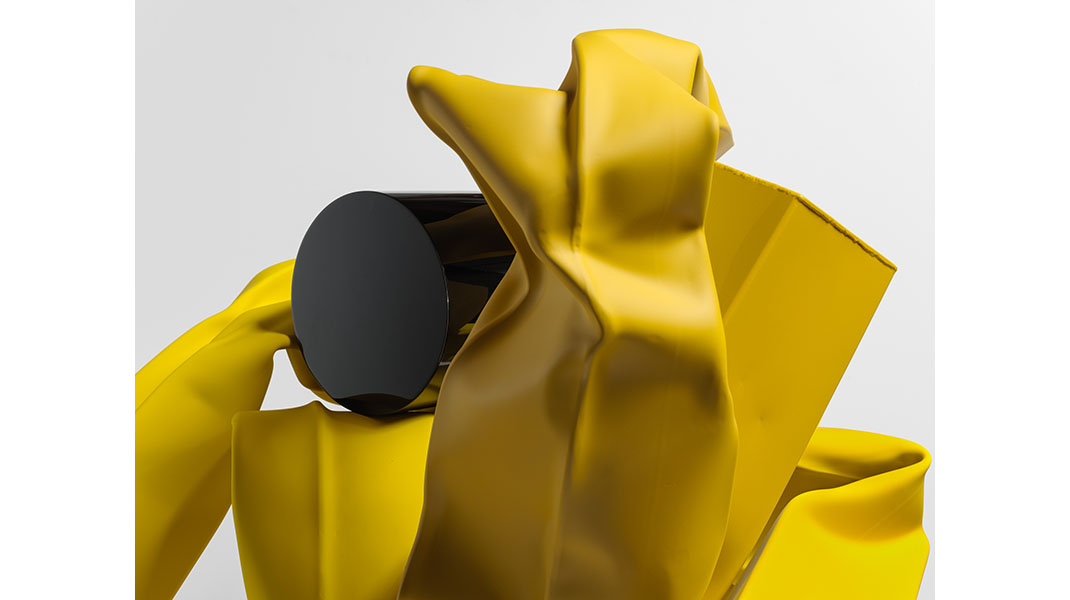
“Carol Bove is the first museum survey and largest exhibition to date of the work of American artist Carol Bove (b. 1971, Geneva, Switzerland; lives and works in New York). The presentation transforms the entire Frank Lloyd Wright–designed rotunda, with sculptures, installations, paintings, and works on paper integrated into an exhibition design that foregrounds the unique spatial dynamics of Wright’s architecture. It traces pivotal shifts in the artist’s career across more than 25 years and debuts two new bodies of work: a monumental group of her steel compositions known as ‘collage sculptures’ conceived for the space and a series of wall-mounted aluminum panel works. Bove’s inventive practice ranges widely, from assemblages of paperback books and intimate paper collages to towering metal sculptures. She explores the workings of perception through her experiments with surface, color, scale, and space, inviting viewers into moments of heightened imaginative awareness.”— Guggenheim New York
As Katherine Brinson, Daskalopoulos Senior Curator of Contemporary Art and Director of Global Initiatives, states, “This survey exhibition marks the first opportunity to see the full arc of Bove’s career, putting her early and more recent bodies of work in generative dialogue. At the same time, it coheres into a single artistic statement, animating the Frank Lloyd Wright spiral with color and form while creating opportunities for rest and active play.”
Carol Bove is organized by Katherine Brinson, Daskalopoulos Senior Curator of Contemporary Art and Director of Global Initiatives, with support from Charlotte Youkilis, Curatorial Assistant, Exhibitions, and Bellara Huang, former Curatorial Assistant, Exhibitions.
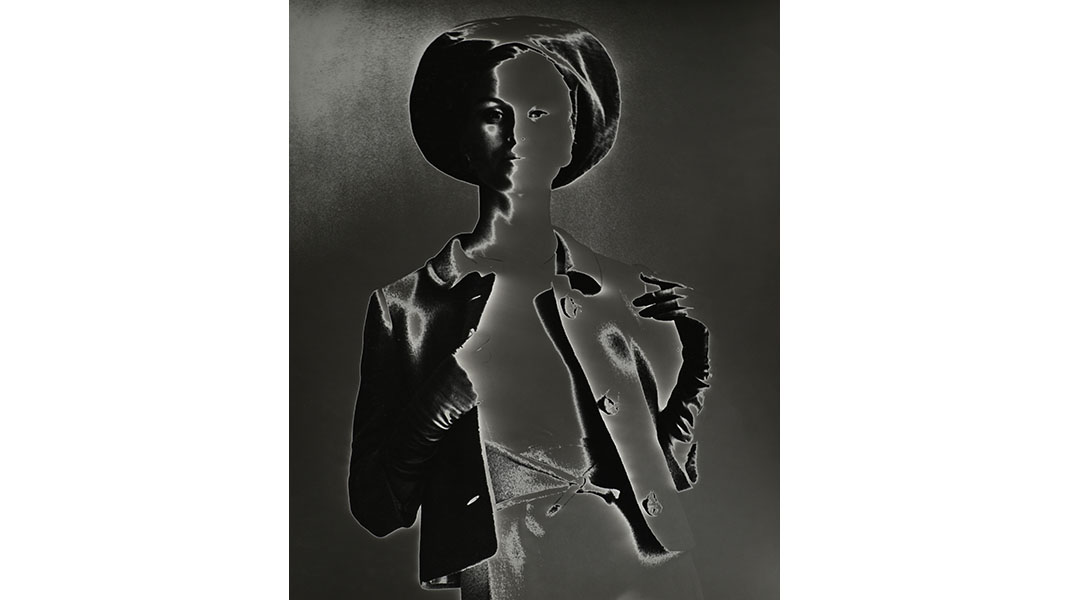
“The Metropolitan Museum of Art introduces an exhibition of daring work by the fashion photographer and art director Lillian Bassman (American, 1917–2012). Lillian Bassman: Bazaar and Beyond, on view through July 26, 2026, presents Bassman’s provocative vision for the mid-century American magazine. In this exhibition of more than 60 works are inventive layout designs, editorial assignments, and darkroom experiments with which Basman advanced new possibilities for photography in print.”— The Met
“Lillian Bassman: Bazaar and Beyond shows an outstanding photographer and trailblazing art director transforming magazine pages into a premier artistic project of experimentation and impact,” said Max Hollein, The Met’s Marina Kellen French Director and Chief Executive Officer. “We are proud to continue to celebrate extraordinary fashion photography as a catalyst of profound innovation and expression.”
“Lillian Bassman: Bazaar and Beyond represents a homecoming of sorts for Bassman, who spent much of her free time exploring The Met. When she began her career in fashion photography, she had no formal training in design houses or haute couture; instead, she encountered an entire history of dress unfolding in the galleries of the Museum. Recalling frequent visits with her husband, she later observed, ‘We were only interested in getting our education from The Met. That’s where I immersed myself in fashion.’ Decades later, this exhibition places her work back in conversation with the collections that first inspired it.” — The Met
Lillian Bassman: Bazaar and Beyond is curated by Virginia McBride, Assistant Curator in the Department of Photographs at The Metropolitan Museum of Art. Works from the Estate of Lillian Bassman are the gift of Bassman’s children, Lizzie and Eric Himmel. This acquisition was assembled by Mia Fineman and Virginia McBride, Curator in the Department of Photographs.
“This winter, Cooper Hewitt, Smithsonian Design Museum will present “Art of Noise,” an exhibition celebrating the groundbreaking designs that have shaped how people experience music over the past century. Organized by the San Francisco Museum of Modern Art (SFMOMA) and adapted to the history of the New York music scene for its East Coast presentation, ‘Art of Noise’ will be on view at Cooper Hewitt Feb. 13, 2026, through Aug. 16, 2026. Central to the exhibition’s experience and located on the first floor of Cooper Hewitt will be an installation of a large-scale, handmade, audio system by multi-disciplinary artist Devon Turnbull. The ‘HiFi Pursuit Listening Room Dream No. 3’ will open to the public Deccember 12.
From concert posters to record albums, phonographs to digital music players, handheld radios to sound systems, ‘Art of Noise’ takes visitors on an exploration of how design has transformed people’s relationship to music over the past 100 years. On view across the museum’s entire third-floor gallery, the exhibition will feature more than 300 artworks drawn largely from the collections of Cooper Hewitt and SFMOMA, as well as Stockholm-based studio teenage engineering’s unique choir installation and Turnbull’s immersive listening room.”— Cooper Hewitt
Stereo Chest, 1973; Designed and made by Wendell Castle (American, 1932-2018); Stack-laminated and carved walnut, leather, metal, rubber, plastic, electronic components; Dual 1229 turntable, Kenwood model KR-5150 receiver; H x W x D (open): 150 x 109.2 x 76 cm (59 1/16 x 43 x 29 15/16 in.); H x W x D (closed): 113.3 x 109.2 x 55.9 cm (44 5/8 x 43 x 22 in.); Cooper Hewitt, Smithsonian Design Museum; Gift of Linda and Irwin R. Berman, 2005-9-1-a/e; Photo: Ellen McDermott
Model 566 Bluebird Radio, 1934; Designed by Walter Dorwin Teague (American, 1883–1960); Manufactured by Sparks-Withington Co. (Jackson, Michigan, USA); Glass, chrome-plated steel, wood, paint, textile, electronic components; H x W x D: 36.2 × 36.8 × 17.8 cm (14 1/4 in. × 14 1/2 in. × 7 in.); Cooper Hewitt, Smithsonian Design Museum; Gift of George R. Kravis II, 2018-22-1; Photo: Matt Flynn
Thilo Oerke and Rosita Tonmöbel, Rosita Vision 2000, 1971; San Francisco Museum of Modern Art, Accessions Committee purchase, by exchange, through a gift of Michael D. Abrams; photo: Don Ross Francisco Museum of Modern Art, Accessions Committee purchase, by exchange, through a gift of Michael D. Abrams; photo: Don Ross
Poster, Grammo-Grafik [Record Graphics], 1957; Gottlieb Soland (Swiss, born 1928) for Kunstgewerbemuseum (Zurich, Switzerland); Lithograph on wove paper; 100.2 × 70.3 cm (39 7/16 × 27 11/16 in.); Cooper Hewitt, Smithsonian Design Museum; Gift of Sara and Marc Benda, 2009-12-19; Photo: Matt Flynn
Poster, 11th Summer Jazz Festival, 1979; Takenobu Igarashi (Japanese, 1944–2025) for Nippon Cultural Broadcasting, Inc. (Tokyo, Japan); Printed by KY Printing Co. Ltd. (Japan); Lithograph on paper; 72.8 × 51.5 cm (28 11/16 × 20 1/4 in.); Cooper Hewitt, Smithsonian Design Museum; Gift of Takenobu Igarashi, 2018-18-14; Photo: Matt Flynn
Poster, Chambers Brothers Band, Neon Rose #12; Victor Moscoso (Spanish, active USA, born 1936); Published by Neon Rose (San Francisco, California, USA); Printed by Graphic Arts of Marin (California, USA) and Cal Litho (California, USA); Lithograph on wove paper; 51 × 36 cm (20 1/16 × 14 3/16 in.); Cooper Hewitt, Smithsonian Design Museum; Gift of Sara and Marc Benda, 2009-12-23; Photo: Matt Flynn
“Music is the soundtrack to our lives, and design is at the center of how we experience it,” said Maria Nicanor, director of Cooper Hewitt. “Through iconic works that many will be able to trace back to their own memories, ‘Art of Noise’ underscores how design shapes the very emotions of our auditory encounters. We are grateful for our collaboration with SFMOMA and curator Joseph Becker to bring this exciting exhibition to the East Coast. From teenage engineering’s unique choir installation to Devon Turnbull’s immersive listening room, audiophiles will mark ‘Art of Noise’ as the not-to-be-missed sonic event of the season.”
“This exhibition invites visitors to reflect on our collective experience of music and the ways we connect with it through dynamic, evocative and often cutting-edge design,” said Joseph Becker, curator of architecture and design at SFMOMA. “Building on its widely attended presentation at SFMOMA, we’re thrilled to bring ‘Art of Noise’ to the East Coast and introduce new elements that capture influential moments from New York’s music scenes.”
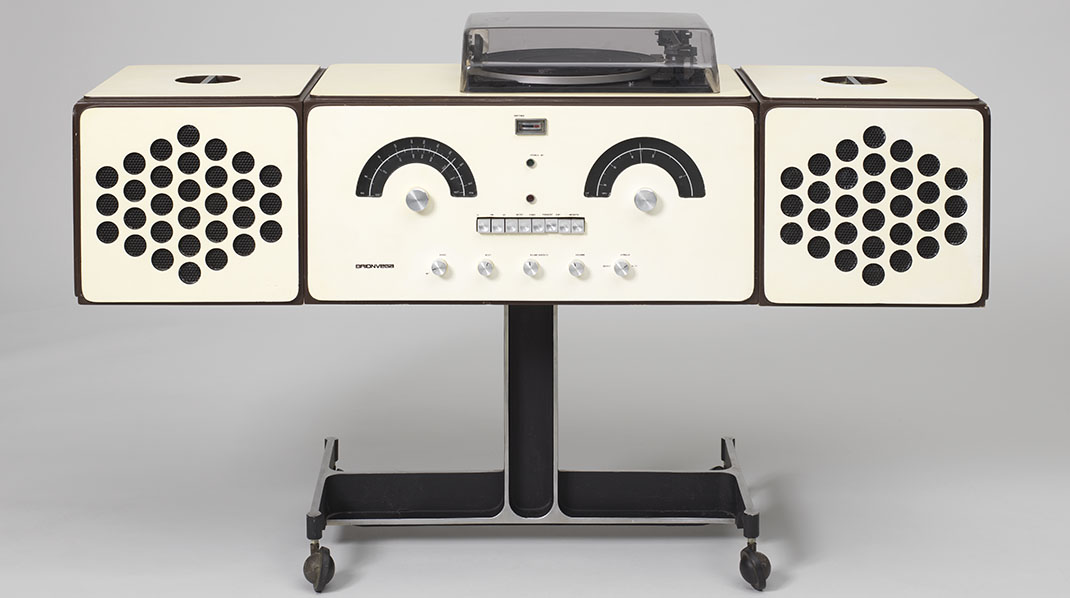
ITitle Image: RR-126 Radio-Phonograph, 1965; Designed by Achille Castiglioni (Italian, 1918-2002) and Pier Giacomo Castiglioni, (Italian, 1913-1968); Manufactured by Brionvega, S.p.A (Milan, Italy); Plywood, plastic, aluminum, polycarbonate, electronic components; H x W x D (speakers on sides): 46.5 × 121 × 36.5 cm (18 5/16 × 47 5/8 × 14 3/8 in.); H x W x D (speakers on top): 92.5 × 61.5 × 36.5 cm (36 7/16 × 24 3/16 × 14 3/8 in.); Cooper Hewitt, Smithsonian Design Museum; Gift of George R. Kravis II, 2018-22-96-a/c; Photo: Matt Flynn.
Images courtesy Cooper Hewitt, Smithsonian Design Museum.
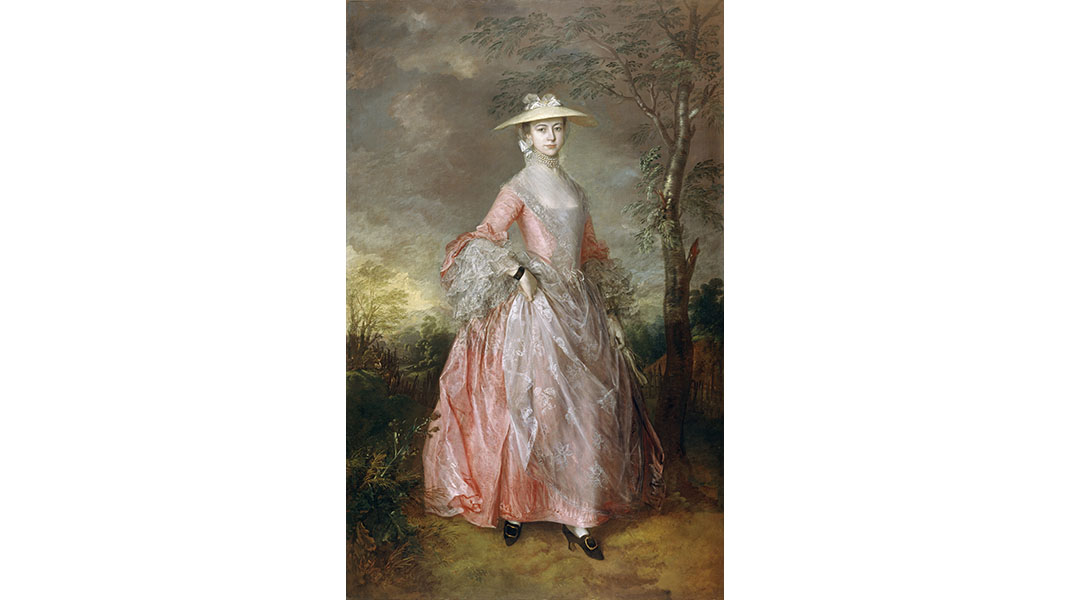
“The Frick Collection presents its first special exhibition dedicated to the English artist Thomas Gainsborough, and the first devoted to his portraiture ever held in New York. Displaying more than two dozen paintings, the show explores the richly interwoven relationship between Gainsborough’s portraits and fashion in the eighteenth century. The works included represent some of the greatest achievements from every stage of this period-defining artist’s career, drawn from the Frick’s holdings and from collections across North America and the United Kingdom.
The trappings and trade of fashion filled Gainsborough’s world—in magazines and tailor shops, at the opera and on promenades—and his portraits were at the heart of it all. This exhibition invites visitors to consider not only the clothing the artist depicted in his paintings, but also the role of his canvases as both records of and players in the larger conception of fashion: encompassing everything from class, wealth, labor, and craft to formality, intimacy, and time. Recent technical investigations also shed light on Gainsborough’s artistic process, including connections to materials—textiles, dyes, cosmetics, jewelry—that fueled the fashion industry” — The Frick Collection
Installation view of Gainsborough: The Fashion of Portraiture at The Frick Collection. Photo: Joseph Coscia Jr.Installation view of Gainsborough: The Fashion of Portraiture at The Frick Collection. Photo: Joseph Coscia Jr.Installation view of Gainsborough: The Fashion of Portraiture at The Frick Collection. Photo: Joseph Coscia Jr.Installation view of Gainsborough: The Fashion of Portraiture at The Frick Collection. Photo: Joseph Coscia Jr.Installation view of Gainsborough: The Fashion of Portraiture at The Frick Collection. Photo: Joseph Coscia Jr.Installation view of Gainsborough: The Fashion of Portraiture at The Frick Collection. Photo: Joseph Coscia Jr.Installation view of Gainsborough: The Fashion of Portraiture at The Frick Collection. Photo: Joseph Coscia Jr.Installation view of Gainsborough: The Fashion of Portraiture at The Frick Collection. Photo: Joseph Coscia Jr.
Gainsborough: The Fashion of Portraiture is organized by Aimee Ng, the museum’s Peter Jay Sharp Chief Curator. Stated Ng, “The spectacular and at times, to modern eyes, absurd fashions in portraits by Thomas Gainsborough continue to fascinate viewers today. The appeal of these demonstrations of taste, status, and wealth persists in tension with increased recognition, over the last few decades, of the injustices that made such extravagance possible. This exhibition necessarily deals with clothing and personal attire, while exploring how fashion was understood in Gainsborough’s time, how it touched every level of society, and how portraiture itself was as much a construction and invention as a sitter’s style.”
“The Morgan Library & Museum presents Caravaggio’s ‘Boy with a Basket of Fruit‘ in Focus, celebrating the extraordinary loan of this important early masterpiece by Michelangelo Merisi da Caravaggio (1571–1610) from the Galleria Borghese in Rome. On view from January 16 through April 19, 2026, the exhibition showcases what can be considered Caravaggio’s first masterpiece alongside a group of ten works that place the painting in context, from the artist’s influences to those he influenced.
Trained in his native Lombardy, Caravaggio brought to Rome a tradition of naturalism that stretched back to Leonardo da Vinci’s work in Milan. He combined this tradition with a revolutionary approach to painting that shattered the illusion of art and celebrated the artifice of the studio. Boy with a Basket of Fruit (ca. 1595), in which these key elements of Caravaggio’s art come together for the first time, marks the beginning of a revolution in Italian painting.”— The Morgan Library & Museum
Gian Lorenzo Bernini (1598–1680). Portrait of Cardinal Scipione Borghese, ca. 1632. Red chalk over graphite. The Morgan Library & Museum, IV, 176. Photography by Steven H. Crossot.
Attributed to Marco d’Oggiono (ca. 1467–1524). Girl with Cherries, ca. 1491–95. Oil on panel. The Metropolitan Museum of Art, Marquand Collection, Gift of Henry G. Marquand, 1890, 91.26.5.
Giuseppe Arcimboldo (1527–1593). Four Seasons in One Head, ca. 1590. Oil on panel. Courtesy National Gallery of Art, Washington, Paul Mellon Fund.
Rutilio Manetti (1571–1639). A Life Study: A Monk Sleeping Against a Pile of Books, ca. 1616. Red chalk. The Morgan Library & Museum, 2019.102. Photography by Janny Chiu.
Bartolomeo Cavarozzi (1587–1625). Basket of Fruit, ca. 1620. Oil on canvas. The Metropolitan Museum of Art, Bequest of Errol M. Rudman, 2020, 2020.263.5.
“Caravaggio captures the imagination in a way that almost no other artist can,” said Colin B. Bailey, Katharine J. Rayner Director of the Morgan Library & Museum. “We are exceptionally fortunate to be able to bring this masterpiece from the Galleria Borghese to share with visitors in New York for the first time in the twenty-first century, accompanied by works that illuminate his impact on the field of painting.”
“Boy with a Basket of Fruit marks a turning point in Italian painting,” said John Marciari, Charles W. Engelhard Curator, Department Head of Drawings and Prints, and Director of Curatorial Affairs. “It is a linchpin between the naturalism of Caravaggio’s sources and his radical interventions in exposing the artifice of painting. To see this painting in context is to understand the revolution it represents.”
Caravaggio’s“Boy with a Basket of Fruit” in Focus is curated by John Marciari, Charles W. Engelhard Curator, Department Head of Drawings and Prints, and Director of Curatorial Affairs. It is organized by the Morgan Library & Museum in collaboration with the Foundation for Italian Art & Culture (FIAC).
“This fall, Cooper Hewitt, Smithsonian Design Museum will present “Made in America: The Industrial Photography of Christopher Payne,” an exhibition featuring Payne’s intricately detailed photography of America’s factories. On view from Dec. 12 through Oct. 4, 2026, the exhibition brings together more than 70 large-format photographs captured by Payne over a decade-long photographic journey to learn more about the craft of both industrial and artisanal making in the United States.
Recently published in the book Made in America: The Industrial Photography of Christopher Payne (Abrams, 2023), Payne’s photographs highlight the traditional craftsmanship behind the creation of musical instruments, flags, footballs and pinball machines, as well as the intricate hand processes still critical to creating the most advanced products, ranging from microchips to the Giant Magellan Telescope. The exhibition also will feature new photographic works not seen before, including images of a Herman Miller furniture factory in Grand Rapids, Michigan; New Balance sneakers being made in Lawrence, Massachusetts; and Alstom high-speed rail trains in Hornell, New York.” — Cooper Hewitt
Sanding infused fiberglass inside a wind turbine blade shell, 2022. Photographed by Christopher Payne (American, born 1968). LM Wind Power (Grand Forks, North Dakota). Courtesy of the artist.American flags in production on a rotary screen printer, 2018. Photographed by Christopher Payne (American, born 1968). Annin Flagmakers (South Boston, Virginia). Courtesy of the artist.Wool carders, 2012. Photographed by Christopher Payne (American, born 1968). S & D Spinning Mill (Millbury, Massachusetts). Courtesy of the artist.
Milling paint, 2024. Photographed by Christopher Payne (American, born 1968) Utrecht Art Supplies (Brooklyn, New York). Courtesy of the artist
Pastel cores used for colored pencils, 2017. Photographed by Christopher Payne (American, born 1968). General Pencil Company (Jersey City, New Jersey). Courtesy of the artist
Piano rims in the rim conditioning room, 2011. Photographed by Christopher Payne (American, born 1968). Steinway & Sons (Astoria, New York). Courtesy of the artist
“Payne’s photographs satisfy our deep curiosity to know how things are made, revealing both the essence of the work being performed and the grace of a skilled maker who brings craft, passion and technological savvy to the process,” said Susan Brown, the exhibition’s curator. “Through this exhibition, which has been years in the making, visitors will glimpse a world that is often hidden from view, from the New England textile mills that were among the country’s founding industries to the newest plants for building rockets, quantum computers and fusion reactors.”
“My photographs are a celebration of the making of things, of the transformation of raw materials into useful objects and the human skill and mechanical precision brought to bear on these materials that give them form and purpose,” Payne said. “They are also a celebration of teamwork and community, revealing how people of varying ages and skill levels come together to work toward a common goal.”
The exhibition is organized by Susan Brown, associate curator and acting head of textiles at Cooper Hewitt.
Title image: Assembling a Discovery IQ PET/CT scanner, 2024. Photographed by Christopher Payne (American, born 1968). GE Healthcare (Waukesha, Wisconsin). Courtesy of the artist.
Images courtesy Cooper Hewitt, Smithsonian Design Museum.















You must be logged in to post a comment.