
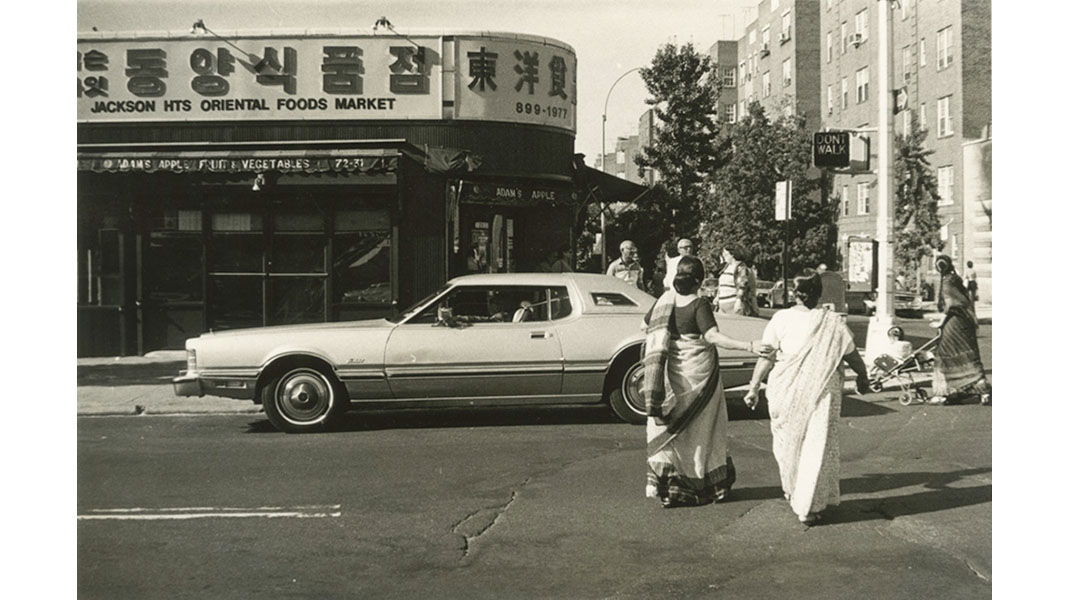
“The New York Historical presents The New York Sari, an exploration of one of the world’s oldest-known garments and its impact on New York. Originating in South Asia, the sari has spread across oceans through trade, colonialism, and migration, becoming a truly global garment. This exhibition traces how the sari—and those who wear it—found a home in New York City. Once seen as a marker of distance and exoticism, the sari has become woven into the city’s cultural fabric, embraced by new generations of artists, dancers, entrepreneurs, community leaders, scientists, and changemakers.
The sari, with its endless variations in fabric, pattern, and draping style, carries a story shaped by centuries of textile artistry, global trade, and cultural exchange that began long before Portuguese ships arrived in India in 1498. The distinct variations we see today are a powerful representation of regional tradition, cultural identity, and personal expression. For many, the sari evokes rituals, milestones, and womanhood; for others, it becomes a bold statement of reinvention.” — The New York Historical
Installation views of The New York Sari at The New York Historical, September 12, 2025 – April 26, 2026. Photos by Glenn Castellano. Courtesy The New York Historical.


“At The New York Historical, we are committed to telling stories that reflect the full breadth of the American experience,” said Dr. Louise Mirrer, president and CEO of The New York Historical. “The New York Sari illuminates how a centuries-old garment continues to shape identity, artistry, and community-building across our city. This exhibition is a celebration of the sari’s complexity—not only as a textile but as a powerful cultural symbol shaped by trade, migration, and personal expression. By centering voices from across the diaspora, we invite all New Yorkers to consider the rich histories woven into the fabric of everyday life and how a single garment can hold memory, spark dialogue, and foster belonging in a city as dynamic as New York.”
You must be logged in to post a comment.