“The experimental Dutch printmaker Hercules Segers (ca. 1589 – ca. 1638), one of the most fertile artistic minds of his time, created otherworldly landscapes and still lifes of astonishing originality. Rejecting the traditional idea put forth by masters since the fifteenth century that prints from a single… Read More
All posts tagged “The Met Fifth Avenue”
Masterworks: Unpacking Fashion at The Met Fifth Avenue, November 18, 2016 – February 5, 2017
The Costume Institute’s exhibition, Masterworks: Unpacking Fashion features significant acquisitions of the past 10 years. The show explores how the department has honed its collecting strategy to amass masterworks of the highest aesthetic and technical quality, including iconic works by designers who have changed the course of fashion history and advanced fashion… Read More
Native American Masterpieces from the Charles and Valerie Diker Collection at The Met Fifth Avenue, October 28, 2016 – March 19, 2017
“An Alaskan shaman in dialogue with the spirit world; an Arctic hunter of sea mammals, bears, and caribou; the Lakota warrior No Two Horns; the Battle of Little Bighorn veteran Standing Bear; a Wasco woman of the Columbia River Plateau; and the celebrity basket weavers… Read More
Max Beckmann in New York at The Met Fifth Avenue, October 19, 2016 – February 20, 2017
“In late December 1950, Max Beckmann set out from his apartment on the Upper West Side of Manhattan to see his latest self-portrait on view at The Metropolitan Museum of Art. On the corner of Sixty-Ninth Street and Central Park West, he suffered a fatal heart attack.… Read More
Fragonard: Drawings Triumphant—Works from New York Collections at The Met Fifth Avenue, October 6, 2016 – January 8, 2017
“Jean Honoré Fragonard (French, 1732–1806)—one of the most forward looking and inventive artists of the 18th century—was equally skilled in painting, drawing, and etching. Yet, unlike many old masters for whom drawing was a preparatory tool, Fragonard explored the potential of chalk, ink, and wash to create sheets that… Read More
Jerusalem 1000–1400: Every People Under Heaven at The Met Fifth Avenue, September 26, 2016 – January 8, 2017
“This exhibition illuminates the key role that the Holy City played in shaping the art of the period from 1000 to 1400. While Jerusalem is often described as a city of three faiths, that formulation underestimates its fascinating complexity. In fact, the city was home… Read More
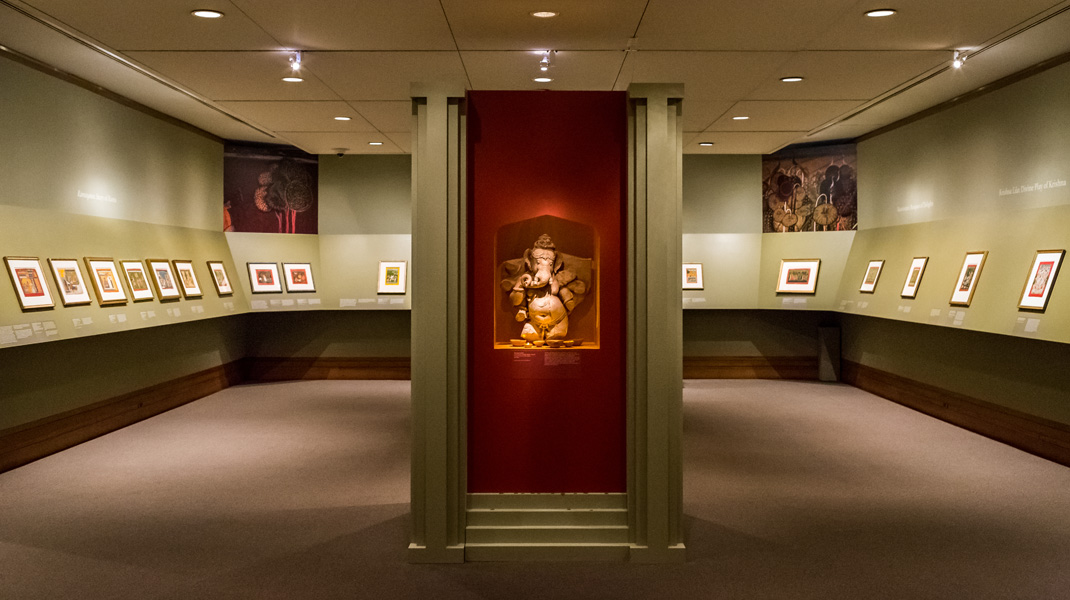
Divine Pleasures: Painting from India’s Rajput Courts – The Kronos Collections at The Met Fifth Avenue, June 14 – September 12, 2016
“The Kronos Collections include a selection of paintings from northern India, mainly the royal courts of Rajasthan and the Punjab Hills. From the sixteenth to the mid-nineteenth century, kingdoms and principalities within these regions developed rich traditions of art and architecture under the patronage of the ruling Rajput elites.… Read More
Manus x Machina: Fashion in an Age of Technology at The Met Fifth Avenue, May 5 – August 14, 2016
Photographs by Corrado Serra. “Manus x Machina features more than 170 examples of haute couture and avant-garde ready-to-wear, dating from the early 1900s to the present. The exhibition addresses the founding of the haute couture in the 19th century, when the sewing machine was invented, and the emergence… Read More
The Roof Garden Commission: Transitional Object (PsychoBarn) by Cornelia Parker at The Met Fifth Avenue, April 19 – October 31, 2016
Photographs by Corrado Serra. “A large-scale sculpture by acclaimed British artist Cornelia Parker, inspired by the paintings of Edward Hopper and by two emblems of American architecture—the classic red barn and the Bates family’s sinister mansion from Alfred Hitchcock’s 1960 film Psycho—will comprise the fourth… Read More
Pergamon and the Hellenistic Kingdoms of the Ancient World at The Met Fifth Avenue, April 18 – July 17, 2016
Photographs by Corrado Serra. “The conquests of Alexander the Great transformed the ancient world, making trade and cultural exchange possible across great distances. Alexander’s retinue of court artists and extensive artistic patronage provided a model for his successors, the Hellenistic kings, who came to rule over much of his… Read More


You must be logged in to post a comment.