
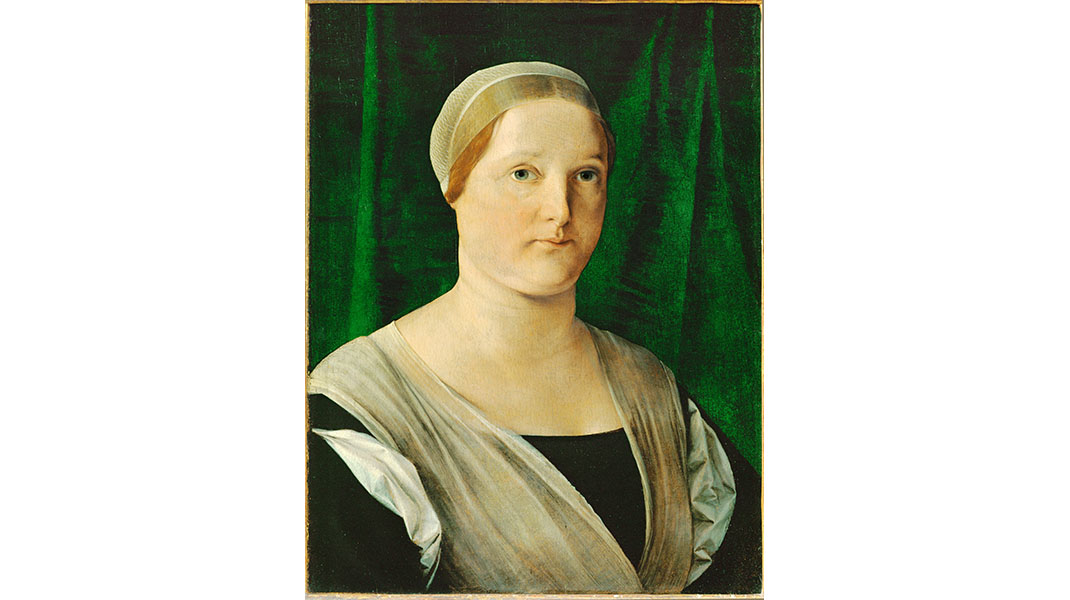
“Opening April 2, at The Metropolitan Museum of Art, Hidden Faces: Covered Portraits of the Renaissance is the first exhibition to examine an intriguing but largely unknown tradition of Renaissance painting: portraits designed as multisided objects in which the sitters’ images were concealed behind a hinged or sliding cover, within a box, or by a dual-faced format. Private portraits were often hidden beneath other paintings that served as witty prologues and protective covers. The reverses and covers of these portraits were adorned with puzzle-like emblems, inscriptions, allegories, and mythologies that reflected the sitters’ characters as well as broader cultural values. The viewer decoded the meaning of the symbolic portrait before lifting, sliding, or turning the image over to unmask the face below.” — The Metropolitan Museum of Art
“This extraordinary, surprising, and revealing exhibition beautifully illuminates a fascinating and little-known tradition of Renaissance painting, tracing the development of these stunning multi-sided masterworks and uncovering the many intriguing stories they tell,” said Max Hollein, The Met’s Marina Kellen French Director and CEO. “Hidden Faces offers a rare opportunity to understand and appreciate the perpetual allure of these mysterious works and celebrate the creativity and inventiveness of the genre.”


National Gallery of Art, Washington, D.C., Samuel H. Kress Collection, 1939.1.147. Photo: Courtesy National Gallery of Art, Washington

Portrait of Giulio Mellini. Oil on wood. 14 3/16 × 9 13/16 in. (36 × 25 cm). Musée du Louvre, Paris, Département des Peintures, RF 1345. Photo: © RMN-Grand Palais / Art Resource, NY, photo by Daniel Arnaudet

Allegorical Landscape, 1492–1507. Oil on wood. 14 3/16 × 9 13/16 in. (36 × 25 cm). Musée du Louvre, Paris, Département des Peintures, RF 1345. Photo: © RMN-Grand Palais / Art Resource, NY, photo by Daniel Arnaudet

Portrait of a Man. Oil on panel. 11 1/2 × 8 7/8 in. (29.2 × 22.5 cm). Museo Nacional Thyssen-Bornemisza, Madrid, Inv. nos. 284.a (1938.1.a); 284.b. Photo: © Museo Nacional Thyssen-Bornemisza. Madrid

Still Life with a Jug of Flowers. Oil on panel. 11 1/2 × 8 7/8 in. (29.2 × 22.5 cm). Museo Nacional Thyssen-Bornemisza, Madrid, Inv. nos. 284.a (1938.1.a); 284.b. Photo: © Museo Nacional Thyssen Bornemisza. Madrid

National Gallery of Art, Washington, D.C., Ralph and Mary Booth
Collection, 1947.6.5.a,b. Photo: Courtesy National Gallery of Art, Washington

Coat of Arms, 1527. Oil on panel. 16 15/16 × 11 13/16 in. (43 × 30 cm). Frame: 19 11/16 × 14 13/16 × 2 in. (50 × 37.6 × 5.1 cm).
National Gallery of Art, Washington, D.C., Ralph and Mary Booth. Collection, 1947.6.5.a,b. Photo: Courtesy National Gallery of Art, Washington
Alison Manges Nogueira, Curator, Robert Lehman Collection at The Met said, “Rather than being affixed to the wall and permanently visible, these three-dimensional objects, which were often stored away and unveiled for special viewings, were designed to restrict access to the sitters’ images. In fact, the viewer was first confronted by emblems and allegories evoking their inner character. The exhibition explores the symbiotic relationship between these physical and symbolic portraits that were bound in form and meaning, like the dual sides of the coins and medals which inspired them.”
Hidden Faces: Covered Portraits of the Renaissance is curated by Alison Manges Nogueira, Curator, Robert Lehman Collection at The Met.
Images courtesy The Metropolitan Museum of Art.
You must be logged in to post a comment.