Art of Noise, February 13-August 16, 2026, at Cooper Hewitt, Smithsonian Design Museum

“This winter, Cooper Hewitt, Smithsonian Design Museum will present “Art of Noise,” an exhibition celebrating the groundbreaking designs that have shaped how people experience music over the past century. Organized by the San Francisco Museum of Modern Art (SFMOMA) and adapted to the history of the New York music scene for its East Coast presentation, ‘Art of Noise’ will be on view at Cooper Hewitt Feb. 13, 2026, through Aug. 16, 2026. Central to the exhibition’s experience and located on the first floor of Cooper Hewitt will be an installation of a large-scale, handmade, audio system by multi-disciplinary artist Devon Turnbull. The ‘HiFi Pursuit Listening Room Dream No. 3’ will open to the public Deccember 12.

From concert posters to record albums, phonographs to digital music players, handheld radios to sound systems, ‘Art of Noise’ takes visitors on an exploration of how design has transformed people’s relationship to music over the past 100 years. On view across the museum’s entire third-floor gallery, the exhibition will feature more than 300 artworks drawn largely from the collections of Cooper Hewitt and SFMOMA, as well as Stockholm-based studio teenage engineering’s unique choir installation and Turnbull’s immersive listening room.”— Cooper Hewitt

teenage engineering, choir, 2022; © teenage engineering
Verner Panton, 3300 Stereo, 1963; San Francisco Museum of Modern Art, Accessions Committee purchase, by exchange, through a gift of Michael D. Abrams; photo: Don Ross
Stereo Chest, 1973; Designed and made by Wendell Castle (American, 1932-2018); Stack-laminated and carved walnut, leather, metal, rubber, plastic, electronic components; Dual 1229 turntable, Kenwood model KR-5150 receiver; H x W x D (open): 150 x 109.2 x 76 cm (59 1/16 x 43 x 29 15/16 in.); H x W x D (closed): 113.3 x 109.2 x 55.9 cm (44 5/8 x 43 x 22 in.); Cooper Hewitt, Smithsonian Design Museum; Gift of Linda and Irwin R. Berman, 2005-9-1-a/e; Photo: Ellen McDermott
Model 566 Bluebird Radio, 1934; Designed by Walter Dorwin Teague (American, 1883–1960); Manufactured by Sparks-Withington Co. (Jackson, Michigan, USA); Glass, chrome-plated steel, wood, paint, textile, electronic components; H x W x D: 36.2 × 36.8 × 17.8 cm (14 1/4 in. × 14 1/2 in. × 7 in.); Cooper Hewitt, Smithsonian Design Museum; Gift of George R. Kravis II, 2018-22-1; Photo: Matt Flynn
Thilo Oerke and Rosita Tonmöbel, Rosita Vision 2000, 1971; San Francisco Museum of Modern Art, Accessions Committee purchase, by exchange, through a gift of Michael D. Abrams; photo: Don Ross Francisco Museum of Modern Art, Accessions Committee purchase, by exchange, through a gift of Michael D. Abrams; photo: Don Ross
Mathieu Lehanneur, Power of Love, 2009; San Francisco Museum of Modern Art, Accessions Committee fund purchase; © Mathieu Lehanneur; photo:
Don Ross
Milton Glaser, Dylan Poster, 1967, San Francisco Museum of Modern Art, gift of the designer; © Milton Glaser, permission of the estate of Milton Glaser; photo: Tenari Tuatagaloa
Poster, Grammo-Grafik [Record Graphics], 1957; Gottlieb Soland (Swiss, born 1928) for Kunstgewerbemuseum (Zurich, Switzerland); Lithograph on wove paper; 100.2 × 70.3 cm (39 7/16 × 27 11/16 in.); Cooper Hewitt, Smithsonian Design Museum; Gift of Sara and Marc Benda, 2009-12-19; Photo: Matt Flynn
Poster, 11th Summer Jazz Festival, 1979; Takenobu Igarashi (Japanese, 1944–2025) for Nippon Cultural Broadcasting, Inc. (Tokyo, Japan); Printed by KY Printing Co. Ltd. (Japan); Lithograph on paper; 72.8 × 51.5 cm (28 11/16 × 20 1/4 in.); Cooper Hewitt, Smithsonian Design Museum; Gift of Takenobu Igarashi, 2018-18-14; Photo: Matt Flynn
Poster, Chambers Brothers Band, Neon Rose #12; Victor Moscoso (Spanish, active USA, born 1936); Published by Neon Rose (San Francisco, California, USA); Printed by Graphic Arts of Marin (California, USA) and Cal Litho (California, USA); Lithograph on wove paper; 51 × 36 cm (20 1/16 × 14 3/16 in.); Cooper Hewitt, Smithsonian Design Museum; Gift of Sara and Marc Benda, 2009-12-23; Photo: Matt Flynn

“Music is the soundtrack to our lives, and design is at the center of how we experience it,” said Maria Nicanor, director of Cooper Hewitt. “Through iconic works that many will be able to trace back to their own memories, ‘Art of Noise’ underscores how design shapes the very emotions of our auditory encounters. We are grateful for our collaboration with SFMOMA and curator Joseph Becker to bring this exciting exhibition to the East Coast. From teenage engineering’s unique choir installation to Devon Turnbull’s immersive listening room, audiophiles will mark ‘Art of Noise’ as the not-to-be-missed sonic event of the season.”

“This exhibition invites visitors to reflect on our collective experience of music and the ways we connect with it through dynamic, evocative and often cutting-edge design,” said Joseph Becker, curator of architecture and design at SFMOMA. “Building on its widely attended presentation at SFMOMA, we’re thrilled to bring ‘Art of Noise’ to the East Coast and introduce new elements that capture influential moments from New York’s music scenes.”

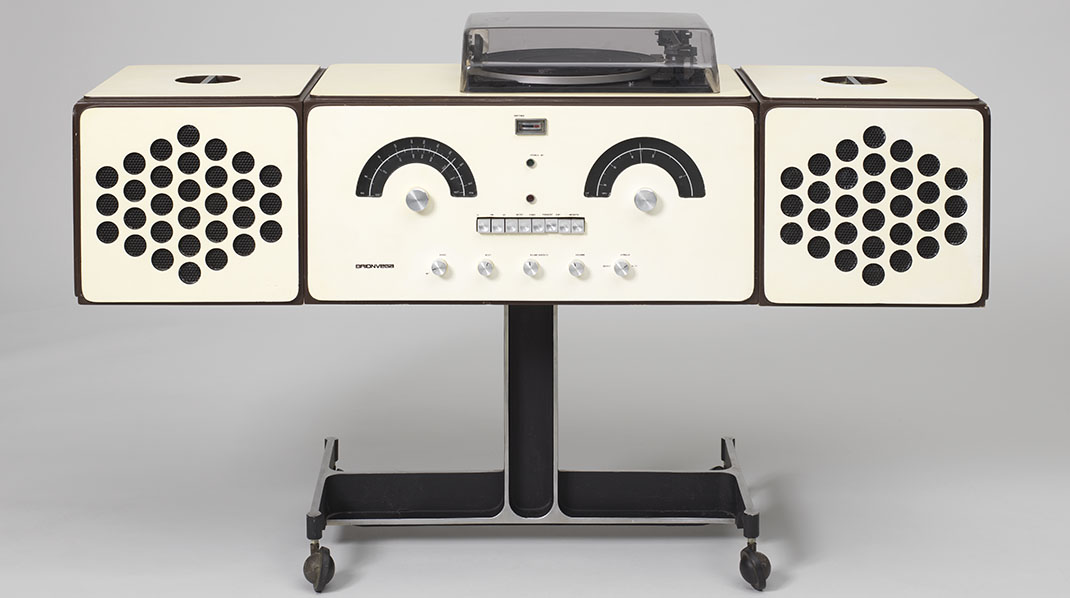
ITitle Image: RR-126 Radio-Phonograph, 1965; Designed by Achille Castiglioni (Italian, 1918-2002) and Pier Giacomo Castiglioni, (Italian, 1913-1968); Manufactured by Brionvega, S.p.A (Milan, Italy); Plywood, plastic, aluminum, polycarbonate, electronic components; H x W x D (speakers on sides): 46.5 × 121 × 36.5 cm (18 5/16 × 47 5/8 × 14 3/8 in.); H x W x D (speakers on top): 92.5 × 61.5 × 36.5 cm (36 7/16 × 24 3/16 × 14 3/8 in.); Cooper Hewitt, Smithsonian Design Museum; Gift of George R. Kravis II, 2018-22-96-a/c; Photo: Matt Flynn.

Images courtesy Cooper Hewitt, Smithsonian Design Museum.
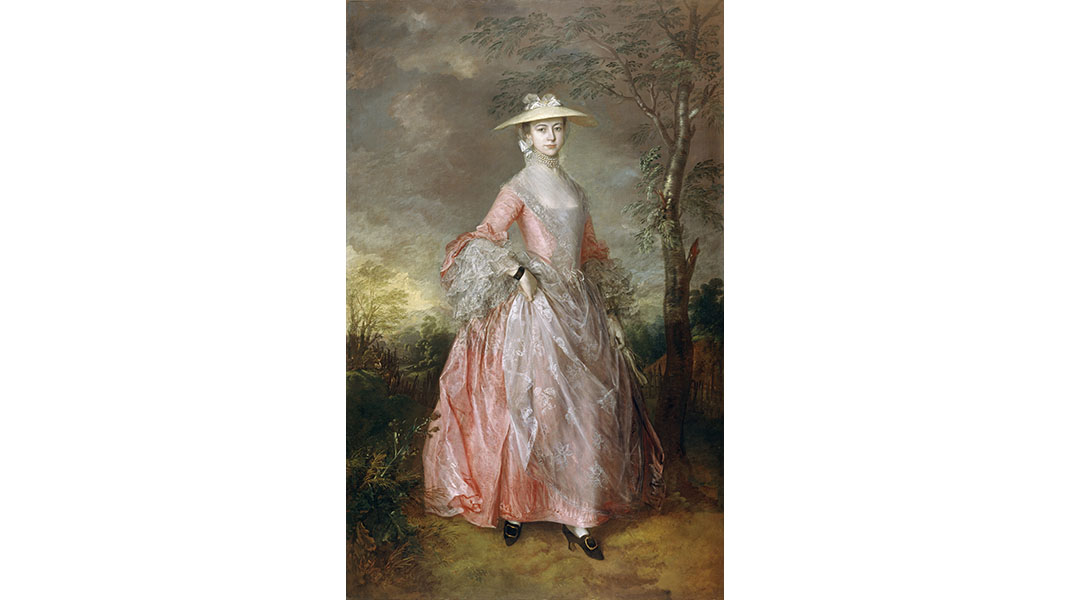
Gainsborough: The Fashion of Portraiture at The Frick Collection, February 12 – May 25, 2026

“The Frick Collection presents its first special exhibition dedicated to the English artist Thomas Gainsborough, and the first devoted to his portraiture ever held in New York. Displaying more than two dozen paintings, the show explores the richly interwoven relationship between Gainsborough’s portraits and fashion in the eighteenth century. The works included represent some of the greatest achievements from every stage of this period-defining artist’s career, drawn from the Frick’s holdings and from collections across North America and the United Kingdom.

The trappings and trade of fashion filled Gainsborough’s world—in magazines and tailor shops, at the opera and on promenades—and his portraits were at the heart of it all. This exhibition invites visitors to consider not only the clothing the artist depicted in his paintings, but also the role of his canvases as both records of and players in the larger conception of fashion: encompassing everything from class, wealth, labor, and craft to formality, intimacy, and time. Recent technical investigations also shed light on Gainsborough’s artistic process, including connections to materials—textiles, dyes, cosmetics, jewelry—that fueled the fashion industry” — The Frick Collection

Installation view of Gainsborough: The Fashion of Portraiture at The Frick Collection. Photo: Joseph Coscia Jr.

Gainsborough: The Fashion of Portraiture is organized by Aimee Ng, the museum’s Peter Jay Sharp Chief Curator. Stated Ng, “The spectacular and at times, to modern eyes, absurd fashions in portraits by Thomas Gainsborough continue to fascinate viewers today. The appeal of these demonstrations of taste, status, and wealth persists in tension with increased recognition, over the last few decades, of the injustices that made such extravagance possible. This exhibition necessarily deals with clothing and personal attire, while exploring how fashion was understood in Gainsborough’s time, how it touched every level of society, and how portraiture itself was as much a construction and invention as a sitter’s style.”

Images courtesy The Frick Collection.

Caravaggio’s “Boy with a Basket of Fruit” in Focus at The Morgan Library & Museum, January 16 through April 19, 2026

“The Morgan Library & Museum presents Caravaggio’s ‘Boy with a Basket of Fruit in Focus, celebrating the extraordinary loan of this important early masterpiece by Michelangelo Merisi da Caravaggio (1571–1610) from the Galleria Borghese in Rome. On view from January 16 through April 19, 2026, the exhibition showcases what can be considered Caravaggio’s first masterpiece alongside a group of ten works that place the painting in context, from the artist’s influences to those he influenced.

Trained in his native Lombardy, Caravaggio brought to Rome a tradition of naturalism that stretched back to Leonardo da Vinci’s work in Milan. He combined this tradition with a revolutionary approach to painting that shattered the illusion of art and celebrated the artifice of the studio. Boy with a Basket of Fruit (ca. 1595), in which these key elements of Caravaggio’s art come together for the first time, marks the beginning of a revolution in Italian painting.”— The Morgan Library & Museum

Caravaggio (Michelangelo Merisi). Boy with a Basket of Fruit, ca. 1595. Oil on canvas © Galleria Borghese / Photography by Mauro Coen.
Gian Lorenzo Bernini (1598–1680). Portrait of Cardinal Scipione Borghese, ca. 1632. Red chalk over graphite. The Morgan Library & Museum, IV, 176. Photography by Steven H. Crossot.
Attributed to Marco d’Oggiono (ca. 1467–1524). Girl with Cherries,
ca. 1491–95. Oil on panel. The Metropolitan Museum of Art, Marquand Collection, Gift of Henry G. Marquand, 1890, 91.26.5.
Giuseppe Arcimboldo (1527–1593). Four Seasons in One Head,
ca. 1590. Oil on panel. Courtesy National Gallery of Art, Washington, Paul Mellon Fund.
Rutilio Manetti (1571–1639). A Life Study: A Monk Sleeping Against a Pile of Books, ca. 1616.
Red chalk. The Morgan Library & Museum, 2019.102. Photography by Janny Chiu.
Bartolomeo Cavarozzi (1587–1625). Basket of Fruit, ca. 1620. Oil on canvas. The Metropolitan Museum of Art, Bequest of Errol M. Rudman, 2020, 2020.263.5.

“Caravaggio captures the imagination in a way that almost no other artist can,” said Colin B. Bailey, Katharine J. Rayner Director of the Morgan Library & Museum. “We are exceptionally fortunate to be able to bring this masterpiece from the Galleria Borghese to share with visitors in New York for the first time in the twenty-first century, accompanied by works that illuminate his impact on the field of painting.”

Boy with a Basket of Fruit marks a turning point in Italian painting,” said John Marciari, Charles W. Engelhard Curator, Department Head of Drawings and Prints, and Director of Curatorial Affairs. “It is a linchpin between the naturalism of Caravaggio’s sources and his radical interventions in exposing the artifice of painting. To see this painting in context is to understand the revolution it represents.”

Caravaggio’s“Boy with a Basket of Fruit” in Focus is curated by John Marciari, Charles W. Engelhard Curator, Department Head of Drawings and Prints, and Director of Curatorial Affairs. It is organized by the Morgan Library & Museum in collaboration with the Foundation for Italian Art & Culture (FIAC).

Images courtesy The Morgan Library & Museum.

Made in America: The Industrial Photography of Christopher Payne at Cooper Hewitt, Smithsonian Design Museum, December 12, 2025 – October 4, 2026

“This fall, Cooper Hewitt, Smithsonian Design Museum will present “Made in America: The Industrial Photography of Christopher Payne,” an exhibition featuring Payne’s intricately detailed photography of America’s factories. On view from Dec. 12 through Oct. 4, 2026, the exhibition brings together more than 70 large-format photographs captured by Payne over a decade-long photographic journey to learn more about the craft of both industrial and artisanal making in the United States.

Recently published in the book Made in America: The Industrial Photography of Christopher Payne (Abrams, 2023), Payne’s photographs highlight the traditional craftsmanship behind the creation of musical instruments, flags, footballs and pinball machines, as well as the intricate hand processes still critical to creating the most advanced products, ranging from microchips to the Giant Magellan Telescope. The exhibition also will feature new photographic works not seen before, including images of a Herman Miller furniture factory in Grand Rapids, Michigan; New Balance sneakers being made in Lawrence, Massachusetts; and Alstom high-speed rail trains in Hornell, New York.” — Cooper Hewitt

Sanding infused fiberglass inside a wind turbine blade shell, 2022. Photographed by Christopher Payne (American, born 1968). LM Wind Power (Grand Forks, North Dakota). Courtesy of the artist.
American flags in production on a rotary screen printer, 2018. Photographed by Christopher Payne (American, born 1968). Annin Flagmakers (South Boston, Virginia). Courtesy of the artist.
Wool carders, 2012. Photographed by Christopher Payne (American, born 1968). S & D Spinning Mill (Millbury,
Massachusetts). Courtesy of the artist.
Milling paint, 2024. Photographed by Christopher Payne (American, born 1968)
Utrecht Art Supplies (Brooklyn, New York). Courtesy of the artist
Pastel cores used for colored pencils, 2017. Photographed by Christopher Payne (American, born 1968). General Pencil Company (Jersey City, New Jersey).
Courtesy of the artist
Piano rims in the rim conditioning room, 2011. Photographed by Christopher Payne (American, born 1968). Steinway & Sons (Astoria, New York). Courtesy of the artist

“Payne’s photographs satisfy our deep curiosity to know how things are made, revealing both the essence of the work being performed and the grace of a skilled maker who brings craft, passion and technological savvy to the process,” said Susan Brown, the exhibition’s curator. “Through this exhibition, which has been years in the making, visitors will glimpse a world that is often hidden from view, from the New England textile mills that were among the country’s founding industries to the newest plants for building rockets, quantum computers and fusion reactors.”

“My photographs are a celebration of the making of things, of the transformation of raw materials into useful objects and the human skill and mechanical precision brought to bear on these materials that give them form and purpose,” Payne said. “They are also a celebration of teamwork and community, revealing how people of varying ages and skill levels come together to work toward a common goal.”

The exhibition is organized by Susan Brown, associate curator and acting head of textiles at Cooper Hewitt.

Title image: Assembling a Discovery IQ PET/CT scanner, 2024. Photographed by Christopher Payne (American, born 1968). GE Healthcare (Waukesha, Wisconsin). Courtesy of the artist.

Images courtesy Cooper Hewitt, Smithsonian Design Museum.

Joan Semmel: In the Flesh at Jewish Museum, December 12, 2025 through May 31, 2026

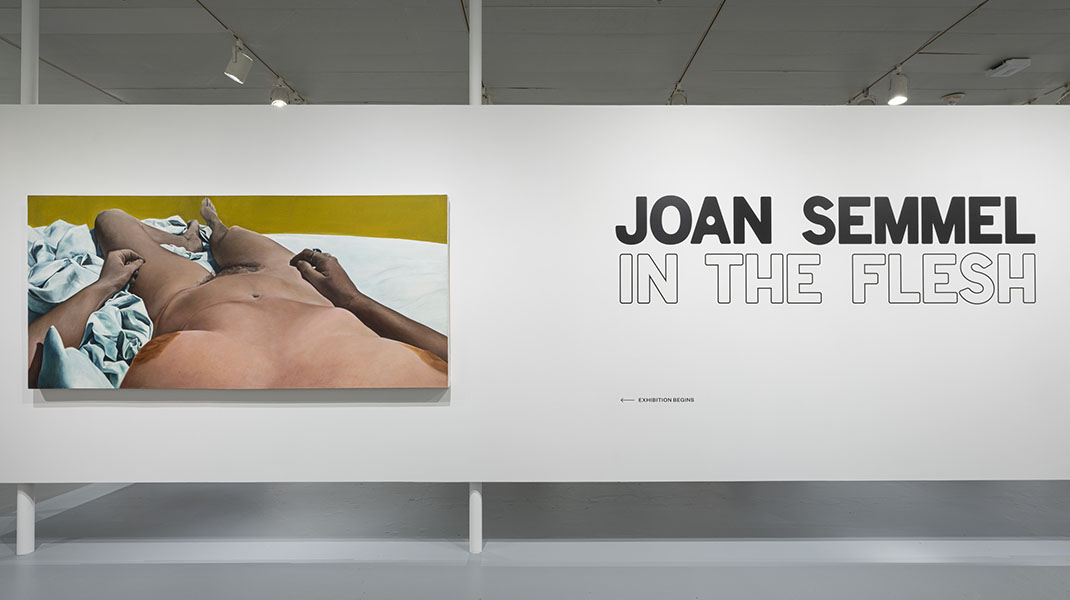
“This winter, the Jewish Museum presents a major exhibition of boundary-breaking work by Joan Semmel alongside a selection of artist- curated works from the Museum’s collection in Joan Semmel: In the Flesh. For over 50 years, Semmel has upended traditional figuration with her boldly declarative nude painting through gestural and hyperreal representation. In the Flesh juxtaposes 16 paintings by the artist, drawn from several periods across her career, many monumental in scale, with nearly 50 modern and contemporary artworks from the Museum’s expansive holdings. The works from the collection—encompassing painting, sculpture, photography, and works on paper—were selected by the artist for their engagement with themes present in her work, including her exploration of beauty, agency, and self-perception.” — Jewish Museum

“As we consider new possibilities for showcasing the Museum’s robust collection, In the Flesh has offered a special opportunity for exploring the range of narratives and stories that radiate from our holdings,” said James S. Snyder, Helen Goldsmith Menschel Director. “Dedicated to and curated in concert with Joan Semmel, In the Flesh highlights the work and insights of an artist who continues to be ahead of her time. The exhibition simultaneously reflects the Museum’s legacy of championing artists who fearlessly share their lived histories and challenge the status quo through their creative practice.”

Installation view of “Joan Semmel: In the Flesh” at the Jewish Museum, New York, December 12, 2025–May 31, 2026. Photo by Kris Graves.

“When I arrived at the Jewish Museum 15 years ago, Sunlight immediately emerged as one of my favorite works in the collection. It is thrilling to present this painting within a comprehensive view of the artist’s development as a painter of the female form, and especially of her own body over time, and to be doing so in such close dialogue with the artist herself,” noted Rebecca Shaykin. “Joan Semmel’s paintings challenged the male-dominated art world of the 1970s. Her work has inspired generations of artists and shifted the trajectory of contemporary art history. Her selections from the Museum’s collection demonstrate how influential the feminist movement has been in changing the conversation about whose perspectives we value and why.”

The exhibition is organized by Rebecca Shaykin, Barnett & Annalee Newman Curator of Contemporary Art, and Liz Munsell, Curatorial Consultant, in partnership with Joan Semmel.

Title image: Installation view of “Joan Semmel: In the Flesh” at the Jewish Museum, NY, December 12, 2025–May 31, 2026. Photo by Kris Graves.

Images courtesy the Jewish Museum.
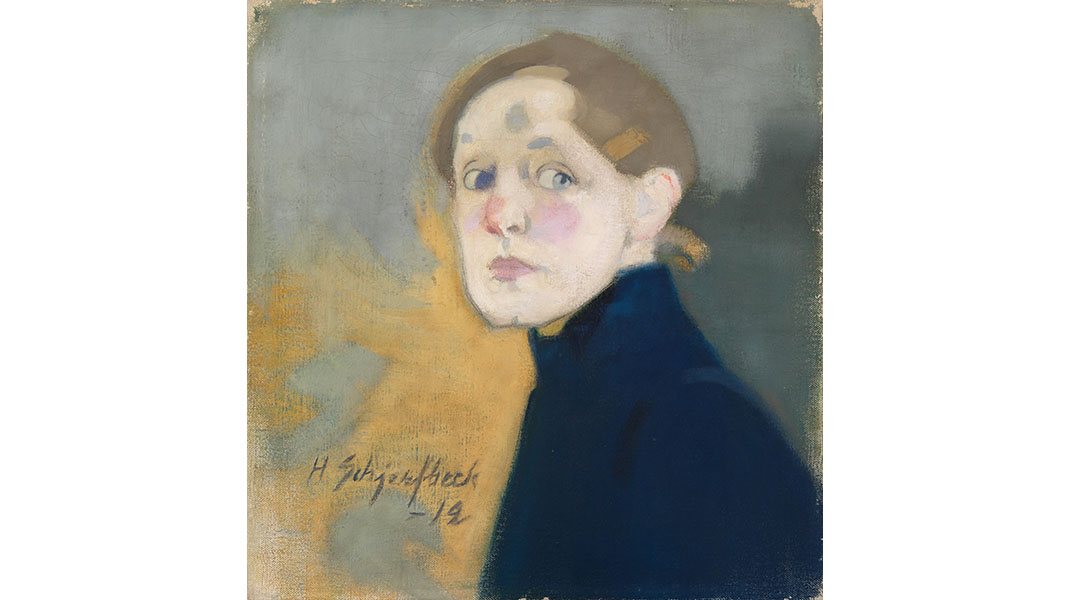
The Met presents Seeing Silence: The Paintings of Helene Schjerfbeck, through April 5, 2026 

“Beloved in Nordic countries for her highly original style, Finnish painter Helene Schjerfbeck (1862–1946) is relatively unknown to the rest of the world. The Metropolitan Museum of Art’s Seeing Silence: The Paintings of Helene Schjerfbeck will be the first major exhibition in the United States dedicated to the artist’s work. Featuring nearly 60 works on canvas—including generous loans from the Finnish National Gallery / Ateneum Art Museum, other Finnish museums, and private collections in Finland and Sweden—the exhibition will be on view December 5, 2025, through April 5, 2026.” — The Metropolitan Museum of Art

 “Seeing Silence highlights the work of an extraordinary artist who, though long celebrated in Norway and Sweden as the most outstanding female painter of her time, has not yet achieved well-deserved visibility on this side of the Atlantic,” said Max Hollein, The Met’s Marina Kellen French Director and Chief Executive Officer. “The exhibition invites audiences here to experience Helene Schjerfbeck’s mesmerizing works and distinctive vision for the first time at a major U.S. museum, showcasing the remarkable perspective and introspection of an artist wholly dedicated to her craft over the course of eight decades.”

Installation views of Seeing Silence: The Paintings of Helene Schjerfbeck, on view December 5, 2025–April 5, 2026 at The Metropolitan Museum of Art. Photo by Anna-Marie Kellen, Courtesy of The Met. 

Dita Amory, Robert Lehman Curator in Charge of the Robert Lehman Collection at The Met, said, “Painting in remote Finland without recourse to broader culture and the exchange of contemporary ideas, Schjerfbeck created her own vernacular every day at her easel by sheer force of will. Seeing Silence looks beyond art history’s cultural mainstream to one woman who overcame immense struggles to produce a powerful body of work, highlighting her rightful place in the story of modernism.” 

This exhibition was organized by The Metropolitan Museum of Art in collaboration with the Finnish National Gallery / Ateneum Art Museum. Seeing Silence: The Paintings of Helene Schjerfbeck is curated by Dita Amory, Robert Lehman Curator in Charge of the Robert Lehman Collection at The Met. Anna-Maria von Bonsdorff, director of the Ateneum Art Museum, is the consulting curator.

Title image: Helene Schjerfbeck (Finnish, 1862‒1946). Self-Portrait, 1912. Oil on canvas. 17 1/8 x16 1/2 in. (43.5 x 42 cm). Ateneum Art Museum, Finnish National Gallery, Helsinki. (A-2016-51) SCH.041 Object ID: 906385. Photo: Finnish National Gallery / Yehia Eweis.

Rodin’s Egypt at NYU’s Institute for the Study of the Ancient World (ISAW), November 19, 2025-March 15, 2026

“NYU’s Institute for the Study of the Ancient World (ISAW) presents Rodin’s Egypt, an exhibition focused on the world-famous French sculptor Auguste Rodin (1840–1917) and his robust collection of ancient Egyptian art. Opening on November 19, 2025, the exhibition brings together more than 60 objects that include Rodin’s sculptures and antiquities from his collection, illuminating the ways in which Rodin’s creative process was clearly inspired by these ancient works.” — ISAW

Rodin’s Egypt is the product of a profound collaboration between colleagues in Paris and New York. The exhibition brings more than 60 objects from the Musée Rodin, which together illustrate the range of inspirations Rodin found in Egyptian material and the variety of his responses to it. Through it, we invite visitors to juxtapose two aesthetics of corporeality, that of ancient Egypt and Rodin’s very different vision, and to think about the various kinds of connection represented by the dialogue between them,” stated Greg Woolf, Leon Levy Director of NYU’s ISAW.

Auguste Rodin. Female nude seated on a lug handled vase,
1895–1910 (figure); 3500– 2900 BCE (Predynastic Period) (vase).
Plaster (figure) and Travertine (vase). Egypt; Findspot unknown (vase). H. 23.7 cm; W. 13.2 cm; D. 11.5 cm. Donation Rodin 1916.
Musée Rodin
Naophorous (shrine) statue of Ra-Horakhty. 1550–332 BCE (New Kingdom – Late Period). Painted limestone. Egypt; Findspot unknown. H. 65 cm; W. 28.5 cm; D. 8.5 cm. Donation Rodin 1916. Musée Rodin
Auguste Rodin. Balzac (Final Study), 1897. Plaster.
H. 109 cm; W. 44 cm; D. 41 cm. Donation Rodin 1916. Musée Rodin
Block Naophorous (shrine) statue of a man. 1295–1070 BCE (New Kingdom). Diorite. Egypt, findspot unknown. H. 44.5 cm; W. 24.2 cm; D. 13.7 cm. Donation Rodin 1916. Musée Rodin.

Curated by Bénédicte Garnier, curator at the Musée Rodin in Paris, Rodin’s Egypt features loans from the Musée Rodin, with additional items from The Metropolitan Museum of Art in New York. The exhibition and its accompanying catalogue were made possible by the generous support of the Leon Levy Foundation.

“This is the very first time that the masterpieces of Rodin’s Egyptian collection are exhibited in the United States. Bénédicte Garnier has been working for more than 15 years to document, restore, and make accessible the collection. She collaborated with Dr. Roberta Casagrande-Kim, former Bernard and Lisa Selz Director of Exhibitions and Gallery Curator at ISAW to create a particularly illuminating journey. It took the curiosity and courage of ISAW to organize an exhibition that is both beautiful and demanding, reflecting the most cutting-edge research. I invite you to immerse yourselves in this fountain of youth!,” added Amélie Simier, Director of Musée Rodin.

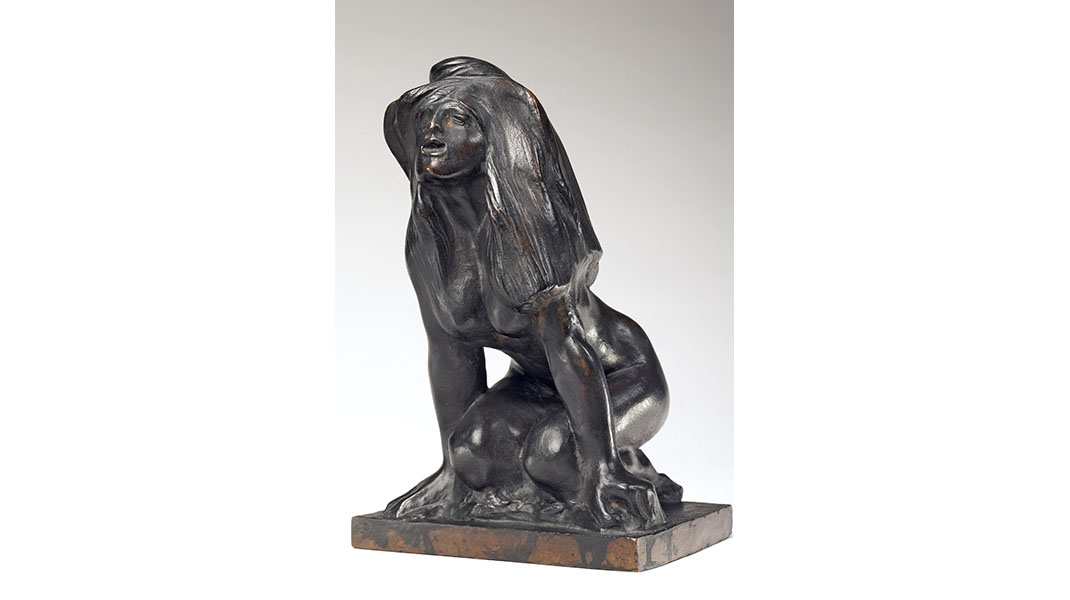
Title image: Auguste Rodin. Le Succube (The Succubus), 1888 (model), 1890 (casting). Bronze. H. 23 cm; W. 16.6 cm; D. 17 cm. Musée Rodin.

Images courtesy NYU’s Institute for the Study of the Ancient World (ISAW).

Wifredo Lam: When I Don’t Sleep, I Dream at The Museum of Modern Art, November 10, 2025–April 11, 2026

“The Museum of Modern Art presents Wifredo Lam: When I Don’t Sleep, I Dream, the most extensive retrospective devoted to the artist in the United States, on view at MoMA from November 10, 2025, through April 11, 2026. Spanning the six decades of Lam’s prolific career, the exhibition includes more than 130 artworks from the 1920s to the 1970s—including paintings, large-scale works on paper, collaborative drawings, illustrated books, prints, ceramics, and archival material—with key loans from the Estate of Wifredo Lam, Paris. The retrospective reveals how Lam—a Cubanborn artist who spent most of his life in Spain, France, and Italy—came to embody the figure of the transnational artist in the 20th century. Wifredo Lam: When I Don’t Sleep, I Dream is organized by Christophe Cherix, The David Rockefeller Director, and Beverly Adams, The Estrellita Brodsky Curator of Latin American Art, with Damasia Lacroze, Curatorial Associate, Department of Painting and Sculpture, and Eva Caston, Curatorial Assistant, Department of Drawings and Prints.” — The Museum of Modern Art

Installation view of Wifredo Lam: When I Don’t Sleep, I Dream on view at The Museum of Modern Art, New York, from November 10, 2025, through April 11, 2026. Photo by Jonathan Dorado.
Wifredo Lam with La jungla (The Jungle) (1942–43), left, La mañana verde (The Green Morning) (1943), right, and La silla (The Chair) (1943), on the floor, in his Havana studio, 1943. Archives SDO Wifredo Lam, Paris

“Lam’s visionary commitment to making his painting an ‘act of decolonization,’ as he put it, forever changed modern art,” said Cherix. “He insisted on placing diasporic culture at the heart of modernism—not as a peripheral influence, but as central, a generative force.”

“His radically inventive works continue to speak to us across time,” said Adams. “The realities he confronted—colonialism, racism, exile, and displacement—remain as urgent today as they were in his lifetime.”

Titlle image: Installation view of Wifredo Lam: When I Don’t Sleep, I Dream on view at The Museum of Modern Art, New York, from November 10, 2025, through April 11, 2026. Photo by Jonathan Dorado.

Images courtesy The Museum of Modern Art.

Guggenheim New York presents Gabriele Münter: Contours of a World, November 7, 2025–April 26, 2026 

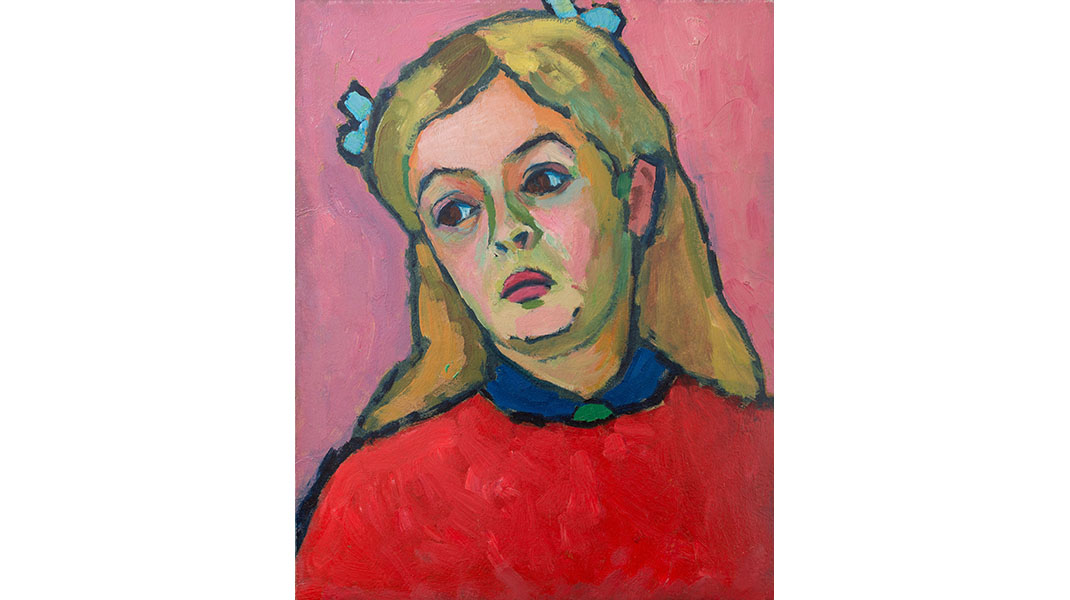
“The Guggenheim New York presents the first monographic exhibition in the United States on the German artist Gabriele Münter (b. 1877, Berlin; d. 1962, Murnau am Stafflesee, Germany) in nearly thirty years. Münter was a critical figure in the advancement of modernism in early twentieth-century Europe. Gabriele Münter: Contours of a World will focus on her heightened Expressionist production from around 1908 to 1920, while also highlighting her later developments. The presentation will comprise some sixty paintings and nineteen of her early photographs across three galleries. Taken during Münter’s travels around the southern and midwestern U.S. at the turn of the twentieth century, these photographs will be exhibited in this country for the first time.

Gabriele Münter: Contours of a World will illuminate Münter’s disruptive and underrecognized practice while challenging historical narratives that have sidelined women artists. For decades, Münter has been relegated to a minor figure in the history of German Expressionism and the Blaue Reiter (Blue Rider, 1911–14) movement, overshadowed by her then-companion and creative partner, Vasily Kandinsky. This exhibition corrects that framing, establishing Münter as a prolific and innovative artist who created significant work across mediums and movements throughout her long career. The show’s counter-canonical approach builds on the Guggenheim’s legacy of upending traditional art-historical frameworks and upholding radical art in all its forms.” — Guggenheim New York

Gabriele Münter, Future (Woman in Stockholm) (Zukunft [Dame in Stockholm]), 1917. Oil on canvas, 38 3/8 × 25 1/8 in. (97.5 × 63.8 cm). The Cleveland Museum of Art, Gift of Mr. and Mrs. Frank E. Taplin Jr. © 2025 Artists Rights Society (ARS), New York / VG Bild-Kunst, Bonn. Photo: Courtesy The Cleveland Museum of Art
Gabriele Münter, Dragon Fight (Drachenkampf), 1913. Painting on board, 14 1/16 × 17 1/8 in. (35.7 × 43.5 cm). The Gabriele Münter and Johannes Eichner Foundation, Munich V117. © 2025 Artists Rights Society (ARS), New York / VG Bild-Kunst, Bonn. Photo: Centre Pompidou, MNAM-CCI/Georges Meguerditchian/Dist. GrandPalaisRmn / Art Resource, NY
Gabriele Münter, From the Griesbräu Window (Vom Griesbräu Fenster), 1908. Painting on board, 13 × 15 13/16 in. (33 × 40.1 cm). Städtische Galerie im Lenbachhaus und Kunstbau München, On permanent loan from the Gabriele Münter and Johannes Eichner Foundation, Munich L142. © 2025 Artists Rights Society (ARS), New York / VG Bild-Kunst, Bonn
Gabriele Münter, Breakfast of the Birds (Das Frühstück der Vögel), March 10, 1934. Oil on board, 18 × 21 3/4 in. (45.7 × 55.2 cm). National Museum of Women in the Arts, Washington, D.C., Gift of Wallace and Wilhelmina Holladay. © 2025 Artists Rights Society (ARS), New York / VG Bild-Kunst, Bonn. Photo: Courtesy National Museum of Women in the Arts

“Münter’s unwavering curiosity about the world around her shaped both her life and art. She wielded color and line in remarkable ways, and this spirit of exploration led her to become a uniquely international artist,” says Megan Fontanella, Curator, Modern Art and Provenance, Guggenheim New York. “A formative trip to the United States around the turn of the twentieth century sparked her creative vision, as she pursued art through the medium of photography. To now organize her debut exhibition at a New York museum, 125 years later, is both extraordinary and long overdue.”

Gabriele Münter: Contours of a World is organized by Megan Fontanella, Curator, Modern Art and Provenance, Guggenheim New York. The photography selection is cocurated with Victoria Horrocks, Curatorial Fellow, Photography, Guggenheim New York.

Title image: Gabriele Münter, Head of a Young Girl (Junges Mädchen), 1908. Oil on board, 16 × 13 in. (40.6 × 33 cm). Des Moines Art Center, Mildred M. Bohen Collection. © 2025 Artists Rights Society (ARS), New York / VG Bild-Kunst, Bonn. Photo: Courtesy Des Moines Art Center 

Images courtesy Guggenheim New York.

Manu-Facture: The Ceramics of Lucio Fontana at Peggy Guggenheim Collection, Venice, October 11, 2025 – March 2, 2026

“The Peggy Guggenheim Collection presents  “Manu-Facture: The Ceramics of Lucio of Fontana, the first museum exhibition dedicated exclusively to the ceramic work of Lucio Fontana (1899–1968), one of the most innovative, and in his unique way irreverent, artists of the twentieth century. While Fontana is best known for his iconic, slashed and punctured canvases of the 1950s and ‘60s, this exhibition casts a spotlight on a lesser-known but essential part of his oeuvre: his work in clay, which he began in Argentina in the 1920s and continued to explore throughout his life. Organized by art historian Sharon Hecker, this is the first solo show to offer an in-depth examination of Fontanaʼs ceramic production.” — Peggy Guggenheim Collection

As Hecker notes: “Long associated with craft rather than fine art, today Fontanaʼs ceramics are receiving attention due to the resurgence of interest in the medium within contemporary art.”

“Between suicide and travel, I chose the latter because I hope to still make a series of ceramics and sculptures that give me the pleasure or feeling of still being a living man.” — Lucio Fontana

© Manu-Facture: The Ceramics of Lucio Fontana, October 11, 2025 – March 2, 2026, Peggy Guggenheim Collection. Photo: Claudia Corrent
Lucio Fontana in his studio with “Nature”, 1959-1960 © Fondazione Lucio Fontana, Milano, by SIAE 2025

Title image: Lucio Fontana. Portrait of Esa. Glazed ceramic: white, brown and pink, cm 57 x 43 x 27. Private Collection. © Fondazione Lucio Fontana, Milano, by SIAE 2025 © Fondazione Lucio Fontana, Milano, by SIAE 2025

Images courtesy Peggy Guggenheim Collection.

Renoir Drawings, October 17, 2025 – February 8, 2026 at The Morgan Library and Museum

“The Morgan Library & Museum presents Renoir Drawings, the first comprehensive exhibition in more than a century devoted to the works on paper of Pierre-Auguste Renoir (1841–1919). On view from October 17, 2025, through February 8, 2026, the exhibition explores Renoir’s engagement with draftsmanship across his long and influential career. Organized with the Musée d’Orsay, Paris, Renoir Drawings brings together over one hundred drawings, pastels, watercolors, prints, and paintings, inviting visitors to engage with Renoir’s creative process while offering insights into his artistic methods across five decades.

While Renoir’s paintings have become icons of Impressionism, his drawings are less well-known. Yet beginning in his earliest days as an artist-in-training and continuing until his very last years, Renoir regularly drew and painted on paper in a variety of media. The first comprehensive exhibition devoted to his drawings since Aquarelles, pastels et dessins par Renoir in 1921 at the Galeries Durand-Ruel, in Paris, Renoir Drawings assembles outstanding examples of all the media on paper in which Renoir worked, from pencil, pen and ink, chalk, pastel, and watercolor to etching and lithography. ” — The Morgan Library & Museum 

The Great Bathers, 1886–87. Oil on canvas. Philadelphia Museum of Art. The Mr. and Mrs. Carroll S. Tyson, Jr. Collection, 1963, 1963-116-13
View of a Park, ca. 1885–90. Watercolor with white opaque watercolor on paper. Thaw Collection, The
Morgan Library & Museum. Photography by Graham S. Haber, 2017.
Child with an Apple or Gabrielle, Jean, and a Young Girl with an Apple, ca. 1895. Pastel. Collection of Leone Cettolin Dauberville. Photo © Jean-Louis Losi, Paris
Seated Woman Leaning on Her Elbow, ca. 1915–17. Black chalk. The Albertina Museum, Vienna; inv. 24330. Image: The ALBERTINA Museum, Vienna.
Study for “The Judgment of Paris,” ca. 1908. Black, red, and white chalk. The Phillips Collection, Washington, DC;. 1636, Acquired 1940.
Auguste Renoir (1841–1919) and Richard Guino. (1890–1973). The Judgment of Paris, 1914. Patinated plaster. Musée d’Orsay, Paris; RF 2745. Musée d’Orsay, dist. GrandPalaisRmn.. Photography by René-Gabriel Ojéda

“Renoir’s drawings reveal an artist of tremendous sensitivity and range,” said Colin B. Bailey, curator of the exhibition and Katharine J. Rayner Director of the Morgan Library & Museum. “This exhibition brings together rarely seen works on paper to provide a more complete view of Renoir’s creative process, offering visitors a fresh perspective on one of the most well-known and influential painters of the nineteenth and twentieth centuries.” Renoir Drawings, the first exhibition at the Morgan to be curated by Dr. Bailey, coincides with his tenth anniversary as its director. He is a noted specialist in eighteenth-century French art and a recognized authority on Renoir. 

Organized by Colin B. Bailey, Katharine J. Rayner Director, and Sarah Lees, Research Associate to the Director. 

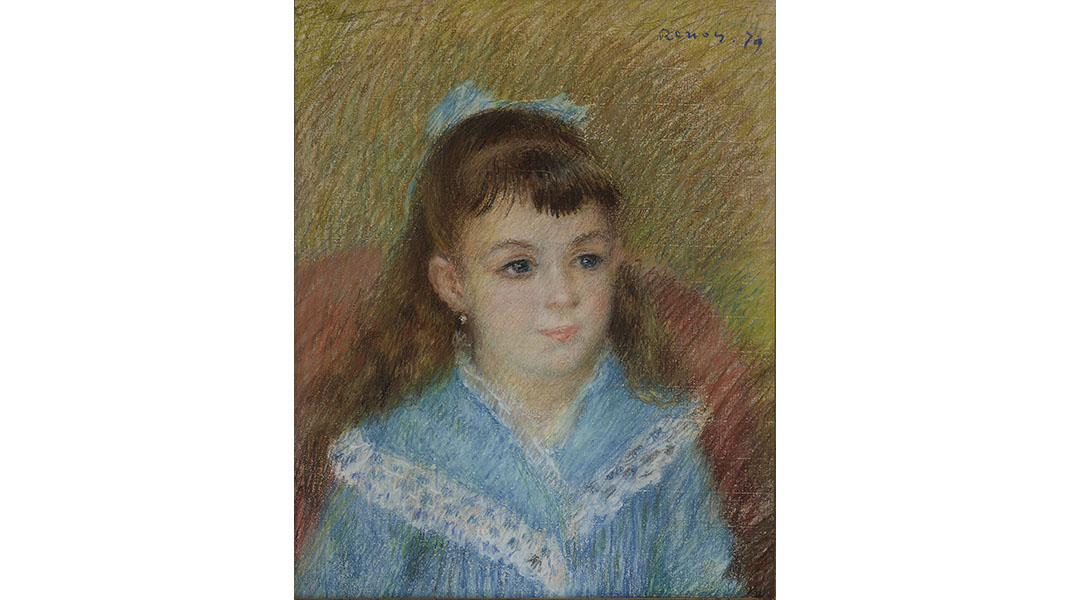
Titlle image: Auguste Renoir (French, 1841–1919). Portrait of a Girl (Elisabeth Maître), 1879. Pastel on Ingres paper. The ALBERTINA Museum, Vienna – The Batliner Collection | Image: The ALBERTINA Museum, Vienna.

Images courtesy The Morgan Morgan Library & Museum.

Anish Kapoor: Early Works at Jewish Museum, October 24, 2025 through February 1, 2026  

“This fall the Jewish Museum presents the first American museum exhibition to focus solely on the formative early work of renowned artist Anish Kapoor. These rarely seen works include Kapoor’s striking pigment sculptures, together with works on paper and sketchbooks. On view from October 24, 2025, through February 1, 2026, Anish Kapoor: Early Works reveals the experimental proclivities of a trailblazing artist at the beginning of his career. The exhibition opens concurrently with the Jewish Museum’s inauguration of its newly transformed collection galleries and learning center.” — The Jewish Museum
“The Jewish Museum has a long tradition of presenting contemporary art as part of its ongoing commitment to exploring the narrative of shared humanity worldwide, together with the rich diversity of the global Jewish experience,” said James Snyder, Helen Goldsmith Menschel Director. “Anish Kapoor: Early Works reinforces this mission by exploring the boundary-pushing practice of one of the most influential artists of our time, while also highlighting themes of ritual, perception, and the power of materiality that resonate across the diversity of world cultures and histories.”

Anish Kapoor’s studio, 1980. © Anish Kapoor. All Rights Reserved, DACS, London/ ARS, NY 2025
Anish Kapoor’s studio, 1982. © Anish Kapoor. All Rights Reserved, DACS, London/ ARS, NY 2025
Anish Kapoor, White Sand, Red Millet, Many Flowers, 1982, mixed media, pigment. Dimensions variable. © Anish Kapoor. All Rights Reserved, DACS, London/ ARS, NY 2025

“These extraordinary early works are virtually unknown to American audiences and represent a side of Kapoor that will be revelatory,” said Darsie Alexander, Senior Deputy Director and Susan and Elihu Rose Chief Curator. “Our show offers a rare glimpse into Kapoor’s process of pairing of color and form to explore the spiritual, psychic, and physical possibilities of sculpture. A keen eye towards the placement of objects transforms how they are perceived by viewers and foretells a future making environmental works on a much larger scale. We are thrilled to be organizing this effort in collaboration with the artist.”

This exhibition is organized by the Jewish Museum’s Senior Deputy Director and Susan and Elihu Rose Chief Curator Darsie Alexander and Leon Levy Associate Curator Shira Backer, in close collaboration with the artist and his studio.

Title image: Anish Kapoor, Part of the Red, 1981, mixed media, pigment, 28.3 × 118.1 × 157.5 in. (72 × 300 × 400 cm). © Anish Kapoor. All Rights Reserved, DACS, London/ ARS, NY 2025.

Images courtesy The Jewish Museum.